Safety Capacitors: Class-X and Class-Y Capacitors Explained
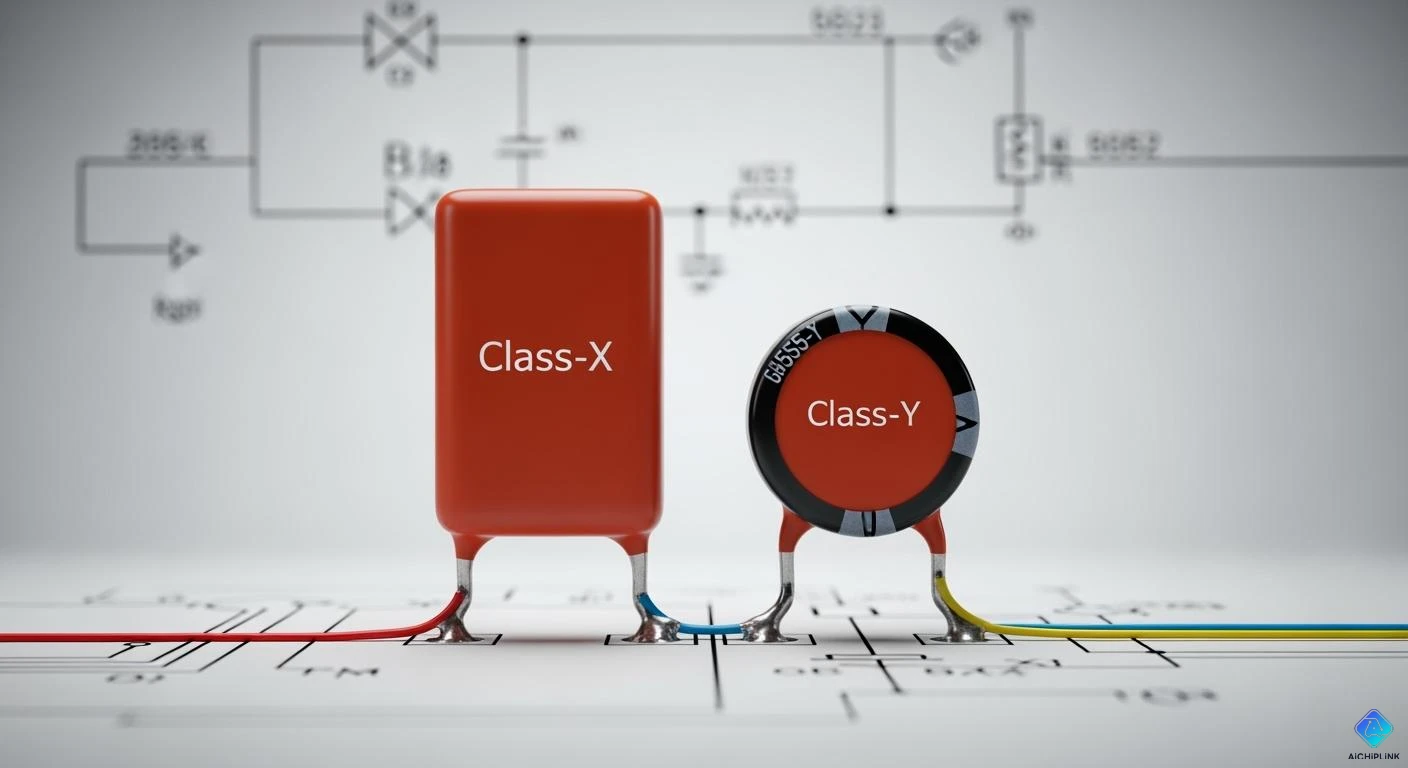
You use safety capacitors to keep devices safe from electrical dangers. Class-X and Class-Y capacitors help clean up noise from AC power lines. They also lower EMI and RFI. You pick Class-X capacitors to stop noise between line and neutral wires. Class-Y capacitors take away noise between the power line and ground. These capacitors have smaller groups like X1, X2, X3 and Y1, Y2, Y3, Y4. Knowing how they are different makes your circuits safer and better protected.
-
Class-X capacitors
-
Class-Y capacitors
-
Subclasses: X1, X2, X3 and Y1, Y2, Y3, Y4
-
Filtering noise between line and neutral wires (Class-X)
-
Safely removing noise between the power line and ground (Class-Y)
Key Takeaways
-
Safety capacitors keep devices safe from electrical problems. They lower noise and make circuits work better.
-
Class-X capacitors go between line and neutral wires. They stop certain noise and help prevent fires.
-
Class-Y capacitors go between line and ground. They filter other types of noise and help stop electric shocks.
-
Always check where you put safety capacitors. Putting them in the right spot is very important for safety.
-
Use safety capacitors that are certified. Look for marks like UL or IEC to make sure they are safe and reliable.
What Are Safety Capacitors
Safety capacitors keep your devices safe from electrical problems. You use these capacitors to block signals you do not want. They also cut down on electromagnetic interference (EMI) and radio frequency interference (RFI). These parts are important for making circuits safe and steady. You can find safety capacitors at the start of power supplies. They help lower EMI and make sure there is galvanic isolation at low frequencies. This isolation keeps you safe if you touch a device.
Safety capacitors keep leakage current very low, only microamperes. This helps protect you from getting shocked.
Class-X Capacitors Overview
Class x capacitors go between the AC line and neutral wires. You use them to stop differential mode noise. This spot helps lower EMI and RFI that move between line and neutral. Your devices get a cleaner AC signal. Class x capacitors are important for stopping overvoltage surges and voltage spikes.
Here is a table that shows the main features of class x capacitors:
| Capacitor Type | Connection | Function | Risk on Failure |
|---|---|---|---|
| Class-X | Line to Neutral | Protects against differential mode noise | Fire risk, no shock |
Most class x capacitors are rated for AC voltages up to 250V. They are made to fail short, so they do not cause shock hazards.
-
Class x capacitors go across the AC 'line' (black) and AC 'neutral' (white) wires.
-
This helps lower EMI and RFI.
-
They also cut down problems from interference and voltage surges.
Class-Y Capacitors Overview
Class y capacitors go between the AC line and ground. You use them to stop common mode noise. This spot is very important for safety. Class y capacitors send unwanted signals away from the circuit and lower shock risks. People also call them 'line to ground' or 'line bypass' capacitors.
Here is a table that shows the main features of class y capacitors:
| Capacitor Type | Connection | Function | Risk on Failure |
|---|---|---|---|
| Class-Y | Line to Chassis | Filters common-mode noise | Risk of electric shock |
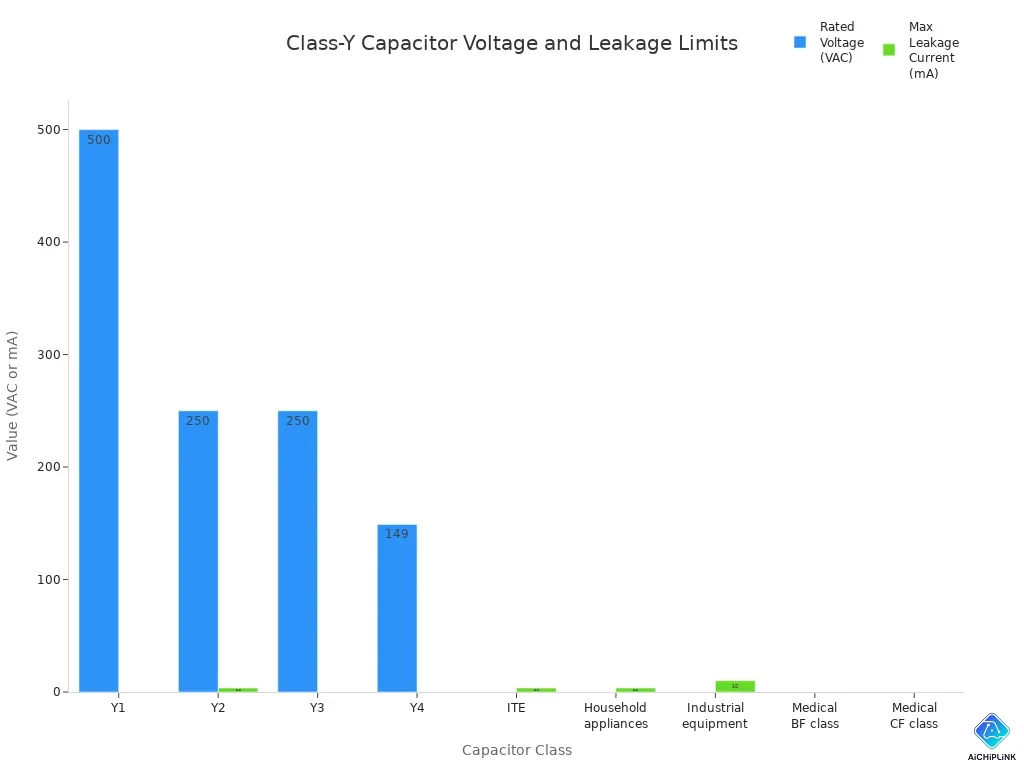
Class y capacitors are made to fail open-circuit. This helps stop fires and shocks. You find them rated for AC voltages up to 250V. Their spot is important for handling EMI and RF noise from common-mode sources.
-
Class y capacitors go between the AC supply and ground.
-
They help control EMI/RF noise and keep you safe from shocks.
You need to pick the right safety capacitors for your project. Where you put class x capacitors and class y capacitors matters a lot for circuit safety.
Class-X vs Class-Y
Placement & Function
It is important to know where each capacitor goes in your circuit. Class-X capacitors are put between the live wire and the return wire. Class-Y capacitors connect the neutral and ground lines. Where you put them changes how they work and what they protect.
Here is a table that shows the differences:
| Capacitor Type | Placement | Safety Considerations |
|---|---|---|
| Class-X | Between live wire and return wire | If it fails, there could be a fire, but not a shock. It needs something to stop too much power. |
| Class-Y | Between neutral and ground lines | If it fails, you could get shocked. It needs extra safety to stop problems with the inside parts. |
Class-X capacitors block noise that moves between the two power wires. This keeps high-frequency noise from going back into the power grid. Class-Y capacitors send unwanted signals to the ground. This keeps other parts of your circuit safe from noise.
-
Class-X capacitors:
-
Take away common-mode interference across power lines.
-
Stop high-frequency noise from going back to the grid.
-
-
Class-Y capacitors:
-
Lower differential mode interference by connecting to ground.
-
Keep sensitive parts safe from noise.
-
Tip: Always check where you put safety capacitors before you install them. Putting them in the wrong place can make things less safe and more risky.
Failure Modes & Safety
You want your devices to stay safe, even if a capacitor stops working. Class-X and Class-Y capacitors fail in different ways.
-
Class-X capacitors are made to fail short. If this happens, a fuse or other protection will stop the electricity. This helps stop fires.
-
You might see blown fuses, devices not turning on, or things not working right if a Class-X capacitor fails. Using certified safety capacitors makes these problems less likely.
-
Class-Y capacitors are made to fail open. This means they stop working but do not let electricity go to the ground. This helps stop electric shocks.
Safety capacitors take away high-frequency EMI and keep you safe. Class-X capacitors help stop fires. Class-Y capacitors protect you from getting shocked.
You can see why these features matter by looking at real-life data. For example, film capacitors can lose up to 10% of their power after 500 hours in tough places. Electrolytic capacitors can lose 30–40% of their power after hot tests. These changes can make your safety capacitors not work as well over time.
Many rules help make sure capacitors act the right way if they fail. Some important ones are:
| Standard | Description |
|---|---|
| IEC 60384-14 | Makes rules for safety capacitor types and how they fail. |
| UL 1414 | Lists tests and ways capacitors can fail. |
| UL 1283 | Gives safety rules for capacitors. |
| CAN/CSA C22.2 No. 1 | Canadian rule for safety types. |
| CAN/CSA 384-14 | Canadian rules for Class-X and Class-Y capacitors. |
Note: Always pick capacitors that follow these rules. This gives the best safety for your devices and for you.
Design & Reliability
Construction Features
You want your capacitors to last a long time. They should work well even when things get tough. Manufacturers use special materials for safety capacitors. These materials can handle high voltage and heat. They use coatings that do not catch fire easily. The cases are made from strong plastic. These features help the capacitors fight fire and moisture. Metalized film or ceramic is often used inside. These materials make the capacitors safer and more reliable.
Here are some important construction features:
-
Flame-retardant epoxy coating
-
Reinforced insulation between layers
-
Self-healing properties in film capacitors
-
High-quality terminals for secure connections
Tip: Always check how the capacitor is made before you pick one. Good construction means it will last longer and work better.
Testing & Certification
You need to know your capacitors will stay safe. Manufacturers test each batch for voltage, temperature, and humidity. They also check for leakage current and breakdown voltage. These tests show the capacitors are reliable.
Most safety capacitors must pass strict certification tests. Look for marks from groups like UL, VDE, or IEC. These marks mean the capacitors meet world safety rules. Certified capacitors help you feel sure about their reliability.
| Test Type | What It Checks For | Why It Matters |
|---|---|---|
| Voltage Endurance | Handles high voltage | Prevents breakdown |
| Humidity Resistance | Works in damp places | Stops corrosion |
| Self-Healing Test | Repairs small faults | Improves reliability |
Note: Always use certified capacitors in your designs. This helps keep your devices safe and protects people who use them.
Applications & Standards
Typical Uses
Safety capacitors are in many electronics. They keep you and your devices safe from electrical trouble. You see them a lot in AC power supplies. They help remove noise and keep things working well. You also find them in computers, TVs, and chargers. Kitchen appliances use them too. Sensitive electronics need these parts to block bad signals. They also help lower the chance of electric shock.
Here are some places where you use these capacitors:
-
Power adapters and chargers
-
Surge protectors
-
Home appliances like microwaves and washing machines
-
Audio and video equipment
-
Industrial control panels
Tip: Always look for safety capacitors in things that plug into the wall. They help stop damage and keep you safe.
International Standards
You have to follow strict rules when picking safety capacitors. These rules make sure the parts work right and keep you safe. The most important rules come from groups like IEC, UL, and CSA. These groups test for voltage, heat, and water. They also say how capacitors should fail to keep you safe.
Capacitor subclasses help you pick the best part for your project. Each subclass has its own job and voltage rating. Here is a table that shows the main subclasses for Class-X capacitors:
| Capacitor Type | Application Description |
|---|---|
| X1 | High pulse applications |
| X2 | General-purpose applications with specific voltage ratings |
| X3 | General-purpose applications with different peak pulse operating voltages and surge voltages |
Class-Y capacitors have subclasses too, like Y1, Y2, Y3, and Y4. Each one matches a different safety level and voltage. You should always check the rules before picking a capacitor. This helps you follow safety rules and avoid trouble.
You see these rules on product labels and datasheets. Look for marks like UL, VDE, or IEC. These marks show the capacitors passed hard tests and meet world rules. Following these rules keeps your devices safe and working well.
Now you know that safety capacitors help protect your devices. They also help keep you safe from electrical problems. Class-X and Class-Y capacitors each have their own job. They block noise and lower risks in different ways. Picking the right capacitor makes your device safer for a long time. It also helps your device work better. There are tests to make sure capacitors are safe. These tests include high-voltage, impulse, endurance, and failure testing:
| Testing Procedure | Purpose |
|---|---|
| High-voltage testing | Makes sure capacitors can handle normal and surge power |
| Impulse testing | Checks if they can take sudden voltage spikes |
| Endurance testing | Looks at how long capacitors last |
| Failure testing | Checks if they fail in a safe way (open or controlled) |
You should always look at standards and certifications before you pick a safety capacitor. Some helpful resources are:
-
IEC 384-14 certification information
-
Details about impulse and endurance tests
-
Guides from UL, VDE, and CSA
Always use the newest safety standards to keep your devices and yourself safe.

Written by Jack Elliott from AIChipLink.
AIChipLink, one of the fastest-growing global independent electronic components distributors in the world, offers millions of products from thousands of manufacturers, and many of our in-stock parts is available to ship same day.
We mainly source and distribute integrated circuit (IC) products of brands such as Broadcom, Microchip, Texas Instruments, Infineon, NXP, Analog Devices, Qualcomm, Intel, etc., which are widely used in communication & network, telecom, industrial control, new energy and automotive electronics.
Empowered by AI, Linked to the Future. Get started on AIChipLink and submit your RFQ online today!
Frequently Asked Questions
What is the main difference between Class-X and Class-Y capacitors?
Class-X capacitors go between line and neutral wires. Class-Y capacitors go between line and ground. Class-X helps stop fires. Class-Y helps stop electric shocks.
How do I know which safety capacitor to choose?
Look at where you need the capacitor in your circuit. If you want to filter between line and neutral, use Class-X. If you want to filter between line and ground, use Class-Y.
Can safety capacitors fail?
Yes, safety capacitors can stop working. Class-X capacitors usually fail short. Class-Y capacitors usually fail open. Certified parts help keep you safer.
Where do I find safety capacitors in everyday devices?
You see safety capacitors in power adapters, surge protectors, home appliances, and computers. They block noise and help keep you safe.
Do safety capacitors need special certifications?
Yes, you should use capacitors with marks like UL, IEC, or VDE. These marks show the capacitor passed safety tests.