What is the capacitor in IoT?
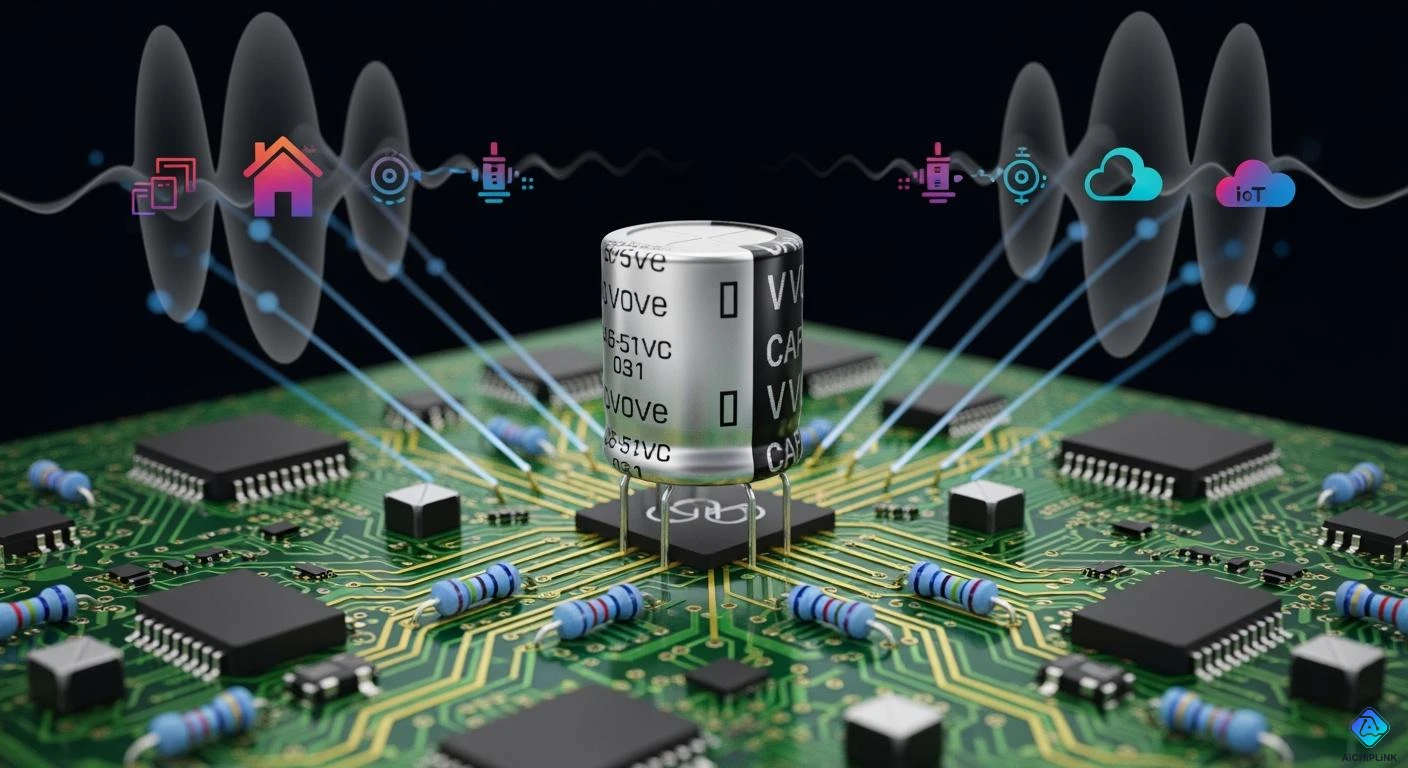
A capacitor in iot holds and lets out electrical energy in devices. You use a capacitor to keep energy steady. It helps control voltage and remove unwanted noise. When you add a capacitor, your iot devices work well and stay reliable. Capacitors also give backup power when needed. Many experts say capacitors help devices work better. They manage heat and keep power delivery stable. Some types, like silicon capacitors, work well in hard conditions. They help your devices stay dependable for a long time.
Key Takeaways
-
Capacitors keep and give out electrical energy. They help IoT devices work well and stay reliable.
-
Picking the right capacitor is very important. It helps control voltage and stops noise in your devices.
-
Supercapacitors give fast power bursts. This makes them great for backup energy in IoT uses.
-
Capacitors make sensors work better. They help sensors be more sensitive and cut down noise. This gives more correct data.
-
Check your capacitors often. This makes sure they work right and keeps your IoT devices safe.
Capacitor in IoT: How It Works
Energy Storage Function
A capacitor in iot stores and releases electrical energy. This helps your iot devices work well. The capacitor holds charge between two plates. When you add voltage, it collects energy. When your device needs power, it gives out energy fast.
-
Supercapacitors keep energy on the surface of their electrodes. This lets them charge quickly and give lots of power.
-
When voltage is added, ions move to the electrodes. This makes an electric double layer for temporary energy storage.
-
Stored energy comes out smoothly as ions move back when power is gone. This keeps power steady.
-
This process does not use chemical changes. Supercapacitors work well through many charge and discharge cycles.
Capacitors, especially supercapacitors, give high power density and fast charging. They help control power surges and protect batteries. This makes batteries last longer in iot devices. A hybrid system uses both batteries and supercapacitors. This gives high energy from batteries and quick energy from supercapacitors. This setup helps manage energy in good iot devices.
Supercapacitors and hybrid supercapacitors can last for 500,000 cycles or more. This is much more than regular batteries, which last about 20,000 cycles. Supercapacitors store lots of charge electrostatically. They give power quickly for short times. This is important for iot devices that need fast energy for things like measurement or wireless transmission. To discharge a capacitor safely, you must use proper methods to avoid damage.
Voltage Regulation Role
Capacitors help keep voltage steady in your iot devices. They act like small energy tanks. When voltage drops suddenly, the capacitor gives power to stop glitches or resets. This keeps your device working without stopping.
-
Capacitors store energy and release it to keep voltage stable.
-
They filter out noise and help power supplies stay smooth.
-
Capacitors protect against voltage spikes and surges, stopping device problems.
You must pick the right capacitor type and value for fast and slow voltage changes. Putting capacitors close to power pins stops problems from trace resistance and inductance. Decoupling capacitors filter noise and keep voltage steady. They give local energy to stop voltage drops when current needs change fast. These capacitors make devices more reliable by keeping power steady for sensitive parts.
For high-frequency noise, common values are from 0.01 µF to 0.1 µF. For low-frequency smoothing, values are from 1 µF to 100 µF. You should put decoupling capacitors close to the IC’s power pins for best results.
Noise Suppression
Noise can cause big problems in iot circuits. Capacitors help stop electrical noise and make devices work better. Decoupling capacitors keep supply voltage steady and cut high-frequency changes. This protects integrated circuits from noise and ripple.
-
Decoupling capacitors keep voltage steady and cut high-frequency changes.
-
Bypass capacitors give a low-resistance path for high-frequency signals to ground. This filters noise and makes signals better.
-
You get better system stability, noise protection, and improved performance in embedded systems.
Capacitors also help cut electromagnetic interference (EMI). They act as filters that block unwanted high-frequency noise but let the needed signal pass.
Capacitors are important for cutting electromagnetic interference (EMI). They act as filters that block unwanted high-frequency noise and let the needed signal pass. They do this by storing and releasing energy, which smooths voltage and stops noise.
Capacitors keep voltage and power flow steady. They filter noise in circuits and protect against voltage spikes. Using the right capacitance value is important for good noise suppression. Capacitance shows how much charge a capacitor can store. By picking the right capacitance, you make sure your iot devices work well and reliably.
Types of Capacitor in IoT
There are different types of capacitor for iot projects. Each type has special features and works best in certain ways. Picking the right one helps you make good iot devices.
Ceramic Capacitors
Ceramic capacitors are used a lot in iot circuits. They are found in digital devices because they work well with high frequencies. These capacitors are small and not expensive, so many people use them. You use ceramic capacitors to clean up signals and keep voltage steady.
| Advantages of Ceramic Capacitors | Disadvantages of Ceramic Capacitors |
|---|---|
| Cheap | Can’t hold much charge |
| Good for high-frequency circuits | Only work with certain voltages |
| Small size | Can change signals by accident |
| Good for digital circuits | May not last long |
Ceramic capacitors work well in many iot uses. You need to check how much charge and voltage they can handle before using them.
Electrolytic Capacitors
Electrolytic capacitors can hold more charge. You use them to store energy and filter low-frequency signals in iot devices. They are bigger and fit in power supply circuits.
| Use Case | Description | Limitations |
|---|---|---|
| Energy Storage | Hold energy in iot devices | Bigger size |
| Filtering Low-Frequency Signals | Make signals better | Don’t last as long if stressed |
| Non-Critical Applications | Used where it’s okay if they fail | Not for important uses |
Electrolytic capacitors help control power and keep voltage steady. You should think about how long they last and how hot they get.
Tantalum Capacitors
Tantalum capacitors keep their charge steady over time and in different temperatures. You use them in small iot devices. They keep working even when things change.
-
Tantalum capacitors stay the same even if they get old or the voltage changes.
-
They do not lose charge like ceramic capacitors.
-
They have low resistance and are very reliable.
-
These capacitors are good for energy harvesting and low-power iot devices.
You can trust tantalum capacitors to work the same way every time.
Supercapacitors
Supercapacitors give short bursts of backup power. You use them in iot devices that need quick energy. They can charge and discharge very fast.
-
Supercapacitors give backup power if the main power goes out.
-
They are great for charging and discharging quickly.
-
You use them in low-power iot modules to keep power going.
Supercapacitors help your devices keep working when power is not steady.
Flexible Capacitors
Flexible capacitors let you make new kinds of wearable iot devices. You use them in things that need to bend or stretch. New materials make these capacitors light and good for the environment.
Flexible capacitors help you put iot devices in clothes or accessories. You can make new shapes for wearables and smart sensors.
Tip: You should pick the right amount of charge and the right type of capacitor for your iot device. This helps your device work well and last longer.
Capacitor in IoT: Applications
Backup Power and Data Preservation
Sometimes your iot device needs to keep working when power drops. A capacitor in iot stores energy and gives backup power. This lets your device finish important jobs and save data before it shuts down. Supercapacitors are good for backup power because they hold lots of energy and last a long time. Regular capacitors help during short power dips.
| Capacitor Type | Benefits | Applications in IoT Devices |
|---|---|---|
| Supercapacitors | High energy, fast charge, long life | Backup power, energy smoothing |
| Traditional Capacitors | Basic storage, voltage filtering | Support battery during peak demand |
-
Capacitors store energy from things like energy harvesting devices.
-
You can run iot devices without batteries for a short time.
-
Capacitors help control unstable energy, so your device works well.
Capacitors also keep your data safe. When power fails, they give enough time to move data to safe storage. You should check your capacitor often to make sure it works right.
Power Flow Stabilization
You want your iot device to get steady power. Capacitors smooth out fast changes in voltage. They act like small energy tanks and give or take energy when needed. This stops your device from resetting or failing during power spikes or drops. The size of the capacitor matters here. You need to pick the right one for the best protection.
-
Capacitors help keep voltage steady during quick changes.
-
They support batteries when your device needs more power.
-
Good power flow helps your device last longer and work better.
Signal Filtering
Many iot devices need clean signals to work right. Capacitors block unwanted noise and high-frequency interference. Bypass and decoupling capacitors send noise to ground, not into your device.
| Type of Capacitor | Function |
|---|---|
| Bypass Capacitors | Remove system noise by sending it to ground |
| Decoupling Capacitors | Filter high-frequency noise, stabilize voltage |
-
Capacitors give a path for noise to leave the circuit.
-
They keep your signal strong and clear.
-
This helps your device work better and cuts electromagnetic interference.
Tip: Always follow the right steps to discharge a capacitor safely. This keeps you and your device safe.
Sensor Performance Enhancement
Sensors in iot devices work better with the right capacitors. Capacitance helps sensors adjust to changes and stay sensitive. Some sensors use smart capacitors that connect to the cloud for better monitoring.
| Improvement Type | Description |
|---|---|
| Enhanced Sensitivity | Sensors adjust to changing conditions |
| Built-in Diagnostics | Sensors warn you before problems happen |
| Cloud Connectivity | You can monitor sensors from anywhere |
-
Capacitors make sensors more sensitive with new materials and shapes.
-
AI and machine learning help process signals and cut noise.
-
Good iot devices use smart capacitive sensors for accurate data.
You should always match the capacitance and type to your device needs. This helps your iot device work well and last longer.
You need the right capacitor to keep your iot devices working well. Capacitance lets you store energy, clean up signals, and control power. Different capacitors do different jobs. Some charge fast, while others keep your device steady for a long time.
-
Embedded capacitors help manage power and make batteries last longer.
-
Silicon capacitors make devices smaller and more stable.
Always pick the right capacitance for your project. Good choices help your device work better and last longer.

Written by Jack Elliott from AIChipLink.
AIChipLink, one of the fastest-growing global independent electronic components distributors in the world, offers millions of products from thousands of manufacturers, and many of our in-stock parts is available to ship same day.
We mainly source and distribute integrated circuit (IC) products of brands such as Broadcom, Microchip, Texas Instruments, Infineon, NXP, Analog Devices, Qualcomm, Intel, etc., which are widely used in communication & network, telecom, industrial control, new energy and automotive electronics.
Empowered by AI, Linked to the Future. Get started on AIChipLink and submit your RFQ online today!
Frequently Asked Questions
What does a capacitor do in iot devices?
A capacitor stores energy and lets it out when needed. This keeps power steady in your iot device. It stops sudden drops in power. Capacitors also block noise and protect important parts.
How do you choose the right capacitor for your iot project?
You need to know how much voltage and energy your device uses. Look at the size and type of the capacitor. Check how fast it can charge. Pick one that fits your device and keeps it working well.
Can capacitors help your iot device during power loss?
Yes, capacitors give backup power for a short time. They let you save data or finish jobs before the device turns off. Supercapacitors are best when you need quick energy.
Why do iot sensors need capacitors?
Capacitors help sensors stay correct in iot devices. They filter signals and block noise. This makes sensor readings clear and easy to trust.