Broadcom Network Processor Families Explained
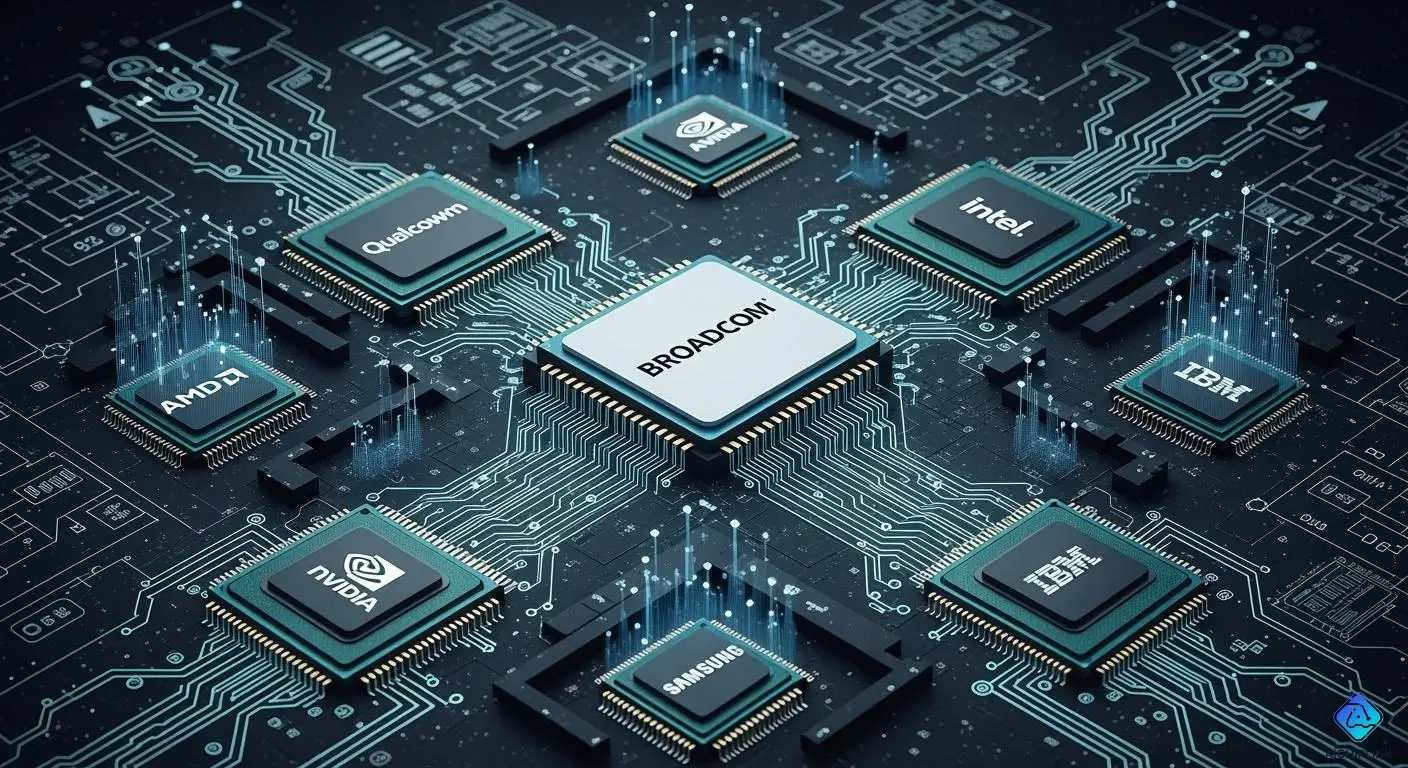
You see Broadcom as a big name in networking hardware. The company makes many products. These include network processor families for data centers and businesses. These processors give high bandwidth and low latency. They also help with AI-optimized routing. The table below shows how they make networks faster and more reliable:
| Feature | Description |
|---|---|
| High Bandwidth | Handles 1,024 100G SerDes on one chip. This helps AI clusters work better. |
| Low Latency | Uses co-packaged optics to lower latency. This makes hyperscale networks more reliable. |
| AI-Optimized Routing | Gives advanced telemetry and dynamic congestion control. This is good for AI workloads. |
| Scale-Up and Scale-Out Support | Meets needs for big XPU clusters. It also allows flexible network setups. |
| Open Scale-Up Innovation | Supports an open Ethernet ecosystem. This helps scale-up interfaces work well. |
Key Takeaways
-
Broadcom network processors move data fast and with little delay, so they work well in data centers and for AI jobs.
-
Merchant silicon lets Broadcom chips work in many brands, which gives more choices and saves money for networks.
-
Picking the best processor depends on how big your network is and what it needs; Tomahawk is very fast, but Trident can be programmed.
-
StrataDNX processors help make networks that can change easily, so they are good for service providers and networks that are getting bigger.
-
Using open-source tools with Broadcom processors makes it easier to control and connect your network.
Broadcom Network Processor Families Overview
What Is a Network Processor?
You might ask how a network processor is different from other chips. A network processor is a special microprocessor. It helps move and control data packets in a network. It works very fast. It does jobs like sorting, checking, and keeping network traffic safe. It does not run whole protocol stacks. It focuses on things like Quality of Service (QoS), encryption, and firewalling. Here are some important features:
-
Moves network data packets fast.
-
Does jobs like header parsing and packet changes.
-
Can process many packets at the same time.
-
Works at wire speed to keep networks safe and quick.
Key Broadcom Families
Broadcom has several network processor families. You will see them in many business and service provider networks. These families help make systems fast and reliable. The most well-known models are:
| Model | Capacity (Gbps) | Description |
|---|---|---|
| BCM88476 | 300 | High-performance packet processor with expansion abilities. |
| BCM88470 | 160 to 300 | Single-chip packet processor with extra buffer space. |
| BCM88270 | 30 to 120 | Small packet processor with extra buffer space. |
You will see that Broadcom uses merchant silicon in these families. This means you can find these chips in lots of networking equipment. They are not just in one brand. Merchant silicon gives you more choices and better prices.
High Speed Ethernet ASICs in Broadcom Solutions
High speed ethernet asics are very important in Broadcom solutions. These chips give you high throughput and low latency. This is needed for big networks and fast data centers. Broadcom Strata DNX is a popular chipset for building systems with many ports. It can use off-chip table and buffer space. This means you get more room for data and better speed. Many hyperscalers and financial companies use these chips. They need fast and reliable networks. Merchant silicon also helps you grow your network when you need to.
Tip: If you need a network that can handle lots of data and many users, look for solutions with high speed ethernet asics from Broadcom.
Major Broadcom Processor Families
StrataXGS Family Overview
The StrataXGS family is used in many networks. You can find these chips in products from different companies. StrataXGS helps you build networks that can grow and work well. These chips let you use new features and support things like SDN and NFV.
StrataXGS processors have more than one core. They use ARM CPUs and special cores together. This design gives you more choices and saves power. You can do hard jobs without making the network slow.
Here is a table with examples of what StrataXGS chips do and how they perform:
| Series | Applications | Performance Benchmarks |
|---|---|---|
| Trident | Enterprise-grade applications | Programmability, advanced features |
| Tomahawk | Data centers, high-bandwidth switching | Up to 102.4 Tbps, 256 ports of 200G |
You can use StrataXGS chips in switches for businesses, schools, and cloud data centers. These chips help you move lots of data and keep your network safe.
StrataDNX Family Overview
StrataDNX is another big network processor family from Broadcom. You use StrataDNX chips when you need to move lots of data and want flexible networks. This family uses merchant silicon, so it costs less and works in many networks.
StrataDNX processors let you split up the network at the edge. You can make networks that grow as you need them. Qumran and Jericho chips help you connect many users and manage traffic well.
You find StrataDNX chips in carrier networks, edge places, and where networks come together. Here are some main ways to use them:
-
Split up the network at the edge with Qumran 2C+ ASICs.
-
Works for small and big networks from the center to the edge.
-
Makes network jobs and supply chains easier.
-
Jericho2 gives fast, low-power routing for carrier networks.
-
Can handle new network needs and standards.
-
Qumran3D is for big, safe networks with many users.
-
Made to grow in places with little power and space.
-
Handles routing for networks with lots of users.
-
Saves money for networks that need lots of speed, like 5G.
-
Makes building and running networks cheaper and easier.
You can use StrataDNX chips to build networks that grow fast and use new tech.
Trident Series Features
The Trident series is part of StrataXGS. You use Trident chips in business networks that need smart features. These processors let you run custom jobs and check network data.
Here is a table that shows how Trident and Tomahawk are different:
| Feature | Trident Series | Tomahawk Series |
|---|---|---|
| Throughput | Significant throughput with a focus on programmability and features | High raw throughput for fast data movement |
| Programmability | Emphasizes programmability for custom functions | Geared towards speed and scalability |
| Telemetry and Visibility | Advanced telemetry and machine learning capabilities | Focus on throughput and low latency |
| Use Cases | Ideal for enterprise networks needing intelligent functions | Suited for high-throughput scenarios like AI/ML and cloud computing |
"IP Infusion is excited to add Broadcom’s Trident 3 switch to OcNOS. OcNOS already works with many StrataXGS chips. OcNOS will use the FleXGS design to give advanced network features for service providers and new data centers. Trident 3’s programmability will help support many features for SDN and NFV.”
— Atsushi Ogata, President & CEO, IP Infusion
"Big Switch is making new data center networks for cloud apps and security. We need advanced switch ASIC features to make networks better and faster. Broadcom’s Trident 3 ASIC will help us build strong SDN networks for businesses, service providers, and cloud customers. It gives us new tools like deep analytics, better traffic flow, and security features.”
— Prashant Gandhi, Chief Product Officer, Big Switch Networks
You can use Trident chips for SDN, NFV, and deep analytics in business and service provider networks.
Tomahawk Series Features
You find Tomahawk chips in fast data centers and cloud networks. This processor family gives you very high bandwidth and lots of ports. Tomahawk chips use merchant silicon, so you get both flexibility and speed.
Tomahawk processors have many cores and use special designs. FLEXGS and Smart-Flow technology let you set up the chip with software and keep things fast. You get more ways to control traffic and set rules.
Tomahawk 3 can reach up to 12.8Tbps bandwidth with a smart buffer system. It uses 40% less power per 100Gbps and costs 75% less per 100Gbps than other chips. Broadview Gen 3 lets you see everything happening in the network.
Ram Velaga from Broadcom says Tomahawk is the top chip for big data centers. Bob Wheeler from The Linley Group says Tomahawk 3 is great for deep learning and RDMA in cloud networks.
Here is a table with performance numbers:
| Metric | Tomahawk 5 | Tomahawk 6 | Competitors (NVIDIA, Marvell, Cisco) |
|---|---|---|---|
| Bandwidth | 51.2 Tbps | 102.4 Tbps | Up to 51.2 Tbps |
| Port Density | High | Very High | Moderate |
| Latency | Low | Lower | Higher |
| AI Optimization | No | Yes | No |
You can use Tomahawk chips for AI, cloud, and big switches. They support up to 1,024 100G SerDes lanes and advanced telemetry.
Broadcom says Tomahawk 6 is the best for switching bandwidth. No other chip can do 102.4 Tbps. You get a design that works for both growing and scaling networks and for AI. Cognitive Routing 2.0 helps control traffic jams.
BCM58800 and XLP500 Series
You use BCM58800 and XLP500 chips for advanced networking and security. These processors have many cores and use ARM CPUs. You get both power-saving and high-speed cores like Cortex-A53 and Cortex-A57. The ARM big.LITTLE setup mixes fast and efficient cores.
Here is a table with processor types and main features:
| Processor | Type | Key Feature |
|---|---|---|
| Cortex-A53 | Power-efficient | World’s smallest 64-bit processor |
| Cortex-A57 | High-performance | Most advanced high-performance applications |
| ARM big.LITTLE | Configuration | Combines high performance with power efficiency |
The XLP500 series has 32 NXCPUs and can do 80 Gbps. It uses a design that lets it do many jobs at once and out of order. You can run NFV and SDN apps with Broadcom's Open NFV platform. You get special engines for checking packets and encryption.
You can use these chips with open-source tools like KVM, QEMU, and OVS. Broadcom’s FASTPATH software helps drivers work better. You can split up CPUs, memory, and other parts. You get a pool of strong processors for networking and security.
You use BCM58800 and XLP500 chips in service provider networks, security devices, and virtual networks. These chips help you move to new tech and keep your network working well.
Comparing Broadcom Network Processor Families
Performance and Scalability
You want your network to be fast and handle lots of users. Each Broadcom processor family gives different network speeds and ways to grow. Some chips focus on high speed ethernet asics. Others let you control special jobs better. The table below shows how Broadcom compares to other brands:
| Feature/Metric | Mellanox ConnectX-5 | Broadcom NetXtreme E Series |
|---|---|---|
| Throughput | Up to twice the throughput | Lower throughput |
| Connection Handling | More connections | Fewer connections |
| Packet Loss Prevention | Yes | No |
| CPU Cycle Consumption | Fewer cycles per packet | Higher cycles per packet |
| Performance in Cloud Workloads | Higher performance | Lower performance |
| Efficiency in Congestion Management | Better management | Not tested |
| Support for Advanced Features | Yes | Limited |
Merchant silicon from Broadcom gives good performance for most networks. Tomahawk chips are best for high throughput network asics. Trident chips are good for programmability and features. You can grow your network with merchant silicon. This helps you save money as your network gets bigger.
Target Markets and Use Cases
You need to pick the right chip for your network job. Each family works best for certain tasks. Trident is good for business networks needing smart features and deep analytics. Tomahawk is great for big data centers and AI clusters needing speed. StrataDNX helps service providers and carriers who want flexible networks. Merchant silicon lets you use these chips in many brands of network switch asics.
Here is a quick look at how each family supports new tech:
| Processor Family | Ethernet Support | NFV/SDN Support |
|---|---|---|
| Trident | Dominates 10GbE | Yes |
| Tomahawk | Significant for 100GbE | Yes |
| Trident 3 | Programmability added | Yes |
You can use these chips for SDN, NFV, and high speed ethernet asics. They work in both enterprise and cloud networks.
Key Differences and Similarities
There are some important differences between these families. Tomahawk gives the highest bandwidth and port counts. Trident gives more control and programmability. StrataDNX lets you build networks that grow and change. All families use merchant silicon. This gives you more choices and better prices. They all support new network needs like SDN and NFV. Broadcom gives strong, flexible chips for many types of networks.
Tip: If you want a network that grows with your business, choose merchant silicon solutions. They help you keep costs low and options open.
Choosing the Right Broadcom Processor
Selection Factors
When you pick a network processor, think about your network’s size and speed. You also need to know what jobs your network does. Look at the main features of each processor. The table below helps you compare some top choices:
| Processor | Key Features | Applications Considered |
|---|---|---|
| Tomahawk 6 | 512 lanes at 200 Gbps or 1,024 lanes at 100 Gbps, cognitive routing | High bandwidth and low latency needs |
| Tomahawk Ultra | Sub-250 nanosecond latency, in-network collectives | Ultra-low latency applications |
| Jericho 4 | Deep buffer system, lossless transmission over 100 km, embedded security | Long-distance AI clusters and security needs |
You should also think about how much data your network moves. Jericho 4 is good for big AI data centers. It can send data up to 60 miles away. This helps if your network is in many places. High-bandwidth memory and HyperPort technology make sharing data fast and easy.
Example Use Cases
Many large companies use broadcom processors in their networks. Here are some real-world examples:
-
Google uses these processors in its TPU clusters for AI models.
-
Meta builds its AI infrastructure with broadcom networking.
-
Microsoft relies on these chips for Azure AI and Copilot.
-
Amazon Web Services uses broadcom switches in EC2 networks.
-
Dell, HPE, Cisco, and Arista Networks include these solutions in their products.
You can see that merchant silicon lets many brands use the same strong technology.
Practical Tips
-
Check your network’s size and how much you want it to grow before you pick a processor.
-
For fast data centers, Tomahawk chips give the most bandwidth.
-
If you need smart features and programmability, Trident chips are best.
-
For networks that cover long distances or need deep buffers, pick Jericho chips.
-
Always look for merchant silicon if you want more choices and better prices.
Tip: Start with your main needs—speed, distance, or smart features. Then match the processor family to those needs for the best results.
You now understand what each Broadcom processor family does best. Tomahawk is very fast and works well in data centers. Trident has smart features for business networks. StrataDNX lets you build networks that can grow and change. Always pick the processor that fits your network’s needs and plans. If you want to learn more, check out these hardware topics:
| Hardware Family | Description |
|---|---|
| Hardware.Processor | Find out how processors run network devices and move data. |
| Hardware.Server | Learn how servers use processors to answer quickly. |
| Hardware.Storage | See how storage units connect with network processors. |

Written by Jack Elliott from AIChipLink.
AIChipLink, one of the fastest-growing global independent electronic components distributors in the world, offers millions of products from thousands of manufacturers, and many of our in-stock parts is available to ship same day.
We mainly source and distribute integrated circuit (IC) products of brands such as Broadcom, Microchip, Texas Instruments, Infineon, NXP, Analog Devices, Qualcomm, Intel, etc., which are widely used in communication & network, telecom, industrial control, new energy and automotive electronics.
Empowered by AI, Linked to the Future. Get started on AIChipLink and submit your RFQ online today!
Frequently Asked Questions
What is merchant silicon, and why does it matter?
Merchant silicon means you can buy chips from Broadcom and use them in many brands of network equipment. You get more choices and better prices. This helps you build networks that fit your needs.
How do I know which Broadcom processor family fits my network?
You should look at your network’s size, speed, and main jobs. Tomahawk works best for fast data centers. Trident helps with smart features. StrataDNX supports flexible and growing networks.
Can Broadcom processors support AI and cloud workloads?
Yes, you can use Tomahawk and Jericho chips for AI and cloud tasks. These processors give high bandwidth and low latency. They help you move large amounts of data quickly.
Do Broadcom processors work with open-source software?
Yes! You can use Broadcom processors with open-source tools like KVM, QEMU, and OVS. This makes it easier for you to build and manage your network.