Passive Components in Autonomous Driving Systems
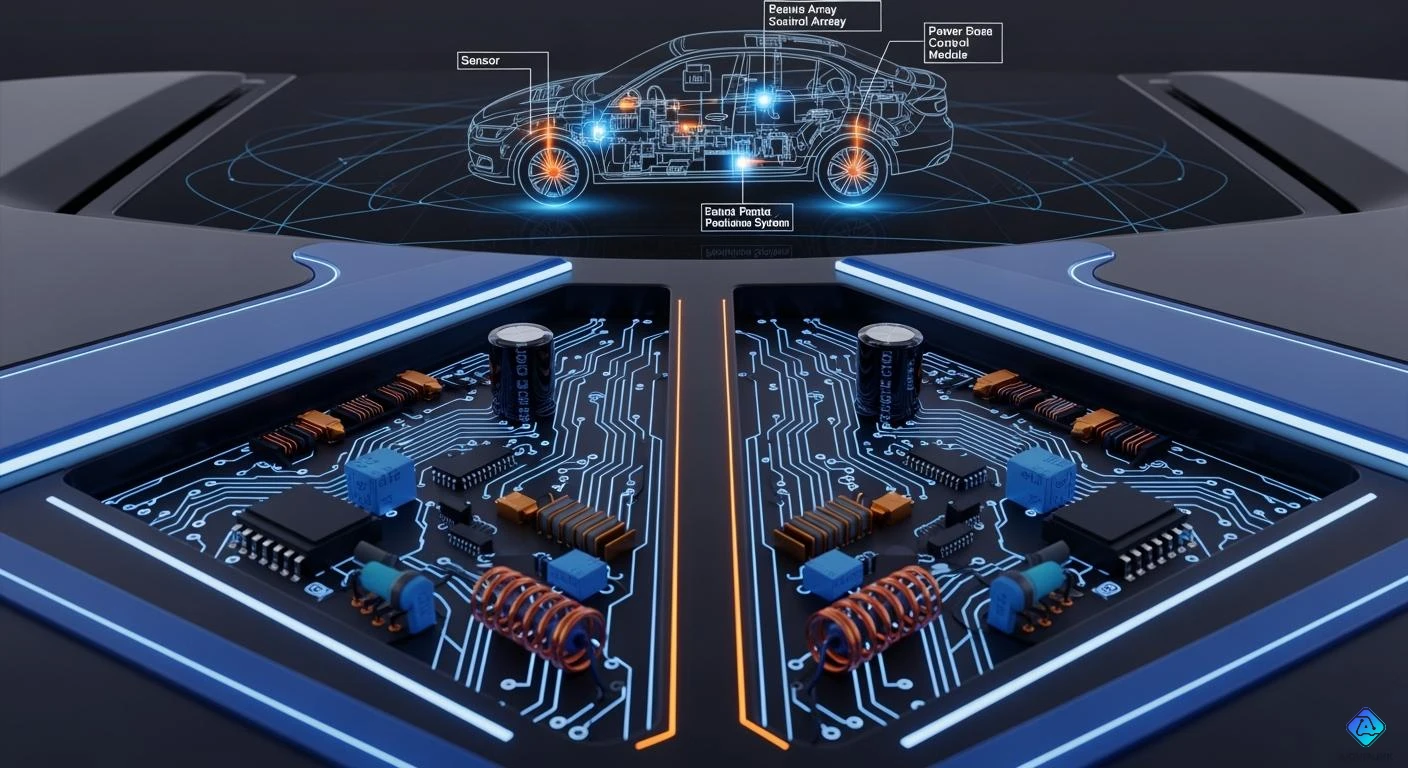
You use passive components whenever you use new car technology. These parts, like capacitors, resistors, and EMI suppression elements, do not make signals stronger or need outside power to work. They help keep circuits steady, clean, and safe in autonomous driving systems. In advanced driver assistance systems, passive components help ADAS sensors give correct information and keep the system working well.
When you use autonomous features, you count on passive components for:
Keeping power steady and signals clear in ADAS
Controlling voltage and keeping signals strong at fast speeds
Stopping EMI so cars work safely in noisy places
Making sure things work for a long time in hot or cold cars
| Component Type | Description |
|---|---|
| Programmable LDOs | Used to control voltage in radar systems. |
| Capacitors | More than 20 are used for cleaning and separating signals. |
| Precision Resistors | Needed for good signal processing. |
| EMI Suppression Elements | Important for stopping electromagnetic interference in sensitive car systems. |
| Market Size | About 30–35 passive parts are in each ADAS node, making the market worth about $1 billion each year. |
| AEC-Q200 Qualification | Makes sure parts meet car safety rules, which is important for lasting use. |
Think about a time when a self-driving car suddenly has a power change. If it has the right passive parts, the system stays safe and does not lose signals. This keeps the car working well in real driving situations.
Key Takeaways
-
Passive components like capacitors and resistors help keep signals clear. They also make power steady in autonomous driving systems.
-
Picking automotive-qualified passive components helps with safety and reliability. These parts meet tough rules like AEC-Q200 and ISO 26262.
-
Putting passive components in the right place can lower noise. It also makes signals better and helps ADAS work well.
-
Making passive components smaller lets designs be more efficient. This means advanced technology fits in small spaces and still works well.
-
Using the correct passive components stops failures. It also makes sure self-driving systems stay safe in many situations.
Understanding Passive Components
Types and Functions
You can find passive components in every car’s electronic system. These parts work without needing extra power. They help control how much current flows. They also store energy and keep signals clean. You see them in many places, like battery systems and ADAS sensors. Each type does something special. The table below shows the main types, what they do, and where you use them in cars:
| Component Type | Main Function | Key Features | Typical Applications |
|---|---|---|---|
| Precision Resistors | Current Sensing, Power Monitoring | Tight Tolerance, Low TCR | Battery Management Systems, Power Distribution |
| High-Voltage Resistors | Voltage Isolation | Ceramic/Glass Substrate | DC-Link, High-Voltage Battery Systems |
| Metal Composite Inductors | Energy Storage, Filtering | Soft Saturation, Low DC Resistance | DC-DC Converters, High-Voltage Traction Systems |
| Nanocrystalline Inductors | EMI Filtering | High-Frequency Suppression | Onboard Chargers, MCU Filters |
| Common-Mode Chokes | Noise Attenuation | High Current Capability | EV Drive Outputs, Electric Steering |
| Ferrite Beads/Chips | Signal Integrity | Miniaturized SMD | Infotainment Systems, ADAS Sensors |
You depend on these parts to keep your car’s electronics safe and steady. For example, precision resistors help measure current in batteries. Inductors store energy and block noise, so sensors work right. Common-mode chokes and ferrite beads keep signals safe from outside noise.
Passive vs. Active Components
You may wonder how passive parts are different from active ones. Here is an easy way to tell:
-
Passive components, like resistors, capacitors, and inductors, control current, store energy, and change voltage.
-
Active components, like transistors and integrated circuits, need extra power. They can make signals stronger, switch, or process them.
-
Passive parts do not need extra power to work.
-
Active parts need extra power to work.
You use both kinds in your car. But passive components are the main parts in every reliable system. They help everything work well, even when things change.
Passive Components in Autonomous Driving Systems
Central Compute and Power
Central compute and power subsystems run the smart parts of self-driving cars. These subsystems need steady power and clear signals to work well. They use many passive components to help them:
-
Inductors
-
Communication modules
-
Common-mode chokes
-
Precision resistors
These parts help control energy and keep things safe. In cars, you often see MLCCs, liquid-cooled inductors, and status-enabled resistors. Each one has special features for powering smart systems in self-driving cars.
| Passive Component Type | Feature | Benefit |
|---|---|---|
| MLCCs | Flexible SMD Terminations | Shock/vibration resistance |
| Liquid-cooled inductors | Thermal Path Integration | Improved cooling, longer life |
| Status-enabled resistors | Self-Monitoring Feedback | Predictive maintenance, safety |
You use these parts to keep power steady, block noise, and stop electromagnetic interference. For example, ATSC silicon capacitors fit in small spaces and handle extreme temperatures. These capacitors hardly age, so they last a long time. Their high insulation resistance keeps leaks low, so signals stay clear. The failure rate is very low, which helps meet strict safety rules for cars.
Sensors for Perception
Sensors for perception are like the eyes and ears of self-driving cars. You depend on these sensors to spot objects, measure distance, and help with close-up detection. Reliable sensors need passive components to work well in all conditions.
-
Silicon capacitors help LiDAR send short, strong light pulses for good detection.
-
Integrated passive devices (IPDs) combine capacitors and wiring, making sensors smaller and stronger.
-
MLCC, film, and polymer capacitors keep power steady and block unwanted signals.
-
Precision resistors, like current sense and anti-surge types, protect sensors and make them work better.
-
Metal-composite and nanocrystalline inductors block electromagnetic noise, which helps sensor fusion.
You see these parts in radar, camera, and LiDAR modules. They help sensors give accurate data for ADAS and self-driving features. When you use reliable sensors, you get better detection and safer driving.
Stabilizing Electronic Connections
Stable electronic connections keep self-driving systems safe and working well. Passive components are important here. They control energy, manage current, and filter signals. This keeps things safe and lowers noise.
-
Passive components help keep connections stable by blocking unwanted signals.
-
They make sure current stays at safe levels, which protects sensitive electronics.
-
Good use of these parts lowers the risk of failure and makes everything work better.
Integrated passive devices (IPDs) are very reliable. Their mean time between failures can be over one billion hours. The failure-in-time rate is much lower than regular devices. Fewer solder joints mean less stress and fewer weak spots. This makes connections more reliable in cars and ADAS systems.
Tip: If you pick the right passive components, your self-driving car stays safe, steady, and ready for the road.
Passive Components in ADAS Architectures
Reliability and Safety
You use passive components every time you use ADAS. These parts help ADAS work safely and stay reliable in your car. You find them in steering, braking, and other safety systems. They keep signals clear and power steady, even in tough car conditions.
MLCCs with flexible SMD terminations can handle shock and vibration. This means ADAS modules keep working during bumps or sudden stops. Liquid-cooled inductors help control heat, so your autonomous systems last longer. Some resistors can check themselves, which helps you find problems before they get worse.
If you pick an automotive-qualified portfolio, you get parts that pass hard tests. These tests make sure your ADAS and autonomous features stay safe and reliable for many years.
Here is how passive components help safety and reliability in ADAS:
| Aspect | Contribution to Safety and Reliability |
|---|---|
| Shock and Vibration Resistance | Flexible SMD terminations in MLCCs protect important modules. |
| Thermal Management | Liquid-cooled inductors help cooling and make parts last longer. |
| Predictive Maintenance | Self-checking resistors help keep ADAS safe. |
| Validation Protocols | Passing AEC-Q200 tests means parts survive tough car conditions. |
| Integration in Powertrains | Helps strong operation in autonomous and electric systems. |
Compliance with Automotive Standards
You need to know every part in your ADAS meets strict car rules. These rules make sure your autonomous systems work well in important safety jobs. The most important standards for passive components are ISO 26262 and AEC-Q200.
| Standard | Description |
|---|---|
| ISO 26262 | Car safety rule for functional safety in car systems. |
| AEC-Q200 | Test rule for passive parts in car uses. |
When you use an automotive-qualified portfolio, you know your ADAS modules can handle high voltage, strong EMI, and tough car conditions. These parts must also meet ISO 16750 and LV 123 for extra safety. You see this in powertrains and sensor modules in self-driving cars.
Tip: Always check for these rules when you design or upgrade ADAS. This keeps your autonomous systems safe and reliable on the road.
Design and Integration in Automotive Systems
Selection Criteria
You must pick passive components with care for cars and adas. Choosing the right parts helps you get good detection and keep signals clear. When you choose, look for:
-
Following industry rules
-
Handling hot and cold
-
Being reliable
-
Lasting a long time
Using car standards builds trust and makes adas work well. Rules like AEC-Q200 and ISO 26262 help test and check parts. You can use these rules to keep sensors and detection safe.
Mechanical stress and high heat can make parts fail twice as fast. You need to pick parts that can handle shaking and heat to keep things working and safe.
Placement and Layout
You make things work better by putting parts in the right place. Good layout helps you get rid of noise and keep signals strong in adas. You should follow these tips:
| Component Type | Best Practice Description | Benefits |
|---|---|---|
| Common-mode choke | Made for tough shaking, used with pulse-stable resistors and MLCCs | Makes parts last longer in hard places, beats AEC-Q200 rules |
| Custom polypropylene film capacitor | Used in fast-charging inverters with balance networks | Handles many fast charges, checked for 15-year use |
| Broadband suppression networks | Used in adas sensor fusion modules with lots of EMI | Keeps signals clear and safe under tough tests like ISO 16750 |
Keep wires short, do not bend them sharply, and keep power and data lines apart. Put decoupling capacitors close to IC power pins. This helps keep signals clear and detection good.
Overcoming Challenges
You face many problems when you put parts in cars and adas. Moving from 12V DC to 48V DC makes things harder. You need parts that can handle high voltage, strong currents, and heat. Shocks, shaking, water, and humidity also hurt detection and signals.
-
Handling shocks and heat changes
-
Passing AEC-Q200 tough tests
-
Stopping water and humidity problems
You can beat these problems by using flexible SMD ends for shock safety, thermal paths for cooling, and self-checking for early fixes. For example, steering modules use common-mode chokes with pulse-stable resistors and MLCCs to handle shaking and last longer. You see more passive parts as new safety ideas help adas and self-driving cars grow.
Future Trends in Passive Components
Supporting Higher Autonomy
Cars are getting smarter and can drive themselves more. You use advanced driver assistance systems to help cars stay safe. Passive components like capacitors and resistors are important for sensors and control units. Manufacturers follow strict safety rules, so every autonomous system has reliable passive parts. The ADAS market grows fast, over 20% each year. This means you need more passive components for complex electronics in self-driving cars.
When you look at Level 4 and Level 5 cars, you see some new trends:
-
Resistors, capacitors, and inductors control electricity in self-driving cars.
-
These parts help sensors work together for better detection.
-
Reliable passive components make cars perform better.
As cars become more autonomous, you depend on passive components to keep systems safe and steady. You trust these parts to handle fast data, strong currents, and tough conditions.
Material and Miniaturization Advances
New materials make passive components work better. Precision current-sense resistors use nickel-chromium alloys or metal foils. These materials give tight tolerance and low temperature changes. This helps with battery management and checking systems. High-voltage thick-film resistors use glass or ceramic substrates. You get surge protection, voltage isolation, and easy mounting for many car uses.
| Component Type | Material Used | Key Feature | Application |
|---|---|---|---|
| Precision current-sense resistor | Nickel-chromium alloy | Tight tolerance | Battery management |
| High-voltage thick-film resistor | Glass/ceramic substrate | Voltage isolation | Traction/battery systems |
Miniaturization changes how you build self-driving cars. Smaller surface-mount parts and integrated features let you make compact and efficient systems. You improve cooling and block electromagnetic noise. You also make electronic systems more reliable for advanced autonomous functions.
Miniaturized passive components help make self-driving cars smarter and safer. These advances let you fit more technology into smaller spaces and keep everything working well.
You need passive components to keep self-driving systems safe. Picking the right parts and putting them in good spots helps you follow tough rules and makes things work better. ATSC and WASC capacitors are in ADAS because they work well in hard places and help things react fast. As cars get smarter, you must learn about new materials and rules. Keeping up with changes helps you make safer and better cars.
| Component Series | Key Features | Application in Autonomous Driving |
|---|---|---|
| ATSC Capacitors | Small size, works in hot or cold, hardly ever fails | Used in ADAS for steady work |
| WASC Capacitors | Handles many voltages, blocks high-frequency noise | Helps control power in self-driving cars |

Written by Jack Elliott from AIChipLink.
AIChipLink, one of the fastest-growing global independent electronic components distributors in the world, offers millions of products from thousands of manufacturers, and many of our in-stock parts is available to ship same day.
We mainly source and distribute integrated circuit (IC) products of brands such as Broadcom, Microchip, Texas Instruments, Infineon, NXP, Analog Devices, Qualcomm, Intel, etc., which are widely used in communication & network, telecom, industrial control, new energy and automotive electronics.
Empowered by AI, Linked to the Future. Get started on AIChipLink and submit your RFQ online today!
Frequently Asked Questions
What are passive components in autonomous driving systems?
You use things like resistors, capacitors, and inductors. These parts help control how much current flows. They also store energy and clean up signals. This keeps your car’s electronics safe and working well.
Why do you need automotive-qualified passive components?
You need these special parts because they pass hard tests. The tests make sure car systems work safely in heat, cold, and when the car shakes.
How do passive components improve ADAS reliability?
You use passive components to keep signals clear and power steady. They help ADAS modules survive bumps and hot days. This makes your car’s safety features work better.
Can miniaturized passive components help your car?
Miniaturized passive components let you fit more tech in small spaces. You get better cooling and less noise. This helps your car’s systems work smarter and safer.