What is Qualcomm's AI Strategy and Its Key Components
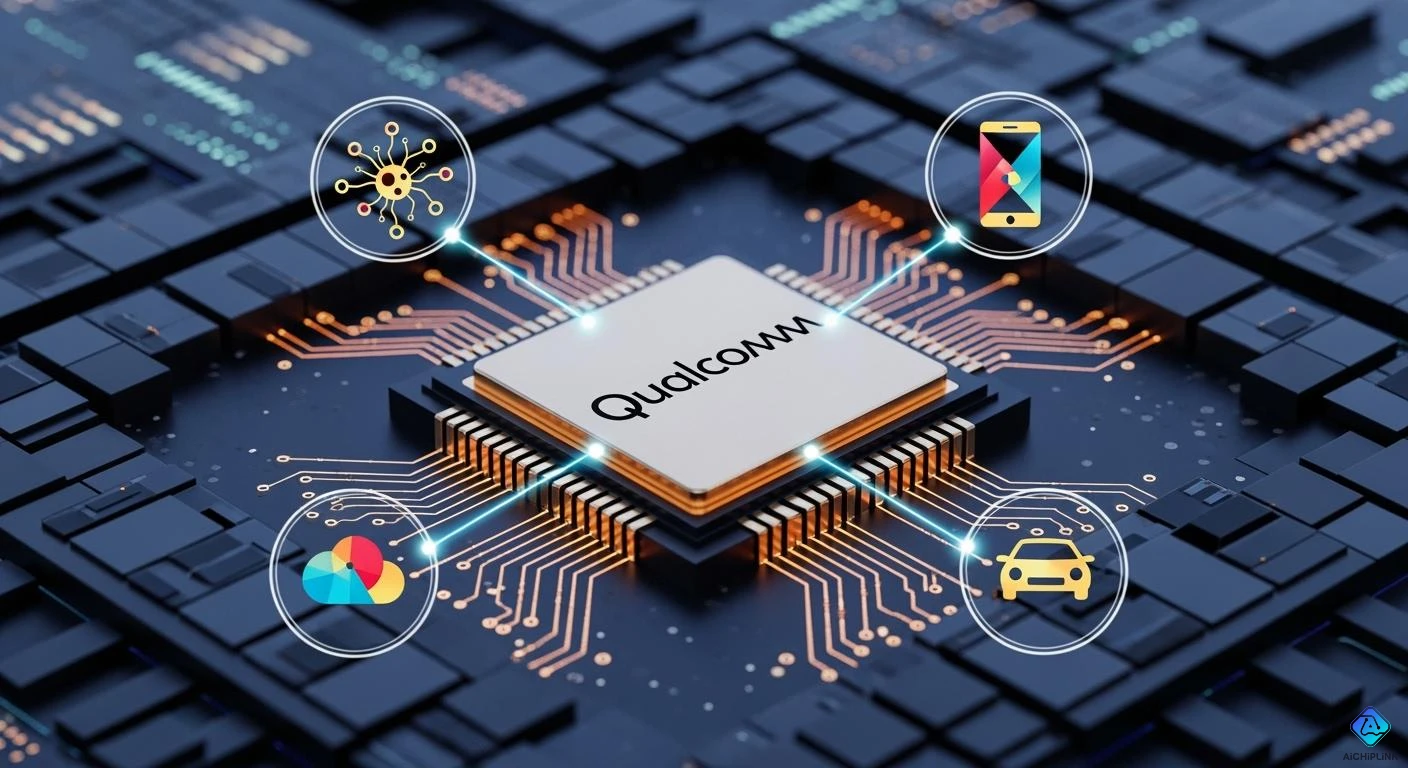
You can see how the Qualcomm AI Strategy stands out from others in the industry. The Qualcomm AI Strategy uses an edge-first, hybrid AI approach, meaning your device handles the intelligent processing instead of relying solely on large data centers. This strategy leverages NPUs for efficient, low-power, and high-speed performance. Additionally, the Qualcomm AI Strategy incorporates LPDDR memory, which helps reduce costs and avoids supply chain issues. AI is deeply integrated into Snapdragon platforms as part of the Qualcomm AI Strategy, and the company is expanding its reach into PCs, automotive, and IoT devices. With the Qualcomm AI Strategy, you get fast, secure, and intelligent AI experiences wherever you use Qualcomm technology.
| Aspect | Qualcomm's Approach (Qualcomm AI Strategy) | Competitors (NVIDIA, Intel, AMD) |
|---|---|---|
| Focus | Edge-first, hybrid AI (Qualcomm AI Strategy) | Mostly focused on data centers |
| NPU Technology | Invests heavily in NPU for low power, high speed | Changes, often uses HBM solutions |
| Memory Strategy | Uses LPDDR memory to lower costs and fix shortages | Usually HBM, which can have supply issues |
| Market Differentiation | Aims for a unique position in data center AI inferencing (Qualcomm AI Strategy) | Big leaders with lots of market share |
| Future Revenue Potential | Expands beyond just phones (Qualcomm AI Strategy) | Strong in markets they already have |
Key Takeaways
-
Qualcomm's edge-first AI strategy helps devices work fast and keep data private. This makes the user experience better.
-
The hybrid AI model uses both the device and the cloud. This gives faster speed, saves money, and keeps data safer.
-
Snapdragon platforms have strong NPUs. These help devices do AI tasks well and quickly.
-
Qualcomm's AI Stack gives developers tools to make and use AI models. These tools work on many different platforms.
-
The focus on low-power computing and good wireless connections helps devices save energy. It also keeps them connected all the time.
Qualcomm AI Strategy Pillars
Edge-First AI Approach
You notice the Qualcomm ai strategy when your device reacts fast. This strategy puts ai processing right on your device. It does not depend on faraway data centers. Qualcomm adds neural processing units (NPUs) to Snapdragon platforms. This ai integration lets your phone, PC, or car act quickly. You get less delay, better privacy, and your device uses power well.
| Pillar | Description | Importance |
|---|---|---|
| AI Integration | NPUs are built into Snapdragon platforms. | On-device AI helps with speed, privacy, and power use. |
| Ubiquitous Connectivity | Solutions connect many technologies together. | Makes design easier and improves the Snapdragon ecosystem. |
| 5G Leadership | Uses 5G for smart edge applications. | Keeps cash flow steady and supports Qualcomm's AI plans. |
When you use a Qualcomm ai strategy device, it processes data right away. Your information stays on your device, so it is private and safe. You do not wait for data to go to the cloud and back. This helps in places where internet is weak or not reliable.
-
Qualcomm bought Edge Impulse, which helps developers make edge ai solutions.
-
The company works with Palantir to build more edge ai software.
-
Qualcomm invests in tools and support for edge intelligence, changing how industrial IoT works.
You see these benefits in real life. In factories, quick insights help control quality. Edge ai means your device works even if the network fails. Keeping data on your device gives you better privacy.
Hybrid AI and Distributed Computing
The Qualcomm ai strategy uses a hybrid model. Your device and the cloud share the ai work. You get fast responses and privacy from on-device ai. The cloud does bigger jobs when needed. This strategy balances speed, cost, and security.
-
On-device ai keeps your data safe and private.
-
You get high performance and quick actions.
-
Doing tasks on your device saves money for you and cloud providers.
-
On-device processing uses less energy, which is good for the planet.
-
Your device learns from you, making your experience more personal.
Qualcomm's hybrid ai model splits work between your device and the cloud. This makes everything faster and smoother. You save money, get better privacy, and your device feels smarter.
Distributed computing is also important. Qualcomm's Cloud AI 100 combines mobile ai and cloud power with 5G. In stores, ai and computer vision can stop theft and help workers. In airports, object detection keeps you safe by tracking things and people.
Sector Expansion: PCs, Automotive, IoT
The Qualcomm ai strategy works in many areas. The company does not only focus on phones. It brings ai to PCs, cars, and the Internet of Things (IoT).
-
Qualcomm expects more PCs with Snapdragon X chips by 2025.
-
The company wants $22 billion in yearly revenue from IoT and cars by 2029.
-
Automotive revenue could reach $9 billion by 2031, growing each year.
Qualcomm's Snapdragon Digital Chassis platform leads in smart cars. Volkswagen Group will use Qualcomm technology for software-defined vehicles. In IoT, Qualcomm made $1.68 billion in Q3 2025, up 24% from last year. Industrial IoT drives much of this growth, and Qualcomm is strong in the global 4G IoT market.
You benefit from this growth. Your PC gets smarter and faster. Your car becomes safer and more connected. Your smart home devices work well together. The Qualcomm ai strategy makes this happen by focusing on ai integration, hybrid models, and distributed computing.
Key Components of Qualcomm AI
Snapdragon Platforms and X Elite
You notice the qualcomm ai strategy when you use Snapdragon devices. These devices have CPUs, GPUs, and NPUs working together. This makes ai processing fast and efficient right on your device. The Snapdragon X Elite is a top performer. It uses a special Oryon CPU that does better than many other CPUs. It works well for both single and multi-task jobs. The NPU in the X Elite can do up to 45 trillion operations each second. This lets your device run big language models with over 13 billion parameters.
| Feature | Description |
|---|---|
| Oryon CPU | Custom CPU with top performance in many tasks |
| Neural Processing Unit | Delivers up to 45 TOPS for ai workloads |
| Large Language Model | Runs models with over 13 billion parameters on-device |
| Advanced GPU | Improves gaming and productivity |
| Windows 11 Support | Runs Windows 11 natively and supports x86 apps |
| Heterogeneous Computing | Shares work across CPU, GPU, and NPU for speed and energy savings |
Snapdragon platforms give you strong performance and long battery life. Devices with Snapdragon X Elite can do ai tasks right on the device. You get quick answers and your data stays private. This supports the qualcomm ai strategy by making on-device ai possible for more people.
Qualcomm AI Stack
The qualcomm ai strategy needs good software tools. The Qualcomm AI Stack has many tools and frameworks for developers. You can use ai frameworks like TensorFlow, PyTorch, and ONNX with this stack. The stack also has special SDKs for cars, robots, IoT, and virtual reality.
| Feature | Description |
|---|---|
| Unified AI Frameworks | Supports TensorFlow, PyTorch, and ONNX for easy model deployment |
| Domain-Specific SDKs | Offers SDKs for cars, robotics, and virtual reality |
| Write-Once-Run-Anywhere | Lets you use the same model on many qualcomm platforms |
| Enhanced Tools | Includes Neural Processing SDK and AIMET for better model efficiency |
You can build and use ai models faster with this stack. The write-once-run-anywhere feature lets you use the same code on different devices. The qualcomm ai strategy uses this stack to help developers and speed up new ideas. The stack also has the Cloud AI 100 processor for big ai jobs in the cloud.
You get more options and flexibility with the qualcomm ai strategy. The stack helps with all steps, from training to using ai models. Tools like the Qualcomm Neural Processing SDK and AIMET make your models smaller and faster. The stack connects with Edge Impulse so you can build ai for edge devices.
Low-Power Compute and Wireless Connectivity
The qualcomm ai strategy cares about saving energy and strong wireless connections. Qualcomm makes low-power compute units that use less energy and last longer. Some units can work for years without a new battery. This saves money and cuts down on maintenance. High-performance units give you fast answers and accurate results. This helps devices like cameras and sensors work better.
-
Low-power compute units help your devices last longer and use less energy.
-
High-performance units give you real-time decision making and better accuracy.
-
Qualcomm invests in camera technology and video processing to improve your experience.
-
The qualcomm ai strategy uses scalable compute for different types of cameras and devices.
Wireless connectivity is important for the qualcomm ai strategy. Qualcomm leads in 5G and other wireless tech. This keeps your devices connected and lets them share data fast. The Snapdragon Digital Chassis uses these features to make cars smarter and safer. You see this in connected cars, smart cameras, and industrial IoT systems.
Note: The qualcomm ai strategy combines low-power compute, strong wireless connections, and advanced ai tools. You get devices that are fast, smart, and save energy.
The qualcomm ai strategy works in many areas like PCs, cars, and IoT. The Snapdragon Digital Chassis shows how qualcomm uses ai to make vehicles safer and more connected. You get better performance, longer battery life, and smarter devices. On-device ai and distributed computing give you fast, private, and reliable ai experiences.
Innovation and Competitive Advantage
Performance and Efficiency
Qualcomm's growth strategy makes your devices work better. The strategy helps ai run faster and use less energy. Snapdragon X Elite gives high performance and saves power. Your laptop lasts longer and runs ai tasks quickly. Cloud AI 100 Ultra uses less energy than many other chips. It beats competitor GPUs in tests. On-device ai gives answers in milliseconds. You do not wait for the cloud. Snapdragon’s smart power management learns your habits. It helps your battery last longer. The Hexagon processor runs ai tasks much faster than before. It uses less power. These changes come from Qualcomm’s plan to focus on ai.
| Metric | Qualcomm Cloud AI 100 | Competitor GPUs |
|---|---|---|
| Power Efficiency | Leading | Lower |
| Performance in MLPerf v3.0 | Top-ranked | Varies |
Security and Privacy
Qualcomm’s growth strategy keeps your privacy safe. On-device ai keeps your data on your device. You stay in control of your information. Personal ai runs on your device, not in the cloud. This keeps your data safe. The platforms meet high privacy standards like SOC2 and HIPAA. The hybrid model lets generative ai run safely on Snapdragon processors. This makes sure your data stays private while you use smart features.
Tip: On-device ai keeps your personal data on your device. You get more security and peace of mind.
Developer Ecosystem and Partnerships
Qualcomm has a strong developer community and good partnerships. The growth strategy gives developers tools like the Qualcomm AI Stack. Partnerships with Advantech bring ai to factories and cities. Working with Google Cloud, Qualcomm helps automakers use generative ai. This makes in-car experiences better. Arduino VENTUNO Q and Dragonwing Robotics Hub help you use generative ai in new projects. These efforts show Qualcomm’s growth strategy supports innovation and the tech ecosystem.
| Partnership | Focus Area | Key Contributions |
|---|---|---|
| Qualcomm & Advantech | Edge AI for IoT | Smarter industry solutions |
| Qualcomm & Google Cloud | Automotive AI Experiences | Better generative ai in vehicles |
Qualcomm’s strategy helps your devices, your car, and your city. The growth strategy brings generative ai to more places. Technology gets smarter and more helpful for everyone.
You can see how Qualcomm’s AI strategy changes technology. The company puts AI on your device. This gives you better privacy and faster speed. You get smarter PCs, cars, and IoT devices. Qualcomm works with strong partners and uses advanced connections. This helps you have smooth experiences in many areas.
| Key Takeaway | What It Means for You |
|---|---|
| On-device Generative AI | Devices are faster, more private, and smarter |
| Hybrid AI Vision | You use both device and cloud AI easily |
| Unified Device Experience | Switching between smart devices is simple |
Qualcomm’s vision brings new ideas and sets rules for the tech world.

Written by Jack Elliott from AIChipLink.
AIChipLink, one of the fastest-growing global independent electronic components distributors in the world, offers millions of products from thousands of manufacturers, and many of our in-stock parts is available to ship same day.
We mainly source and distribute integrated circuit (IC) products of brands such as Broadcom, Microchip, Texas Instruments, Infineon, NXP, Analog Devices, Qualcomm, Intel, etc., which are widely used in communication & network, telecom, industrial control, new energy and automotive electronics.
Empowered by AI, Linked to the Future. Get started on AIChipLink and submit your RFQ online today!
Frequently Asked Questions
What makes Qualcomm’s AI strategy unique?
You see Qualcomm focus on edge-first AI. This means your device does the smart work. You get fast results, better privacy, and less need for cloud connections.
How does Qualcomm support developers?
You can use the Qualcomm AI Stack. It gives you tools, SDKs, and support for many platforms. You build and test AI models faster with these resources.
Why is on-device AI important for privacy?
On-device AI keeps your data on your device. You control your information. This reduces risks from sending data to the cloud.
How does Qualcomm help create an ai-driven connected future?
You benefit from Qualcomm’s work in PCs, cars, and IoT. These devices use AI to connect and share information. This helps you live and work in an ai-driven connected future.