What Makes an MLCC Automotive Grade?
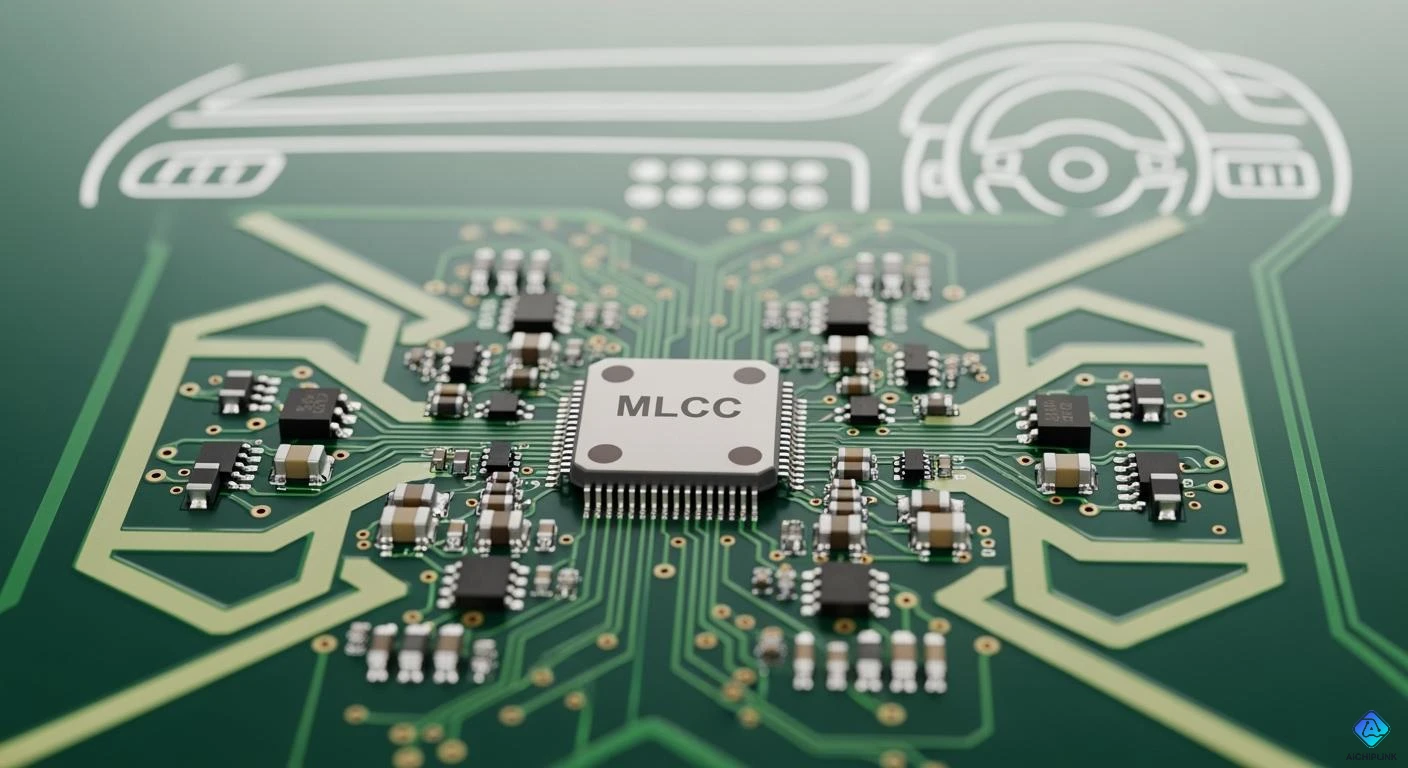
You need parts that work well and are safe when you build cars. The mlcc automotive grade is special because it works in hard places and gives good results. It is small and holds a lot of charge, so it saves space and makes things work better. Each mlcc is tested a lot to make sure it works right. Capacitors can make up to 30% of problems in car systems, and about half of these problems are from cracked mlccs:
-
Capacitors cause up to 30% of problems in the field.
-
About 50% of these problems are from cracked mlccs.
Key Takeaways
-
Automotive-grade MLCCs are small but strong. They hold a lot of charge. They save space in cars.
-
These capacitors are made to be reliable. They can handle high voltages. They work in very hot or cold places. They make sure things work well.
-
Automotive-grade MLCCs go through tough tests. They follow AEC-Q200 standards. This proves they can survive hard conditions. It shows they last a long time.
-
Using automotive-grade MLCCs makes cars safer. They help important systems like airbags. They help battery management too.
-
Picking the right MLCCs for cars lowers the chance of problems. It makes the car work better overall.
Key Features of MLCC Automotive Grade
Miniature Size and High Capacitance
Cars have tight spaces inside. You need parts that fit well. Multilayer ceramic capacitors are small. They can hold a lot of charge. This saves space and helps build better systems. Modern cars use between 3,000 and 5,000 MLCCs. This shows how important these parts are. High-end smartphones use about 1,000 MLCCs. So, cars need even more MLCCs than phones.
Automotive-grade capacitors give high capacitance in a small size. This matters because space is limited. These capacitors help keep power supplies stable. They also filter voltage changes. Stable power is very important for electric cars. Battery management systems need this stability. MLCC automotive grade parts work well even in tough places.
Tip: Making parts smaller lets you add more features to cars. You do not make the car bigger or heavier.
Enhanced Reliability
You want your car electronics to work every time. Automotive-grade MLCCs are made to be reliable. They are strong and can handle high voltages. They resist fast temperature changes. This is important for smoothing and decoupling power lines in ECUs.
MLCCs in cars face problems like humidity and mechanical stress. Humidity can cause migration issues in high-voltage circuits. Cracking can happen during assembly. This lets moisture in and causes breakdowns. Automotive-grade capacitors use soft terminations and special materials like copper-epoxy. These features stop silver migration. They also make the capacitors stronger against bending.
-
Automotive-grade capacitors are used in infotainment, safety systems, electric powertrains, and autonomous driving.
-
Their reliability and small size make them great for places with little space, but where performance must stay high.
Note: If an MLCC fails in a smartphone, you might lose your device. If it fails in a car, the risk is much higher. That is why automotive-grade MLCCs must be very durable and last a long time.
Performance in Harsh Environments
You need parts that work in tough conditions. Automotive-grade MLCCs must handle extreme temperatures, humidity, and vibration. They work from −55 °C to +125 °C. They are made for places with high vibration, like engine compartments.
| Temperature Range |
|---|
| −55 °C to +125 °C |
Multilayer capacitors must keep their electrical properties stable. Co-firing stability stops mechanical stress from thermal expansion. This keeps performance steady over time. If co-firing is not stable, performance drops when temperatures change. Changes in capacitance and impedance can cause problems in car systems.
| Aspect | Impact on Performance |
|---|---|
| Co-Firing Stability | Stops mechanical stress from thermal expansion. This keeps electrical properties steady over time. |
| Thermal Expansion Issues | Unstable co-firing can make performance worse when temperatures change. |
| Variations in Properties | Changes can cause bad variations in capacitance and impedance. This is critical for car reliability. |
Automotive-grade MLCCs help make sure your car electronics work in all conditions. You can trust them for safety and performance.
Automotive Standards and Compliance
AEC-Q200 Qualification
You need to know MLCCs will work in your car. The AEC-Q200 qualification sets rules for automotive-grade capacitors. This standard checks if MLCCs can handle tough conditions. Tests look at temperature changes, humidity, and vibration. These tests make sure the parts stay strong and keep working. The table below lists the main requirements:
| Requirement Type | Description |
|---|---|
| Thermal Cycling | Checks if MLCCs can handle hot and cold. Parts expand and shrink during these tests. |
| Humidity Bias Test | Looks at how MLCCs work in wet places. |
| Vibration and Mechanical Shock | Tests how MLCCs handle shaking and bumps in cars. |
| Material Durability | Makes sure materials stay strong in harsh conditions. |
| Quality Control | Checks every step in making MLCCs to keep quality high. |
Tip: If you see AEC-Q200 on a datasheet, the MLCC passed tough tests for cars.
Traceability and Documentation
You want to know where each MLCC comes from. Automotive-grade MLCCs have good traceability and documentation. Makers keep records for every batch. You get reports about testing, reliability, and design changes. This helps you find problems and fix them fast. The table below compares automotive-grade and commercial-grade MLCCs:
| Feature | Automotive-Grade MLCCs | Commercial-Grade MLCCs |
|---|---|---|
| Testing Requirements | AEC-Q200 standards, lots of testing | Less testing, only basic checks |
| Reliability Level | High reliability for cars | Lower reliability, made for cheaper products |
| Life Test Duration | 1,000 hours | Not listed, usually shorter |
| Notification of Design Change | More updates sent to customers | Fewer updates |
| Primary Electrical Parameters | Checks many things including reliability | Only checks basics like capacitance |
Note: You get more info and help with automotive-grade MLCCs. This helps you build safer cars.
Regulatory Compliance
You must follow rules from industry groups and regulators. Automotive-grade MLCCs meet strict standards. The AEC Q-200 standard covers qualification and testing. Tests check capacitance, dissipation factor, dielectric withstanding voltage, and insulation resistance. Makers test MLCCs for 1,000 hours at high heat and voltage. Sometimes, tests last 2,000 or even 4,000 hours. The table below shows key regulations:
| Regulation/Standard | Description |
|---|---|
| AEC Q-200 | Sets rules for automotive grade MLCCs. Includes tough tests like Destructive Physical Analysis and electrical checks. |
| Testing Parameters | Checks capacitance, dissipation factor, dielectric withstanding voltage, and insulation resistance. |
| Testing Duration | Tests run for 1,000 hours at 125°C with double voltage. Sometimes tests go up to 2,000 or 4,000 hours. |
Alert: If you use MLCCs that do not meet these standards, your car may have failures and safety problems.
Manufacturing and Testing for Automotive-Grade MLCCs
Co-Firing Stability
MLCCs must stay strong when they face heat and stress. Co-firing stability helps make this happen. In the factory, ceramic and metal layers are heated together. This step joins the layers tightly. Good co-firing stops cracks from forming. It also keeps electrical properties steady. MLCCs work well even if temperatures change fast. High temperature ratings are important in cars. If co-firing is not stable, MLCCs can fail in tough places.
Tip: Stable co-firing lets your MLCCs handle quick temperature changes without losing how well they work.
Stringent Process Controls
You want every MLCC to have the same quality. Makers use strict controls to protect the tiny parts. Careful handling and testing keep the parts safe. Quality checks happen at each step. Skipping these steps means more defects and money loss. A good reputation is important in cars. Strong quality control finds problems early. This stops bad MLCCs from going into your car.
-
Quality control costs went up by 12% in 2023.
-
Defect levels are now less than 0.5 parts per million (PPM).
-
The AEC-Q standard series gives rules for car parts.
| Quality Control Step | Purpose |
|---|---|
| Precise Handling | Stops damage |
| Testing Protocols | Checks if parts are good |
| Early Defect Detection | Lowers the chance of failures |
100% Electrical Testing
MLCCs must pass every test to be used in cars. Automotive-grade MLCCs get checked with 100% electrical testing. Every single capacitor is tested for how well it works. Tests include heating and cooling, shaking, and electrical checks. The AEC-Q200 standard has 41 tough tests. Quality control checks every part of making MLCCs. This means MLCCs meet strict rules and work well in cars.
-
Certifications like AEC-Q200 need lots of testing.
-
Makers check for high temperature ratings and electrical strength.
-
You can trust MLCCs that pass these tests to work in hard places.
Alert: Using MLCCs without full testing can cause failures in important car systems.
Why Automotive-Grade MLCCs Matter
Safety and Performance in Vehicles
You trust your car to keep you safe. The mlcc automotive grade helps make this happen. These parts keep power steady so electronics do not break. They block noise from sensors, so your car can see things and avoid crashes. Fast action is needed for airbags and anti-lock brakes. Automotive-grade mlccs help these systems work right when it matters most.
-
They help with battery tech and energy use in ev.
-
They support driver-assistance systems to keep you safe.
Note: Picking the right capacitor for each job helps your car react fast and right in emergencies.
Differences from Commercial Grade
You may ask how mlcc automotive grade is different from normal ones. The table below shows the main ways they are not the same:
| Series | Operating Temperature Range | Temperature Cycle | Humidity Load | Quality Management System |
|---|---|---|---|---|
| RCE (AEC-Q200) | -55~125°C | 1000 cycles | 85°C, 85%, Rated voltage×100%, 1000 hours | IATF16949 |
| RHE (AEC-Q200) | -55~150°C (up to 2000 hrs) | N/A | N/A | AEC-Q200 |
| RDE (non-compliant) | -55~125°C | 5 cycles | 40°C, 90~95%, Rated voltage×100%, 500 hours | ISO9001 |
Automotive-grade mlccs can take more stress and last longer than regular ones. They follow strict rules and work in hard places. You get better trust for your ev and car systems.
Application Examples
You find mlcc automotive grade parts in many spots in your car. Here are some places you see them:
-
Electric vehicles (ev)
-
Autonomous driving systems
-
Advanced driver-assistance systems
-
Vehicle infotainment systems
-
Sensor arrays
-
Battery management systems
These mlcc parts keep power steady in electric cars and block noise in infotainment. They also help safety systems send clear signals, so your car works well. You can count on these parts to keep your car safe and working.
Tip: Using mlcc automotive grade in your ev means fewer problems, longer part life, and better performance everywhere.
You need MLCCs that follow strict rules for your car. Automotive-grade MLCCs are very reliable. They work in hot and cold places. They can handle lots of stress. The table below shows what is important:
| Attribute | Description |
|---|---|
| Reliability Standards | Automotive MLCCs must meet high reliability standards. |
| Temperature Range | They work from -55°C to +150°C. |
| Stress Tolerance | They can take mechanical stress, vibration, and electromagnetic interference. |
| Testing Standards | Makers test them for a long time. They check for failures and use new materials. |
| Safety Requirements | There can be no defects in important car parts. |
You should pick automotive-grade MLCCs because:
-
They last more than 20 years and keep your car safe.
-
They work well in electric powertrains and ADAS.
-
They meet strict quality and testing rules.
Tip: Using automotive-grade MLCCs makes your car work better and keeps you safe.

Written by Jack Elliott from AIChipLink.
AIChipLink, one of the fastest-growing global independent electronic components distributors in the world, offers millions of products from thousands of manufacturers, and many of our in-stock parts is available to ship same day.
We mainly source and distribute integrated circuit (IC) products of brands such as Broadcom, Microchip, Texas Instruments, Infineon, NXP, Analog Devices, Qualcomm, Intel, etc., which are widely used in communication & network, telecom, industrial control, new energy and automotive electronics.
Empowered by AI, Linked to the Future. Get started on AIChipLink and submit your RFQ online today!
Frequently Asked Questions
What does "automotive grade" mean for MLCCs?
"Automotive grade" means these capacitors pass hard tests for cars. These MLCCs can handle heat, shaking, and stress. You can count on them to work in tough spots.
How do automotive MLCCs differ from commercial MLCCs?
Automotive MLCCs last longer and work in harsh places. They go through more tests and use better materials. Commercial MLCCs are for easier jobs and do not meet car rules.
Why do cars need so many MLCCs?
MLCCs are in almost every part of a car. They keep power steady, clean up signals, and protect electronics. Modern cars use thousands of MLCCs for safety and good performance.
Can you use commercial MLCCs in vehicles?
Do not use commercial MLCCs in cars. They might break in high heat or when the car shakes. Always choose automotive-grade MLCCs to keep cars safe.


