Why AI Servers Need So Many MLCCs
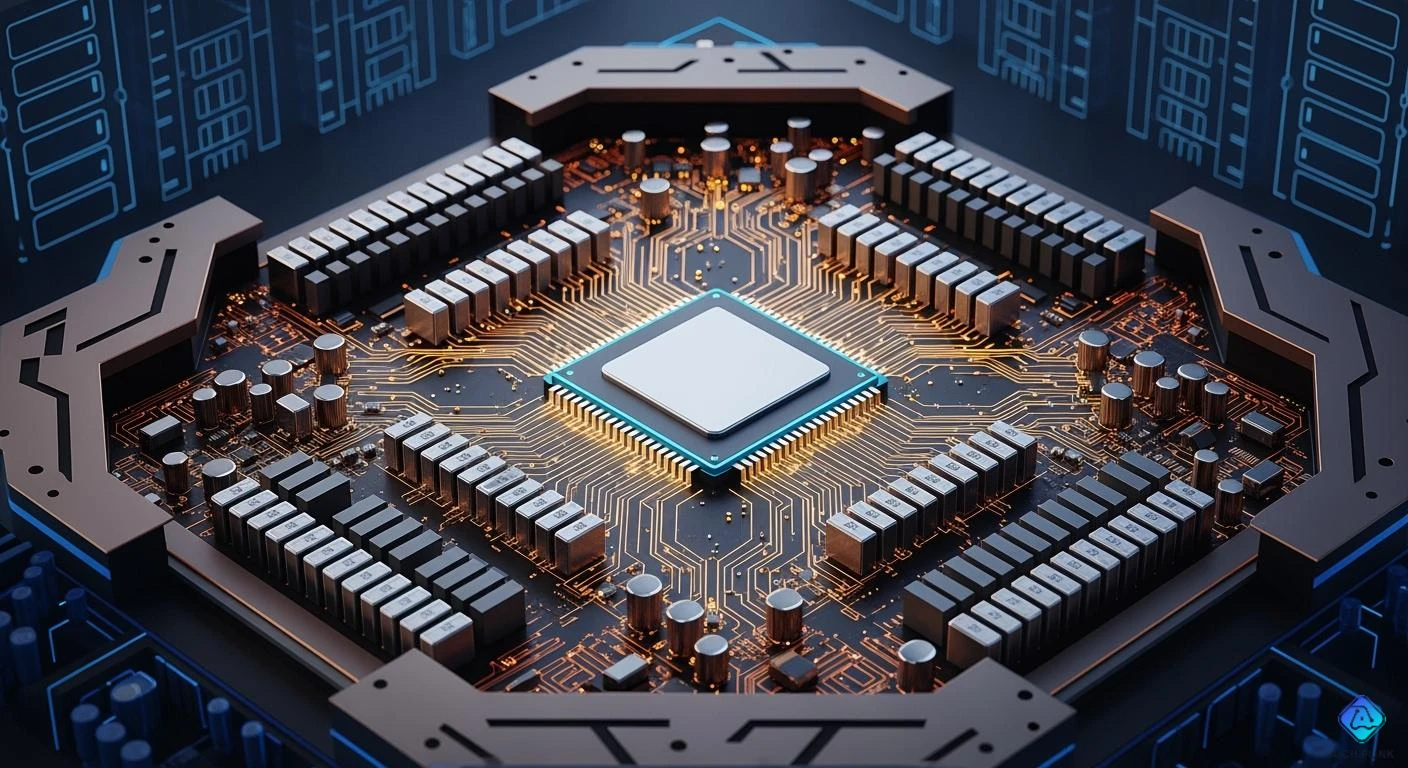
You can find MLCCs all over inside AI servers. These small parts help keep power steady and signals clear. AI data centers use up to 25,000 MLCCs in one server. Regular servers only use about 2,000 MLCCs. MLCCs are about 0.5% of the total cost for AI GPU boards. This amount will get twice as big soon. When you learn about AI, you will see MLCCs help every server work well and last longer.
| Server Type | Number of MLCCs |
|---|---|
| General Server | 2,000 |
| AI Server | 25,000 |
Key Takeaways
-
AI servers need up to 25,000 MLCCs. This is much more than the 2,000 used in normal servers. These MLCCs help keep power steady and signals clear.
-
MLCCs are small and very reliable. They can handle high voltage. This makes them important for fast AI chips and good server performance.
-
More people want MLCCs as AI servers become more common. New designs help give power better and make servers more reliable.
-
MLCCs stop voltage drops and noise. This keeps data safe and lets AI work faster.
-
Buying good MLCCs can help servers last longer and work better. This makes them a smart and cheap choice for AI hardware.
MLCCs In AI Servers
MLCC Basics
You might ask why MLCCs matter so much in electronics. MLCC means multi-layer ceramic capacitors. These small parts can quickly store and give out energy. You see them in almost every electronic gadget. MLCCs have special things that make them great for ai servers:
-
They can hold a lot of energy for their size.
-
They are very reliable and help ai servers work well.
-
They have low ESR, which saves energy and makes things work better.
-
They can handle high voltage, which is needed for ai hardware.
-
They can work even when it gets really hot.
These things help MLCCs support the fast chips inside ai servers.
Role In AI Server Hardware
If you open an ai server, you will see many MLCCs near the main chips. Engineers put them close to the chips to act as energy helpers. This keeps the voltage steady and stops sudden drops that could hurt the server. MLCCs also block noise and keep signals clear. This is important for ai jobs that need fast and correct data.
MLCCs are very important for filtering power and decoupling. Their low ESR and low ESL help keep power steady and signals strong.
New MLCCs are even smaller and work better. Some use special packaging to put many MLCCs together. This saves space and helps with heat. Because of these changes, more MLCCs can fit on ai server boards. This gets them ready for new and stronger ai uses.
AI Servers: MLCC Demand
Power Delivery Challenges
AI servers work much harder than regular servers. They run AI programs that need lots of power. AI data centers use over 100 kW in each rack. Regular racks only use 7 to 10 kW. This big difference means AI servers need fast and steady energy.
| Feature | Traditional Data Center | AI Data Center |
|---|---|---|
| Primary Functions | General-purpose IT services | AI/ML model training and inference |
| Workload Pattern | Stable, predictable workloads | Dynamic, bursty, data-intensive workloads |
| Rack Power Density | 7 kW - 10 kW/rack | 30 kW - over 100 kW/rack |
AI jobs change quickly. They can use lots of power in seconds. This puts stress on the power grid. It makes giving power to servers harder. MLCCs help fix these problems. They keep voltage steady and block noise. You find thousands of MLCCs on each AI server board. They handle these tough jobs.
MLCCs are very important for keeping power steady. They make sure power stays clean and reliable for AI work.
Fast Transient Loads
AI chips like GPUs and TPUs change power needs fast. They go from low to high current quickly. These fast changes happen during hard AI tasks.
-
Current gets much higher during AI jobs.
-
Voltage can get unstable because of resistance and inductance.
-
MLCCs act as helpers. They protect chips from sudden changes and keep voltage steady.
You depend on MLCCs to handle these quick shifts. High-frequency MLCCs help control voltage during fast changes. Mid-frequency capacitors connect regulators and high-frequency parts. Bulk capacitors keep power steady at the supply.
MLCCs are not always perfect. Sometimes, silicon capacitors work better for very fast loads. Still, MLCCs are used most often in AI server boards.
Dense Board Design
AI servers have lots of chips and parts packed together. Engineers fit more pieces in less space. This means they need smaller and stronger MLCCs. Companies like Murata make tiny MLCCs. For example, the 47µF capacitor fits in a 0402-inch size. These go close to hot chips and keep power steady.
-
Small MLCCs let you put more capacitors in tight spots.
-
They work well near hot AI chips.
-
You get more capacitance without using extra space.
Dense boards help AI jobs run faster and better. You depend on MLCCs to support these designs. As AI hardware grows, you will see even more MLCCs on each board.
MLCCs help AI servers get ready for new and strong AI jobs. They support fast chips and keep everything working well.
AI servers need thousands to millions of MLCCs. This is because AI chips need fast, steady power and tight designs. MLCCs help meet these needs and keep AI server demand growing.
AI Server Growth And The AI MLCC Market
Market Trends
More companies are using AI, and the world is changing fast. The global AI server market was $128 billion in 2024. Experts think it will reach $1.56 trillion by 2034. This means the market will grow about 28% every year. The COVID-19 pandemic made this growth even faster. Many businesses started using more cloud services and AI tools.
-
New data centers around the world now have AI server racks.
-
Companies want more power and faster computers for AI jobs.
-
The need for high-quality MLCCs keeps going up as AI servers grow.
The ai mlcc market is also changing a lot. High-spec MLCCs are hard to find now. It takes longer to get them, and prices are rising. The ai mlcc supply chain has new problems. Makers must plan early and work with more suppliers. Buying at the last minute is risky because demand is so high.
| Segment | Main Demand Drivers | Market Trends |
|---|---|---|
| High-Spec MLCC | AI servers, data centers, EVs, 5G, industrial automation | Tight supply, long wait times, higher prices, high use of factories (>80%) |
| General Consumer MLCC | Smartphones, PCs, traditional electronics | Slow demand recovery, too much inventory, tough competition, not much pricing power |
The ai mlcc market is growing because AI servers need more and better MLCCs. This growth changes prices, supply, and how companies plan for the future.
Impact Of Rising AI Server Deployments
AI servers use way more MLCCs than regular servers. They use 10 to 15 times more MLCCs than general-purpose servers. This big jump is because AI jobs need steady power and fast data.
| Server Type | Average Number of MLCCs Used |
|---|---|
| AI Servers | 10 to 15 times more |
| General-Purpose Servers | A lot fewer |
New AI servers need over 30,000 MLCCs each. Old servers use only 5,000 to 10,000. Some boards, like Nvidia Rubin, use about 12,000 MLCCs. This shows how much the ai mlcc market depends on AI server growth.
| Server Type | MLCCs Required |
|---|---|
| Traditional Server | 5,000 - 10,000 |
| New-Generation AI Server | Over 30,000 |
| Nvidia Rubin Board | About 12,000 |
The ai mlcc market has more problems as demand grows. High-end MLCCs are harder to make. They need hundreds of thin layers, sometimes less than one micrometer thick. Only 40-60% of these parts pass tests. This makes it hard to keep up with AI server growth.
-
More companies are working together to fix these problems.
-
MLCC makers buy other companies to get better at making high-end parts.
-
AI server makers plan early and use more than one supplier.
The ai mlcc market will keep growing as more AI server racks are built. If you use fewer MLCCs, you help the environment by saving material and energy.
You are part of this growth story. When you use more AI, you help the ai mlcc market grow.
MLCCs: Performance Impact
Reliability And Uptime
MLCCs help your AI servers keep working without stopping. These capacitors let your server handle hard jobs and sudden power changes. Using thousands of MLCCs in each AI server makes them more reliable. This means servers stay on longer. Data centers use between 15,000 and 25,000 MLCCs in each server. By 2030, this number will be more than three times bigger. This shows MLCCs are very important for stable servers.
-
MLCCs change to match power needs right away.
-
They use layers to block power noise and keep signals strong.
-
Smart sensors inside MLCCs can warn about problems before they happen.
-
Custom capacitor designs make servers up to 27% more reliable and parts last almost twice as long.
| Key Capability | Description |
|---|---|
| Real-time dynamic current compensation | Changes to match different loads and keeps power steady. |
| Layered capacitance architecture | Blocks power noise at different speeds and keeps signals clear. |
| Integration of smart monitoring sensors | Helps find problems early and makes the system more reliable. |
| Custom capacitor topologies | Makes servers up to 27% more reliable and parts last 1.8 times longer. |
MLCCs help your AI hardware keep working even when jobs get hard.
Data Integrity And Speed
MLCCs help keep your data safe and your AI jobs fast. Using more MLCCs gives better power filtering and conversion. This keeps voltage steady and helps servers work quickly. The NVIDIA GB300 model uses about 30,000 MLCCs. One AI rack can have over 440,000 MLCCs. Regular servers use only about 2,200 MLCCs. This shows AI servers use many more MLCCs.
-
MLCCs stop voltage drops and harmonics that cause errors.
-
They keep your data clean and your AI jobs fast.
-
High-capacitance MLCCs near processors lower voltage swings and make signals better.
-
Automotive-grade MLCCs work well even when it gets hot.
| Failure Mode | Description | Impact on System Performance |
|---|---|---|
| Thermal shock during reflow | Fast temperature changes stress the layers inside. | Can cause cracks and hurt performance. |
| PCB flexure stress | Bending the board strains the ceramic parts. | May break signals and make performance worse. |
| Microcrack propagation | Small defects grow when voltage stays high. | Can cause breakdowns or shorts and hurt performance. |
MLCCs protect your data and keep your AI jobs fast and correct.
MLCCs Vs Other Capacitors
Alternative Technologies
You might wonder if other capacitors can do what MLCCs do in your server. Tantalum and aluminum electrolytic capacitors are also used a lot. Each kind has things it does well and things it does not. Look at the table below to see how they are different:
| Capacitor Type | Capacitance Stability | Voltage Dependence | Mechanical Properties |
|---|---|---|---|
| Tantalum Capacitors | Linear change with temperature, stable capacitance | Full capacitance as advertised, less tolerance | Less damaging when failing, gradual capacitance reduction |
| Aluminum Electrolytic | Gradual capacitance reduction, less damaging | N/A | Bursts or swells without damaging circuit |
| Multilayer Ceramic (MLCC) | Significant capacitance decrease with voltage | Decreases as voltage increases | N/A |
Tantalum capacitors keep their capacitance steady and handle heat changes well. Aluminum electrolytic capacitors lose capacitance slowly, but they do not usually hurt your circuit if they break. MLCCs can lose capacitance when voltage goes up, but they still work for many jobs.
Note: You should always pick the best capacitor for your project. Each type works best in different spots on your board.
Why MLCCs Are Preferred
You see MLCCs most often on ai server boards. They have many good points compared to other capacitors. MLCCs cost less to make and buy. They also last longer, even when your server gets hot or works for a long time. This makes them a smart pick for boards with lots of parts.
Here is a quick look at why MLCCs are special:
| Advantage | MLCCs | Other Capacitors |
|---|---|---|
| Cost-Effectiveness | High due to lower material costs | Generally higher due to materials and manufacturing processes |
| Reliability | High reliability in long-term use | Varies significantly, often lower in high-temperature environments |
| Performance in High-Density Applications | Excellent, suitable for AI servers | May not perform as well under similar conditions |
MLCCs fit in small spaces and work well with fast chips. You get better performance and lower costs. That is why engineers pick MLCCs for most ai hardware designs.
Tip: When you use MLCCs, your server can run faster, stay cooler, and last longer.
You need MLCCs in ai servers to keep power steady and signals clear. They also help your server work well.
-
Tiny MLCCs let you put more parts in small spaces. This helps fast chips get the power they need.
-
Putting MLCCs in the right spots and using new designs stops mistakes and makes servers last longer.
-
The MLCC market gets bigger as more companies make better ai servers.
| Feature | Benefit |
|---|---|
| Ultra-small form factor | Lets you add more parts and get more energy. |
| High voltage rating | Works with new ways to give power. |
| Wide temperature range | Keeps working even when it gets very hot or cold. |
New MLCC ideas will help you use the next big AI hardware.

Written by Jack Elliott from AIChipLink.
AIChipLink, one of the fastest-growing global independent electronic components distributors in the world, offers millions of products from thousands of manufacturers, and many of our in-stock parts is available to ship same day.
We mainly source and distribute integrated circuit (IC) products of brands such as Broadcom, Microchip, Texas Instruments, Infineon, NXP, Analog Devices, Qualcomm, Intel, etc., which are widely used in communication & network, telecom, industrial control, new energy and automotive electronics.
Empowered by AI, Linked to the Future. Get started on AIChipLink and submit your RFQ online today!
Frequently Asked Questions
What does MLCC stand for?
MLCC stands for Multi-Layer Ceramic Capacitor. You find these parts in almost every electronic device. They can quickly store and give out energy. MLCCs help your AI server work better.
Why do AI servers need so many MLCCs?
AI servers use strong chips. These chips need steady power and clean signals. You need thousands of MLCCs to keep things working well. More MLCCs make your server more reliable.
Can you use other capacitors instead of MLCCs?
You can use other capacitors like tantalum or aluminum electrolytic. MLCCs are best for AI servers because they are small, reliable, and handle fast power changes.
How do MLCCs affect server speed?
* MLCCs filter power and block noise. * They keep voltage steady. * Your server runs faster and avoids errors.