How to Select Industrial Ethernet Chips for ESS Applications
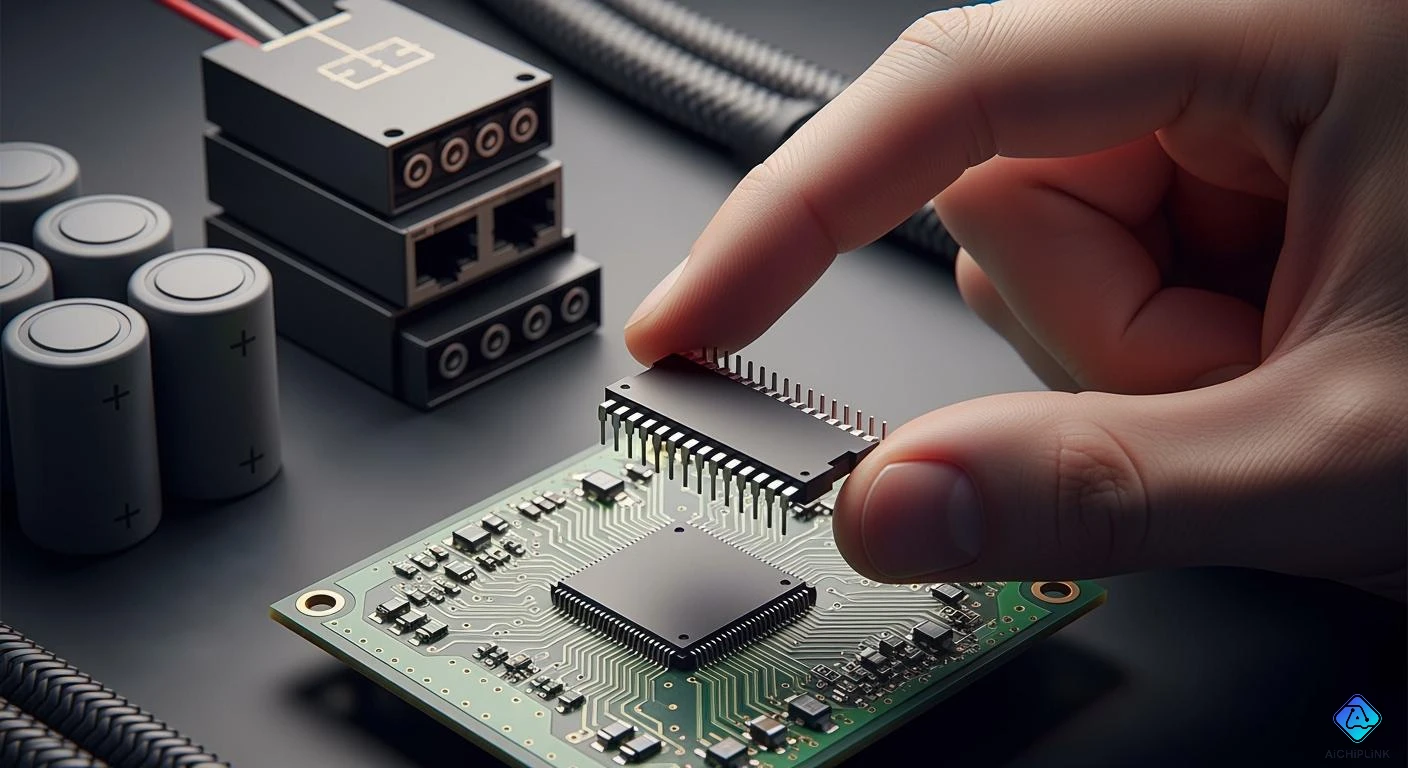
You should pay attention to reliability, protocol support, and environmental durability when picking Industrial Ethernet Chips for ESS. Energy storage systems need chips that work well in tough places. You have to choose chips that can deal with changes in temperature, vibration, and humidity. It is important to make sure the supply chain stays steady, so picking chips that will last helps stop problems. These things help your system stay safe and work well.
Key Takeaways
-
Pick industrial Ethernet chips that support the right protocols. Make sure they work with Profinet, Modbus, and IEC104. This helps devices talk to each other well.
-
Choose chips that are reliable and last a long time. Chips with high MTBF break down less often. This means less downtime and lower maintenance costs.
-
Get chips that can handle tough environments. Look for chips that work in hot and cold places. They should also resist shock, dust, and moisture.
-
Think about how long you can get these chips. Pick suppliers who have steady supply chains. This helps keep production running without problems.
-
Check if you need managed or unmanaged switches. Managed switches let you control and watch the network better. This makes the network more reliable.
Key Criteria for Industrial Ethernet Chips
Protocol Support and Compatibility
You need to see which protocols the chips support before picking one. Factories often use Profinet, Modbus, IEC104, and Ethernet/IP. Each protocol needs different things. Profinet needs special hardware to talk in real time. Regular controllers cannot do Profinet IRT timing. You must use chips with ASICs or FPGAs for this job. Ethernet/IP works with normal hardware, but you need switches that handle multicast traffic well. IGMP Snooping helps stop packet loss and flooding.
-
Modbus protocol support is needed for many energy storage systems.
-
IEC104 protocol support is important for talking to power grid devices.
-
Profinet and Ethernet/IP are used a lot in industrial automation.
-
High-availability protocols like HSR and PRP keep the network working during failures.
Single Pair Ethernet (SPE) is getting more popular in factories. SPE lets you connect devices with fewer wires and longer cables. You should pick chips that support SPE if you want your system ready for the future.
Tip: Always check the datasheet for protocol support. Make sure the chip works with all the protocols your system uses.
Reliability and Uptime
You want your energy storage system to work without stopping. Reliability is very important when you pick industrial ethernet chips. Chips with high mean time between failures (MTBF) last longer and help stop downtime. The LINK-PP LS-MM3101-02I SFP module has high MTBF ratings. This is because of good parts and strong testing. You should pick chips that meet or go above OEM reliability standards.
Industrial chips also need to meet strict safety rules. IEC 61508 gives rules for functional safety. Chips that follow Safety Integrity Levels (SIL) help protect your system from problems. You should look for chips that meet these safety rules.
Note: Reliable chips keep your system working and help you avoid expensive repairs.
Environmental Factors
Factories can be tough places. You must pick chips that can handle hot, cold, shaking, and wet air. Energy storage systems often work outside or in busy factories. Chips need to work well in these hard places.
-
Chips should work in wide temperature ranges.
-
Chips must resist shaking and shock.
-
Chips need to be safe from water and dust.
You should check for certifications that show the chip can survive in factories. Look for chips tested for tough temperature and humidity.
Callout: Chips that survive hard places help your system stay safe and steady.
Long-Term Availability
You want your system to last a long time. Long-term availability is important for industrial ethernet chips. You should pick chips from suppliers with steady supply chains. This helps you avoid trouble if a chip is not made anymore.
-
Pick chips with promised production lifecycles.
-
Choose suppliers with good reputations.
-
Check for support and updates that last.
You should also think about the future. Chips that support new things like SPE will help your system stay up to date. Good supply chains and strong chips keep your energy storage system working well.
Tip: Ask your supplier about how long they will support the chip and manage its lifecycle.
Comparing Industrial Ethernet Chips and Switches
Managed vs Unmanaged Switches
You have to pick between managed and unmanaged switches for your energy storage system. Managed switches let you watch and control your network. You can make VLANs, use access lists, and check what devices do. Unmanaged switches are simple and work right away. They do not have special features or ways to watch the network. The table below shows how they are different:
| Feature/Performance | Managed Switches | Unmanaged Switches |
|---|---|---|
| Cybersecurity | Enhanced security features including VLAN and ACL | Basic security, no advanced features |
| Configuration | Web-based, customizable | Plug-and-play, no configuration required |
| Control Mechanisms | Extensive control for data distribution and bandwidth management | Limited to basic protocols like autonegotiation |
| Monitoring | Supports syslog, SNMP, Modbus TCP | No monitoring capabilities |
Managed switches help you find and fix problems fast. They use SNMP to check if the network is healthy. Unmanaged switches just send ethernet frames. You cannot see how well they work or find problems easily. Managed switches make big networks more reliable.
Redundancy and Failover
You want your switch to keep working if something fails. Redundancy is very important in factories. High-availability protocols like HSR and PRP help your network recover quickly if a cable or device stops working. Managed switches can use these protocols. They help your energy storage system stay online. You can use more than one switch and path to make your network stronger. This setup keeps your system from stopping.
Tip: Always check if your switch has redundancy features. Reliable networks keep your energy storage safe.
Power Input Options
You need to choose the right power input for your switch. Power over Ethernet (PoE) lets you send power and data in one cable. This makes setting up easier and uses less wiring. PoE switches can give up to 100W for each port. Devices talk to each other to get the power they need. IEEE P802.3bt makes sure high-power devices work with the switch.
The table below shows common PoE options:
| Power Input Option | Description | Power Output |
|---|---|---|
| PoE (IEEE802.3af) | Provides regulated DC power through handshaking with PSE | ~13 Watts |
| PoE Plus (IEEE802.3at) | Upgrades capability for higher wattage | Up to 30 Watts |
| PoE Type 3 (IEEE P802.3bt) | Supports devices requiring higher power | 60 Watts |
| PoE Type 4 (IEEE P802.3bt) | Further increases power supply capability | 100 Watts |

PoE makes cabling easier in factories. You can use Cat5e or Cat6a cables for better results. Higher power lets you use more demanding machines in factories. Pick the right power option for your needs.
Environmental and Reliability Factors
Thermal Management
It is important to keep chips cool. Hot chips can break and not work well. In energy storage systems, there are two main ways to cool chips. Liquid-cooling uses special pipes and strong boxes to protect chips. Air-cooling uses smart designs to move heat away from chips. Both ways help chips work in tough places.
| Thermal Management Solution | Key Features |
|---|---|
| Liquid-cooling | IP65 enclosure protection, high capacity battery cells, PACK level fire protection, high-efficiency liquid-cooling channel design |
| Air-cooling | Modular integration, rationalized design for heat dissipation, harmonica tube solution for improved efficiency |
Most chips have thermal protection. Chips will turn off or slow down if they get too hot. This protection starts between 85°C and 125°C, depending on the chip.
-
Liquid-cooling is best for big power systems.
-
Air-cooling is used in smaller setups.
Tip: Always check the chip’s datasheet for its safe temperature range.
Mechanical Robustness
Factories can be rough places. Chips and switches must handle shock, shaking, dust, and water. Look for devices with strong cases and special connectors. Many switches use IP67-rated aluminum cases. These cases keep out dirt and water. M12 connectors give extra safety and keep connections tight.
| Feature | Description |
|---|---|
| Shock and Vibration Resistance | Reliable performance under vibration and shock. |
| Connectors | Eight 10/100BASE-TX auto-negotiation waterproof/dustproof M12 connectors. |
| Environmental Protection | IP67-rated aluminum case for humidity, dirt, dust, shock, and vibrations. |
| Mounting Options | DIN-rail or wall mounting for efficient cabinet use. |
| Power Output | Each PoE+ port provides 36 watts of PoE output. |
| Compatibility | Supports PROFINET traffic pass-through with QoS for industrial automation systems. |
Always check for these features to keep your network strong and safe.
Power Quality and Protection
Good power keeps chips safe. You must protect devices from electrical noise and surges. Many systems follow strict rules for electromagnetic interference and compatibility. Look for chips and switches that meet MIL-STD-461 and DO-160 standards. These rules help chips work well even with lots of electrical noise.
| Feature | Description |
|---|---|
| EMI/EMC Compliance | Meets MIL-STD-461 and DO-160 standards for electromagnetic interference. |
| Power Filtering | Input/output power filtering ensures EMI/EMC compliance. |
| Environmental Testing Standards | Includes MIL-STD-704, MIL-STD-1275, and DO-160 for various applications. |
| Testing Facilities | Testing at certified labs with detailed reports. |
Note: Always ask your supplier about testing and certifications. This helps you make sure your ethernet network will last in any industrial setting.
Supply Chain and Quality Assurance
Sourcing and Lifecycle Management
You need a good plan to get industrial ethernet chips and switches. Supply chain visibility means you know where your parts come from. It also helps you know how long they will last. You can tell suppliers what you need ahead of time. This helps them make enough parts and avoid running out. Working with suppliers lowers risks. You can react faster if something changes. Performance metrics help you see which parts might have problems. You can check if any parts are almost at the end of their life. You can also see if you depend too much on one supplier. Risk management helps you find problems early. You can stop issues from parts running out or suppliers having trouble.
-
Supply chain visibility helps you plan better.
-
Working with suppliers helps you act fast.
-
Performance metrics show which parts are risky.
-
Risk management stops supply chain problems.
Supplier Evaluation
You need to pick suppliers who are reliable and make good products. Look for suppliers who have supported industrial ethernet switch products for a long time. You can check how well they do by looking at delivery times and product quality. Keep watching how suppliers do over time. This helps you find problems early. You can ask suppliers if they will support you in the future. Good suppliers keep your systems working. Stay away from suppliers who change products a lot or stop making them without warning.
Tip: Always ask about lifecycle support and read supplier reviews before you choose.
Testing and Certification
Testing and certification show your industrial ethernet chips and switches meet the rules. You must follow steps to get certified. The table below shows the steps for PROFINET certification:
| Step | Description |
|---|---|
| 1 | Get a vendor ID from PI before testing. |
| 2 | Do a system test using PROFINET tools like PLC or ProfinetCommander. |
| 3 | Get tested at a PI test lab using the right steps. |
| 4 | Make sure your device works with PROFINET and other devices. |
| 5 | Get a certificate when you pass all the tests. |
| 6 | Get CE and/or UL certification on your own. |
You must test all connections, like power, RS485, and ethernet. The test level depends on where you use the device. Substations need Level 4 tests. Most factories use Level 3. If a device fails ESD testing, it might restart and lose data. This happened at a wind farm when a converter failed. It caused a 12-hour outage. You must pick the right test level to keep your network safe.
Note: Certification makes sure your system meets world standards and helps you avoid big problems.
You can pick the best industrial Ethernet chips and switches for ESS if you follow easy steps. First, look at this table of important steps:
| Key Step | Description |
|---|---|
| Assess Availability and Lifecycle | Make sure parts will be around and not run out. |
| Quality Control and Testing | Test switches well so they work right and last longer. |
| Evaluate Environmental Requirements | Choose chips that fit where you will use them for best results. |
| Vendor Reputation and Support | Pick vendors who make good products and help you when needed. |
Always think about protocol support, how reliable the chips are, and if they can handle tough places. Use a checklist for each project you do. Pick strong chips that will work well in the future.

Written by Jack Elliott from AIChipLink.
AIChipLink, one of the fastest-growing global independent electronic components distributors in the world, offers millions of products from thousands of manufacturers, and many of our in-stock parts is available to ship same day.
We mainly source and distribute integrated circuit (IC) products of brands such as Broadcom, Microchip, Texas Instruments, Infineon, NXP, Analog Devices, Qualcomm, Intel, etc., which are widely used in communication & network, telecom, industrial control, new energy and automotive electronics.
Empowered by AI, Linked to the Future. Get started on AIChipLink and submit your RFQ online today!
Frequently Asked Questions
What makes an industrial ethernet chip different from a regular chip?
Industrial ethernet chips are built to be tougher. They can handle very hot or cold places. These chips also work well with dust and shaking. They last longer in rough spots. You can count on them for energy storage systems and other factory jobs.
Why do energy storage systems need special industrial ethernet solutions?
Energy storage systems need steady communication. Industrial ethernet chips help keep the network strong. They support key protocols and work in hard places. This helps stop downtime and keeps your system safe.
How do I know if an industrial ethernet chip supports the right protocols?
You should read the datasheet for each chip. Look for protocol names like Profinet or Modbus. Most industrial ethernet chips list their supported protocols. You can also ask your supplier for more information.
Can I use unmanaged switches in industrial ethernet networks?
Unmanaged switches work for simple networks. For big or important networks, managed switches are better. They give you more control and help you find problems fast. This keeps your network working well.
What certifications should I look for in industrial ethernet chips?
Look for certifications like CE, UL, or IEC. These show the chip meets safety and quality rules. Chips with these marks work well in factories and energy storage systems.