How do you implement STM32 microcontrollers in energy storage applications
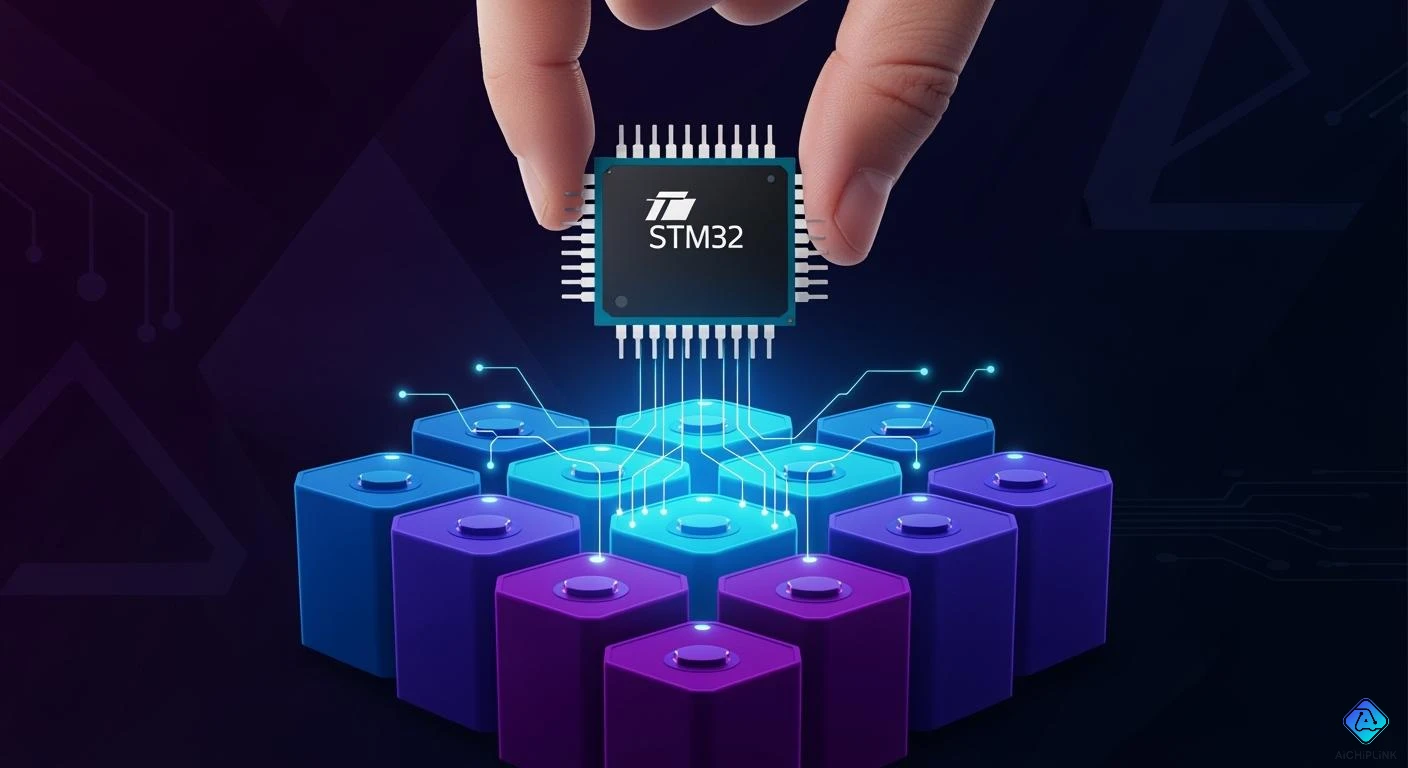
You want to create energy storage applications that operate efficiently and consume less power. STM32 microcontrollers assist you in achieving this goal. These microcontrollers are unique because they combine advanced energy metering with real-time monitoring. STM32 microcontrollers also facilitate smart energy management. You can rely on STM32 for effective control of energy storage applications. With STM32 microcontrollers, you benefit from lower power consumption and improved system performance. When you choose STM32, you select microcontrollers you can trust for your energy storage needs.
Key Takeaways
-
STM32 microcontrollers help energy storage systems work better. They give correct energy readings and watch things in real time. This helps the system run well.
-
Use low-power modes in STM32 microcontrollers to make batteries last longer. This also helps use less energy in your projects.
-
Pick the right STM32 microcontroller for your project. Think about how fast it works, how much memory it has, and what extra parts it supports.
-
Make good firmware to control power use. This lets STM32 microcontrollers change between working and saving power fast.
-
Link STM32 microcontrollers to IoT networks for better data. This helps manage energy in a smart way and makes the system work better.
STM32’s Role in Energy Storage Applications
Advanced Energy Metering
STM32 microcontrollers help measure energy very accurately. They help control how batteries charge and discharge. STM32 microcontrollers check voltage, current, temperature, and State of Health in energy storage systems. They stop batteries from getting too full or too empty. STM32 microcontrollers also protect batteries from short circuits. This keeps batteries safe and helps them last longer.
STM32 microcontrollers have ADCs that turn analog signals into digital data. You can use DACs to make analog signals for different jobs. These features make STM32 microcontrollers great for advanced energy storage. You can use low-power modes to save energy. These modes help your devices work longer.
Tip: STM32 microcontrollers can make batteries work better and need less fixing in your systems.
Real-Time Monitoring and Analytics
STM32 microcontrollers are good for real-time monitoring in energy storage. They check important things like voltage, current, and temperature. STM32 microcontrollers also check State of Health to show how your battery is doing. They react fast to changes and help stop problems before they happen.
STM32 microcontrollers can talk to other devices. You can connect energy storage systems to IoT networks and battery management systems. This lets you collect data, study trends, and make smart choices. STM32 microcontrollers have low-power modes, like Stop Mode that uses only 6 µA. You can wake them up quickly, which is important for IoT and advanced energy storage.
-
STM32 microcontrollers give you:
-
High efficiency
-
Cost-effective solutions
-
Accurate data for analytics
-
STM32 microcontrollers help you build energy storage systems that are smarter, safer, and more reliable.
STM32 Selection for Energy Storage Applications
Device Selection Criteria
You need to pick the right stm32 microcontrollers for your energy storage project. First, think about what your project needs. Decide what you want your energy storage system to do. Do you need it to process data quickly? Do you want it to be very safe? Do you need it to connect to lots of IoT devices? Each stm32 microcontroller has its own features. You have to choose the one that fits your needs.
Here are some important things to think about:
-
Processing Power: You need stm32 microcontrollers that are fast enough for real-time work. Fast ones help you control energy storage better.
-
Memory Size: You need enough memory to keep data and run your code. Some energy storage systems need more memory for analytics and IoT.
-
Low Power Consumption: Pick stm32 microcontrollers that use less energy. This helps your system last longer and need less fixing.
-
Peripheral Support: You might need stm32 microcontrollers with ADCs, DACs, and ports. These let you connect sensors and IoT parts.
-
Security Features: You want your data to be safe. Some stm32 microcontrollers have tools for encryption and secure boot.
-
Package Size and Cost: Think about how big the microcontroller is and how much it costs. Small ones fit in tight spots. Cheaper ones help you save money.
Tip: Make a list of what you need before you pick your stm32 microcontrollers. This makes it easier to find the best one for your energy storage project.
Matching Features to Application Needs
You need to match the features of stm32 microcontrollers to your project goals. Every energy storage system is different. Some need strong IoT support. Others need advanced energy metering. You can use a table to compare features and pick the right stm32 microcontrollers.
| Application Need | STM32 Feature Example | Why It Matters |
|---|---|---|
| Real-time monitoring | High-speed ADC, DMA | Fast data collection and response |
| IoT connectivity | Integrated Wi-Fi, BLE, LoRa | Easy connection to IoT networks |
| Low power operation | Stop Mode, Standby Mode | Longer battery life |
| Data security | Hardware encryption, Secure Boot | Protects sensitive information |
| Advanced energy storage | Multiple communication ports | Connects to sensors and controllers |
You can see that stm32 microcontrollers give you lots of choices. If you want smart IoT energy storage, pick microcontrollers with wireless features. If you need high accuracy, pick microcontrollers with strong ADCs and low noise.
You can use stm32 microcontrollers in small devices too. They help you save space and energy. You can trust stm32 to work well in all kinds of energy storage systems.
Note: Always test your stm32 microcontrollers with your real hardware. This helps you find the best settings for your energy storage system.
Now you know how to pick and match stm32 microcontrollers for your energy storage projects. You can use these steps to build smarter and safer energy storage solutions.
Low Power Design Strategies
You want your energy storage systems to work longer. You also want them to need less fixing. You can do this by using low power features in stm32 microcontrollers. These microcontrollers help you use less energy in your systems. You can make smart choices to get the best results for your devices.
Utilizing Low-Power Modes
You can use low-power modes to save energy with stm32 microcontrollers. These modes let your microcontrollers use very little power most of the time. You wake them up only when you need to do something important. This works well for iot and energy storage systems.
Here are some low-power modes you can use:
-
Sleep Mode: The CPU stops, but other parts keep working. You use this mode for short breaks. Your microcontrollers wake up fast when something happens.
-
Stop Mode: All clocks stop, but RAM and registers stay safe. You can wake up your microcontrollers with a signal or timer. This mode is good for iot devices that check sensors sometimes.
-
Standby Mode: This mode uses the least power. Most parts turn off. You lose most memory, but you save lots of energy. Use this mode for very low power needs.
You can use DMA to move data without waking up the CPU. This helps your stm32 microcontrollers stay in low-power modes longer. You can turn off parts you do not use to save more energy.
Tip: If you use low-power modes well, your batteries can last much longer in your energy storage systems.
Clock and Voltage Scaling
You can use less power by changing the clock speed and voltage in stm32 microcontrollers. Lowering the supply voltage cuts down dynamic power a lot and static power a little. You can do this with voltage scaling or gating. Lowering the clock speed saves energy because the microcontrollers switch less often. You can use clock gating to turn off the clock for parts you do not need.
You should use dynamic voltage and frequency scaling (DVFS) for the best energy savings. If you run your microcontrollers faster, you finish tasks quickly, but use more power. If you run slower, you save power, but tasks take longer. You need to find the right balance for your energy storage systems. If you use DVFS with duty-cycling, you can save up to 50% more energy in your stm32 microcontrollers.
Peripheral Optimization
You can save more energy by turning off parts of your stm32 microcontrollers you do not use. You should only turn on the peripherals and memory you need for your task. This helps your microcontrollers use less power in your iot and energy storage systems.
Here are some ways to optimize peripherals:
-
Turn off parts and memory blocks you do not use.
-
Use low-power peripherals like the LP timer for simple tasks.
-
Use clock gating and power domain isolation to stop power loss in unused circuits.
You can use smart power architecture in your stm32 microcontrollers. You can add LDO regulators, DC-DC converters, and power ICs to match the load and help energy harvesting. Fast wake-up architectures help your microcontrollers switch quickly between low-power and active modes. You can use low-power communication protocols like BLE and Zigbee to save energy when your microcontrollers talk to iot devices.
| Strategy | Description |
|---|---|
| Smart Power Architecture | Use LDOs, DC-DC converters, and power ICs to match the load and harvest energy. |
| Fast Wake-Up Architectures | Pick microcontrollers that wake up fast and keep important data. |
| Low-Power Communication Protocols | Use BLE and Zigbee to use less energy when communicating. |
Note: If you use these strategies, your stm32 microcontrollers can work longer and better in all your energy storage systems.
Firmware and Power Management
Efficient Firmware Architecture
You need to plan your firmware when using stm32 microcontrollers in battery devices. How you write your code changes how much power stm32 microcontrollers use. You should focus on how your code handles hardware and power states. Good firmware lets stm32 microcontrollers switch between active and sleep modes fast. This saves energy and helps your energy storage systems last longer.
-
Firmware design affects power use in stm32 microcontrollers.
-
You must handle hardware and power states well for best results.
-
Device drivers help control power states and use power management features in stm32 microcontrollers.
You can use advanced security features in stm32 microcontrollers to keep your data safe. These features protect your system and use little power. You should also use the high performance of stm32 microcontrollers to process data quickly and go back to low-power modes.
Tip: Write your firmware so stm32 microcontrollers only turn on what they need. This keeps your battery devices efficient.
Power Profiling and Validation
You need to check how much power stm32 microcontrollers use while running. Power profiling helps you see where stm32 microcontrollers use the most energy. You can use tools to measure current and voltage as stm32 microcontrollers run your code. This helps you find ways to save more power.
Stm32 microcontrollers work well with sensors and displays. For example, you can use a Lithium-ion battery, a MAX17043 sensor, stm32 microcontrollers like STM32F446RE, a TFT display, and a load simulator. The STM32F446RE microcontroller gives enough power to handle sensor data and run battery algorithms.
You can use different ways to check battery state and power use. Here is a table that shows some common methods:
| Method | Accuracy | Speed | Complexity | Real-time applicability |
|---|---|---|---|---|
| Coulomb counting | Low (drift over time) | Fast (simple) | Low | Good for basic systems |
| Open-circuit voltage | High (at rest) | Slow (needs rest) | Low | Not good for real-time |
| EKF | High (dynamic) | Moderate (prediction-correction cycle) | High | Good for real-time |
| UKF | Very high (non-linear systems) | Slow (non-linear handling) | High | Good for real-time (but slower) |
You must remember battery voltage does not drop in a straight line as it discharges. Temperature, battery age, and current rate all change how stm32 microcontrollers measure battery state. If you guess wrong, you can cause shutdowns, shorten battery life, or create safety problems.
Note: Always test stm32 microcontrollers with real hardware to make sure your power management features work well.
Real-World Example: Home Battery Storage System
STM32-Based Battery Management
You can make a smart battery system for your home with stm32 microcontrollers. In this system, stm32 is the main controller. It connects to a BMS IC. The BMS IC checks battery current, tracks charge, and looks for faults. The stm32 microcontrollers get this data using the I²C interface. They process the data for you. You can add a touch display that connects to stm32 with SPI. The display shows battery status. It lets you change settings.
Here are the main parts you need for your system:
-
stm32 microcontroller: Runs the system and handles data.
-
BMS IC: Checks current, counts charge, and finds faults.
-
Touch display: Shows info and lets you send commands.
-
Interfaces: I²C and SPI connect all the parts.
You can pick stm32 microcontrollers because they balance speed, power, and cost. These microcontrollers work well in smart home energy storage systems. You can use wired or wireless communication. Wired options like CAN bus give fast and reliable data. Wireless options like Wi-Fi or Bluetooth are easier to install but use more power.
| Communication Method | Description | Advantages | Disadvantages |
|---|---|---|---|
| Wired Communication | Uses cables like CAN bus or Ethernet | Fast, reliable | Needs more wiring |
| Wireless Communication | Uses Bluetooth or Wi-Fi | Flexible, easy to install | Can have interference, uses more power |
Results and Benefits
When you use stm32 microcontrollers in your home battery system, you get many benefits. You can check your battery in real time. You can see voltage, current, and battery health on the display. The stm32 microcontrollers help keep your battery safe by finding faults early. You can save energy because stm32 uses low-power modes.
You may face some challenges. Sleep and wake transitions in stm32 can use extra energy. Wireless communication can drain your battery faster than local processing. It is hard to predict total power use because it depends on how you use your system. You must watch for GPIO leakage current, which can waste power if not managed. Different parts of your system may need different voltages, so you must plan your power design carefully.
Tip: Test your stm32 microcontrollers with real hardware to find the best settings for your energy storage systems.
You can trust stm32 microcontrollers to give you a safe, efficient, and smart home battery storage system.
You can make energy storage systems work well with STM32 microcontrollers. Use advanced metering, low-power design, and real-time monitoring. These features help you save energy and add smart functions. They also keep your system safe. The table below shows how STM32 helps your projects:
| Feature/Benefit | Description |
|---|---|
| Energy Consumption Reduction | Uses less energy and makes batteries last longer. |
| Real-time Monitoring | Gives live data for better control and safety. |
| Low Static Power | Needs very little power when not working, so batteries last longer. |
| Cost-effectiveness | Makes PCBs cheaper and works in many devices. |
Use these ideas to build energy storage solutions that are reliable and can grow.

Written by Jack Elliott from AIChipLink.
AIChipLink, one of the fastest-growing global independent electronic components distributors in the world, offers millions of products from thousands of manufacturers, and many of our in-stock parts is available to ship same day.
We mainly source and distribute integrated circuit (IC) products of brands such as Broadcom, Microchip, Texas Instruments, Infineon, NXP, Analog Devices, Qualcomm, Intel, etc., which are widely used in communication & network, telecom, industrial control, new energy and automotive electronics.
Empowered by AI, Linked to the Future. Get started on AIChipLink and submit your RFQ online today!
Frequently Asked Questions
What makes STM32 microcontrollers good for energy storage systems?
You get accurate energy measurement and low power use. STM32 microcontrollers also give real-time monitoring. They help you build safe and efficient energy storage solutions. You can trust STM32 microcontrollers for small and big projects.
How do you connect STM32 microcontrollers to sensors?
You use built-in interfaces like I²C, SPI, or UART. These interfaces let you link sensors for voltage, current, and temperature. You can collect data fast and control your system easily.
Can STM32 microcontrollers work with the internet of things?
Yes, STM32 microcontrollers can connect to the internet of things. You use wireless features like Wi-Fi or Bluetooth. This lets you monitor and control your energy storage system from anywhere.
How do you reduce power use in STM32-based systems?
You use low-power modes and clock scaling. You turn off parts you do not need. You write efficient code that puts STM32 microcontrollers to sleep when not needed. These steps help your battery last longer.
What tools help you program STM32 microcontrollers?
You can use STM32CubeIDE, STM32CubeMX, or Keil MDK. These tools help you write, test, and debug your code. You get libraries and examples to start your project faster.