Why AI Servers Need Thousands of MLCC Capacitors
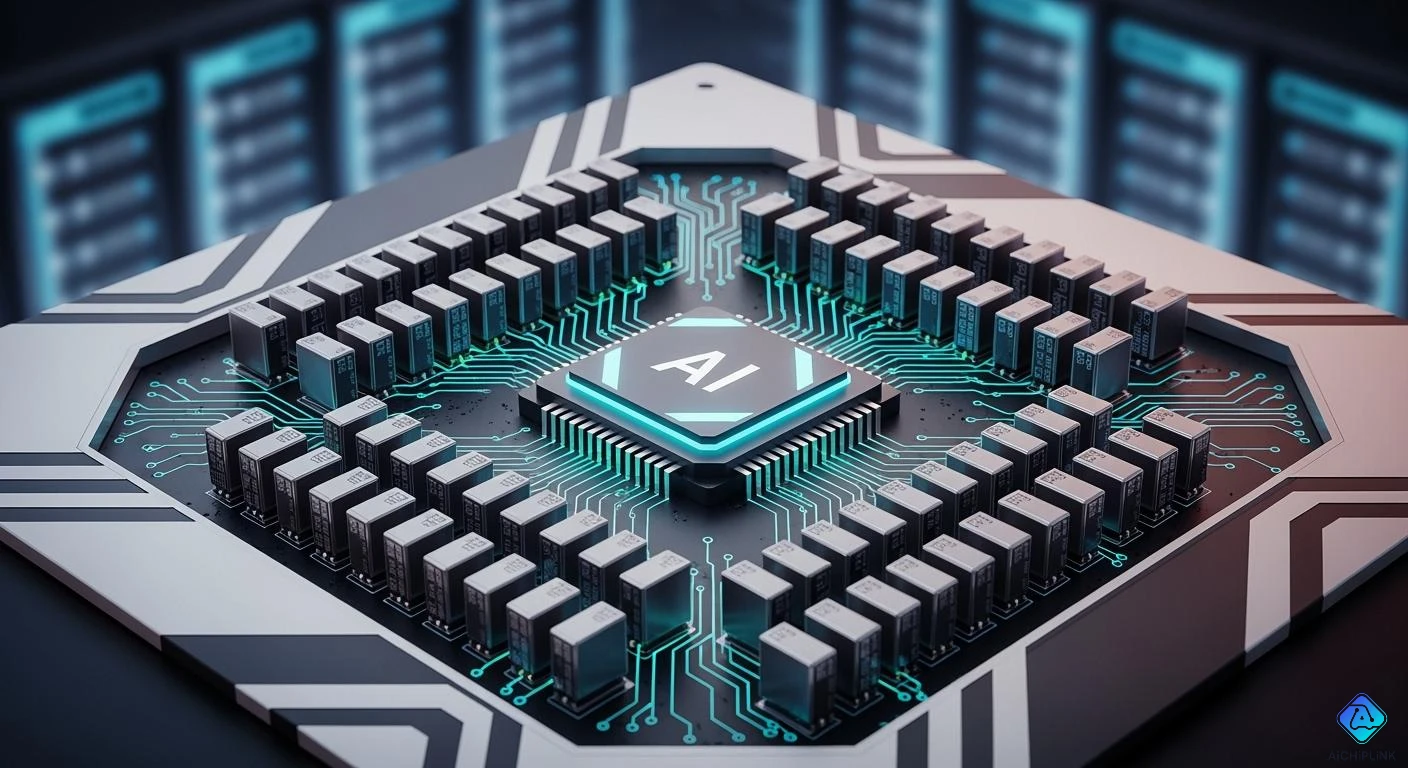
AI servers need thousands of mlcc capacitors. These help keep voltage steady. They also filter out noise. They store energy when work gets intense. AI servers are very different from regular servers.
-
AI servers use thousands of mlccs on each motherboard. This helps with power supply decoupling and keeps voltage steady.
-
Regular servers use fewer mlccs. Their jobs are not as hard.
High-performance ai hardware, like GPUs and CPUs, need tight voltage control. They also need to react fast to changing loads. The table below shows what these parts usually need:
| Component Type | Power Draw (Watts) | Voltage Regulation | Current Response |
|---|---|---|---|
| GPUs/AI Accelerators | Hundreds (peak) | Regulated DC rails | Instant load changes (up to several kW per rack) |
You need mlccs to keep ai servers working well and reliably.
Key Takeaways
- AI servers need thousands of MLCC capacitors to keep voltage steady and handle quick power changes. High-capacitance MLCCs help by storing energy and blocking noise, which is very important for AI work. Putting MLCCs close to AI chips helps power get to them better and stops voltage from dropping, which keeps the system stable. More people want high-performance MLCCs as AI gets better, so companies are making more and prices are going up. Picking good MLCCs and putting them in the right spots on server boards is key for AI servers to work well.
High Capacitance Density in AI Servers
Energy Storage for GPUs and CPUs
Regular servers and ai servers use different numbers of mlcc capacitors. Ai servers need more energy storage because their GPUs and CPUs work harder. When you run ai programs, power needs can change fast. The server must handle these changes to stop crashes or slowdowns.
-
Ai accelerators and high-bandwidth memory need more mlcc capacitors now.
-
New GPU and ASIC cards use many low-ESL, high-capacitance mlccs in voltage regulator modules.
-
As power density rises, you need more mlccs to store and deliver energy quickly.
Ai servers use 10 to 15 times more mlccs than regular servers. This big increase shows how much ai server demand has grown. High-capacitance mlccs keep GPUs and CPUs stable when workloads spike. You get better performance and fewer voltage drop problems. Engineers look for new ways to fit more mlccs on each board as ai servers grow.
Note: High-capacitance mlccs help control heat. Using the right capacitors keeps your ai server motherboard cooler and more efficient.
Compact Design for Server Racks
Ai servers need powerful hardware in small spaces. You must place thousands of mlcc capacitors close to ai chips. This tight setup helps deliver energy fast and keeps voltage steady. There are many design challenges that make this harder.
| Design Constraint | Description |
|---|---|
| High Voltage Ratings | You need capacitors that handle different power supply designs and stay reliable under stress. |
| Low Equivalent Series Resistance (ESR) | Lower ESR means less power loss and less ripple in high-frequency circuits. |
| Compact Form Factors | Small capacitors fit better in dense server racks and save space. |
| Thermal Performance | Good thermal management keeps your ai server running longer and more reliably. |
| Balancing Capacitance | You must balance the total capacitance across many mlccs for best performance. |
| Voltage Stress | You need to prevent failures from high voltage by choosing the right parts. |
| High-Frequency Switching Capability | Fast switching helps your ai server work efficiently with modern power electronics. |
You want ai servers to run fast without overheating or failing. Compact mlccs let you put more power in each rack. You also need to think about cooling. High-voltage solutions, like 100V+ mlccs, help your server work better and stay cool. When you design ai servers, you must balance space, power, and cooling.
Ai server demand keeps growing as more companies use ai for work and research. You need to pick the right mlccs to keep up with this growth. The right design helps ai servers stay reliable, even when workloads are heavy.
Low-Voltage and High-Current Demands
Stable Power for AI Accelerators
AI accelerators need steady power in data centers. They use much more power than regular servers. The voltage is low, but the current is very high. This makes it hard to deliver power.
Here is a table showing voltage and current for AI accelerators:
| Voltage (VDC) | Current (A) | Power (kW) |
|---|---|---|
| 400 | 350 | 140 |
| 800 | 175 | 140 |
AI servers must handle lots of current. MLCC capacitors help keep voltage steady when current changes fast. These capacitors sit close to AI chips. They store energy and release it quickly when chips need it. This keeps AI hardware working well.
MLCCs have special features for this job:
-
Ultra-high capacitance in a small size
-
Low-voltage optimization for modern AI chips
-
Good high-frequency performance for fast circuits
-
High component density to save board space
-
Ability to manage extreme transient loads
Tip: Putting MLCCs near power pins of AI accelerators helps stop voltage drops and keeps your system stable.
Managing Large Current Swings
AI workloads can change very quickly. When you run a big AI task, the current can jump fast. If your power system cannot handle this, your AI servers might crash or slow down. MLCCs act like shock absorbers for power supplies. They absorb sudden changes and keep voltage from dropping.
AI servers use racks that need much more power than standard racks. Look at this table:
| Rack Type | Power Demand (kW) | Example Server Power (kW) |
|---|---|---|
| Standard | 7-10 | N/A |
| AI-capable | 30-100 | 66 (GB200 NVL36), 120 (GB200 NVL72) |
AI-capable racks use much more power. MLCCs help manage big swings in current. They keep AI servers reliable, even during peak loads. Engineers use advanced MLCC arrays and special layouts to keep voltage steady. This is why you find thousands of MLCCs in every AI server.
High-Frequency Performance and Noise Filtering
Signal Integrity in AI Servers
You want your ai servers to work fast and not break. High-speed ai chips need clean signals to do their jobs. MLCC capacitors help keep these signals strong and clear. When you put mlccs near ai chips, you smooth out voltage changes. This keeps power steady and stops noise from hurting your data.
MLCCs help signal integrity in three ways:
-
They decouple power lines, so each ai chip gets steady voltage.
-
They filter out unwanted noise, which protects your data.
-
They store energy and release it quickly when ai chips need it.
MLCCs are everywhere in ai servers because they keep signals good. If you use enough mlccs, you stop voltage drops and keep ai hardware running well. Fast response is important for high-speed ai tasks. MLCCs make sure ai chips get power without interruptions.
Filtering Power Supply Noise
Power supply noise can cause big problems in ai servers. You often see noise from shared circuits and digital ICs. This noise can spread and make your ai hardware unstable. MLCC capacitors help stop this noise before it reaches your ai chips.
You use MLCCs to filter high-frequency noise and stop electromagnetic interference (EMI). Clean power is important for ai workloads, especially with switching parts. MLCCs act as decoupling capacitors, keeping circuits stable and stopping noise from spreading.
Here is a table showing how different inductors help filter noise in ai servers:
| Inductor Type | Functionality |
|---|---|
| Common-mode chokes | Suppress high-frequency noise in AC-DC conversion |
| Ferrite beads | Improve signal integrity and EMI performance |
| Differential inductors | Filter noise in signal lines |
You use MLCCs with these inductors to make a strong noise filtering system. MLCCs filter out high-frequency noise and keep ai servers reliable. When you design ai hardware, you must pick the right mlccs and put them close to your chips. This helps you deliver clean power and protect your ai workloads from interruptions.
Tip: Always check where you put MLCCs on your ai server motherboard. Good placement improves noise filtering and keeps your ai chips safe.
PCB Layout and MLCC Selection Challenges
Area Allocation Near AI Packages
It is hard to fit thousands of mlcc capacitors near ai chips. The space on the server’s printed circuit board is small. You have to think about many things when you design ai servers. You need to keep the temperature steady. High heat can make multilayer ceramic capacitors work worse. You also need enough space so the board does not get damaged or bent. Low equivalent series inductance is important for fast, clean power. You must balance die-side and land-side capacitors to keep power strong. Your design should work well when the load changes quickly. Putting mlcc capacitors close to ai chips is very important. Modern ai processors can switch up to 3 GHz. They can use more than 400 amperes very fast. If mlcc capacitors are too far away, ai hardware may not get power fast enough. You also need to think about high heat. Some ai data centers get as hot as 105°C. Your capacitors must keep working in these tough places.
Tip: Always put mlcc capacitors as close as you can to ai chips. This helps filter noise and keeps power delivery strong.
Importance of MLCC Quality and Uniformity
You want ai servers to work well all the time. You need to pick high-quality mlcc capacitors for this. Good quality means ai hardware lasts longer and works better. Manufacturers use strict checks to make sure every multilayer ceramic capacitor is good.
| Quality Control Measure | Impact on MLCC Uniformity and Reliability |
|---|---|
| Precise control of trace thickness, width, spacing | Makes performance steady and keeps electromagnetic behavior good |
| Real-time monitoring systems | Watches important things like bond line thickness and copper layer uniformity |
| Statistical process control methodologies | Finds problems early and fixes them quickly |
| Advanced manufacturing technologies | Puts materials in the right place and makes performance better |
Industry rules help you choose the right mlcc for ai servers. You should look for capacitors with high capacitance, low ESR and ESL, and strong temperature tolerance. Many ai servers use package sizes like 0402 or 0201. Some can handle up to 105°C and give 47 µF capacitance. Picking the right mlcc capacitors and putting them in the best spot helps ai servers stay reliable, even when they work hard.
AI MLCC Market Trends and Future Needs
Growing Demand for High Capacitance MLCCs
The ai mlcc market is changing quickly. More companies are building ai servers. This makes the need for high-capacitance mlccs go up fast. Experts think the ai mlcc market will grow by 30% each year for five years. By 2030, ai servers will need over three times more mlccs than in 2025.
-
Ai servers use more mlccs than before, so the market is getting bigger.
-
Manufacturers are now making more high-end mlccs for ai instead of consumer products.
-
High-capacitance mlccs are harder to get and cost more.
Here is how demand has changed with new ai server designs:
| Evidence Description | Details |
|---|---|
| More MLCCs per server board | Nvidia’s GB200 server board needs about 6,500 mlccs. Rubin architecture will need around 12,000 mlccs per board. |
| Cloud service providers’ demand | Microsoft, AWS, Google, and Meta are buying more high-end mlccs for their ai chips. |
| Price changes | Some suppliers raised prices for certain mlccs by 6 to 13 percent. |
| Production changes | Manufacturers in Japan and Korea are making more high-end mlccs for ai servers. |
| Longer lead times | Bigger mlccs now take over 20 weeks to get because ai mlcc demand is strong. |
The cost of using thousands of mlccs in ai servers is rising. Some systems need up to 30,000 mlccs. This makes careful planning and sourcing very important.
Innovations in MLCC Technology
The ai mlcc market is not only growing. It is also changing with new technology. Companies are making better materials and smarter designs for next-generation ai servers. Samsung Electro-Mechanics makes ultra-compact, high-capacitance mlccs for tough conditions. Murata Manufacturing helps you make power delivery networks stable for ai servers.
| Innovation Type | Description |
|---|---|
| New Dielectric Materials | These give higher capacitance in smaller packages. This is important for compact ai servers. |
| More miniaturization | Smaller parts fit better in dense ai server designs. |
| Higher capacitance | New breakthroughs let you use stronger mlccs, like 0805-100µF and 1206-220µF. |
| Copper inner electrode technology | This makes high-frequency performance better for ai hardware. |
| High-reliability MLCCs | You can now get mlccs that handle higher voltages, up to 3–4kV, for advanced ai designs. |
MLCC makers use advanced ceramic formulas and multilayer stacking to solve miniaturization problems. These steps help you fit more mlccs in less space. New materials science gives you better performance and reliability in ai environments.
Note: The ai mlcc market will keep growing as digital transformation and ai adoption spread. You will see more demand for high-performance passive parts like low-ESL mlccs to support this growth.
You can see that high capacitance is important for ai servers. Low-voltage optimization helps ai chips work better. Strong noise filtering keeps signals clean and safe. MLCC capacitors help keep voltage steady in ai servers. They stop power problems from hurting your hardware. You need thousands of MLCCs to support fast ai chips. These capacitors make servers stable and reliable. Power quality management uses MLCCs to stop voltage sags. MLCCs also prevent sudden changes called transients. The need for high-performance MLCCs keeps growing as ai gets bigger. You may not notice MLCCs, but they power every ai advance in your servers.

Written by Jack Elliott from AIChipLink.
AIChipLink, one of the fastest-growing global independent electronic components distributors in the world, offers millions of products from thousands of manufacturers, and many of our in-stock parts is available to ship same day.
We mainly source and distribute integrated circuit (IC) products of brands such as Broadcom, Microchip, Texas Instruments, Infineon, NXP, Analog Devices, Qualcomm, Intel, etc., which are widely used in communication & network, telecom, industrial control, new energy and automotive electronics.
Empowered by AI, Linked to the Future. Get started on AIChipLink and submit your RFQ online today!
Frequently Asked Questions
Why do AI servers use so many MLCC capacitors?
AI servers need thousands of MLCC capacitors to keep voltage steady. These capacitors help power systems handle fast current changes. This keeps hardware safe and makes ai applications run smoothly.
How do MLCC capacitors help in high-performance data centers?
MLCC capacitors filter noise and store energy. They give stable power to servers. This helps data centers handle heavy workloads and avoid downtime.
Where do you place MLCC capacitors on an AI server board?
You put MLCC capacitors close to main chips. This lets power reach chips quickly. Good placement helps ai servers work well and perform strongly.
What happens if you use fewer MLCC capacitors?
Using fewer MLCC capacitors can cause voltage drops. This may lead to errors or crashes in ai applications. You could lose data or slow down your system.
Are MLCC capacitors important for future AI server designs?
Yes. As ai servers get stronger, they will need more MLCC capacitors. New designs will use even more to support faster and smarter hardware.