Exploring Different Types of Capacitors Used in Motor Drives
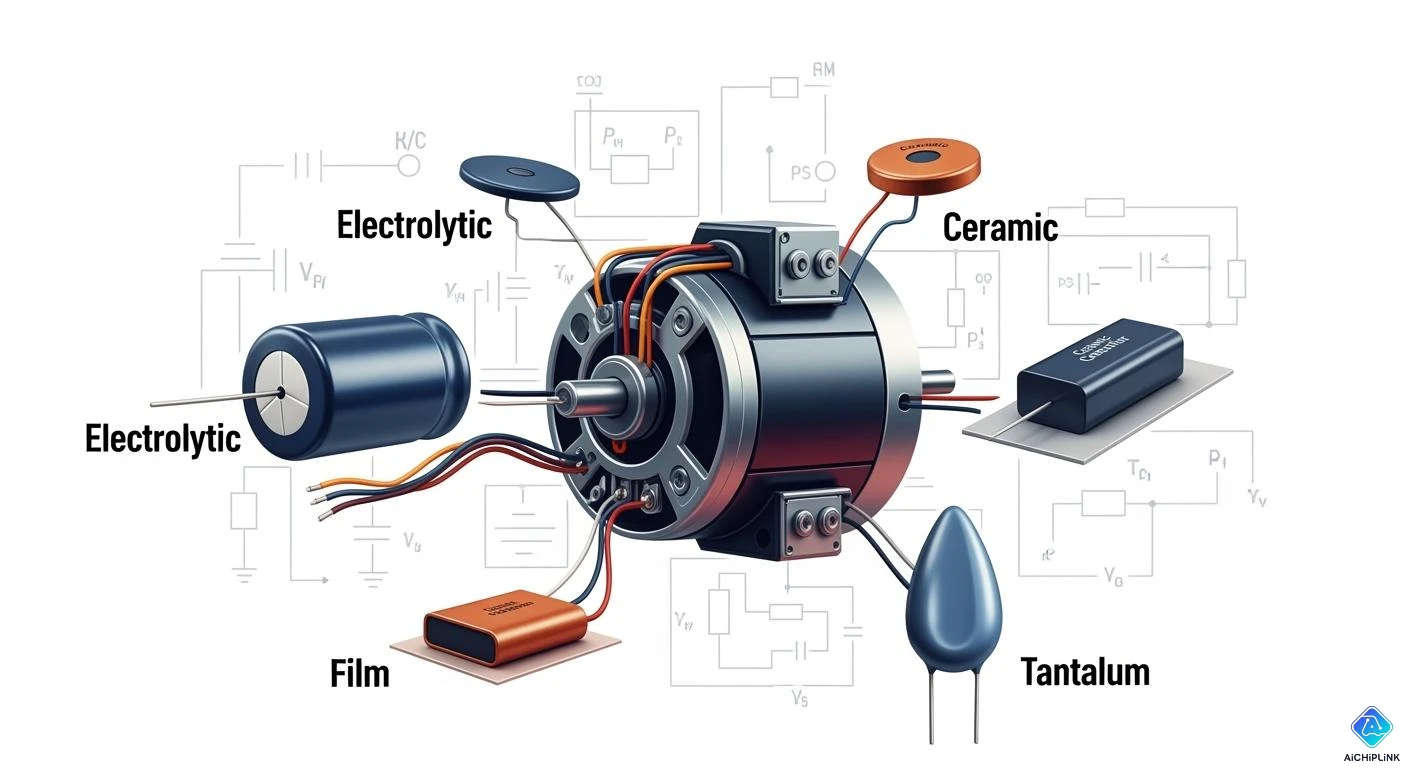
You can see different types of capacitors in motor drives. Each type has its own job. Ceramic capacitors help filter noise. They also keep motors working well. Electrolytic capacitors give motors a fast energy boost. This helps the motors start. Film capacitors make motors work better and use less energy. Tantalum capacitors are good for control circuits. They are small and very steady. Start and run capacitors are important for single-phase motors. Capacitors in Motor Drives help store energy. They also cut down noise and help motors run smoothly.
Key Takeaways
-
Different capacitors have special jobs in motor drives. Knowing each type helps you pick the best one for your motor.
-
Starting capacitors give motors a fast energy boost to start. Always check the voltage and capacitance before you pick one.
-
Running capacitors help motors work better and last longer. They keep voltage steady and stop energy from being wasted.
-
DC bus capacitors store energy and make voltage smooth in variable frequency drives. Picking the right size is very important for good performance.
-
Testing and taking care of capacitors often stops problems. Watch for bulging or leaking to keep things safe.
Types of Motor Capacitors in Motor Drives
Starting Capacitor
A starting capacitor helps a motor begin to spin. It gives a quick energy boost when the motor starts. You see starting capacitors in motors that need extra power at the beginning. Most starting capacitors have more than 70 μF capacitance. Their voltage ratings are between 125 and 330 VAC. The table below shows some common values:
| Capacitance (μF) | Voltage (VAC) |
|---|---|
| > 70 | 125 |
| > 70 | 165 |
| > 70 | 250 |
| > 70 | 330 |
Starting capacitors use non-polarized aluminum electrolytic parts. The liquid inside lets them give energy for a short time. You put a start capacitor in single-phase capacitor motors. It only works when the motor starts, then it turns off.
Tip: Always check the voltage and capacitance before picking a starting capacitor for your motor.
Running Capacitor
A running capacitor keeps the motor working well after it starts. You use this capacitor to make motors more efficient and save energy. Running capacitors stay connected while the motor is on. They help keep the voltage steady and give a phase shift for single-phase motors.
The table below shows some voltage and temperature ratings for running capacitors:
| Capacitor Type | Voltage Rating (V) | Temperature Rating (°C) |
|---|---|---|
| Aluminum Electrolytic | 450 | 85 |
| Polyester Film | 370 | 105 |
| Paper Capacitor | 300 | 70 |
| Ceramic Capacitor | 1000 | 125 |
| Mica Capacitor | 500 | 150 |
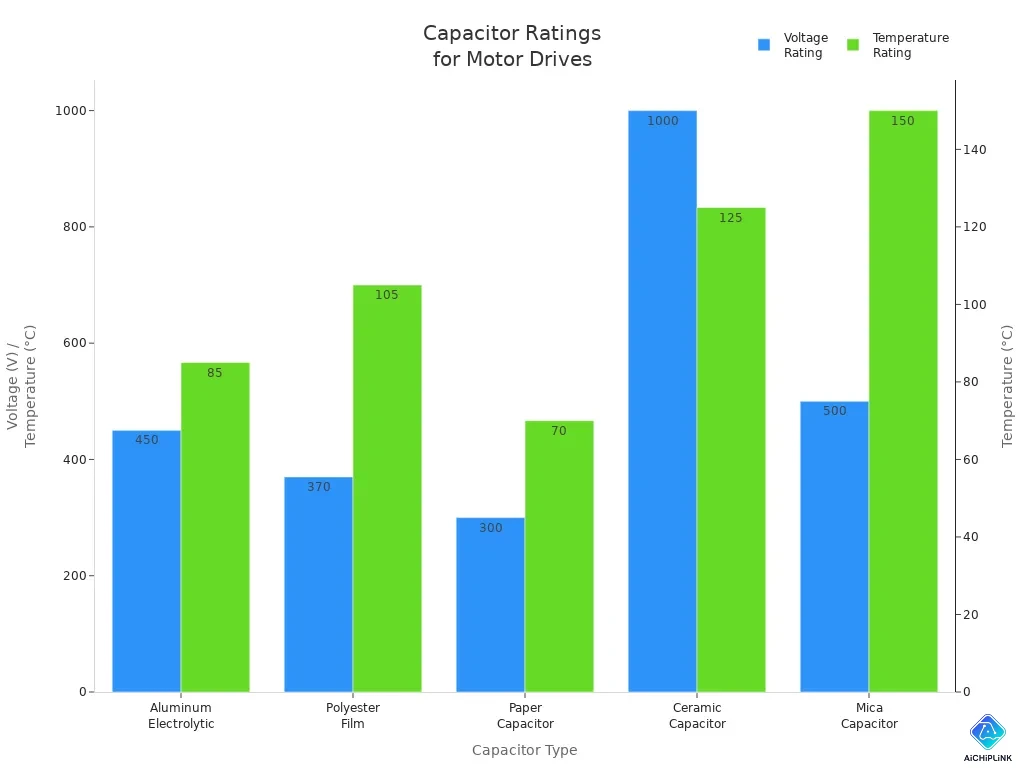
Running capacitors make the power factor better and help the motor run smoother. They also improve torque and keep voltage levels steady. This helps the motor last longer. You should change running capacitors often to keep motors working well.
-
Running capacitors make power factor better and cut energy loss.
-
They give the phase shift needed for smooth running.
-
Better torque means the motor works more efficiently.
-
Running capacitors keep voltage steady and help motors last longer.
Dual Run Capacitor
A dual run capacitor is used when you need both a start and run capacitor in one part. You see this type in HVAC systems and air conditioners. It powers more than one motor, like a fan and a compressor, at the same time.
| Feature | Single-Run Capacitor | Dual-Run Capacitor |
|---|---|---|
| Function | Provides torque | Functions as both run and start capacitor |
| Installation | Separate units | Single unit |
| Application | Single motor | Multiple motors |
| Application Type | Description |
|---|---|
| HVAC Systems | Powers fan and compressor motors simultaneously |
| Air Conditioners | Supplies power to both fan motor and compressor motor |
A dual run capacitor saves space and makes wiring easier. You find them in systems that need to run more than one motor at once.
DC Bus Capacitor
A DC bus capacitor is used in variable frequency drives and other motor drives. It stores energy and smooths out the DC voltage. This keeps the inverter working with clean power so the motor runs well.
| Specification | Value |
|---|---|
| Operating temperature | –55 °C to +105 °C |
| Dielectric strength | 650 Vdc at 25 °C |
| ESR (Maximum) | 0.003 Ω at 10 kHz |
| ESL (Typical) | 21 nH |
| Peak current (Maximum) | 9818 A |
| RMS current | 207 A at 10 kHz, 25 °C |
| 147 A at 10 kHz, 85 °C |
Inside every VFD, DC bus capacitors cut down voltage ripple and store energy for sudden loads. They keep the DC supply steady. You must pick the right size for the DC bus capacitor. If it is too small, you get ripple and problems. If it is too big, it costs more and is heavier.
-
DC bus capacitors cut voltage ripple and store energy.
-
They lower electromagnetic interference and make power better.
-
Picking the right size helps the capacitor and other parts last longer.
Snubber Capacitor
A snubber capacitor protects power switching modules in motor drives. It soaks up noise from high-frequency switching, usually between 100 and 300 kHz. Snubber capacitors need to handle high voltage, have low ESR, low loss, and high power.
-
Snubber capacitors protect switching modules by soaking up noise.
-
They must handle high voltage and lots of power.
| Failure Mode | Description |
|---|---|
| Dielectric breakdown | Breakdown of insulating material |
| Excessive self-healing | Occurs in metallized film capacitors during self-repair |
| Electrode erosion | Erosion of electrodes over time |
| Mechanical cracking | Cracking in ceramic capacitors from stress |
You should check snubber capacitors for problems like breakdown or cracks. Checking them often keeps your motor drives safe.
Filter Capacitor
Filter capacitors remove unwanted noise and smooth out voltage in motor drives. They help keep the power supply clean and steady. You find filter capacitors in both AC and DC circuits. They protect motors from voltage spikes and electrical noise.
-
Filter capacitors lower noise and stop voltage changes.
-
They make power better and protect important parts.
Ceramic, Electrolytic, and Film Capacitors
There are three main types of capacitors in motor drives: ceramic, electrolytic, and film. Each one has its own good and bad points.
| Capacitor Type | Advantages | Disadvantages |
|---|---|---|
| Ceramic | High performance, wide range, reliable, low ESR, high Q at high frequencies | Some types can be expensive, performance varies |
| Electrolytic | High capacitance, inexpensive | Polarized, can fail if reverse voltage applied |
| Film | High stability, low losses | Larger size compared to ceramic |
Electrolytic capacitors keep bulk power steady. Ceramic capacitors stop high-frequency noise. Film capacitors last a long time and are very reliable.
| Capacitor Type | Reliability (Lifespan) |
|---|---|
| Film | 100,000+ hours |
| Electrolytic | 2,000-12,000 hours |
| Ceramic | Varies, often paired with electrolytic for stability |
-
Electrolytic capacitors are cheap but do not last as long.
-
Film capacitors last longer but cost more.
-
Ceramic capacitors work well and do not cost much.
Mica, Paper, and Air Capacitors
Mica, paper, and air capacitors are used for special motor drive jobs. Mica capacitors are very precise, stable with temperature, and have low losses. You find them in RF circuits and communication gear. Paper capacitors are big and soak up moisture. They are used in old systems. Air capacitors are rare but can handle high voltage.
| Capacitor Type | Unique Properties | Applications |
|---|---|---|
| Mica Capacitors | High precision, temperature stability, low losses | RF circuits, oscillators, communication equipment |
| Paper Capacitors | Non-polarized, large, moisture absorption | Restoration, high-voltage circuits (historical) |
You pick these capacitors when you need special things like high precision or stability.
Note: You must pick the right capacitor for your motor drive. Each type has its own job. Picking the right one helps your motors work well and last longer.
Functions and Applications of Capacitors in Motor Drives
Role of Starting Capacitors
A starting capacitor helps motors begin to spin. When you turn on a single-phase ac induction motor, the start capacitor connects to the windings. This gives the motor a quick energy boost. The extra power helps the motor move heavy things, like a fan or auger. The start capacitor only stays on for a short time. A switch turns it off when the motor gets to about 75% speed.
-
A start capacitor gives more power at the start.
-
It lets motors turn on and off quickly for short jobs.
-
The capacitor turns off at 75% speed to keep the motor safe.
-
If the start capacitor breaks, the motor may hum, use too much power, or get too hot.
You see starting capacitors in single-phase motors that start with heavy loads. If the start capacitor does not work, the motor has trouble starting and might not work at all.
| Application Scenario | Benefits |
|---|---|
| Medium Voltage Motor Starting | Lowers startup power, keeps voltage steady, stops overloads |
| Soft Start Technologies | Cuts down big current at start, keeps the motor from getting too hot |
A good start capacitor helps motors reach full speed fast. This saves energy and keeps the motor safe.
Role of Running Capacitors
A running capacitor stays on while the motor is working. You use it to keep the phase shift between the start and run windings. This makes the magnetic field inside the motor balanced. When the field is balanced, the motor runs smoother and uses less energy.
-
Run capacitors keep the phase shift steady.
-
They help motors work better and use less power.
-
You see less wasted energy and lower current.
-
The motor stays cooler and lasts longer.
If a running capacitor fails, the motor may hum but not start. Sometimes, the motor starts slowly or stops when working hard. You might see the capacitor bulge, leak, or look damaged.
The U.S. Consumer Product Safety Commission (CPSC) has gotten over 100 reports about motor capacitors getting too hot, and some even caused fires.
A good running capacitor makes motors work better and last longer. You find them in many motors, like those in HVAC systems and home appliances.
DC Bus and Snubber Capacitor Applications
DC bus capacitors are used in variable frequency drives and vfds to store energy and keep the DC voltage smooth. These capacitors keep the voltage steady for the inverter. This helps the motor run better and with less ripple. Snubber capacitors protect switching parts, like IGBTs, from voltage spikes when switching.
| Capacitor Type | Application Description |
|---|---|
| DC Link Capacitors | Smooth out voltage, store energy for inverters in vfds and servo motors |
| Snubber Capacitors | Soak up voltage spikes, protect switches during changes |
| Capacitor Type | Function |
|---|---|
| DC Bus Capacitor | Keeps voltage steady, manages energy in the system |
| Snubber Capacitor | Protects against voltage spikes during switching |
-
The DC bus capacitor stops sudden voltage changes from reaching the input.
-
It gives energy when the input voltage drops.
-
Snubber capacitors stop unwanted signals and protect important parts.
You find these capacitors in motor drives for machines, elevators, and conveyor belts. They help motors run smoothly and keep the electronics safe.
Filtering and Noise Suppression
Capacitors in motor drives also help filter noise and stop voltage spikes. When motors run, they make high-frequency noise. This noise can bother other devices and cause problems. Filter capacitors remove this noise and keep the power supply clean.
-
Capacitors filter out high-frequency noise in BLDC motors, servo motors, and vfds.
-
Putting capacitors across motor ends or between the motor and ground cuts voltage spikes.
-
Ceramic capacitors are good for stopping noise because they react fast.
-
Where you put the capacitors matters for the best results.
| Benefit | Description |
|---|---|
| Filtering High-Frequency Noise | Takes away electrical noise from motors |
| Reducing Voltage Transients | Stops voltage spikes and keeps other devices safe |
| Power Factor Correction | Makes power use better and saves energy |
| Back-EMF Management | Soaks up voltage spikes from quick stops or load changes |
You use capacitors in motor drives to protect electronics and help motors work better. Filtering and noise suppression help single-phase and capacitor motors last longer. Picking the right capacitor keeps your motors safe and working well.
Selection and Testing of Motor Capacitors
Key Selection Criteria
You must pick the right capacitor for your motor drive. The best choice helps your motor stay safe and work well. Think about these things when you choose a capacitor:
-
The capacitance value should fit what the motor needs. If it is wrong, the motor might not start or run right.
-
The voltage rating must match the motor’s needs. If it is too low, the capacitor can break.
-
The temperature rating is important for hot or cold places. The right rating lets the capacitor work in tough spots.
-
Good material makes the capacitor last longer and work better.
-
Installing the capacitor the right way helps it work as it should.
-
Checking and caring for the capacitor keeps it from breaking and helps your motor stay strong.
Tip: Always read the label on the capacitor before you put it in. Make sure the numbers are right for your motor.
How to Test Motor Capacitors
Testing a capacitor helps you find problems early. You can use easy tools to see if it works. Here are some ways to test motor capacitors:
| Testing Procedure | Description |
|---|---|
| Capacitance Measurement | Measure capacitance and check if it is close to the rated value; it should be within 10%. |
| Insulation Resistance Test | Use a 500V DC tester to check insulation; it should be more than 2 megohms. |
| Motor Current Analysis | Check the running current and compare it to the motor’s full load number for problems. |
If a capacitor does not pass a test, you should get a new one. Testing keeps your motor safe and stops bigger problems.
Troubleshooting Common Issues
You might see problems with capacitors in motor drives. Knowing what to look for helps you fix things fast. Here are some signs and what to do:
-
If the capacitor is bulging or leaking, you need to change it.
-
If the motor hums or will not start, the capacitor may be bad.
-
Overheating can happen if the rating is wrong.
-
If the motor is weak, check if the capacitor has the right value.
-
If you have many breakdowns, you may need a better capacitor.
Note: Always turn off the power before you check or change a capacitor. Safety is most important.
You can keep your motor working well by picking the right capacitor, testing it often, and fixing problems fast.
Now you know why there are different capacitors in motor drives. Each one helps your motor start, keep running, or stay safe. Picking the right capacitor keeps your motor working well. Checking them often helps you stop problems before they get worse.
Want to know more? Check out guides on advanced motor drive design or tips for fixing problems to get even better results.
-
Learn what each capacitor does.
-
Choose the best type for your motor.
-
Test and take care of your motor capacitors often.

Written by Jack Elliott from AIChipLink.
AIChipLink, one of the fastest-growing global independent electronic components distributors in the world, offers millions of products from thousands of manufacturers, and many of our in-stock parts is available to ship same day.
We mainly source and distribute integrated circuit (IC) products of brands such as Broadcom, Microchip, Texas Instruments, Infineon, NXP, Analog Devices, Qualcomm, Intel, etc., which are widely used in communication & network, telecom, industrial control, new energy and automotive electronics.
Empowered by AI, Linked to the Future. Get started on AIChipLink and submit your RFQ online today!
Frequently Asked Questions
What are ceramic capacitors used for in motor drives?
Ceramic capacitors help block high-frequency noise. They keep the motor drive steady. These capacitors work well in circuits that need quick action. They are reliable and help the motor drive perform better.
Why do you need electrolytic capacitors in motor drives?
Electrolytic capacitors store energy for the motor. They give a fast power boost when the motor starts. These capacitors also smooth out voltage. This helps the motor run strong and steady.
How do film capacitors improve motor drive performance?
Film capacitors help the motor drive work smoothly. They cut down energy loss and make the motor more efficient. These capacitors last longer than many others. They can handle higher temperatures too.
Can you mix ceramic capacitors, electrolytic capacitors, and film capacitors in one motor drive?
Yes, you can use all three types together. Each type does something special. Ceramic capacitors block noise. Electrolytic capacitors store energy. Film capacitors give stability. Mixing them helps the motor drive work better.
How do you know if an electrolytic capacitor needs replacement?
Look for bulging or leaking. If the motor hums or has trouble starting, the electrolytic capacitor may be bad. Change it to keep the motor drive safe.