Which Capacitor Is Best for Power Supplies?
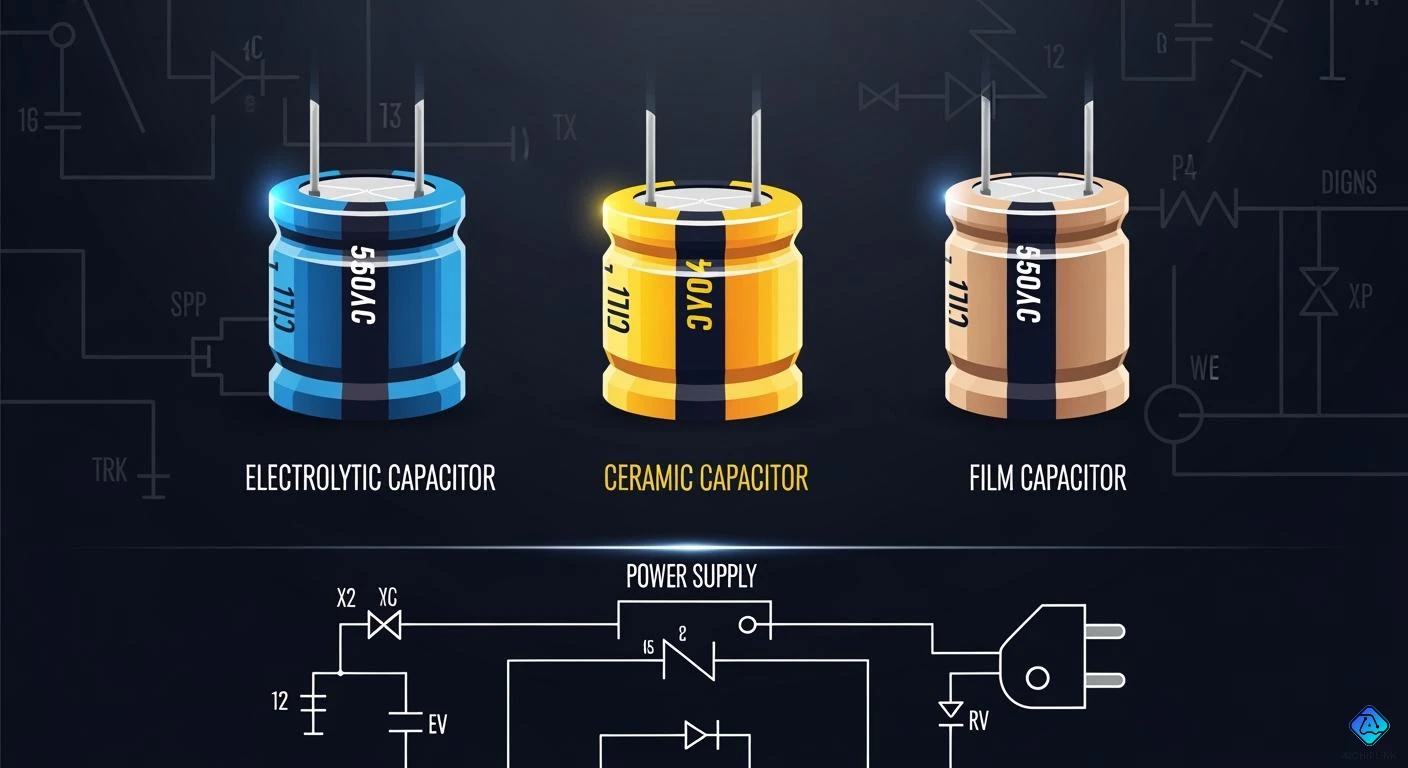
When you pick the best capacitor for your psu, you often see electrolytic and ceramic types. Many experts think using both types is best for most power supply units. You want the best capacitor because low ESR helps your psu stay cool and work better. High capacitance in the best capacitor helps stop voltage changes and keeps your psu steady. A reliable capacitor is important because you want your psu to last a long time. The best capacitor for your psu depends on what your circuit needs. You should always look at different capacitor types and check ESR, capacitance, and reliability before you pick the best capacitor for your psu.
Key Takeaways
-
Pick capacitors with low ESR. This keeps your power supply cool. It also makes it work better.
-
Choose a voltage rating that is at least 1.25 times higher than your circuit’s voltage. This keeps the capacitor safe and helps it last longer.
-
Use both electrolytic and ceramic capacitors. This gives the best filtering and decoupling for your power supply.
-
Look at the ripple current rating. This stops the capacitor from getting too hot. It also helps it handle sudden changes in load.
-
Pick high-quality capacitors from brands you trust. This makes your power supply last longer and work better.
Best Capacitor Criteria
Key Performance Factors
When you pick the best capacitors for power supplies, you need to think about a few important things. Each thing can change how your power supply works and how long it lasts. You can look at the table below to see what is most important:
| Performance Factor | Description |
|---|---|
| Capacitance Value | Tells how much energy the capacitor can hold. This helps control ripple voltage and helps with sudden load changes. |
| Voltage Rating | Shows the highest voltage the capacitor can take. You should pick a rating at least 1.25 times higher than your circuit’s voltage. |
| Equivalent Series Resistance (ESR) | Measures the resistance inside the capacitor. Low ESR means less heat and better working power supply. |
| Ripple Current | Tells the most AC current the capacitor can handle without breaking. |
| Temperature Rating | Shows how well the capacitor works when it is hot. Higher ratings mean the capacitor will last longer. |
You should pick a capacitor with the right capacitance, voltage rating, low esr, and high ripple current rating. These choices help your power supply stay steady and work for a long time. Japanese companies often make capacitors that last long, work well, and do not cost too much.
ESR in Capacitor Selection
You need to know about esr when you pick the best capacitors for power supply circuits. ESR means equivalent series resistance. It is the small resistance inside every capacitor. Low esr is important because it keeps your power supply cool and working well. Here is why esr is important:
-
ESR comes from the parts inside the capacitor.
-
High esr makes the capacitor lose energy as heat. This makes your power supply not work as well.
-
If you use a switching power supply, high esr can make the capacitor get hot and break faster.
-
Low esr capacitors, like ceramics, are better for high-current or high-efficiency designs.
-
High esr can make voltage ripple and make your circuit not steady.
-
In audio circuits, high esr can make noise or distortion.
-
You should always check what esr your design needs.
You want to use low esr capacitors to keep things cool and working well. For example, if your power supply has a lot of current ripple, a low esr capacitor will last longer and keep your circuit safe.
Voltage Rating and Safety
You must check the voltage rating when you pick a capacitor. The voltage rating tells you the highest voltage the capacitor can take safely. You should always pick a capacitor rated at least 1.25 times higher than your circuit’s voltage. For example, if your power supply uses 12 volts, you should use a 16-volt capacitor. This extra space keeps your power supply safe and helps the capacitor last longer. Low esr also helps stop overheating when the voltage is high.
Reliability and Lifespan
Reliability is very important for the best capacitors for power supply. How long a capacitor lasts depends on many things, like temperature, ripple current, and esr. Here are some important points:
-
Aluminum electrolytic capacitors can wear out faster because of what they are made of.
-
High temperature and high ripple current can make the capacitor break sooner.
-
If the capacitor gets too hot, the liquid inside can dry up. This makes the power supply not steady.
-
The life of a capacitor gets cut in half for every 10°C rise in temperature.
-
You should pick capacitors with a 105°C temperature rating instead of 85°C for better reliability.
-
Low esr helps the capacitor stay cool and last longer.
-
Japanese companies are known for making good capacitors. Many people trust them because they have made good products for a long time.
You should always check the ripple current rating and temperature rating. These ratings help you find a capacitor that will last a long time in your power supply. If you want the best capacitors for power supply, look for low esr, high ripple current rating, and products from trusted Japanese companies.
Tip: For switch-mode power supplies, you should also check the self-resonant frequency. A high self-resonant frequency means the capacitor works well at high switching speeds.
Capacitor Types Compared
When you make a power supply, you need to know about different capacitor types. Each type has special things that make it good for certain jobs. You will see electrolytic, ceramic, film, and tantalum capacitors in many circuits. Let’s see what makes each one different.
Electrolytic Capacitors
Electrolytic capacitors give you a lot of capacitance in a small package. People use them in DC power supply circuits for filtering and storing energy. These capacitors help lower ripple voltage and keep the output steady. You must connect them the right way. If you connect them backwards, you can break the capacitor or make it stop working. In commercial and car devices, you see more polymer electrolytic capacitors. They work well in LC filters, DC/DC converters, and inverters. They are important for energy storage and power factor correction in switched-mode power supplies. Remember, electrolytic capacitors have a set voltage rating and do not work with AC power.
Ceramic Capacitors
Ceramic capacitors are popular because they have low ESR and work well at high frequencies. People use them for decoupling and bypassing in power supply circuits. Their multilayer design gives more capacitance and less loss. Ceramic capacitors are best for low-capacitance and high-frequency jobs. You find them in commercial and car electronics. But, their capacitance can drop when voltage goes up. They can also make noise in sensitive analog circuits because of microphonic effects. Over time, ceramic capacitors can lose some capacitance.
Film Capacitors
Film capacitors give you steady performance and last a long time. People use them for filtering in power supplies because they handle high currents and voltages well. Metalized film capacitors can self-heal, so they keep working after small problems. This makes them good for tough places. You see film capacitors in commercial and car power supplies. They can break if there is a lot of humidity or big temperature changes, so you need to think about where you use them.
Tantalum Capacitors
Tantalum capacitors give steady capacitance and last a long time. People use them in switched-mode power supplies for storing energy. Tantalum capacitors do not have microphonic effects, so they are good for audio and places with a lot of shaking. Their capacitance stays the same even when voltage changes, which is different from ceramic capacitors. Tantalum capacitors have higher ESR, so they are not good for high-frequency jobs. You find them in circuits where you need stability and long life.
Pros and Cons Table
| Capacitor Type | Pros | Cons |
|---|---|---|
| Electrolytic | High capacitance, small size, good for filtering and energy storage | Polarized, limited voltage, not for AC, can fail if reversed |
| Ceramic | Low ESR, high-frequency, small size, good for decoupling | Capacitance drops with voltage, microphonic noise, degrades over time |
| Film | Stable, long life, self-healing, handles high current | Sensitive to humidity and temperature, larger size |
| Tantalum | Stable capacitance, long life, no microphonic effects | High ESR, not for high-frequency, more expensive |
Tip: Pick the right capacitor type for your power supply by thinking about frequency, voltage, and how reliable you need it to be.
Capacitor Recommendations for Power Supply Design
Bulk Filtering
When you pick a capacitor for your power supply, bulk filtering is important. Bulk capacitance helps your psu deal with sudden load changes. It keeps the voltage steady. Aluminum electrolytic capacitors are good for bulk filtering. They have high capacitance and are small. You see them in input and output filtering. These capacitors are cheap, but their esr is higher than other types. Ceramic capacitors also help with filtering, especially for high-frequency ripple. They have low esr and esl, so they react fast to changes. Ceramics may not give enough bulk capacitance for every psu. Always check the ripple current rating. Make sure the capacitor can handle the ripple in your circuit. If you go over the ripple current rating, the capacitor can get hot and break. For the best quality, pick capacitors with a high temperature rating and a good reputation.
Decoupling and Noise Suppression
Decoupling capacitors help keep your psu stable. They block noise from other circuits. They also help with high-frequency noise. Decoupling keeps voltage steady during drops or surges. Bypass capacitors remove noise from the power supply. They supply charge when needed. For low-frequency decoupling, electrolytic capacitors (1 to 100 μF) work well. For high-frequency decoupling, ceramic capacitors (0.1 or 0.01 μF) are best. Multilayer ceramic capacitors are great for frequencies above 10MHz. Low-esl capacitors improve noise suppression. When you pick a capacitor for your power supply, use both types for the best filtering and decoupling.
High-Frequency Switching Supplies
High-frequency switching psu designs need special care when picking capacitors. You face problems like temperature changes and sudden loads. Ceramic capacitors are great because they have low esr and filter high frequencies well. Tantalum capacitors have steady capacitance and work in many temperatures. Ceramics are better at very high frequencies. Aluminum electrolytic capacitors give bulk capacitance, but you need low esr types for high-frequency jobs. Film capacitors are stable and reliable, but they are big. Always check the ripple current rating. Make sure the capacitor can handle sudden load changes. Getting high self-resonant frequency is hard at high frequencies. You must balance bulk capacitance, esr, and quality.
| Capacitor Type | Advantages | Limitations |
|---|---|---|
| Ceramic | Low esr, great for high-frequency filtering | Limited bulk capacitance |
| Tantalum | Stable, small, good temperature range | Not as strong at very high frequency |
| Aluminum Electrolytic | High bulk capacitance, good for ripple | Higher esr, shorter lifespan |
| Film | Low esr, reliable, handles ripple well | Large size |
Choose Capacitor for Power Supply Design
You need to pick a capacitor for your power supply by looking at ripple current, esr, filtering, decoupling, and quality. Start by checking the ripple current rating in the datasheet. Pick a capacitor with a rating higher than the ripple in your psu. Look for low esr to keep your psu cool and efficient. Use both electrolytic and ceramic capacitors for the best filtering and decoupling. Always think about the quality of the capacitor, especially for long-lasting psu designs. High-quality capacitors from trusted brands last longer and handle ripple better. The right capacitor keeps your psu safe, steady, and reliable.
How to Size Capacitors and Placement Tips
How to Size Capacitors
You need to know how to size capacitors for your psu to keep it working well. Start by asking these questions:
-
What is the purpose of this capacitor in your psu? Is it for bulk storage or high-frequency decoupling?
-
What is the operating voltage of your system?
-
What ripple voltage can your psu allow?
-
What is the highest temperature your psu will reach?
-
How small should the ESR be for your design?
Follow these steps to size your capacitor:
-
Identify the function of the capacitor in your psu.
-
Calculate the minimum capacitance you need. Use voltage derating rules. Pick a voltage rating at least 25% higher than your psu voltage.
-
Choose the right type based on capacitance, ESR, size, and cost.
-
Check the ripple current rating and make sure it is higher than what your psu will produce.
-
Think about the temperature rating and expected lifespan, especially for electrolytic capacitors.
The design of your psu, including the control method and operating frequency, will change the size you need. If you use a fixed or variable frequency, the RMS current and voltage ripple will be different. Always check the datasheet for the best results.
Tip: If you use a capacitor with too little capacitance, your psu will have more ripple and less stable output.
Placement in Circuit Design
Where you put your capacitor in the psu matters a lot. Good placement helps your psu stay stable and quiet. Here are some tips:
-
Place decoupling capacitors close to the IC power pins. This helps block noise and keeps the voltage steady.
-
If you put the capacitor far from the load, it cannot supply current fast enough. This can cause voltage drops and noise.
-
High ESR can increase ripple voltage and make your psu unstable.
-
High ESL can stop the capacitor from filtering high-frequency noise. This can cause EMI problems.
-
Good placement improves load response and keeps your psu cool.
A well-placed capacitor with the right value will give you a clean output and better performance.
Quality Considerations
You should always pick high-quality capacitors for your psu. Cheap capacitors can cause problems like overheating and early failure. Here is what to look for:
-
Use capacitors from trusted brands. These last longer and handle ripple current better.
-
Pick capacitors rated at 105°C if your psu gets hot. These handle stress better than 85°C types.
-
Poor quality capacitors can lead to motherboard failures and noise issues.
-
Good manufacturing means your psu will work longer and safer.
Note: Spending a little more on a good capacitor can save you from big problems later.
By following these tips, you will know how to size capacitors and place them for the best results in your psu.
You need to pick the best capacitor for your power supply by checking some important things. The table below shows what you should look for:
| Parameter | Description |
|---|---|
| Capacitance Value | Bigger values help stop ripple and handle quick changes. |
| Voltage Rating | Choose a rating at least 1.25 times your circuit’s voltage. |
| esr | Lower esr means less heat and better power supply work. |
| Ripple Current | High ripple current rating stops the capacitor from getting too hot. |
| Temperature Rating | Higher ratings help the capacitor last longer in hard places. |
You should pay attention to esr, ripple current, and how good the capacitor is. Low esr helps your power supply stay cool and work well. A high ripple current rating keeps the capacitor from breaking. Good quality capacitors last longer, even when it is hot or the power is high. Always check the esr in the datasheet before you choose. These tips help you pick the right one. If you work with electric cars or green energy, look for new ways to cool and manage esr. Capacitor performance can change a lot when it gets hot, so keep learning about esr and new ideas.

Written by Jack Elliott from AIChipLink.
AIChipLink, one of the fastest-growing global independent electronic components distributors in the world, offers millions of products from thousands of manufacturers, and many of our in-stock parts is available to ship same day.
We mainly source and distribute integrated circuit (IC) products of brands such as Broadcom, Microchip, Texas Instruments, Infineon, NXP, Analog Devices, Qualcomm, Intel, etc., which are widely used in communication & network, telecom, industrial control, new energy and automotive electronics.
Empowered by AI, Linked to the Future. Get started on AIChipLink and submit your RFQ online today!
Frequently Asked Questions
What is the main reason to use low ESR capacitors in power supplies?
Low ESR capacitors keep your power supply cooler. They help it work better and make less heat. Low ESR also lowers voltage ripple. This keeps your circuit steady.
Can you mix different capacitor types in one power supply?
Yes, you can use different types together. Electrolytic capacitors are good for bulk filtering. Ceramic capacitors help with high-frequency noise. Using both types makes your power supply work better and last longer.
How do you know if a capacitor is failing in your power supply?
You might see bulging or leaking parts. Sometimes you hear buzzing sounds. Your power supply may have unstable voltage or turn off. If you see these signs, change the capacitor soon.
Why do you need to check the ripple current rating?
Ripple current rating shows how much AC current the capacitor can take. If the rating is too low, the capacitor can get hot and break fast.
Do all capacitors have polarity?
No, not every capacitor has polarity. Electrolytic and tantalum capacitors are polarized. You must connect them the right way. Ceramic and film capacitors are not polarized. You can connect them either way.