What Are Capacitors for PLC Systems and Why Do They Matter
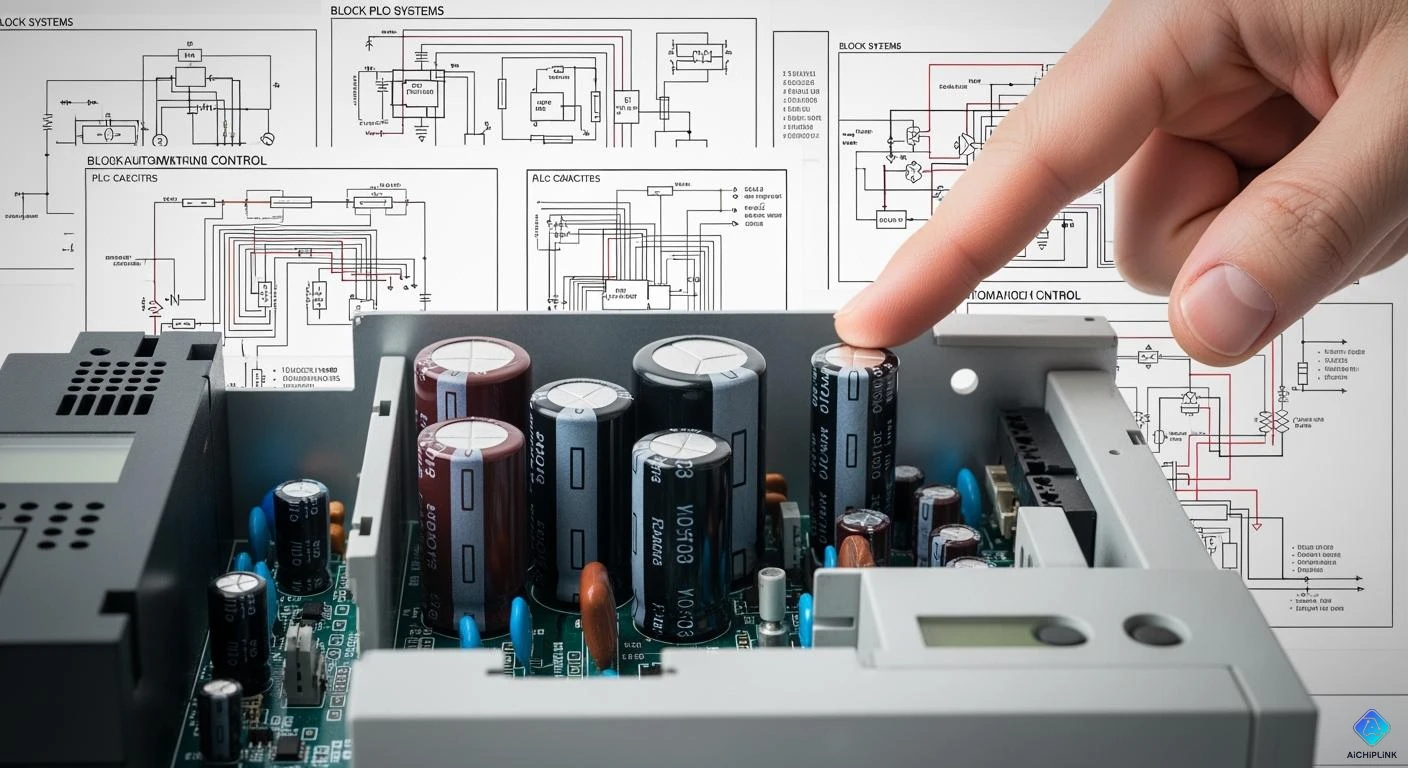
You need capacitors for PLC Systems to help your machines work well. These parts keep the power steady and stop ripple noise. This helps your PLCs avoid changes in signals. If you put capacitors close to integrated circuits, they help send quick bursts of current where needed. Capacitors also work as low-pass filters. They send unwanted high-frequency noise to the ground. This keeps both signals and power safe in your factory setup.
Key Takeaways
-
Capacitors help PLC systems stay steady. They smooth out voltage and stop power spikes. This helps machines run without stopping.
-
There are different types of capacitors. Some are ceramic, electrolytic, and film. Each type has a special job. They filter noise, store energy, or protect circuits.
-
Capacitors work as low-pass filters. They block high-frequency noise. This makes signals better for correct PLC readings.
-
It is important to check capacitors often. Look for damage or wear. This helps them guard PLC systems from voltage spikes and noise.
-
Pick the right capacitor for your system. Think about what the system needs, where it is, and where you put it. This helps it last longer and saves energy.
Capacitors for PLC Systems Overview
Capacitor Basics in PLCs
Capacitors help your plc systems work well. Each one does something important. Some hold energy. Others help filter signals. You see different capacitors in control panels. Each kind is good at something. The table below shows the main types and what they do:
| Capacitor Type | Key Applications | Typical Characteristics |
|---|---|---|
| Ceramic | Decoupling, high-frequency filtering, RF modules | Small, low ESR, stable at high frequencies |
| Electrolytic | Power supply filtering, bulk energy storage | High capacitance, polarized, larger size |
| Film | Audio signal paths, motor run/start, power factor correction | Low distortion, long life, high stability |
| Tantalum | Compact designs, timing, bypass in portable electronics | Stable, low ESR, polarized, voltage-sensitive |
| Supercapacitor | Short-term energy storage, memory backup, regenerative loads | High capacity, rapid cycling, large form |
Ceramic capacitors are good for high-frequency filtering. Electrolytic capacitors store lots of energy. Film capacitors last a long time and stay steady. Tantalum and supercapacitors are used for special jobs. You need to pick the right capacitor for your needs.
Why Stability Matters
You want your plc system to work without trouble. Keeping voltage steady is very important. If you use the wrong capacitors, you can have problems. Here are some reasons why stability matters:
-
Voltage stability keeps your plc system working.
-
Changes in voltage can stop your machines.
-
Factories use voltage stabilizers to help avoid these problems.
Unstable voltage can cause big trouble:
-
PLC programs may get messed up.
-
Power supply failures can make the CPU lose contact or restart.
-
I/O modules can burn out from voltage spikes.
-
Electrical noise can mess up the CPU and cause errors.
-
Your production line may stop, and you can lose data.
-
Equipment can break, which costs a lot.
-
Ripple in power can send wrong signals to sensors.
-
Voltage changes can make digital inputs act weird.
Capacitors help stop these problems in plc systems. They filter signals, smooth voltage, and protect your equipment. Picking the right capacitor keeps your system safe and your work going.
Key Roles of Capacitors in PLCs
Power Smoothing and Filtering
Capacitors help your PLC system run well. They store energy and give it back when needed. This keeps the power steady. When machines turn on or off, power can change quickly. Capacitors fill in the gaps and soak up extra power. This keeps voltage even in your PLC circuits.
Capacitors make your factory use energy better. They lower the need for extra power. Your machines use power in a smarter way. You see fewer drops in voltage. This keeps your important devices safe and working right. In factories with big machines, capacitor banks keep the power factor high. This helps you follow the rules and avoid extra charges.
Capacitors also clean up power by blocking noise. They stop unwanted signals from getting through. This protects your PLC from ripple and other problems. Picking the right capacitor helps keep power good and voltage steady.
Tip: Put capacitors close to your PLC power supply and important parts. This gives you the best results for smoothing and filtering.
Noise Suppression
Noise can make your PLC system have mistakes. Capacitors block high-frequency noise and keep signals clear. Filtering out noise is important for good communication and correct readings. Capacitors act like low-pass filters. They let good signals go through and send noise away.
You can use different setups to block noise better. Here is a table that shows common filter types:
| Filter Type | Description |
|---|---|
| Single-stage filter | Has a choke and capacitors to ground, good for noise from VFDs. |
| Two-stage filter | Uses two filter parts for better blocking, works well in tough places. |
| Load reactors | Put on the output side of VFDs to stop voltage spikes in long wires, keeps motors safe. |
You can mix capacitors with resistors to make RC filters. These filters block certain kinds of noise. You can change them to fit your PLC system. Filtering noise keeps your signals strong and your data right.
-
Capacitors in low-pass filters block high-frequency noise.
-
RC filters help block noise and make signals better.
-
Filtering noise keeps your PLC safe from errors.
Voltage Spike Protection
Voltage spikes can hurt your PLC and other devices. Capacitors soak up these spikes and keep things safe. When voltage changes fast, capacitors react quickly. They protect your CPU, I/O modules, and sensors from damage.
Capacitors also help with sudden voltage changes. They smooth out fast changes and stop equipment from breaking. You get steady voltage, so your PLC does not stop working. This is important where loads change a lot and switches turn on and off often.
You count on capacitors to guard against sudden surges. They keep your PLC safe from big shocks and keep your line running. You do not have to pay for repairs or lose time. Capacitors help you feel sure your power stays good.
Note: Check your capacitors often for damage or wear. Changing old capacitors keeps your PLC safe from spikes and noise.
Capacitors and PLC Analog Inputs
Signal Integrity
You want your plc analog inputs to give correct data. Capacitors help keep signals steady and smooth. When you measure a signal, the capacitor acts like a tiny storage tank. It holds the voltage for a short time. This helps your system read values without sudden drops or jumps. In many PLC systems, capacitors work as sample-and-hold amplifiers. They store the output from a digital-to-analog converter. The quality of this hold depends on how fast the voltage drops. This is called the droop rate. If the droop rate is high, you must refresh the channel more often. Using the right capacitor keeps your analog readings precise and stable.
Tip: Put capacitors close to your analog input channels. This helps you get the most accurate readings.
Reducing Interference
You face many sources of interference in your plc analog inputs. These can make your signals noisy or wrong. Here are some common sources:
-
Magnetic coupling from strong alternating magnetic fields
-
Capacitive coupling that causes leakage currents
-
Ground loops from voltage differences at different grounding points
-
High-temperature measurement leading to conductive leakage
-
Electrical noise from power supplies
Capacitors, especially bypass types, help fight these problems. They send high-frequency noise away from your signal lines. This gives you cleaner and more filtered inputs. When you use capacitors, you improve the accuracy of your plc analog inputs. You also protect your system from errors caused by outside electrical noise.
Note: Always check your capacitors for wear. Old or damaged capacitors may not block interference well.
Choosing the Right Capacitor
Selection Criteria
You want your PLC system to work well for years. Picking the right capacitor is important for this. First, look at the noise in your system. Each capacitor blocks certain types of noise. You need to pick one that stops the noise you have. Check the insertion loss curve for each capacitor. This curve tells you how well it blocks bad signals. Do not only look at the capacitance number.
You also need to match the capacitor to your job. Some are better for smoothing power. Others are better for blocking noise. Think about where you will put the capacitor cabinet. Where you put it changes how well it works. Try to put the capacitor cabinet near the power supply and main circuits.
Check the voltage rating, capacitance, and temperature range. The table below shows how different capacitors work:
| Type | Temperature Range | Capacitance Stability | Typical Use |
|---|---|---|---|
| X5R | -55°C to +85°C | ±15% | Power Supplies |
| Y5V | -30°C to +85°C | +22%/-82% | Low-cost consumer |
| X7R | -55°C to +125°C | ±15% | Decoupling, General |
You also need to check the environment. High heat and wet air can hurt the capacitor cabinet. Heat dries out electrolytic capacitors. Wet air can cause rust and leaks. Always follow the rules for your capacitor cabinet. Leave enough space for insulation and safety.
Common Pitfalls
Many people make mistakes when picking capacitors for PLC systems. You might pick a capacitor that is too small for your power. This can make voltage drop and cause errors. If you use the wrong capacitor in the cabinet, it can get too hot and break. Old capacitors can also stop working and cut off your power.
You also need to watch for problems in the environment. High heat and wet air in the cabinet can make capacitors wear out faster. If you do not check your cabinet often, you might miss early warning signs. Look for heat, leaks, or strange smells in the cabinet. These signs mean you should change the capacitor.
If you wire the cabinet the wrong way, you can cause more problems. For example, a star connection in a system with lots of harmonics can make it overheat and blow fuses. A delta connection in the cabinet can handle uneven loads better. Always check your wiring and follow the best rules for your cabinet.
Tip: Check your capacitor cabinet every few months. Change old capacitors before they break. This keeps your power steady and your PLC system safe.
Capacitors help your PLC system work well and stay safe. They protect machines from voltage spikes and noise if you pick the right one. You should check your system often to keep it running. Look for swelling, leaks, or cracks in the parts. Test the capacitance and change old parts every 5 to 7 years if needed.

Written by Jack Elliott from AIChipLink.
AIChipLink, one of the fastest-growing global independent electronic components distributors in the world, offers millions of products from thousands of manufacturers, and many of our in-stock parts is available to ship same day.
We mainly source and distribute integrated circuit (IC) products of brands such as Broadcom, Microchip, Texas Instruments, Infineon, NXP, Analog Devices, Qualcomm, Intel, etc., which are widely used in communication & network, telecom, industrial control, new energy and automotive electronics.
Empowered by AI, Linked to the Future. Get started on AIChipLink and submit your RFQ online today!
Frequently Asked Questions
What does a capacitor do in a PLC system?
A capacitor helps keep voltage steady in your PLC. It stores energy and gives it back when needed. This stops sudden drops or spikes in power. Your control circuits stay safe and work better.
How do capacitors help with power factor in PLC systems?
Capacitors make power factor better by balancing energy flow. They store energy and release it to match what your circuits need. This cuts down wasted energy and helps you avoid extra charges.
Why is noise suppression important for PLC analog signal conditioning?
Noise suppression keeps your analog signal clean and clear. High-frequency noise can cause mistakes in your PLC. Capacitors filter out unwanted signals. This helps your control system read data right and keeps power stable.
Can capacitors help with 4-20mA current loops in PLC systems?
Yes, capacitors smooth the signal in 4-20mA current loops. This stops your control system from picking up noise. You get more reliable readings and protect your PLC from power spikes.
How do capacitors support energy efficiency and power management in PLC systems?
Capacitors store and release energy to fit your system’s needs. This helps you use less power and waste less energy. Your control system runs smoother, and you save money on energy costs.