How FPGAs Transform Network Performance and Scalability
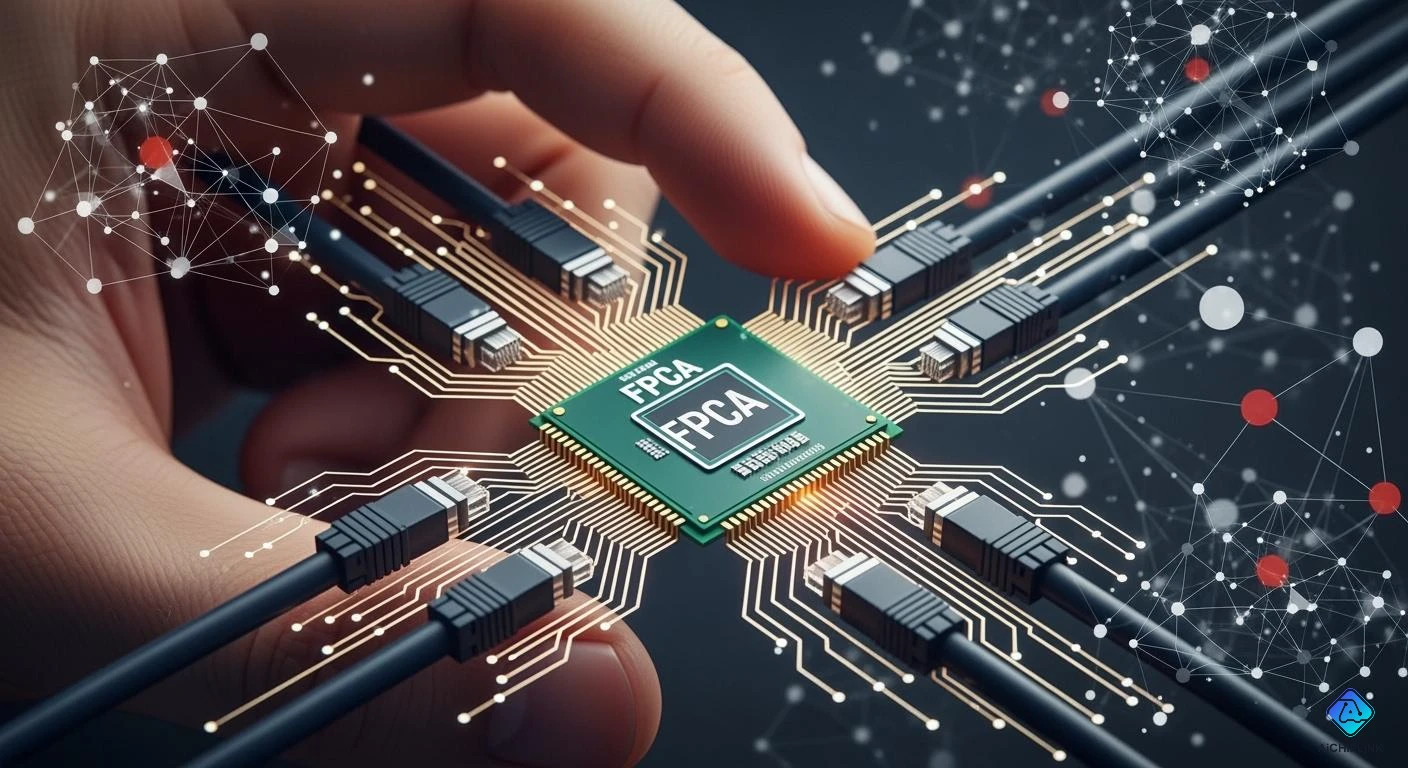
FPGA for Networking is transforming how networks operate by providing greater speed and flexibility. Unlike traditional processors, FPGA for Networking can perform multiple tasks simultaneously, which boosts performance and efficiency. Recent data shows that FPGA for Networking can reduce network delays by more than half and consume nearly 50% less energy. You can easily reprogram FPGA for Networking to adapt to new protocols and tasks, making it ideal for applications that require rapid response and for edge networking. Thanks to these advantages, FPGA for Networking has become the top choice for building fast and flexible networks.
Key Takeaways
-
FPGAs make networks faster by doing many jobs at once. They help cut down waiting time and save power.
-
You can change FPGAs after they are set up. This lets you update them quickly for new rules and safety needs.
-
FPGAs make networks safer with hardware encryption. This helps keep important data safe.
FPGA for Networking: Architecture and Comparison
FPGA vs. CPUs and GPUs
A field-programmable gate array is like a blank board. You can set it up for any job you want. FPGAs use instant-on deterministic logic and parallel processing. This lets them handle many data streams at once. CPUs do one thing after another. GPUs are good for graphics or lots of similar data. With FPGAs, you can make custom data paths for each network task. The table below shows the main features:
| Feature | Description |
|---|---|
| Instant-on deterministic logic | Lets the chip start working right away with no wait. |
| Parallel processing | Handles many jobs at the same time, so it works faster. |
| Post-deployment re-programmability | You can change how the chip works even after you install it. |
| Protocol bridging | Helps different protocols talk to each other easily. |
| I/O scalability | You can change input and output setups for different needs. |
| Multi-socket flexibility | Lets you connect more things for better sharing and speed. |
These features help networks work better and change quickly for new protocols.
FPGA vs. ASICs
You might wonder how FPGAs are different from ASICs. ASICs are chips made for one job only. They are fast but cannot be changed later. FPGAs are more flexible. You can reprogram them for new jobs or protocols. FPGAs can also do many data jobs at the same time. This helps you sort, filter, and manage big sets of data. Your main processors can do other things. These FPGA benefits make them great for edge networking and upgrades.
-
FPGAs are flexible and can be changed for new jobs.
-
They can do many data jobs at once, which helps with big data.
-
This lets you sort, filter, and decimate data better, so main processors are free.
Why FPGAs Excel in Networking
FPGAs are great for networking because they are fast and flexible. You can update an FPGA solution even after you set it up. This helps you keep up with new rules and security needs. FPGAs move data quickly and lower delays in your network. You can use them for both main and edge networks. They support many network interface protocols, so they fit modern networks well.
Key Benefits of FPGAs in Networking
Parallel Processing and Scalability
FPGAs can do many jobs at the same time. Traditional processors do one job after another. FPGAs are good at parallel processing. They can handle lots of data streams at once. This makes networks much faster. FPGA solutions can be over 100 times quicker than regular hardware. They also use less power. This is important for jobs where speed matters a lot. Using FPGAs gives you a platform that can grow as your needs change. You can expand data centers or upgrade edge networks easily.
Flexibility and Reprogrammability
FPGAs are very flexible because you can reprogram them. You can change what they do even after you install them. Partial reconfiguration lets you update parts of the FPGA without stopping everything. This helps with protocol updates, security patches, or new features. Network operators can adapt to new standards quickly and easily. Sometimes, updates can be done remotely. This means your network can keep up with changes without buying new hardware. FPGAs are great for places where rules and security change often.
Low Latency and Power Efficiency
Lower latency makes networks work better and faster. FPGAs give steady performance and can reach 100Gbps speeds. They have less than 3 microseconds of latency. Their design lets you make custom data paths. This cuts down delays in processing packets. FPGAs use much less power than older solutions. UltraScale FPGA families save up to 40% power compared to older models. They use special power-saving methods. This means lower costs and less heat. It is important for data centers and edge devices where power and cooling are limited.
Enhanced Security and Protocol Support
Security is very important in networks today. FPGAs help keep networks safe with hardware-based encryption and secure boot protocols. They use AES-256 encryption to protect files and stop unauthorized access. Hardware partitioning keeps important functions separate. This lowers the risk of attacks. Real-time monitoring tools can spot problems and stop breaches. Some tools use AI to help. FPGAs can get security updates quickly because they are reprogrammable. This keeps your network safe from new threats. FPGAs support many network protocols. They fit well in both main and edge networks.
Real-World Applications of FPGAs
Telecom and Edge Networking
FPGAs are changing how telecom networks work. With 5G and talk of 6G, FPGAs are even more important. These chips help process data very fast. Telecom companies use FPGAs for speed and flexibility. Open RAN systems use FPGAs to support many network types. The market for FPGAs in telecom is growing quickly. It could reach about 2.8 billion dollars by the decade’s end. As more companies use FPGAs, you get faster data and better service.
-
FPGAs lower delays in video and data jobs.
-
They boost throughput using distributed computing.
-
Financial trading uses special FPGA designs for quick trades.
Smart Grids and Data Centers
FPGAs help manage energy and data better. In smart grids, they process info in real time. This makes power systems more stable. Data centers use FPGAs to save energy and do more jobs at once. The table below shows some benefits:
| Application Area | Performance Metrics | Benefits |
|---|---|---|
| Solar Power Systems | Real-time data for power tracking | Less energy loss, more precision |
| Wind Energy | Adaptive control for turbines | Stable and efficient energy |
| Smart Grid Communication | Low-latency for fault detection | Better grid stability |
| Energy Storage Systems | Fast battery management | Prevents overcharging and damage |
| Data Centers | Up to 50% less power for AI workloads | More efficient and sustainable |
A study from Numenta shows Xilinx FPGAs can make throughput 100 times better. They also save a lot of energy in deep learning.
Network Interface Cards and Protocol Bridging
FPGAs in network interface cards move data faster. They handle tough jobs with features like XDMA and DDR4 memory. FPGAs take networking work off your main processor. This means less delay and more bandwidth. Many companies use these cards for packet processing and machine learning. Ethernity’s Router-on-NIC puts router functions into a small FPGA card. This saves space and power.
-
Full hardware offload for networking jobs
-
Small design with low power use
-
Handles Layer 3 routing and traffic management
FPGAs help you build networks that are fast, flexible, and ready for new needs.
FPGAs give you faster, smarter networks. You can adapt to new needs and boost security.
-
The FPGA market may reach $23.34 billion by 2030.
-
Over 8 billion IoT devices in Europe could use FPGAs for real-time tasks.
Explore FPGA solutions to future-proof your network.

Written by Jack Elliott from AIChipLink.
AIChipLink, one of the fastest-growing global independent electronic components distributors in the world, offers millions of products from thousands of manufacturers, and many of our in-stock parts is available to ship same day.
We mainly source and distribute integrated circuit (IC) products of brands such as Broadcom, Microchip, Texas Instruments, Infineon, NXP, Analog Devices, Qualcomm, Intel, etc., which are widely used in communication & network, telecom, industrial control, new energy and automotive electronics.
Empowered by AI, Linked to the Future. Get started on AIChipLink and submit your RFQ online today!
Frequently Asked Questions
What makes FPGAs better for network upgrades?
You can change what FPGAs do very fast. This means you can update your network for new rules or safety needs. You do not need to buy new hardware.
Can FPGAs help reduce power use in data centers?
Yes. FPGAs use less energy than old chips. This helps you save power and spend less on cooling in your data center.
How do FPGAs improve network security?
FPGAs use hardware encryption and secure boot. These tools help protect your network from attacks. They also keep your data safe.