ELCB vs RCD vs RCBO: What's the Difference?
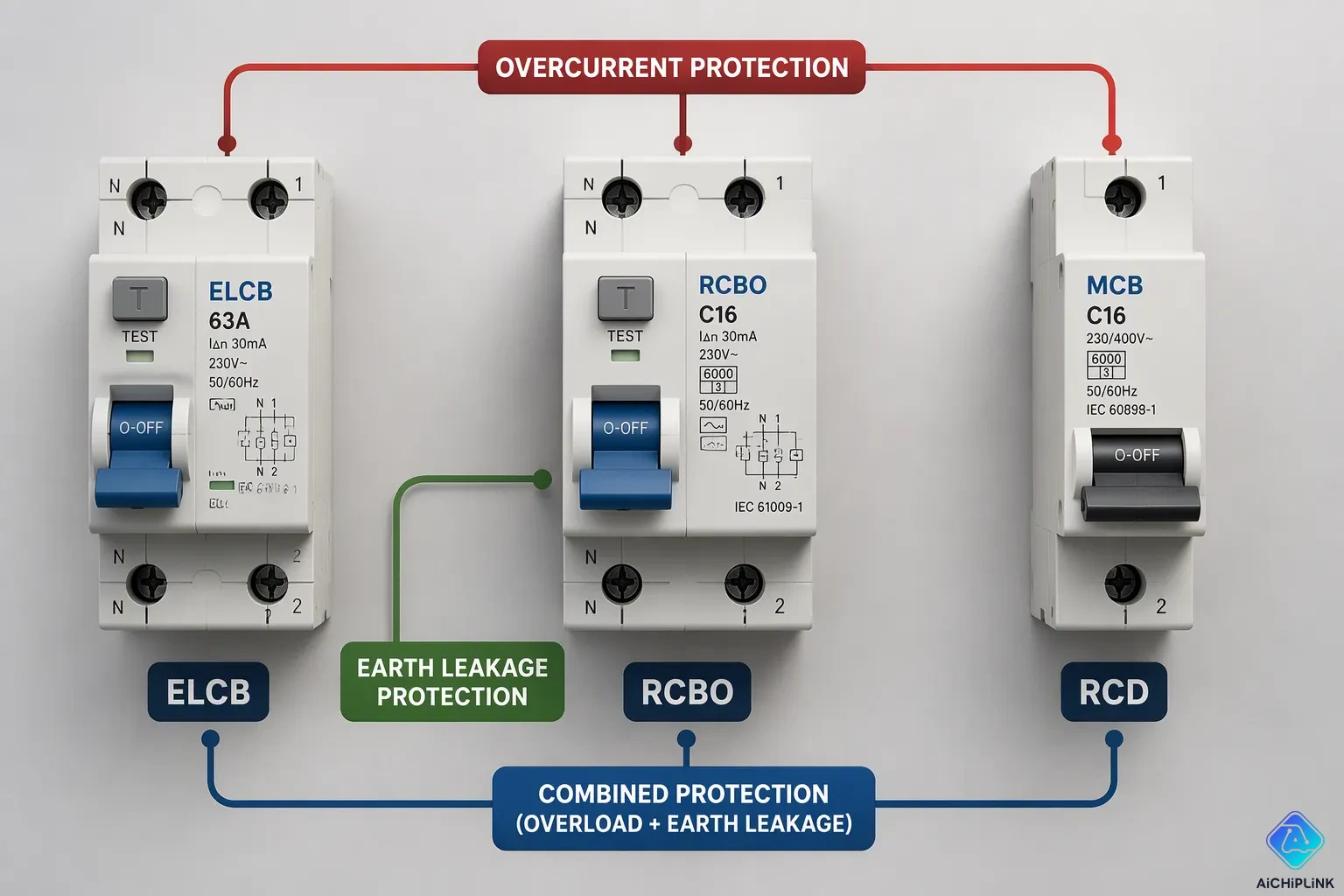
RCD and RCCB are the same modern safety device. ELCB is an older device that works on voltage. RCBO adds extra protection against overloads. This guide helps you pick the right device for new or old setups. You will learn about safety, testing, and following electrical codes. Knowing how rccb, elcb & rcbo differ matters for your home's safety. You need to know what's the difference? between these devices before you choose. An rcd finds small current leaks. An rcbo combines that with circuit breaker jobs. An elcb works in a different way and is outdated. Test regularly to stay safe. Choose carefully for your electrical panel.
Key Takeaways
-
ELCBs are old voltage-based devices; modern RCDs and RCCBs find current imbalances to protect against shocks more reliably.
-
An RCBO combines earth leakage detection with overload and short-circuit protection in one unit, saving space and improving safety.
-
Choose a 30 mA rated device to protect yourself from electric shock. Higher ratings, like 100 mA or 300 mA, only help prevent fires.
-
Test your RCD or RCBO every month by pressing the test button to make sure it turns off the power, and always get a licensed electrician to install it.
-
For new circuits, put RCBOs on each circuit so a fault is isolated and you avoid nuisance trips throughout your home.
RCD and RCBO vs ELCB: What's the Difference?
When you compare these three devices, the main question is simple: what's the difference? between them. An ELCB is an older device that works by checking voltage. An RCD and RCCB are modern devices that watch for current leaks. An RCBO also protects against too much current. Knowing how rccb, elcb & rcbo differ helps you pick the right one for your home.
ELCB vs RCD vs RCBO: Core Protections
The differences between elcb, rccb, and rcbo come down to how each device finds faults. A voltage-operated ELCB checks voltage on the earth wire. It compares that voltage to a reference earth connection. When a fault makes voltage rise on the watched earth path, the device trips. This method has a big flaw: it needs a properly connected earth path to work.
An RCD works in a different way. It measures the total of currents through all live wires using a summation transformer. Normally, the current going through the phase wire equals the current coming back through the neutral wire. When an earth fault happens, some current escapes through an unintended path. This creates an imbalance, called residual current, which the RCD detects and reacts to right away.
The main benefit of this current-based method is that it does not depend on the protective earth wire as a measured path. Even if fault current returns through a parallel earth path outside the sensing core, the imbalance is still found. This makes modern RCDs much more reliable than older voltage-based ones.
An RCBO, or residual current breaker with overcurrent, combines both jobs. It gives residual current detection plus overload and short-circuit protection in one unit. Think of it as an RCD and an MCB working together in one small device.
| Functional Aspect | Voltage-Operated ELCB | Current-Operated RCD/RCCB |
|---|---|---|
| Sensing mechanism | Watches voltage rise on protected earth wire | Measures current imbalance through all live wires |
| Trip trigger | Voltage on earth path reaches a set level | Residual current reaches a set level |
| Earth path dependency | Needs intact watched earth path | Works without using earth wire as measured path |
| Overload protection | Not a built-in job | Not given under IEC 61008-1 |
Why ELCBs Are No Longer Recommended
The earth leakage circuit breaker worked in older setups, but modern standards have moved past it. Several real problems make ELCBs unreliable for today's electrical systems.
First, the voltage-based sensing method fails when parallel earth paths exist. If fault current bypasses the watched earth connection, the voltage never reaches the trip level. The device simply does not work when you need it most.
Second, ELCBs need a dedicated earth connection to a reference electrode. Many modern setups share earth paths between multiple circuits. This sharing can stop the ELCB from finding faults on circuits that use a different earth route.
Third, the differences between elcb and rccb extend to standards compliance. Modern RCDs and RCCBs follow IEC 61008-1, which sets their performance and testing rules. ELCBs have no similar modern standard. They stay a legacy device with no current code recognition.
For personal shock protection, you need a 30 mA residual current device. This sensitivity level trips before current through the human body reaches dangerous levels. ELCBs usually work at higher levels and cannot give this kind of protection.
The rcd and rcbo devices you install today offer reliable, code-compliant protection. An RCCB, or residual current circuit breaker, handles earth leakage faults well. An RCBO adds circuit breaker jobs for full protection. Both show the modern way to electrical safety.
An RCCB covered by IEC 61008-1 is a residual current operated circuit-breaker without built-in overcurrent protection. Its rated current, In, tells the current it can carry under its stated conditions; it is not an adjustable overload trip setting.
When you upgrade from an ELCB, you get protection that works no matter the earth path conditions. You also get the option of combining residual current breaker jobs with overcurrent protection in one device. This makes your electrical system safer and easier to maintain.
How ELCB, RCD, and RCBO Work
How an RCD Detects Residual Current
An rcd watches the balance between live and neutral wires continuously. In normal operation, these conductors carry equal and opposite currents that cancel each other out inside a toroidal sense coil. You get no magnetic flux in the core, so the device stays quiet.
A fault changes this picture completely. When you touch a live part, some current escapes through your body to earth instead of returning through neutral. This diversion creates an imbalance between line and neutral conductors. That imbalance produces magnetic flux in the sense coil. When flux grows large enough, it activates a relay that forces contacts apart and cuts your electricity supply instantly.
Sensitivity determines how well you stay protected from shock hazards. A standard electric shock protective device rated at 30 mA must trip within 300 ms at its rated level. At five times that rating (150 mA), it must trip within just 40 ms according to IEC 61008 and IEC 61009 standards.
| Test Condition | Maximum Tripping Time |
|---|---|
| At rated residual current (30 mA) | 300 ms |
| At 5 × rated residual current (150 mA) | 40 ms |
One limitation exists for every residual current device. It cannot detect a live-to-neutral short circuit because those currents remain equal and opposite even during such faults.
CBCTs operate on zero-sequence current balance principles. They detect residual current when an imbalance appears among phases in a system. Normally, the vector sum of phase currents is zero. An earth fault disrupts this balance.
What an RCBO Adds Over an RCD
A standalone rcd detects only earth leakage faults. It has no mechanism for overcurrent detection whatsoever. In an overload or line-to-neutral short condition, currents stay balanced so nothing trips.
An rcbo adds thermal-magnetic tripping similar to an MCB. A bimetallic strip handles sustained overloads while a solenoid responds to high fault currents. This lets you disconnect for both overcurrent and short-circuit faults.
The residual current breaker with overcurrent combines both jobs in one module:
-
Residual protection: Monitors live conductor flow constantly.
-
Overload response: Trips when flow exceeds rated values.
-
Short-circuit handling: Responds instantly to high fault levels.
An MCB alone protects only against overloads and shorts. It offers zero shock protection for you or your family. The residual current circuit breaker with overcurrent protection gives you complete coverage for earth leakage current and overcurrent in one package. The residual current breaker with over-current protection also saves panel space compared to separate units.
For older installations with an elcb, upgrading makes complete sense. The earth leakage circuit breaker cannot match modern safety levels. A residual current circuit breaker or rcbo gives you reliable code-compliant protection every day.
RCD vs RCBO: Which One Should You Choose?
RCD for Basic Earth Leakage Protection
A standalone rcd gives your home basic earth leakage protection. It finds residual current and cuts the circuit when a fault happens. This device works well when you need simple shock safety without extra features.
You might pick an rcd when you already have separate MCBs for each circuit. The rcd sits upstream and protects the whole group. This setup costs less than buying separate combined units. Many older homes use this plan because it needs few panel changes.
But a shared rcd has a clear problem. When one circuit fails, the whole group loses power. You sit in the dark while every connected circuit goes dead. Finding the issue becomes a guessing game. You must reset the device again and again and test each circuit one at a time.
For basic safety, a 30 mA rcd meets the standard for personal shock protection. This level trips before dangerous current moves through your body. The rccb, which is the same device under another name, gives the same protection. Both follow the same IEC rules and testing needs.
RCBO for Combined Overcurrent and Earth Leakage Protection
An rcbo circuit breaker does two main jobs in one small unit. It finds leaks like an rcd, but it also handles overloads and shorts like an MCB. You get full protection for each circuit without needing separate devices.
For new homes, rcbo units on individual circuits offer clear benefits. Each circuit works on its own. A fault in your kitchen outlets does not turn off your bedroom lights. Only the bad circuit trips, so you keep power elsewhere. This separate protection cuts down on nuisance trips across many circuits.
The residual current circuit breaker with overcurrent protection also makes fixing problems easier. When one unit trips, you know exactly which circuit has the issue. You skip the guesswork completely. This focused tripping makes finding faults faster and safer.
Space matters too. The residual current breaker puts two functions into one module. Your panel stays neat and small. You avoid the tricky neutral wiring that shared rcd setups sometimes need.
The rccb vs rcbo comparison comes down to range. An rccb handles only residual current faults. An rcbo adds overcurrent and short-circuit protection. For modern homes, the rccb and rcbo choice favors rcbo units for individual circuits. They give better fault isolation and system reliability.
When picking a device, match the rating to your circuit. For lighting circuits, 6A units work well. Socket circuits usually use 10A or 16A ratings. The rule says your circuit design current must sit between the device rating and the wire capacity. A licensed electrician applies this rule correctly. This rule makes sure the device protects the wiring without false trips during normal use.
For older setups with an elcb, upgrading brings big safety gains. The elcb cannot match modern residual current detection. You get reliable protection that works no matter the earth path conditions. Check your panel compatibility before making changes. Some old panels may need upgrades to fit modern devices. This upgrade also brings you current code compliance and steady operation.
Test your rcd and rcbo units every month. Press the test button and check that the device trips. Follow local electrical codes for installation rules. Always hire a licensed electrician for the final choice and installation work. Your family's safety depends on getting this right.
Common Misconceptions About ELCB, RCD, and RCBO
ELCB vs RCCB: Are They the Same?
Many people think the earth leakage circuit breaker and the residual current circuit breaker do the same job. They do not. The differences between elcb and rccb start with how each device finds faults. A voltage-operated ELCB watches the earth wire for a voltage rise. A current-operated RCCB compares the current moving through live and neutral wires. When an imbalance shows up, it trips right away.
| Parameter | Voltage-Operated ELCB | Current-Operated RCCB/RCD |
|---|---|---|
| Operating Principle | Detects voltage rise on the earth wire | Detects current imbalance between live and neutral |
| Sensitivity | Lower; may miss small leakages | High; typically 30 mA for personal protection |
| Earth Connection | Requires direct earth connection | Does not rely on earth resistance |
| Modern Usage | Obsolete | Standard in modern installations |
The voltage-operated ELCB system is obsolete and was removed from the IEE Regs. as a permissible arrangement in the 1980s. In later years, the current-operated ELCB was renamed RCCB before finally changing to RCD.
Regional names add confusion. In the US, you see the term ground fault circuit interrupter (GFCI) with a 5 mA trip level. In the UK and Europe, you find RCDs with a 30 mA trip. Both concepts guard against leakage currents, but modern RCDs offer better reliability. Understanding rccb, elcb & rcbo differences helps you avoid buying the wrong device for your panel.
Do You Need Both RCD and RCBO?
You do not need both on the same circuit. A residual current circuit breaker with overcurrent protection combines both jobs in one module. It detects residual current and handles overloads and short circuits. If you install RCBOs on individual circuits, a separate RCD at the distribution panel becomes redundant.
| Misconception | Fact |
|---|---|
| RCCB provides overcurrent protection | RCCB has no overcurrent protection; it needs an MCB in front |
| RCBO only does one job | RCBO does both overcurrent and residual current protection |
| 300 mA RCD protects people | 30 mA is for people; 100/300 mA is for fire protection |
The rccb vs rcbo choice depends on your panel layout. An RCCB alone needs a separate MCB for overcurrent protection. An RCBO gives you both functions in one unit. For new circuits, RCBOs make sense. For older panels with limited space, a single RCD feeding multiple MCBs may work better.
Trip curve selection matters too. Type B suits lighting and sockets. Type C handles mixed loads. Type D works for high inrush currents. The wrong curve causes nuisance tripping. A licensed electrician matches the curve to your load type.
Remember the sensitivity rule. A 30 mA residual current device protects people. A 100 mA or 300 mA unit protects against fire, not shock. Check the rating before you buy. The rccb/rcd/rcb family all follow this rule. So, what's the difference? between these devices comes down to function and sensitivity — choose based on your circuit needs, not brand names.
You now know how these devices differ. The elcb is old and outdated. The rcd and rccb give modern shock protection. The rcbo also adds overcurrent protection.
For new home circuits, pick rcbo units if your panel allows it. This residual current circuit breaker with overcurrent protection does both jobs in one unit. If space is tight, use an rcd with separate MCBs instead. This residual current circuit breaker setup still gives solid earth leakage protection.
Test your residual current device every month. Press the test button and make sure it trips. Always hire a licensed electrician for installation. Your family's safety depends on proper wiring and choosing the right device.

Written by Jack Elliott from AIChipLink.
AIChipLink, one of the fastest-growing global independent electronic components distributors in the world, offers millions of products from thousands of manufacturers, and many of our in-stock parts is available to ship same day.
We mainly source and distribute integrated circuit (IC) products of brands such as Broadcom, Microchip, Texas Instruments, Infineon, NXP, Analog Devices, Qualcomm, Intel, etc., which are widely used in communication & network, telecom, industrial control, new energy and automotive electronics.
Empowered by AI, Linked to the Future. Get started on AIChipLink and submit your RFQ online today!
Frequently Asked Questions
How often should I test my RCD or RCBO?
Test these devices once a month. Press the test button and see if it trips. Hold it for a few seconds. If nothing happens, call an electrician right away. Testing often keeps your protection working well.
Can I replace an old ELCB with a modern RCD myself?
No, you need a licensed electrician for this job. The electrician must first check if your panel can accept the new device. Some older panels need upgrades before they can handle modern units. This work involves live wiring and is very risky.
What does a 30 mA rating mean on a residual current device?
The 30 mA rating tells you how sensitive the device is. It trips when it finds 30 milliamps of leakage current. That level keeps people safe from electric shock. Higher ratings like 100 mA or 300 mA only guard against fire, not harm to people.
Is an RCCB the same as an RCD?
Yes, RCCB and RCD are the same device. Both names mean a residual current circuit breaker without overcurrent protection. The terms come from different naming systems. You can use either name when talking to your electrician.
Does an earth leakage device protect against overloads?
A standard RCD or RCCB does not stop overloads. Only an RCBO combines earth leakage detection with overcurrent protection. If you have a separate MCB on the circuit, that handles overloads. Check your panel layout to see what protection you have.