Understanding the Differences Between Circuit Breakers and Fuses in Electronics
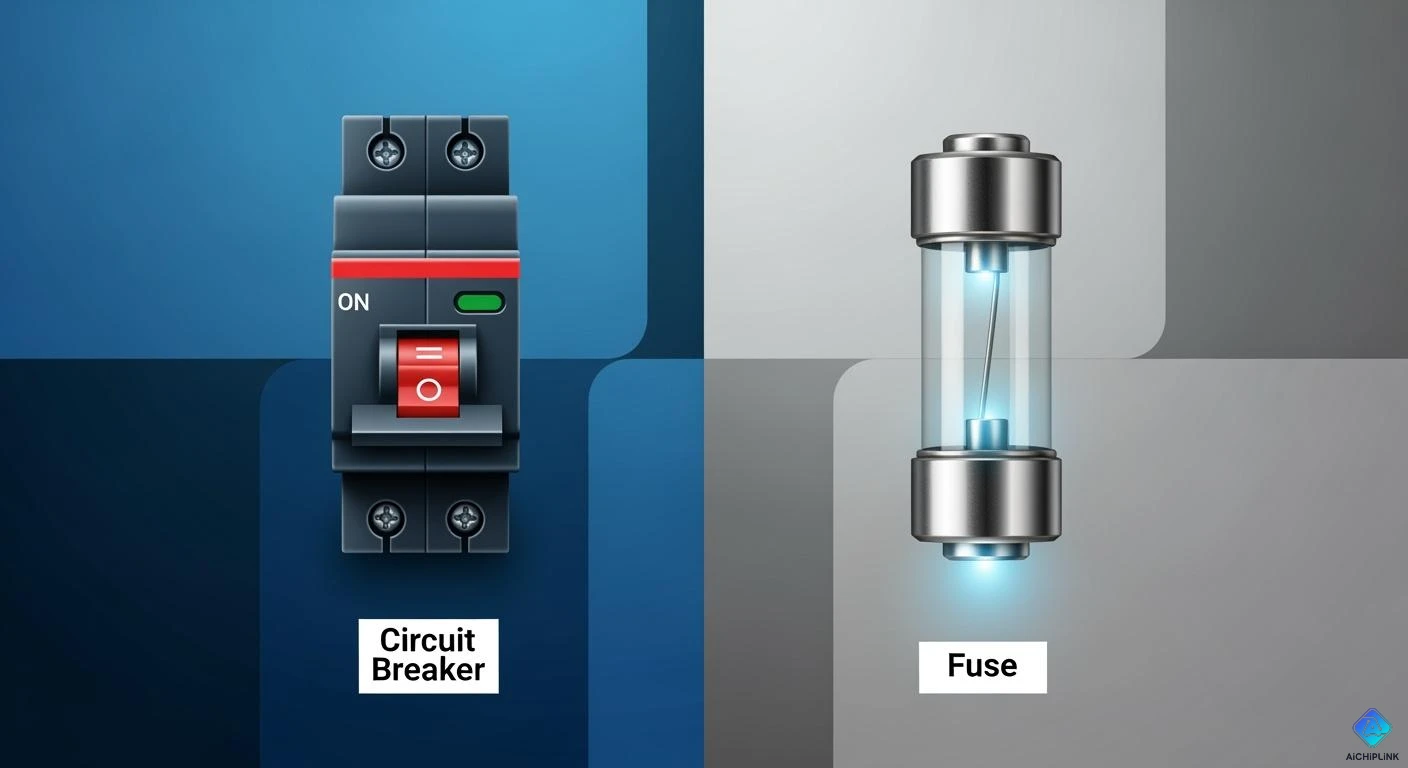
Imagine you plug in a new device and the power stops. You might wonder if a fuse or a circuit breaker did it. The biggest difference in the circuit breaker vs fuse electronics debate is that a circuit breaker can reset, while a fuse needs to be replaced if it blows. Knowing these differences keeps you safe and protects your devices from harm. Circuit breakers often have ground fault protection, which lowers the risk of fire in your home. Fuses can be less safe if you use the wrong kind. Learning about circuit breaker vs fuse electronics helps you choose the best one for your needs.
Key Takeaways
-
Circuit breakers can be used again after they trip. Fuses need to be changed when they blow. This means circuit breakers are easier and save money over time.
-
Circuit breakers have extra safety features like ground fault protection. These features help stop fires and electric shocks. Fuses do not have these extra safety features.
-
Fuses work faster when there is a power surge. This makes them good for protecting sensitive electronics. Use fuses for fast protection. Use circuit breakers for homes or factories.
-
Think about the cost over time. Fuses cost less at first but can get expensive if you replace them a lot. Circuit breakers cost more at first but save money later.
Circuit Breaker vs Fuse Electronics Overview
Circuit Breaker Definition
A circuit breaker helps keep electronics safe from harm. It works like a switch that turns off if there is a problem. Too much current or a short circuit can make it turn off. You can turn a circuit breaker back on after it trips. You do not have to buy a new one. There are different kinds of circuit breakers. Some are low-voltage, some are medium-voltage, and some are high-voltage. People use them in houses, factories, and power plants. Each kind works with a certain voltage and has special jobs.
| Breaker Type | Voltage Range | Examples | Typical Uses |
|---|---|---|---|
| Low-Voltage | Usually <1 kV | Miniature (MCB), molded case (MCCB) | Homes, factories, offices |
| Medium-Voltage | 1-72 kV | Air, vacuum, SF6 breakers | Power plants, data centers |
| High-Voltage | 72.5+ kV | Vacuum, SF6, air blast, oil types | Power transmission networks |
Fuse Definition
Fuses keep your devices safe by stopping too much current. You can find fuses in cars, gadgets, and home machines. If a fuse blows, you need to put in a new one. There are many kinds of fuses. Some are fast-acting, slow-blow, resettable, blade, and sub-miniature. Each kind is made for a special job. Some protect small electronics. Others handle big currents.
-
Fast-acting fuses: Keep small parts safe from shorts.
-
Slow-blow fuses: Can take quick surges, good for motors.
-
Resettable fuses: Cool down and work again, used in battery devices.
-
Blade fuses: Used a lot in cars.
-
Sub-miniature fuses: Fit into tiny spaces.

How They Work
The main difference between a circuit breaker and a fuse is how they stop problems. A circuit breaker uses switches and trip units to open the circuit. It can sense trouble with heat or magnets. You can reset it after you fix the issue. A fuse melts a metal part if the current gets too high. This stops the power, but you must replace the fuse.
| Component | Fuse Operation | Circuit Breaker Operation |
|---|---|---|
| Mechanism | Melts a conductive element to interrupt current flow during faults. | Uses mechanical switches to open the circuit upon detecting faults. |
| Response to Overcurrent | Melting of a low-melting-point metal element due to excessive current. | Opens contacts quickly via an internal tripping mechanism when a fault is detected. |
| Reusability | Single-use; must be replaced after operation. | Reusable; can be reset and put back into service after a fault is cleared. |
| Trip Mechanisms | N/A | Thermal, Magnetic, Thermomagnetic, Hydraulic-Magnetic trip units for various faults. |
| Arc-Quenching | Uses materials like quartz sand or air to extinguish arcs. | Requires a robust arc-extinguishing system, especially for high-voltage applications. |
People use circuit breakers for main panels. Fuses are used to protect single devices. You pick between a circuit breaker and a fuse based on if you want to reuse it, how fast it works, and how much it costs.
Circuit Breaker vs. Fuse Key Differences
Reusability and Safety
When you look at circuit breakers and fuses, you notice they work differently. Circuit breakers can be reset after they trip. You do not need to buy a new one each time. Fuses must be replaced after every problem. This means you spend more money and time with fuses.
-
Circuit breakers help you save money because you do not replace them after every overload.
-
You can reset a circuit breaker fast, so your devices work again quickly.
-
Fuses need to be changed after each use, which takes time and costs more.
-
Circuit breakers have extra safety parts. They use a tripping system inside, so you do not touch wires or metal.
-
Some circuit breakers have special protection like GFCI or AFCI. These features help stop fires and shocks. Fuses do not have these features.
Tip: If you want less work and more safety, pick a circuit breaker for your main power lines.
Protection Types
It is important to know how each device protects your electronics. Circuit breakers use both heat and magnets to work. The heat part reacts when there is too much current. The magnet part reacts to strong surges or short circuits. This means circuit breakers can protect from many problems.
Fuses protect by melting a thin wire inside. When the current is too high, the wire melts and stops the power. Fuses are good for simple jobs, but they do not have the extra features of circuit breakers.
-
Circuit breakers use heat and magnets for protection.
-
Fuses only use a melting wire.
Response Time
How fast each device works is important. Fuses act very quickly. When there is a big surge, the wire melts almost right away. This fast action can protect sensitive electronics. Circuit breakers also work fast, but sometimes take a little longer, especially in big problems.
Here is a table to help you compare:
| Device Type | Response Time |
|---|---|
| Miniature Circuit Breaker (MCB) | Less than 10 milliseconds |
| Fuse | Very fast (almost instant) |
You should use fuses for devices that need the fastest protection. Use circuit breakers when you want speed and extra features.
Cost Comparison
Cost matters when you pick between fuses and circuit breakers. Fuses cost less at first. You pay a small amount for each fuse. But you need to buy a new fuse every time one blows. This adds up if you have many problems.
Circuit breakers cost more when you buy them. But you do not need to replace them after each trip. You just reset them. This saves money and time later.
Here is a quick look at the cost:
| Maintenance Factor | Fuse | Circuit Breaker |
|---|---|---|
| Replacement Parts | Needed | Rarely Needed |
| Downtime | Higher | Lower |
| Maintenance Cost | Medium | Lower Long-Term |
-
Fuses are cheaper at first but cost more over time.
-
Circuit breakers cost more at first but save money and reduce downtime.
Note: For homes and places with many devices, circuit breakers are often the better choice.
Quick Reference Table
Here is a summary table to help you compare circuit breakers and fuses:
| Feature | Circuit Breaker | Fuse |
|---|---|---|
| Reusability | Yes, resettable | No, single-use |
| Safety Features | Advanced (GFCI, AFCI, no exposed parts) | Basic, manual replacement |
| Protection Types | Thermal and magnetic | Melting wire only |
| Response Time | Fast, but sometimes slower than fuses | Very fast, almost instant |
| Upfront Cost | Higher | Lower |
| Long-Term Cost | Lower | Higher |
| Downtime | Minimal | Can be significant |
Now you can see the main differences between circuit breakers and fuses. Think about what matters most for your project—speed, safety, or cost—before you choose.
Circuit Breaker and Fuse Pros and Cons
Circuit Breaker Pros and Cons
Circuit breakers keep your electronics safe from too much current. They help stop damage and lower fire risks. You can reset them like a switch. You do not need to buy a new one after every problem. Circuit breakers work well in homes and factories. They protect many devices and give reliable safety. They cost more to install and fix than fuses. Sometimes, they react slower than fuses. You must test and check them often. Switching can sometimes cause voltage spikes.
| Advantages of Circuit Breakers | Disadvantages of Circuit Breakers |
|---|---|
| Stops too much current | Expensive to install and repair |
| Can be reset easily | Slower than fuses sometimes |
| Very reliable | Needs regular maintenance |
| Gives special protection | Can cause voltage spikes |
| Lowers fire risks | N/A |
Tip: Circuit breakers can be used again, so you make less waste than fuses.
Fuse Pros and Cons
Fuses give simple and quick protection. They cost less and are small in size. Fuses react fast to problems. This makes them good for sensitive electronics. You find fuses in small appliances and cars. You must replace a fuse after every problem. Fuses cannot be used again. You spend more time and money if problems happen often. Fuses do not have advanced safety features.
| Advantages | Disadvantages |
|---|---|
| Cheap | Must replace after every problem |
| Reacts very fast | Not reusable |
| Simple to use | Limited protection |
| Small size | Not good for many problems |
Note: Fuses make more waste because you throw them away after each use.
Application Scenarios
You pick a fuse or circuit breaker based on what you need. Circuit breakers are best for main power panels and factories. They protect big systems and help lower downtime. Fuses are better for small devices and sensitive electronics. You use fuses in microwaves, TVs, and circuit boards. Fuses also protect heating devices and electric cars.
| Type of Protection | Application Scenario | Key Features |
|---|---|---|
| Circuit breaker | Main panels, machines, vehicles | Can be used again, strong safety |
| Fuses | Electronics, small appliances, circuit boards | Small, reacts fast |
| Thermal fuses | Heating devices | Stops overheating |
| Resettable fuses | Battery devices, electronics | Works again after cooling |
If you want quick action and low cost, pick fuses. If you need reusable safety and extra features, choose a circuit breaker.
Choosing Circuit Protection Devices
Factors to Consider
When you pick between a circuit breaker and fuses, you should think about a few key things. You want your protection to be safe, work well, and not cost too much. First, look at what device you want to protect. Some devices need fast action. Others need to be easy to fix.
| Factor | Circuit Breakers | Fuses |
|---|---|---|
| Performance Consistency | Stays reliable over time | Can wear out and trip early |
| Safety Features | Simple and safe to use | Wrong replacement can cause fire |
| Response Time | Fast for overloads | Very fast for surges |
| Maintenance | Easy to reset, less work | Needs replacement after each use |
| Cost | Higher at first, saves money later | Cheaper at first, costs more over time |
| Application Suitability | Good for modern loads | Best for simple or sensitive devices |
You also need to follow safety rules like the National Electrical Code or local laws. Check how much electricity your device uses and where you will use it. If you use it in a wet place, pick a sealed type. If you have motors or big machines, make sure it can handle high power.
Tip: Always match the voltage and current ratings to your system. This stops accidents and keeps your equipment safe.
Practical Tips
Here are some tips to help you choose the right protection:
-
Pick fuses if you do not want to spend much, need fast action, or have sensitive electronics.
-
Choose a circuit breaker if you want easy resets, less work, or plan to add more devices later.
-
For home systems, circuit breakers are best because they are safe and easy to use.
-
Use fuses for small gadgets or low-power devices that need quick action.
-
Make sure the voltage rating is higher than your supply voltage.
-
Set the current rating at 125-150% of your device’s normal use to stop false trips.
-
In wet or dusty places, use sealed protection devices.
-
For places with lots of faults, pick high-rupture types for big surges.
-
Do not make mistakes like using the wrong amp rating or ignoring the environment.
Note: The main difference is that circuit breakers can be used again, but fuses must be replaced. This changes how much you spend and how often you need to do work.
By thinking about these things, you can pick the right protection and keep your devices safe.
You now know that circuit breakers and fuses protect your electronics in different ways.
-
Fuses melt to stop extra current, while circuit breakers trip a switch.
-
Fuses work best for low-current devices. Circuit breakers fit high-current machines and modern homes.
-
Fuses cost less at first, but circuit breakers save time with easy resets.
Choosing the right device keeps your system safe and reliable. Always match your choice to your needs for better protection and longer equipment life.

Written by Jack Elliott from AIChipLink.
AIChipLink, one of the fastest-growing global independent electronic components distributors in the world, offers millions of products from thousands of manufacturers, and many of our in-stock parts is available to ship same day.
We mainly source and distribute integrated circuit (IC) products of brands such as Broadcom, Microchip, Texas Instruments, Infineon, NXP, Analog Devices, Qualcomm, Intel, etc., which are widely used in communication & network, telecom, industrial control, new energy and automotive electronics.
Empowered by AI, Linked to the Future. Get started on AIChipLink and submit your RFQ online today!
Frequently Asked Questions
What happens if you use the wrong fuse or circuit breaker?
You risk damaging your device or causing a fire. Always match the rating to your system. Using the wrong size can lead to unsafe conditions or equipment failure.
Can you use a fuse and a circuit breaker together?
Yes, you can use both for extra safety. You might see this setup in large systems. The fuse protects sensitive parts, while the circuit breaker guards the main circuit.
How do you know when to replace a fuse?
You need to replace a fuse when it blows. You will notice your device stops working. Check the fuse for a broken wire or dark marks before replacing it.
Why do circuit breakers trip so often?
Frequent tripping means you have too much current or a wiring problem. You should check your devices and wiring. If the problem continues, ask an electrician for help.
Is a fuse an electrical protection device?
Yes, a fuse is an electrical protection device. It stops too much current from damaging your electronics. You find fuses in many gadgets and vehicles.