What Are DC Switching Regulators and How Do They Work
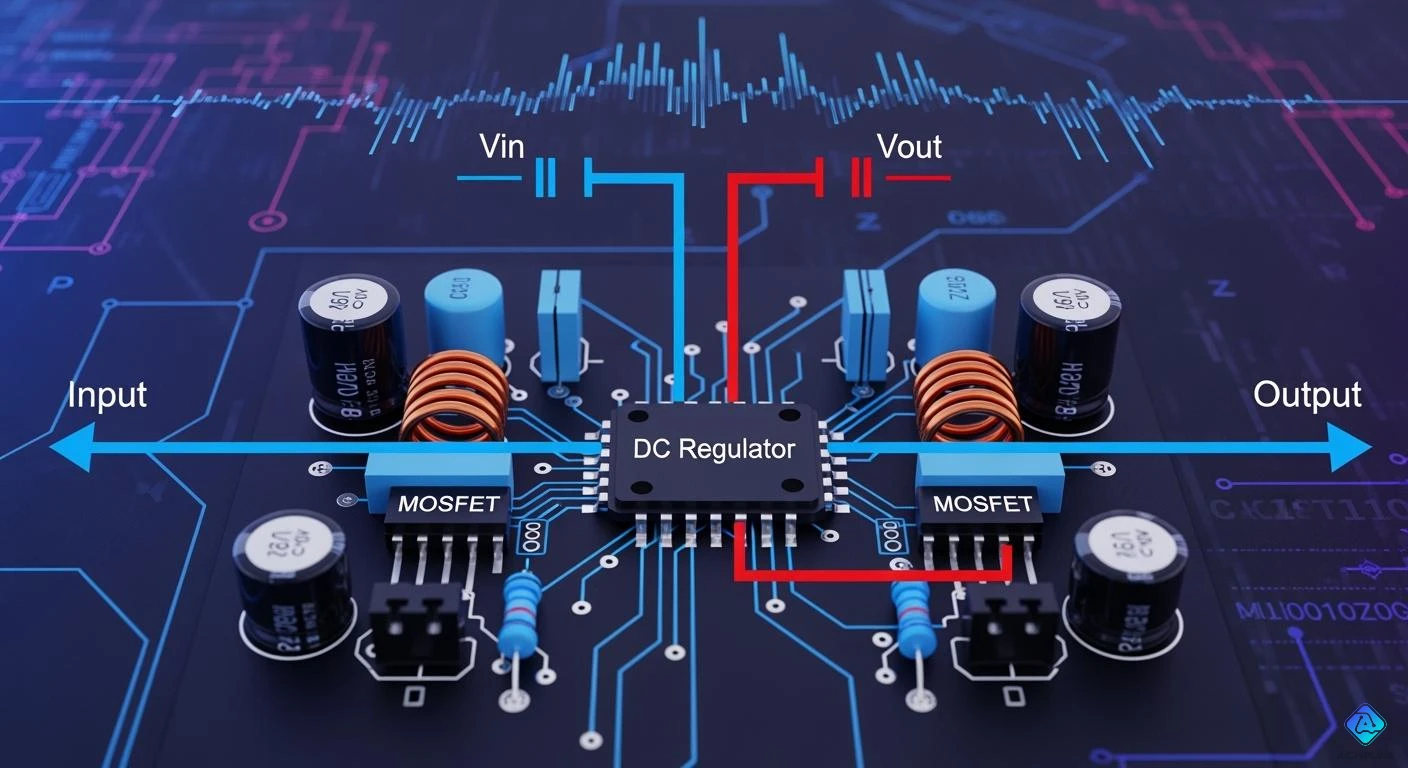
You use dc switching regulators to turn one dc voltage into another. These devices help give electronic circuits the correct voltage. A regulator works by turning transistors on and off very fast. This keeps energy loss low. You save energy because dc switching regulators are over 90% efficient. They waste less power than linear regulators. They also make less heat. High efficiency is important if you want your devices to stay cool and work longer.
Key Takeaways
-
DC switching regulators change one DC voltage to another. They do this in a way that saves energy and makes less heat.
-
These regulators are very important in today’s electronics. You can find them in things like smartphones and laptops. They help batteries work longer.
-
They are very efficient, often over 90%. This means they waste less power than linear regulators. That makes them great for devices that need a lot of power.
-
To lower output ripple, use good filter capacitors. Also, make sure you design your circuit layout well.
-
When picking a switching regulator, think about efficiency, output noise, and voltage needs. This helps your device work its best.
DC Switching Regulators Overview
What Is a DC Switching Regulator
A switching regulator helps change one dc voltage to another. It does this by turning on and off very quickly. You can find switching regulators in many devices. These include smartphones, laptops, tablets, and wearables. They give power to processors, memory, sensors, and display drivers. High efficiency helps batteries last longer and keeps things cool. Switching regulators are important for modern electronics. They are used in both home and work devices. Their high efficiency and flexibility make them good for many devices. This helps them work well in different places.
In factories, steady power is very important. DC to DC voltage regulators keep the voltage stable. This is needed for PLCs, servo drives, and sensor networks to work right.
Key Components and Features
A switching regulator circuit has several main parts. Each part helps control the voltage. The table below lists the main parts and what they do:
| Component | Function |
|---|---|
| Input capacitor Cin | Takes in changes in input current, usually from tens to hundreds of μF. |
| Switch element SW1 | Turns on and off, often a MOSFET, works as a high-side switch. |
| Switch element SW2 | Makes a loop with the output inductor and load, often a MOSFET for better efficiency. |
| Output inductor L | Stores energy when SW1 is on and gives it back when SW1 is off, with inductance from nH to μH. |
| Output capacitor Cout | Takes in changes in output voltage, makes it smoother, usually several μF to tens of μF. |
Switching regulators are very efficient. They also help manage noise and heat. These features help your devices last longer and work better.
| Feature | Contribution to Performance in Voltage Regulation |
|---|---|
| High Efficiency | Often over 80%, so they are good for high-power jobs. |
| Noise Management | New designs cut down noise, making SNR and SFDR better. |
| Thermal Performance | Good heat control helps regulators last longer and stay reliable. |
DC Switching Regulators vs Linear Regulators
You might wonder how switching regulators are different from linear regulators. The table below shows the main differences:
| Feature | Linear Regulators | Switching Regulators |
|---|---|---|
| Design Complexity | Simple Design | Complex Design |
| Power Management | Wastes Extra Power | Saves Extra Power |
| Efficiency | Lower Efficiency | Higher Efficiency |
| Thermal Stress | More Heat | Less Heat |
Tests show that switching regulators are about 94% efficient. This is much better than the 62% efficiency of linear regulators. Switching regulators stay cooler and do not need big heat sinks or fans. Linear regulators are best when you need a very clean output or when the input voltage is just a little higher than the output. They are also cheaper and easier if saving power is not the main goal.
Switching Regulator Operation
Operating Principles
A switching regulator is like a smart energy manager. It uses a power switch called a FET. This switch turns the current on and off very fast. This action is called switching. When the switch is on, energy moves to the inductor. The inductor holds this energy for a short time. When the switch turns off, the inductor sends energy to the output. A diode helps the energy go the right way. It also stops energy from going backward.
The switching controller IC is like the brain. It tells the switch when to turn on or off. This keeps the output voltage steady. The output capacitor makes the voltage smooth. This gives you a clean output. The switching regulator does this process many times each second.
If you make the switching frequency higher, you can use smaller parts. This means the switching regulator can be smaller and lighter. But, higher frequency can cause more switching losses. It can also make more electromagnetic interference. You need to find a good balance between size, efficiency, and noise.
Feedback and Control Loop
A switching regulator uses a feedback loop to keep the voltage stable. Here is how it works:
-
The feedback loop checks the output voltage all the time.
-
If the voltage changes, the regulator changes the switching pattern.
-
This keeps the output voltage at the right level, even if the load or input voltage changes.
There are different types of feedback in switching regulators. The table below shows the most common ones:
| Feedback Mechanism | Description |
|---|---|
| Voltage Mode Control | Basic method using output voltage feedback through an error amplifier comparing it with a reference. |
| Current Mode Control | Modification of voltage mode, using inductor current for control instead of triangular waveforms. |
| Hysteresis Control | Designed for fast load transient response, detects output ripples for control, also known as ripple control. |
The feedback and control loop helps the regulator react fast to changes. This keeps your devices safe and working well.
Ripple and Output Characteristics
The output of a switching regulator is not always perfectly smooth. This small change is called ripple. Ripple happens because filter capacitors cannot remove all AC signals. You can measure ripple by looking at how much the voltage goes up and down. High ripple can make sensitive circuits less accurate. It can also make devices less stable.
Here are some important facts about ripple in switching regulators:
-
Ripple comes from filter capacitors not removing all AC signals, so the output voltage changes a little.
-
You can measure ripple to see how much the voltage varies.
-
High ripple can hurt the performance of sensitive circuits.
-
Ripple can make your device less reliable.
-
You can lower ripple by using good filter capacitors and a well-designed voltage regulator circuit.
You can use different ways to lower ripple in a switching regulator:
-
PCB Layout: A good PCB layout can lower output ripple a lot.
-
Component Selection: Pick capacitors with low ESR to help reduce ripple.
-
Circuit Design Strategies: Use special circuit modes, like forced PWM, to control ripple.
If you follow these tips, your switching regulator will work better. This helps keep your devices safe.
Types of DC to DC Voltage Regulators
Buck (Step-Down) Regulator
A buck switching regulator is used to lower voltage. It takes a higher input voltage and makes it lower. You use it when your device needs less voltage than the battery gives. For example, if you have 6V but need 5V, a buck switching regulator helps. Many devices use buck switching regulators to get the right voltage.
Here is a table that shows how well a buck switching regulator works:
| Mode | Input Voltage (V) | Output Voltage (V) | Load Current (mA) | Efficiency (%) |
|---|---|---|---|---|
| Stepdown | 6 | 5 | 180 | 93 |
Buck switching regulators are very efficient. They often work at more than 90%. This helps batteries last longer and keeps devices cool.
Boost (Step-Up) Regulator
A boost switching regulator makes voltage higher. You use it when your battery gives less voltage than your device needs. For example, if your battery is 3V but you need 5V, a boost switching regulator helps.
Boost switching regulators are found in portable electronics. They let you use fewer batteries but still get enough voltage. This is good for rechargeable devices.
-
Boost switching regulators help when input voltage is lower than output voltage.
-
They work well in devices that need more voltage from a small battery.
-
You can use fewer battery cells because the boost switching regulator increases voltage.
Buck-Boost & Inverting Regulator
A buck-boost switching regulator can raise or lower voltage. It gives you more options for your circuit. An inverting switching regulator can make negative voltage from a positive source.
Here is a table with the main types:
| Type of Regulator | Functionality | Key Component |
|---|---|---|
| Buck | Steps down voltage | Inductor |
| Boost | Steps up voltage | Inductor |
| Inverting | Inverts voltage | Inductor |
-
Buck-boost and inverting switching regulators let you set the output voltage higher, lower, or negative.
-
Inductors store energy and help change voltage.
-
You control the output voltage by switching and using pulse-width modulation.
Choosing the Right DC-DC Converter
You should pick the best dc-dc converter for your project. Here are some steps to help you choose:
-
Match your needs to the converter’s features.
-
Decide the voltage and current you need, with some extra room.
-
Think about temperature, altitude, and if you need isolation.
-
Look for efficiency above 85% for better results.
-
Check the package style for easy building and heat control.
-
Make sure the converter meets safety and EMC rules.
Tip: Always check your load power and input voltage range before picking a switching regulator.
A dc to dc voltage regulator helps you get the right voltage. Using a switching regulator saves energy and keeps your device safe.
Advantages & Uses of DC Switching Regulators
Efficiency and Heat Management
A switching regulator helps your power supply work better. It is more efficient than a linear regulator. The switching regulator stores energy in inductors or capacitors. It lets out the energy at different voltages. The transistors switch on and off very fast. This makes pulsed waveforms. These waveforms get filtered into smooth DC output. Less energy turns into heat in this process. Switching regulators can be 75% to 98% efficient. Linear regulators are only 30% to 60% efficient.
| Regulator Type | Efficiency Range |
|---|---|
| Switching Regulators | 75% to 98% |
| Linear Regulators | 30% to 60% |
Switching regulators do not make much heat. This means you can make smaller devices. You do not need big heatsinks. For high-power jobs, you can use thermal vias, copper pour, or metal cases to help with heat.
Noise and EMI Considerations
Switching regulators can make electromagnetic interference, or EMI. This happens because they switch on and off quickly. There are different types of EMI. Some are continuous, some are radio frequency, some are broadband noise, and some are short pulses. EMI can come from power supply hum, wireless signals, or switching circuits.
| Type of EMI | Frequency Range | Sources of EMI |
|---|---|---|
| Continuous Interference | Up to 20 kHz | Power supply hum, audio equipment |
| Radio Frequency Interference | 20 kHz and above | Wireless transmissions, industrial equipment |
| Broadband Noise | Multiple frequencies | Solar activity, arc welders |
| Transient EMI | Short pulses | Switching circuits, motors, power line surges |
You can lower noise by using input and output capacitors. Inductors and ferrite beads also help. Put capacitors close to the regulator pins. Use short and wide traces. Keep the feedback network near the regulator. This stops noise from getting picked up. You can add a PI filter or extra EMI filters if you need them.
Applications in Electronics, Automotive, Industrial, Renewable Energy
DC switching regulators are used in many areas. In electronics, they give power to processors, memory, and sensors. In cars, they help with ADAS, battery management, infotainment, and electric power steering. Renewable energy systems use them in solar panels and wind turbines. They help change and control voltage.
| Application Area | Specific Applications |
|---|---|
| Automotive | ADAS, EV/HEV, Battery Management, Infotainment |
| Electric Power Steering, On Board Chargers, Inverters | |
| Renewable Energy | Solar panels, Wind turbines, Energy monitoring |
In factories, switching regulators use power switches, inductors, and diodes. They move energy in a smart way. This gives steady voltage to controllers and sensors. It makes the system work better. A dc to dc voltage regulator or dc-dc converter saves energy. It also keeps your devices cool and safe.
Selection Tips & Innovations
Factors for Choosing a Switching Regulator
When you choose a switching regulator, you need to check some important things. These things help your device work well and stay safe. Here are the main things to look at:
-
Efficiency: High efficiency saves energy and makes less heat.
-
Output noise levels: Low noise helps your circuits work better.
-
Input and output voltages: Make sure the switching regulator can handle your voltages.
-
Output current across the loading range: Check if the regulator gives enough current for all your loads.
-
Comprehensive performance data from datasheets: Always read the datasheet for details about the switching regulator.
You should also think about the size of the dc to dc voltage regulator. See if it is easy to cool and fits on your board. If your device is small, pick a compact dc-dc converter with good heat control. High efficiency helps your device last longer and stay cool.
Tip: Always match the switching regulator’s features to what your project needs. This helps you avoid problems and get the best results.
Recent Trends in DC Switching Regulators
There are many new things happening with switching regulators. Companies now use wide-bandgap semiconductors like GaN and SiC. These materials let the switching regulator work faster and waste less power. You get high efficiency and quicker system response. Better heat control also helps the switching regulator work well, even in small spaces.
Today, more switching regulators have smart features. These features let them change when the load or temperature changes. This makes your system work better and last longer. In consumer electronics, companies use advanced packaging and integration. They put the switching regulator, capacitors, and inductors together in one small package. This makes the converter smaller and helps control heat. You get high efficiency and better performance in a smaller space.
If you want to keep up with new switching technology, watch for these trends. They help you make devices that are smaller, faster, and more reliable.
You have learned that dc switching regulators give steady power. They work with high efficiency and do not make much heat. These devices use fast switches, inductors, and diodes to control voltage. You can use them for many things.
| Advantage | Description |
|---|---|
| High Efficiency | Over 90%, so you save energy and reduce heat. |
| Design Flexibility | Compact size fits many projects and devices. |
| Low Heat | Less heat means longer device life and safer operation. |
You can use dc switching regulators in electronics, cars, and renewable energy. If you want to know more, check out these links:
Stay curious and keep learning about new power supply ideas!

Written by Jack Elliott from AIChipLink.
AIChipLink, one of the fastest-growing global independent electronic components distributors in the world, offers millions of products from thousands of manufacturers, and many of our in-stock parts is available to ship same day.
We mainly source and distribute integrated circuit (IC) products of brands such as Broadcom, Microchip, Texas Instruments, Infineon, NXP, Analog Devices, Qualcomm, Intel, etc., which are widely used in communication & network, telecom, industrial control, new energy and automotive electronics.
Empowered by AI, Linked to the Future. Get started on AIChipLink and submit your RFQ online today!
Frequently Asked Questions
What is the main job of a DC switching regulator?
A DC switching regulator changes one DC voltage to another. It helps your device get the right voltage. It works with high efficiency and makes less heat.
Why do devices need high efficiency in power supplies?
High efficiency saves energy. It also keeps your device cool. Less heat helps your device last longer and work better.
Can you use DC switching regulators in battery-powered devices?
Yes, you can use DC switching regulators in battery-powered devices. They help batteries last longer because they waste less energy.
How do you reduce noise from a switching regulator?
You can use good capacitors and short traces. Careful layout also helps. These steps lower noise and keep your circuits stable.
What is ripple in a switching regulator?
Ripple is a small change in the output voltage. You see it as tiny waves on the voltage. Good design helps keep ripple low.