AC DC vs DC DC Converters Which Is Best for Your Electronics Project
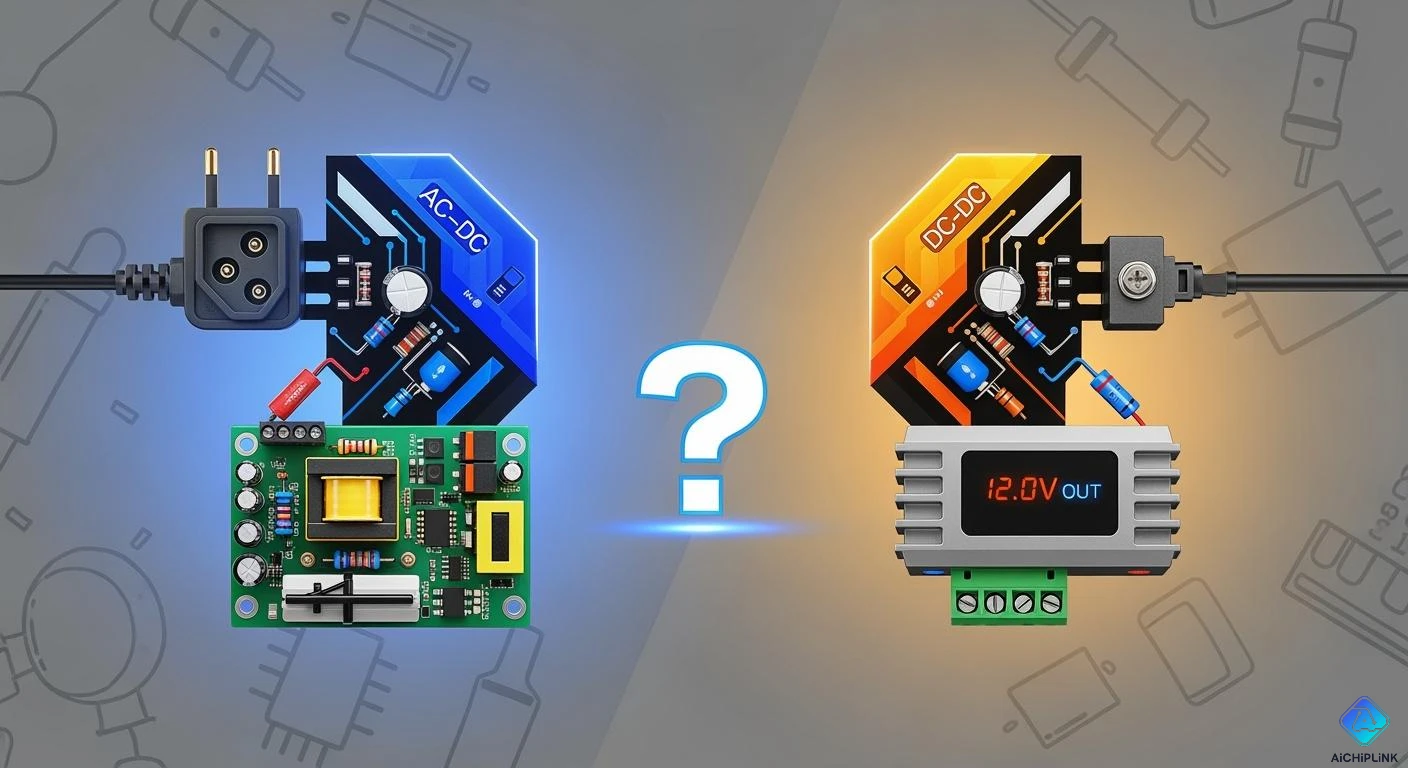
If you want to use a wall outlet for power, you need an ac/dc converter. If you have a battery or other DC supply, a dc/dc converter is better. You should check your power source and voltage needs. Think about efficiency, size, and how much money you can spend. Choosing the right ac/dc or dc/dc converter helps your project work well and stay safe.
Key Takeaways
-
Use an AC/DC converter if your project uses a wall outlet. This gives safe and steady power to your electronics.
-
Pick a DC/DC converter for battery or solar power projects. It changes voltage to fit what your device needs.
-
Always look at your voltage needs before picking a converter. Matching voltage stops your electronics from getting hurt.
-
Think about efficiency and price when you choose a converter. Efficient converters save energy and lower costs over time.
-
Notice the size of the converter. A small design fits your project and helps it stay cool.
AC/DC and DC/DC Converter Basics
What Is an AC/DC Converter
An ac/dc converter changes ac from a wall outlet into dc. This converter turns alternating current into direct current. You can find ac-dc converters in things like battery chargers and home devices. The converter makes the power safe and steady for your electronics.
-
Rectification: Diodes let electricity move one way. They stop the negative part of the ac wave. This makes the dc pulse.
-
Filtering: Capacitors and chokes smooth out the voltage. They lower interference and keep the dc steady.
-
Regulation: Voltage regulators keep the voltage stable. They protect electronics from spikes and ripple.
-
Switched-Mode Power Supply: High-frequency switches help the converter work better. They cut down heat and make designs smaller.
You need an ac/dc converter if your power comes from ac. This converter is important for projects that use wall outlets.
What Is a DC/DC Converter
A dc-dc converter changes one dc voltage to another. You use dc-dc converters when you have a dc supply, like a battery. They help you get the right voltage for different parts of your project. These converters do not change the type of electricity. They only raise or lower the voltage.
-
DC-dc converters help circuits get the voltage they need.
-
They keep voltage steady and stop harmful changes.
-
These converters manage power and use it well.
-
In portable devices, dc-dc converters can boost voltage when batteries are low.
-
You see dc-dc converters in phones, electric cars, factories, and robots.
A dc to dc converter makes sure each part gets the right voltage and current. This helps power conversion and keeps electronics safe.
Tip: Always check your power source before picking a converter. If you start with ac, use an ac to dc converter. If you start with dc, use a dc to dc converter.
| Feature | AC-DC Converters | DC-DC Converters |
|---|---|---|
| Function | Changes AC to DC | Changes DC voltage levels |
| Applications | Home electronics, battery chargers | Portable electronics, electric cars |
| Voltage Adjustment | Not needed (AC to DC conversion) | Raises or lowers DC voltage |
| Power Source | AC from wall outlets | DC from batteries or other sources |
| Efficiency | Varies, usually lower than DC-DC | Can be made for high efficiency |
When to Use AC/DC or DC/DC
Common AC/DC Applications
You use ac/dc converters when your project uses ac from a wall. These converters turn ac into dc. Most electronics at home and work need this step. You see ac-dc converters in many things every day.
-
You use ac to dc adapters to power computers and tablets.
-
You charge phones and music players with battery chargers that use ac-dc converters.
-
You run fridges, microwaves, and air conditioners. These use ac but need dc inside.
-
You light rooms with LED lights. These lights need ac to dc converters for the right voltage.
-
You help machines and green energy systems work. These often use ac-dc converters for steady dc.
-
You keep electronics safe with backup power supplies. These converters keep voltage steady during blackouts.
Here is a table that shows devices using ac-dc converters:
| Device Type | Application Description |
|---|---|
| Portable Electronics | Laptops, phones, and small devices use external power adapters. |
| Household Appliances | TVs, fridges, and air conditioners change ac to dc for their circuits. |
| Industrial Equipment | Strong cases for tough places and small open-frame types. |
| LED Lighting Systems | Need ac to dc converters for the right dc voltage. |
Note: If your project plugs into a wall or uses ac, you need an ac/dc converter to make power safe for your electronics.
Common DC/DC Applications
You use dc-dc converters when your project starts with dc from a battery or solar power. These converters change the voltage to what your electronics need. You see dc to dc converters in many new devices.
-
You power phones and tablets. Each part needs a different voltage.
-
You use dc-dc converters in electric cars. The main battery gives high voltage, but small parts need less.
-
You build solar power systems. These use dc to dc converters to raise or lower voltage for storage or use.
-
You design robots and factory machines. These need steady voltage for motors and sensors.
-
You work with green energy systems. Dc-dc converters help control power from solar panels or wind.
-
You use dc to ac converters to turn battery power into ac. You also use dc to dc converters to set voltage before changing to ac.
You often use dc-dc converters in projects to save space and use power well. These converters help you get the right voltage and current for each part.
Tip: Always check your power and voltage needs before picking a converter. If you start with dc, use a dc to dc converter for the best results.
Power Source and Voltage Needs
AC Power Source
You see ac power in homes, schools, and factories. Wall outlets give ac power. The voltage is usually between 100 and 240 V. The frequency is 50 Hz or 60 Hz. You need an ac-dc converter for electronics that use wall outlets. This converter changes ac to dc for your devices. Big machines use ac because it can handle more power. Small electronics need dc to work safely. If you use solar panels, you must change ac and dc to fit your system.
-
AC power is good for big machines.
-
DC power is better for small electronics.
-
Solar panels and wind turbines need both ac and dc conversion.
You should check voltage before picking a converter. Microprocessors and ICs often need 3.3V or 5V. Boards like Arduino Uno use 6V to 12V. Always match the voltage to your device.
DC Power Source
You use dc power with batteries, solar panels, or portable devices. DC-dc converters help you set the right voltage. Input voltages for dc-dc converters are not always the same. You need to know the input voltage range for your project. This keeps your electronics safe and helps with power.
-
Batteries and solar panels give dc power.
-
You must set the right voltage for each part.
-
DC-dc converters let one battery power many things.
You use dc to ac converters to run ac devices from dc. You also use dc to dc converters to change voltage for different parts.
Voltage Step-Up or Step-Down
You need to know if you must raise or lower voltage. DC-dc converters can boost or lower voltage as needed. These converters make sure each part gets the right voltage. AC/dc converters use rectification to turn ac into dc. They often use diodes or switches. DC to ac converters change battery power into ac for home devices.
-
DC-dc converters change dc voltage levels.
-
AC/dc converters turn ac into dc for electronics.
-
DC to ac converters let you use dc for ac tools.
Always check your power and voltage before picking a converter. This helps your project work safely and well.
Efficiency and Cost
Efficiency Comparison
You want your project to work well and not waste power. Efficiency shows how much input power becomes useful output. AC to DC converters are usually less efficient than dc-dc converters. This is because ac to dc converters must change ac into dc. That adds more steps and wastes some energy. Dc-dc converters only work with dc, so they can be more efficient. They work best when you use the right load.
-
AC to DC converters lose more energy during rectification.
-
DC-dc converters work better if you match voltage and current.
-
Battery-powered projects do better with dc-dc converters.
The place where you use your converter also matters for efficiency. You should check if your converter can handle heat and dust. The table below shows what to think about:
| Environmental Condition | Impact on AC to DC Converter Selection |
|---|---|
| Operating Temperature Range | Pick supplies that work in your temperature range. Too much heat or cold can make them work worse. |
| Dust, Dirt, Foreign Objects | Choose supplies with cases or coatings to keep out dirt. |
| Thermal Derating | High heat can lower output power. You may need extra cooling. |
Cost Factors
You should think about cost when you pick a converter. AC to DC converters can cost more at first. They have more parts to handle both ac and dc. Dc-dc converters often cost less, especially for small projects. These only need to change voltage. You should also think about long-term savings. A more efficient converter saves power and lowers your bills over time.
-
AC to DC converters may cost more at the start.
-
DC-dc converters can save money by using less power.
-
Picking the right converter helps you avoid extra costs later.
Tip: Always balance efficiency and cost for your project. The right converter will help your electronics last longer and work better.
Size and Integration
Physical Size
You want your project to fit in a small space. AC/DC and DC/DC converters come in many shapes and sizes. Some are big and heavy. Others are very small and light. Some converters can fit inside a phone or a watch. Makers design converters to take up less space. This leaves more room for other parts on the board.
Some converters have built-in parts. These parts help make the converter smaller. High efficiency, up to 96%, means less heat is made. Small converters need good ways to get rid of heat. Special cases help move heat away so things stay cool. You can pick converters that work with many voltages. This lets you use different power sources without changing your design.
| Converter Type | Typical Size | Where You Find It |
|---|---|---|
| AC/DC | Small to Medium | Wall adapters, appliances |
| DC/DC | Very Small to Small | Phones, wearables, robots |
Tip: If you build something you carry, pick a converter that is small and works well. This helps your project last longer and not get too hot.
Compact Project Integration
You need converters that fit in tight spaces. AC/DC and DC/DC converters are easy to add to small electronics. You see them used in many places:
-
Telecommunications: Small converters power base stations and network gear.
-
Industrial Automation: Robots and machines need strong power in small boxes.
-
Consumer Electronics: Phones, tablets, and watches use tiny converters.
-
Automotive: Electric cars and radios use small converters.
-
Medical Devices: Portable tools need small and efficient converters.
DC/DC converters change voltage for chips. This keeps your electronics safe and working right. AC/DC converters turn wall power into DC for your devices. You can use special outputs and remote sensing to make your project flexible. Good integration means your device works well, stays safe, and fits in your pocket or bag.
Note: Always check the size and features of your converter. This helps you make a project that is strong and easy to carry.
Choosing the Right Converter
Quick Decision Guide
You want to pick the best converter for your electronics project. You can make a smart choice by looking at a few key points. Here is a simple guide to help you decide:
-
Check your power source. If you use AC from a wall outlet, you need an AC/DC converter. If you use DC from a battery or solar panel, you need a DC/DC converter.
-
Look at your voltage needs. Write down the voltage your device needs to work. DC-DC converters help you adjust voltage up or down if you already have DC power.
-
Think about efficiency. If you want to save energy or use batteries, DC-DC converters often give you better efficiency.
-
Measure the space you have. Some converters are big, and some are small. Pick one that fits your project.
-
Compare costs. Some converters cost more because they have more parts. Choose one that matches your budget.
You can also follow these steps to make sure you get the right converter:
-
Set the main details. Write down the highest and lowest input voltage, the output voltage, and the biggest and smallest current your project needs.
-
Figure out the smallest duty cycle and the right inductance. This helps your converter work well, even when your project uses less power.
-
Calculate the ripple current, peak current, and RMS current. This makes sure your converter can handle the load.
-
Find a real part that matches your numbers. Check that the converter you pick meets all your needs.
-
Test with DC-bias and temperature-rise charts. Make sure your converter stays safe and cool when it runs.
Tip: Always double-check your voltage and power needs before you buy a converter. This helps your electronics work safely and last longer.
Here is a quick table to help you choose:
| Power Source | Converter Type | When to Use It |
|---|---|---|
| AC | AC/DC | Wall outlets, home devices |
| DC | DC/DC | Batteries, solar panels |
Mistakes to Avoid
You can avoid many problems by watching out for common mistakes when you pick a converter:
-
Do not guess your voltage needs. Always check the numbers for your electronics.
-
Do not use the wrong converter for your power source. AC needs an AC/DC converter. DC needs a DC/DC converter.
-
Do not forget about size. A converter that is too big will not fit in your project.
-
Do not ignore efficiency. Low efficiency can waste power and make your device hot.
-
Do not skip checking the cost. Some converters look cheap but may not last long or work well.
-
Do not forget to test your converter under real conditions. Heat and dust can change how it works.
Note: You can save time and money by planning ahead. Write down your needs and check them before you buy a converter.
You can make your electronics project work better by picking the right converter and avoiding these mistakes.
You should use an ac/dc converter if your project plugs into the wall. If you use batteries or solar panels, pick a dc/dc converter. Both types help your electronics work safely and last longer. Check your voltage and power before you choose. Think about how much space you have for the converter. Also, look at safety, heat, and how much energy you use.
| Converter Type | Best Use Case | Environmental Benefit |
|---|---|---|
| AC/DC | Wall-powered devices | Supports renewable energy |
| DC/DC | Battery-powered gear | Minimizes energy losses |
You can make a good choice if you match your converter to what your project needs.

Written by Jack Elliott from AIChipLink.
AIChipLink, one of the fastest-growing global independent electronic components distributors in the world, offers millions of products from thousands of manufacturers, and many of our in-stock parts is available to ship same day.
We mainly source and distribute integrated circuit (IC) products of brands such as Broadcom, Microchip, Texas Instruments, Infineon, NXP, Analog Devices, Qualcomm, Intel, etc., which are widely used in communication & network, telecom, industrial control, new energy and automotive electronics.
Empowered by AI, Linked to the Future. Get started on AIChipLink and submit your RFQ online today!
Frequently Asked Questions
What is the main difference between AC/DC and DC/DC converters?
You use an AC/DC converter to change wall power into DC. You use a DC/DC converter to adjust DC voltage. AC/DC converters work with alternating current. DC/DC converters work with direct current only.
Can I use a DC/DC converter with an AC power source?
You cannot use a DC/DC converter with AC power. You must use an AC/DC converter first. This changes AC to DC. Then you can use a DC/DC converter to adjust the voltage.
How do I choose the right converter for my project?
You check your power source. If you use AC, pick an AC/DC converter. If you use DC, pick a DC/DC converter. Write down your voltage needs. Match the converter to your device.
Are DC/DC converters more efficient than AC/DC converters?
DC/DC converters often give you higher efficiency. They waste less energy. AC/DC converters lose more power when changing AC to DC. You save battery life with DC/DC converters.
What happens if I use the wrong converter?
You risk damaging your electronics. The device may not turn on. You could cause overheating or safety issues. Always check your power source and voltage before you choose a converter.