How an Automatic Star-Delta Starter Works for Three-Phase Motors
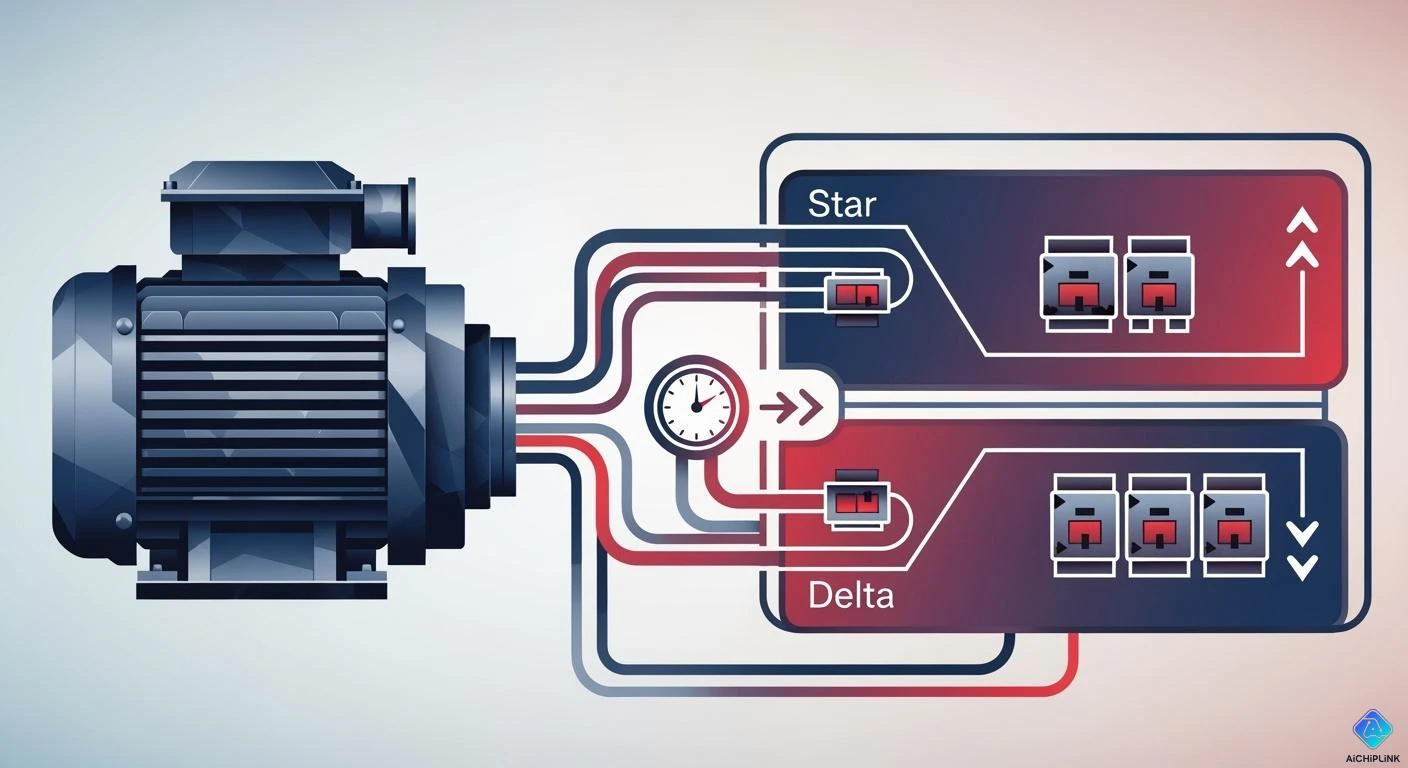
You use an automatic star-delta starter to help your three-phase motor start in a smooth way. This device makes the starting current lower and keeps your motor safe from electrical stress. When you turn on the motor, it connects in a star pattern first. Then, as the motor gets faster, it switches by itself to a delta connection.
- The starting current is only one-third as much as direct-on-line starting.
Key Takeaways
- An automatic star-delta starter lowers the starting current in three-phase motors. This helps protect the motors from electrical stress. - This starter saves money for big motors. It is cheaper to set up and take care of than other ways to start motors. - The star-delta starter lets the motor switch smoothly from star to delta connection. This keeps the motor running safely and well. - It works best for machines that need low or medium starting torque, like pumps and compressors. - Always look at the wiring diagram and interlocks before you start the motor. This helps stop electrical problems and keeps everyone safe.
Purpose of Star-Delta Starter
Why Use Star-Delta Starter
When you start a three-phase motor, the current can be very high. This can hurt your equipment and cause problems. The star-delta starter helps with this issue. At first, the motor windings connect in a star pattern. This lowers the voltage for each winding. The starting current becomes about one-third of direct-on-line starting. This makes it cheaper to start big motors.
You see star-delta starters in factories and other places. They are used for pumps, compressors, conveyor systems, and HVAC systems. These machines need a safe and smooth start. This protects the motor and other equipment.
Here is a table that shows the main advantages of using a star-delta starter:
| Advantage | Description |
|---|---|
| Reduced Starting Current | Keeps the motor and power supply safe by lowering the first current draw. |
| Increased Starting Torque | Gives more torque than direct online starting methods. |
| Energy Efficiency | Uses less power when starting, so it saves energy overall. |
Benefits for Three-Phase Motors
A star-delta starter gives your three-phase motor many good things. It lowers stress on the motor, both electrical and mechanical. This helps your equipment last longer and work better. The starter also keeps the power supply steady by lowering the starting current. This stops voltage drops and overheating.
You save money because the star-delta starter is simple. It uses fewer parts than other ways to start motors. You spend less on buying, installing, and fixing it. Lower starting current and torque means better energy use and helps save energy.
-
The star-delta starter is simple to put in and take care of.
-
It is good for jobs that need low or medium starting torque.
-
You can use it in many places, like water treatment, factories, and building management.
The automatic star-delta starter is a reliable and efficient way to start your three-phase motor. It helps protect your equipment and saves money.
Automatic Star-Delta Starter Components
When you look at a wiring diagram for an automatic star-delta starter, you see many important parts. Each part has a special job to help your motor start safely and run well. You need to know these parts to understand how the starter works.
Power Circuit Elements
The power circuit carries the main current to your motor. In a wiring diagram, you find these key elements:
| Component | Function |
|---|---|
| Main Contactor (KM1) | Connects the motor to the power supply during both starting and running. |
| Star Contactor (KM2) | Connects the motor windings in a star pattern during startup. |
| Delta Contactor (KM3) | Switches the windings to a delta pattern after startup. |
| Overload Relay (OLR) | Protects the motor from too much current. |
| Circuit Breaker (CB) | Stops the circuit if there is a short or overload. |
| Fuse Unit | Guards against current surges. |
You see these parts in every wiring diagram for a star-delta starter. The main contactor lets power flow to the motor. The star and delta contactors change the way the motor windings connect. The overload relay and circuit breaker keep your motor safe.
Control Circuit Elements
The control circuit tells the power circuit what to do. In a wiring diagram, you spot these control parts:
-
Timer: Decides when to switch from star to delta.
-
Start Push Button (NO): Lets you start the motor.
-
Stop Push Button (NC): Lets you stop the motor.
-
Auxiliary Contacts: Help control the contactors and keep the system safe.
-
Electrical Interlocks: Stop both star and delta contactors from working at the same time.
You use the start and stop buttons to control the motor. The timer waits for the right moment, then switches the wiring from star to delta. Auxiliary contacts and interlocks make sure the change happens safely. Every wiring diagram shows these control elements, so you can follow the path of control signals.
Tip: Always check the wiring diagram before you connect or fix a star-delta starter. This helps you avoid mistakes and keeps your motor safe.
A clear wiring diagram helps you see how all these parts work together. You can trace the flow of power and control signals from start to finish. When you understand the wiring diagram, you can set up, use, and fix your automatic star-delta starter with confidence.
Star-Delta Starter Operation
Star Connection Phase
When you use the automatic star-delta starter, it starts with the star connection phase. This phase helps your motor start in a safe way. Here are the steps that happen:
-
The main contactor and star contactor turn on. The motor starts in the star setup.
-
The timer relay starts counting. The motor windings connect in star, so the starting current is about one-third of normal.
-
The motor speeds up and gets to about 80% of its top speed.
You usually set the timer delay for 5 to 15 seconds. This gives the motor time to speed up before the next phase. The star connection phase keeps your equipment safe from sudden electrical stress and helps the power supply stay steady.
Note: The star connection phase is important for big motors. It stops high current surges and helps your three-phase motor last longer.
Transition to Delta
After the star phase, the starter moves to the delta connection. The timer relay controls this change. Here is what happens:
-
The timer relay finishes its delay.
-
The star contactor turns off.
-
There is a short delay of 30–100 milliseconds to stop overlap.
-
The delta contactor turns on.
Now, the motor runs in the delta setup. Full voltage goes to the windings, and the motor gets its rated torque and speed. The starter makes sure the change happens smoothly. The timer lets the motor reach the right speed before switching, so it avoids problems and faults.
Tip: Timing matters a lot. If you switch too soon, the motor may not be fast enough. If you switch too late, the motor can get too hot and lose efficiency.
Role of Timer and Interlocks
The timer relay and interlocks are important for safe operation. The timer relay keeps the motor in star mode for a set time. After this, it opens the star contactor and waits a short time before closing the delta contactor. This stops both contactors from working at once.
Interlocks protect your motor and starter from electrical faults. They make sure the star and delta contactors cannot turn on together. This stops short circuits and keeps your system safe. There are two kinds of interlocks:
| Requirement | Description |
|---|---|
| Mechanical interlock | Stops both star and delta contactors from closing at the same time. |
| Electrical interlock via control circuit | Makes sure contactors turn on in the right order. |
| Minimum 100ms overlap prevention gap | Stops overlap between star and delta contactor actions. |
| Timer OFF-delay >50ms | Makes sure contacts release before the next step. |
The starter uses both mechanical and electrical interlocks. These features make sure your motor starts and runs safely. The timer relay and interlocks work together for smooth and reliable operation.
Safety Alert: Always check that interlocks work before starting your motor. This step stops electrical faults and keeps your equipment safe.
The automatic star-delta starter gives you a safe way to start your three-phase motor. You get lower starting current, smooth changes, and strong protection from electrical faults.
Control Features and Protection
Overload and Short-Circuit Protection
Your motor needs good protection. The star-delta starter gives you safety features. These features stop damage from overloads and short circuits. The starter watches the motor and stops it if there is a problem.
Here are the main protection devices:
-
Miniature Circuit Breaker (MCB) turns off power if it finds a short circuit or overload.
-
Overload Relay (OLR) checks the current in the motor. If the current is too high, it turns off the control circuit to keep the motor safe.
-
Main Circuit Breaker works as a lockable switch and gives short-circuit protection.
-
Thermal Overload Protection Relay keeps the motor windings safe from too much current for a long time.
You can see how these devices work together in the table below:
| Control Feature | Description |
|---|---|
| Overload Protection Panel | Keeps the motor safe from overloads and stops damage. |
| Thermal Overload Protection Relay (FR1) | Turns off the motor if it gets too hot or uses too much current. |
| Main Circuit Breaker (QFO) | Cuts power fast if there is a short circuit. |
| Sequential Switching | Makes sure the change from star to delta is safe and happens at the right time. |
Tip: Always check the protection devices before you start your motor. This step keeps your equipment safe and helps you avoid expensive repairs.
Auxiliary Controls
Auxiliary controls help you use the star-delta starter safely and easily. These controls let you start and stop the motor, set the timing, and keep the system safe.
Common auxiliary controls include:
-
Start Button (NO contact): Starts the motor.
-
Stop Button (NC contact): Stops the motor.
-
Timer Relay: Sets the time for switching from star to delta.
-
KM1 Auxiliary Contact: Keeps the circuit closed for smooth running.
-
KM2 and KM3 Auxiliary Contacts: Stop both star and delta contactors from working at the same time.
-
Control Voltage (24VDC): Gives power to the control circuit.
You can see these controls in the table below:
| Component | Type | Function |
|---|---|---|
| Start Button | NO contact | Starts the motor. |
| Stop Button | NC contact | Stops the motor. |
| Timer KT1 | Delay-on-make | Sets the time for the star to delta change. |
| KM1 Auxiliary Contact | NO (13-14) | Keeps the circuit closed. |
| KM2/KM3 Auxiliary Contact | NC (21-22) | Stops both contactors from turning on together. |
| Control Voltage | 24VDC | Powers the control circuit. |
Note: Auxiliary controls make the star-delta starter simple to use and help keep your motor safe. You can trust these controls for easy operation and strong protection.
Pros and Cons
Advantages
When you use a star-delta starter, you get many good things. This method helps big motors start safely and easily. Here is a table that lists the main advantages:
| Advantages of Automatic Star-Delta Starter | Description |
|---|---|
| Reduced starting current | Keeps inrush current at 2-3 times full load, about 1/3 of DOL starting. |
| Reduced voltage dips | Lowers stress on the motor and other equipment. |
| Cost-effective for large motors | Cheaper than soft starters or VFDs for big jobs. |
| Suitable for high-inertia loads | Works well for loads that need more torque to start. |
The star-delta starter makes the starting current lower. This keeps your motor safe and helps the power supply stay steady. You also save money because this starter costs less than other ways for big motors. High-inertia loads like pumps and fans start more smoothly and have less stress.
Tip: A star-delta starter can help stop damage and lower your energy bills.
Limitations
You should know what a star-delta starter cannot do before you pick it. Here are some important things to remember:
-
The starter only gives about 33% of full-load torque at the start. This is not enough for machines that need a lot of power, like crushers or elevators.
-
You only get two steps: first, reduced voltage, then full voltage. You cannot change how fast the motor ramps up or make the switch smoother like with soft starters.
-
The starter is best for loads that do not need high starting torque. If your machine needs more power at the start, you might need something else.
A star-delta starter does not work for every job. Some new systems need more control and smoother starts. Soft starters and variable frequency drives give you more choices for these cases.
Note: Always check what your motor and load need before you choose a starter. This helps you avoid trouble and keeps your system working well.
You use an automatic star-delta starter to help your three-phase motor start safely. It lowers the starting current so the motor is protected. This method is best for big motors that do not need a lot of power to start. When you pick a starter, you should think about a few things. You need to know what kind of load you have. You should check how much starting torque is needed. You also need to see if you want to control the speed. Think about your whole electrical system too.
You should also think about how much it costs. Here is a quick chart to compare:
| Starter Type | Initial Cost Comparison |
|---|---|
| DOL/Star-Delta Starters | Lowest initial cost |
| Intelligent Soft Starters | Mid-range cost |
| VFDs | Highest initial cost (2-3x soft starter) |
This starter is simple and works well. But you might need something else for special loads or if you want to control speed.

Written by Jack Elliott from AIChipLink.
AIChipLink, one of the fastest-growing global independent electronic components distributors in the world, offers millions of products from thousands of manufacturers, and many of our in-stock parts is available to ship same day.
We mainly source and distribute integrated circuit (IC) products of brands such as Broadcom, Microchip, Texas Instruments, Infineon, NXP, Analog Devices, Qualcomm, Intel, etc., which are widely used in communication & network, telecom, industrial control, new energy and automotive electronics.
Empowered by AI, Linked to the Future. Get started on AIChipLink and submit your RFQ online today!
Frequently Asked Questions
What is the main job of a star-delta starter?
You use a star-delta starter to lower the starting current of your three-phase motor. This helps protect your motor and electrical system from damage.
Can you use a star-delta starter for any motor?
No, you should only use a star-delta starter for large motors that do not need high starting torque. Small motors or motors with heavy loads at start need other starters.
How long should the star connection last?
You usually set the star connection for 5 to 15 seconds. This gives your motor enough time to reach about 80% of its full speed before switching to delta.
What happens if the star and delta contactors close together?
Safety Alert: If both contactors close at the same time, you can cause a short circuit. This may damage your motor and starter. Always check interlocks before starting.
Do you need to adjust the timer for different motors?
Yes, you should set the timer based on your motor’s size and load. A correct timer setting helps your motor start smoothly and prevents overheating.