Why DC-Link capacitors are essential in electric vehicles
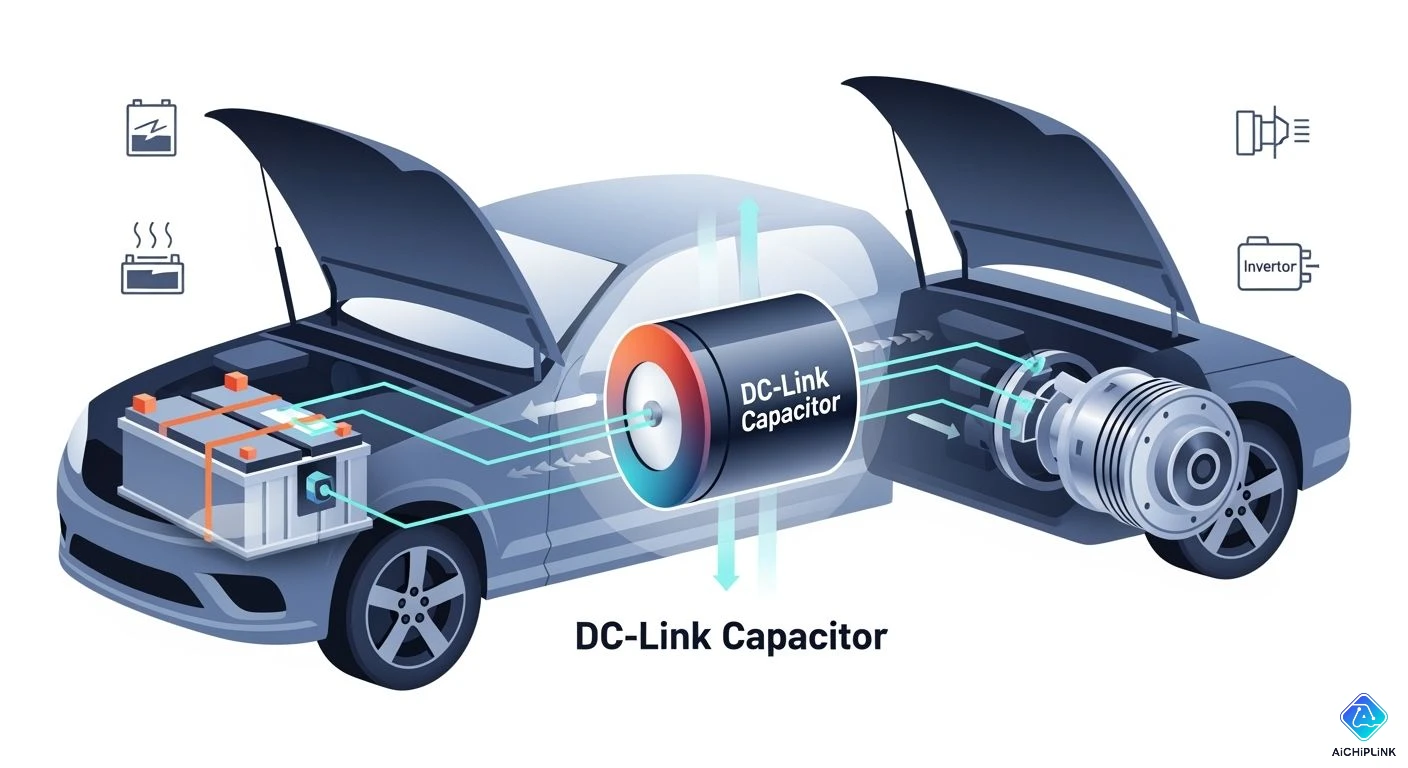
You rely on dc-link capacitors to help your electric vehicle work well.
-
These parts keep voltage steady by dealing with strong ripple currents.
-
They store energy when you brake and help save more energy. This makes your car use energy better.
-
Dc-link capacitors help change power quickly when you speed up.
-
Good design can make charging faster by up to 15%.
You notice their help with keeping voltage steady, storing power, and protecting the system each time you drive. If you want your car to work well and last long, you should know why they matter.
Key Takeaways
-
DC-Link capacitors keep voltage steady in electric vehicles. This helps the car work well and protects electronics from quick changes.
-
These capacitors hold energy when you brake. This makes the car use energy better and helps with regenerative braking.
-
Putting DC-Link capacitors in the right spot lowers electromagnetic interference. This makes your car safer and more dependable.
-
Picking the correct DC-Link capacitor can make your car work better and last longer. It also saves money on repairs over time.
-
Buying good DC-Link capacitors helps your electric car run well and stay strong. This gives you confidence while driving.
What are DC-Link Capacitors?
Definition and Role in Electric Vehicles
Dc-link capacitors are very important in electric vehicles. These parts hold electrical energy and give it to the car when needed. They help keep the voltage steady, even if the motor uses a lot of current. You count on them to stop voltage spikes and make the electricity flow smoother. When you speed up or slow down, dc-link capacitors control the energy changes and protect the electronics. Your car works better because these capacitors handle ripple currents and stop sudden voltage drops.
Tip: Dc-link capacitors act like "shock absorbers" for your car’s electrical system. They soften fast power changes and help everything work well.
Placement in EV Power Circuits
Dc-link capacitors are put between the battery and the inverter in most electric vehicles. Where they are placed is important because it helps your car deal with power surges and electromagnetic interference. Engineers use tools like 3D modeling and electromagnetic field simulation to pick the best spot for these capacitors. They want to lower unwanted inductance and make the system work better. You get help from this careful placement because it filters out ripple currents and keeps the DC bus voltage steady during quick changes.
The way dc-link capacitors are placed also helps cut down electromagnetic interference. Engineers try to make the loop areas between capacitors and switching devices as small as possible. This lowers the electromagnetic signature of your car and keeps other electronics safe. You get a safer and more dependable car because of these smart design choices.
Core Functions of DC Link Capacitors
Voltage Stabilization and Ripple Reduction
You need dc-link capacitors to keep voltage steady in your electric car. These parts are placed between the rectifier and inverter. They store energy and help keep the DC bus voltage stable. When your car faces high-frequency AC ripple currents, dc-link capacitors give a path with low resistance. This separates the DC source from the AC load. You see fewer voltage ripples, so your inverter works better.
-
DC-link capacitors cut down voltage ripple.
-
They keep DC voltage steady during fast changes.
-
They separate the battery from the motor controller.
Note: When voltage is steady, your car’s electronics stay safe and work right.
Power Buffering and Energy Storage
You notice dc-link capacitors help with power when the load changes quickly. When you speed up or slow down, these capacitors smooth out current pulses and lower voltage spikes from wiring. They separate the battery loop inductance and filter out high-frequency ripple from the inverter. This helps your car run well, even when the load changes fast.
-
DC-link capacitors smooth out current pulses.
-
They lower voltage spikes from wiring.
-
They filter high-frequency ripple from the inverter.
-
Energy storage can be from 200µF to 1500µF.
-
Voltage ratings can be from 300V to 500V.
Tip: Your car works steady under different loads, especially when the load changes fast.
EMI Protection and Noise Filtering
You count on dc-link capacitors as important filters in your electric car. These parts help balance out the effects of inductance in inverters and motor controllers. They act as filters to keep EV subsystems safe from voltage spikes. You also get help from their power to lower electromagnetic interference (EMI). This keeps your car’s electronics safe and makes sure they work well.
-
DC-link capacitors balance out inductance in inverters and motor controllers.
-
They keep subsystems safe from voltage spikes.
-
They lower EMI and filter out unwanted noise.
Alert: Your car is safer and more reliable because dc-link capacitors work as important filters for your EV’s power system.
Impact on Electric Vehicle Performance
Efficiency and Power Management
When dc link capacitors work well, your electric car uses energy better. These parts help your car run smoother and waste less power. The capacitance stays steady for up to ten years. This means your car stays efficient for a long time. You notice less heat because dc link capacitors cut thermal losses by 30%. This lets you use smaller cooling parts and saves space.
-
Your motor gets more torque and your car goes farther.
-
You spend less time and money fixing your car.
-
You lose less energy because these capacitors have low ESR and stay cool.
-
The inverter works better and keeps the DC bus voltage steady.
-
The system lasts longer since these capacitors handle high ripple currents and heat changes.
-
You need less cooling, so you save money.
Tip: Dc link capacitors help your power systems work better. You get more power in a smaller space, but you must watch for heat problems. New designs change how heat moves, so smart cooling helps keep EMI low.
Reliability and Safety
You count on dc link capacitors to keep your electric car safe and working well. These parts balance the load and store energy, which smooths out voltage changes. You avoid sudden spikes that could hurt your car’s electronics. When quick changes happen on the load side, dc link capacitors stop them from reaching the input side.
-
Your car is safer because these capacitors follow strict safety rules like IEC 62660, IEC 61851, and ISO 26262.
-
You see fewer voltage changes, which protects your battery and motor controller.
-
You avoid breakdowns and spend less on repairs because your system needs less fixing.
Alert: You trust dc link capacitors to protect your electric car from electrical problems. They help your car follow safety rules and keep you safe on the road.
Fast Charging and Regenerative Braking
You want your electric car to charge fast and save energy when you brake. Dc link capacitors make this happen. When you plug in your car, these capacitors handle quick power changes and keep voltage steady. You charge faster and your battery is less stressed.
When you slow down, dc link capacitors cut voltage ripple and make power flow smoother. You get more energy back when you brake, which makes your car more efficient. Smart controls, like adaptive control and real-time checks, help these capacitors work their best.
| Feature | Benefit to You |
|---|---|
| Fast Charging | Shorter charging times |
| Regenerative Braking | More energy recovery |
| Voltage Ripple Control | Smoother power flow |
Note: You save energy and time because dc link capacitors help with fast charging and good braking. Your electric car works better and lasts longer.
Risks of Inadequate DC-Link Capacitors
Performance Degradation
If DC-link capacitors are too weak, your electric car may not run well. The voltage will not stay steady. Your car might jerk or pause when you press the gas pedal. The motor might not get enough power when you start fast or go uphill. You could see the dashboard lights blink or the screen restart by itself.
-
Power does not come smoothly.
-
The car speeds up slowly.
-
Electronics might act strange.
Tip: To keep your car working well every day, you need strong DC-link capacitors.
Safety Concerns
Using bad or small DC-link capacitors can be risky. These parts help stop dangerous voltage spikes. If they break, high voltage can hurt important electronics. The inverter or motor controller might stop working. Sometimes, there could be an electrical fire or your car could lose power while driving.
| Risk | What You Might Experience |
|---|---|
| Voltage Spikes | System shuts down suddenly |
| Overheating | You smell burning or see smoke |
| Electrical Failure | You lose steering or brakes |
Alert: Always make sure your DC-link capacitors are safe. Your safety depends on this.
Reduced Component Lifespan
If DC-link capacitors are not good enough, your car’s parts will not last as long. Other parts must work harder because of unstable voltage and extra heat. The battery, inverter, and motor controller can wear out faster. You might have to replace these costly parts sooner.
-
You fix things more often
-
It costs more to keep your car running
-
Your car does not last as long
Note: Buying good DC-link capacitors helps your car last longer and saves you money.
Selecting DC-Link Capacitors for EVs
Key Criteria
You have to think about a few main things when you pick DC-Link capacitors for your electric car. Each thing you look at helps your car use power better and keeps it working well. Picking the right one makes your car run smoother and keeps the electronics safe.
| Criteria | Description |
|---|---|
| Capacitance Value | Controls how much energy is stored and keeps voltage steady during quick changes. |
| Ripple Current Rating | Handles strong ripple currents and stops overheating or damage. |
| Voltage Rating | Should be 20-30% higher than the DC bus voltage for extra safety. |
| ESR and ESL | Lower ESR means less heat, and lower ESL helps block noise. |
| Temperature Stability | Works well even if it is hot or cold. |
| Lifetime Expectancy | Should last at least 100,000 hours for best reliability. |
| Physical Size and Cost | Must fit in your car and not cost too much. |
You can choose from a few types of capacitors. Film capacitors last a long time and can handle high voltage. They also have low ESR, so they control voltage well. Aluminum electrolytic capacitors are smaller and hold more energy, but they have higher ESR and cannot handle as much ripple current. Hybrid capacitors mix both types, so they have medium ESR and are small.
Tip: Always look at the voltage rating, capacitance, and ESR. These three things help your DC-Link capacitors deal with power changes and keep your motor controllers safe.
Balancing Cost and Performance
You want your electric car to work well but not cost too much. Film capacitors cost more at first, from $0.20 to $1.00 for each microfarad, but they last longer and you do not need to change them often. Aluminum electrolytic capacitors cost less, about $0.10 to $0.50 for each microfarad, but you might have to replace them more. Hybrid supercapacitors cost a lot more, but they can last over 15 years and can be charged and used many times.
If you look at how long they last, film capacitors can be used for over 50,000 hours. Aluminum electrolytics last between 2,000 and 10,000 hours, so you spend more fixing them. Hybrid supercapacitors can last up to 1,000,000 cycles, so you do not need to replace them much and you save money on repairs.
Note: If you want the best deal, think about both the starting price and how long the capacitor will last. Spending more at first can help you save money later.
You need DC-Link capacitors to keep your electric car safe and working well. These parts help keep voltage steady and protect your car from heat and ripple currents. They also store power when needed.
-
New designs use better materials and watch the system in real time. This makes your car work better and stay safer.
-
More people want DC-Link capacitors because more electric cars are being made.
Remember: When you care about DC-Link capacitors, you help new ideas grow and your electric car stays dependable.

Written by Jack Elliott from AIChipLink.
AIChipLink, one of the fastest-growing global independent electronic components distributors in the world, offers millions of products from thousands of manufacturers, and many of our in-stock parts is available to ship same day.
We mainly source and distribute integrated circuit (IC) products of brands such as Broadcom, Microchip, Texas Instruments, Infineon, NXP, Analog Devices, Qualcomm, Intel, etc., which are widely used in communication & network, telecom, industrial control, new energy and automotive electronics.
Empowered by AI, Linked to the Future. Get started on AIChipLink and submit your RFQ online today!
Frequently Asked Questions
What does a DC-Link capacitor do in my electric car?
A DC-Link capacitor helps keep voltage steady. It also filters out noise in your car’s power. This makes your car run smoothly. It protects important electronics from sudden power changes.
How can I tell if my DC-Link capacitor needs replacement?
You might see your dashboard lights flicker. Your car could speed up slowly or make odd motor sounds. If you notice these things, check the capacitor or ask a technician for help.
Which type of DC-Link capacitor works best for electric vehicles?
Film capacitors work best for most electric cars. They last longer and handle high voltage well. They also stay cooler. Aluminum electrolytic capacitors cost less but do not last as long.
Can DC-Link capacitors improve fast charging?
DC-Link capacitors help your car charge faster. They handle quick power changes and keep voltage steady. This protects your battery during fast charging.
Are DC-Link capacitors safe in extreme temperatures?
Most DC-Link capacitors work well in very hot or cold weather. They can handle temperatures from -40°F to 185°F. Always check the specs to make sure your capacitor fits your climate.