The Pros and Cons of Polymer and Aluminum Capacitors
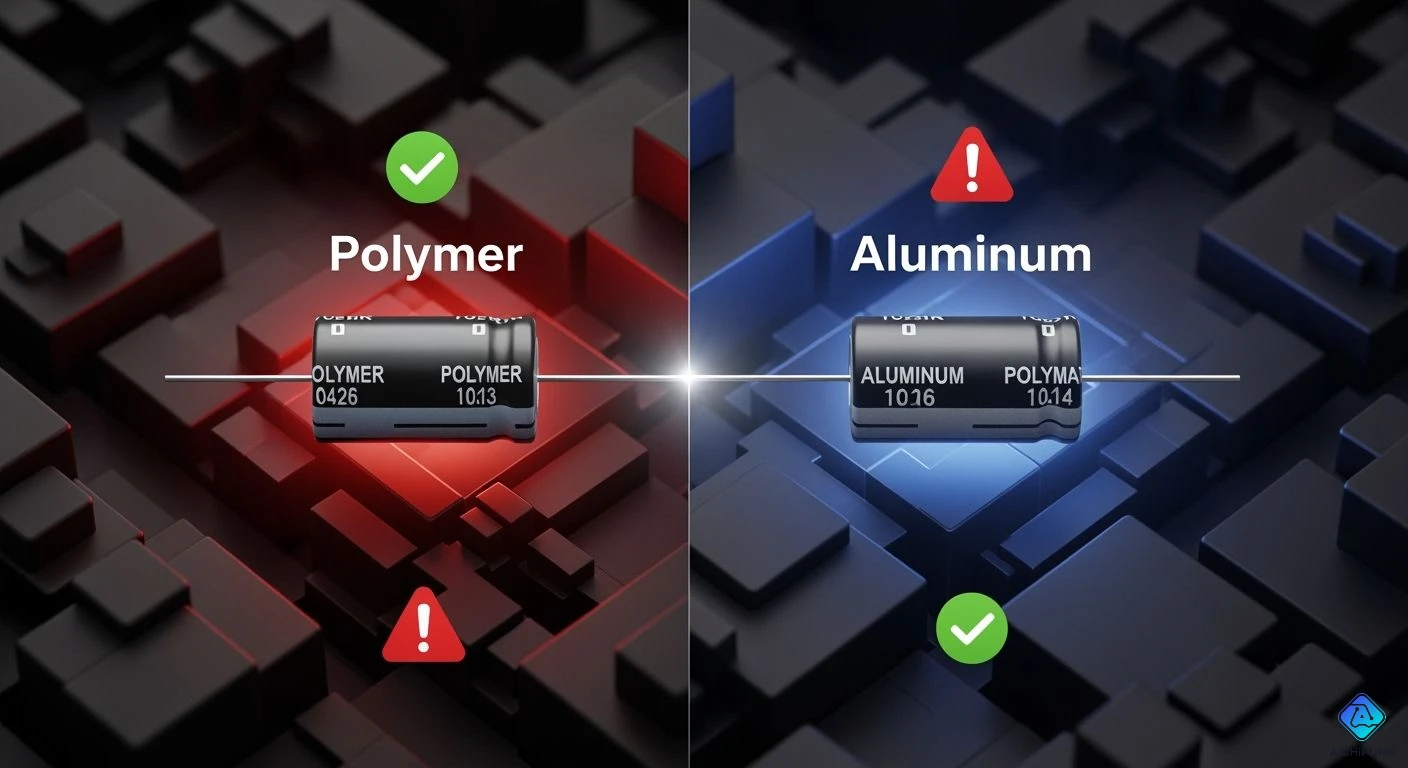
You will see big differences between Polymer vs Aluminum Capacitors. Polymer capacitors work well with ripple current and maintain stability even when temperatures rise. In contrast, Aluminum capacitors can break down quickly in heat and struggle with high-frequency signals. Price is an important factor to consider, as polymer types tend to cost more; however, they typically last longer than aluminum ones. Check the table below to compare ripple current, temperature stability, and voltage ratings between Polymer vs Aluminum Capacitors.
| Characteristic | Polymer Capacitors | Aluminum Capacitors |
|---|---|---|
| Ripple Current | Low ESR, handles varying currents well | Struggles with high-frequency signals |
| Temperature Stability | Excellent thermal stability | Can degrade rapidly at higher temperatures |
| Voltage Ratings | Must meet or exceed application needs | Lower ratings can lead to failure |
Key Takeaways
-
Polymer capacitors work well with high ripple currents. They stay stable in hot places. This makes them good for tough jobs.
-
Aluminum capacitors cost less and are easy to find. They are a smart pick if you want to save money.
-
Think about how long capacitors last. Polymer types last longer and work better in hard places than aluminum types.
-
Pick capacitors with the right voltage for your circuit. Also, think about how heat can change how they work.
-
Look at what your project needs. Use polymer capacitors for strong performance. Use aluminum capacitors if you want to save money.
Polymer Capacitors: Pros
High Ripple Current Handling
Polymer capacitors are good for high ripple currents. They use special materials to work well with fast signals. These capacitors can handle lots of current in high-frequency circuits.
-
The RKS series works well with high currents in fast circuits.
-
The RL8 series has very low ESR and handles high ripple currents.
-
The RNE series gives high capacitance, low ESR, and high ripple current.
-
The RNL series is big and has high capacitance and low ESR for high ripple current.
-
The RNS, RNU, RPA, PCX, PCZ, and PCK series all let lots of ripple current through and have low ESR, even when it gets hot.
Temperature Stability
Polymer capacitors stay stable when it gets hot. You can use them in places where the temperature goes up. They keep working well, even when it is warm. Solid polymer capacitors do better in heat than aluminum capacitors.
-
They last longer because they do not lose their inside liquid or break down as fast.
-
You do not need to worry about leaks, which happens more with aluminum capacitors.
Low ESR and Reliability
Polymer capacitors have low ESR and are very reliable. ESR means equivalent series resistance. Lower ESR is better for performance.
| Capacitor Type | ESR Value |
|---|---|
| POSCAP | 5 mΩ |
| Layered Polymer Caps | 3 mΩ |
| Hybrid Capacitors | 11 to 120 mΩ |
Polymer capacitors are known for low ESR. This helps them work better in fast circuits. You can count on them to last a long time and stay steady, even if it gets hot. They do not break as easily as other types.
Long Lifespan
Polymer capacitors last longer than aluminum capacitors. You can trust them for many years, even in tough places. Their long life makes them a good choice for many uses. They work well for a long time and do not need to be changed often. This saves you time and money.
Polymer Capacitors: Cons
Higher Cost
Polymer capacitors cost more than other types. They use special materials and new technology. This makes the price go up. If your project has a small budget, these might be too expensive. Many engineers pick aluminum capacitors because they are cheaper. You have to think if better performance is worth the extra money.
💡 Tip: Always look at your project budget before you pick polymer capacitors. High cost can change your total spending.
Limited Range
Polymer capacitors do not have as many voltage and capacitance choices. It can be hard to find the right one for your project. Aluminum capacitors come in more sizes and ratings, so you get more options. If your circuit needs a certain voltage or capacitance, you may not find a polymer capacitor that works. This can make your design harder.
-
Polymer capacitors often have lower voltage ratings.
-
There are not as many high-capacitance choices as aluminum types.
Availability Issues
It is sometimes hard to find polymer capacitors in stock. Stores may not have every kind you want. If you need a lot or a special type, you might wait longer to get them. This can slow down your project. Aluminum capacitors are easier to find and buy. You save time when you pick parts that are easy to get.
| Factor | Polymer Capacitors | Aluminum Capacitors |
|---|---|---|
| Stock Availability | Sometimes limited | Usually plentiful |
| Lead Time | Can be longer | Often shorter |
If you want to finish your project fast, think about how easy it is to get the parts you need.
Aluminum Capacitors: Pros
Affordable
Aluminum capacitors help you save money. They cost less than most other types. If your project has a small budget, these are a good choice. You can buy many of them without spending too much. People use them a lot because they are cheap and easy to get. Buying lots does not make the total price go up much.
💡 Tip: If you need to make many things, using affordable capacitors helps you not spend too much.
Wide Range
Aluminum capacitors come in many shapes and sizes. You can find them for both low and high voltage. They also have many different capacitance values. This gives you more choices for your project. You will not have trouble finding the right one. Most stores have many types, so you can get them fast.
-
There are many voltage ratings to pick from.
-
You can choose from different capacitance values.
-
They come in lots of shapes and sizes.
Versatile Applications
You can use aluminum capacitors in many places. They work well in electronics and other fields. Reports show they help in many areas:
-
Healthcare: They help doctors make better choices and help patients.
-
Manufacturing: They help make smart factories and fix machines faster.
-
Banking and Finance: They help check for risks and stop fraud.
-
Retail: They help keep track of products and guess what people will buy.
-
Telecommunications: They help networks work better.
-
Logistics: They help make daily work easier.
-
Energy: They help use power in a smart way.
Aluminum capacitors are flexible. You can use them in simple or hard projects. Their many uses show they are important in today’s technology.
Aluminum Capacitors: Cons
Shorter Lifespan
Aluminum capacitors do not last as long as some others. How long they work depends on heat and stress. If it gets hot or the circuit is tough, they wear out faster. You should always check the design lifetime and rated temperature before using them.
| Design Lifetime (hours) | Maximum Rated Temperature (°C) | Estimated Service Life (years) |
|---|---|---|
| 1,000 | 105 | Varies based on conditions |
| 2,000 | 105 | Varies based on conditions |
| 5,000 | 105 | Varies based on conditions |
| 10,000 | 105 | Varies based on conditions |
If you want capacitors to last many years, look at other choices. High heat and heavy use make them stop working sooner.
🕒 Note: Always check the rated lifetime and temperature before you use aluminum capacitors in your project.
Higher ESR
Aluminum capacitors have higher ESR than polymer types. ESR means equivalent series resistance. High ESR makes it hard to handle fast signals. This can cause heat and lower how well your circuit works.
| Capacitor Type | ESR Value |
|---|---|
| Aluminum Capacitor | 205.5 mΩ |
| Polymer Capacitor | 20.7 mΩ |
You might see problems in circuits that need low resistance. High ESR can limit how well your project works.
Performance Limitations
Aluminum capacitors have some limits in hard jobs. These limits can change how your circuit works, especially if you need high speed or reliability.
-
They can break down in tough conditions.
-
Making them can be hard.
-
It is tough to get good performance and low cost.
If your project needs strong performance and long life, try other types. Aluminum capacitors can have trouble in harsh places or when pushed too hard.
Polymer vs Aluminum Capacitors: Comparison Table
Cost
Polymer capacitors cost more than aluminum capacitors. They use special materials and new technology. Aluminum capacitors are cheaper and good for small budgets. If you need a lot for power supply smoothing, aluminum types save money. Polymer capacitors are better if you want high performance and can pay more.
| Type | Cost Level | Budget Suitability |
|---|---|---|
| Polymer Capacitors | High | Best for premium projects |
| Aluminum Capacitors | Low | Best for large-scale use |
💡 If you want to spend less on power supply smoothing, aluminum capacitors are a better deal.
Reliability
Reliability is important in hard places. Polymer capacitors are very reliable when it is hot or tough. You can use them in cars and factories. They keep working even if it gets hotter than 125°C. Aluminum capacitors are fine for simple power supply smoothing, but they might not last as long in rough spots.
-
Polymer capacitors pass hard tests for tough jobs.
-
Factories need reliable capacitors for smooth power.
-
Aluminum capacitors are good for easy jobs but may wear out faster.
🛡️ Pick polymer capacitors if you need strong and steady power in important systems.
Performance
Performance is how well each type smooths power. Polymer capacitors keep voltage steady and block noise well. They charge and let out energy fast, so they work better. They also handle heat and last longer. Aluminum capacitors can hold a lot of charge and help with power supply smoothing, but they do not work as well in fast circuits.
-
Polymer capacitors make fast circuits smoother.
-
Aluminum capacitors are good for basic smoothing and filtering.
-
Polymer capacitors keep voltage even and cut down noise.
| Type | Smoothing Quality | Noise Filtering | Thermal Stability | Efficiency |
|---|---|---|---|---|
| Polymer Capacitors | Excellent | High | Strong | High |
| Aluminum Capacitors | Good | Moderate | Moderate | Moderate |
⚡ Polymer capacitors give better power smoothing in advanced electronics.
Applications
You should pick the right capacitor for your project. Polymer capacitors are good for fast and audio circuits. They work well in power supply smoothing for AI servers and green energy systems. Aluminum capacitors are used for power supply smoothing in power supplies and filters. They are best when you need a lot of charge and want to save money.
| Capacitor Type | Advantages | Application Scenarios |
|---|---|---|
| Polymer Capacitors | Low ESR, high capacitance density | High-frequency, audio, advanced power supply smoothing |
| Aluminum Capacitors | Cost-effective, large capacitance | Power supply smoothing, filters, basic electronics |
🏗️ Use polymer capacitors for advanced smoothing. Use aluminum capacitors for regular power supply smoothing.
Lifespan
Lifespan means how long a capacitor lasts. Polymer capacitors last longer because they do not have liquid inside. They do not fail as much from drying out. Aluminum capacitors wear out faster, especially when it is hot. If you want your power supply to last, polymer capacitors will work for more years.
-
Polymer capacitors last longer.
-
Aluminum capacitors lose life faster when it gets hot.
-
Both types change lifespan with temperature. If it gets 10°C hotter, the life is cut in half. If it gets 10°C cooler, the life is twice as long.
| Type | Typical Lifespan | Effect of Temperature Change |
|---|---|---|
| Polymer Capacitors | Long | Less affected |
| Aluminum Capacitors | Shorter | More affected |
⏳ For long-lasting power supply smoothing, polymer capacitors stay good for many years.
Capacitors Application Guide
Best Uses for Polymer Capacitors
Pick polymer capacitors if you want high performance and steady results. They work best in circuits that change fast or need to handle lots of ripple current. You will see them used in power supplies, audio gear, and car electronics. Polymer types keep their capacitance steady, even if the temperature or frequency changes. This means you can count on them every time.
-
High capacitance density lets you save space on your board.
-
Polymer capacitors make music sound clearer and cut down noise.
-
You can use them instead of tantalum electrolytic capacitors in many cases.
-
They work in DC-DC converters to lower ripple voltage and help with quick changes.
-
Polymer capacitors give better sound and steady power in advanced electronics.
🏆 Tip: For the best sound and long-lasting use, pick polymer capacitors for tough jobs.
Best Uses for Aluminum Capacitors
Aluminum capacitors are good for projects where you need to save money. They work well for power supply filtering, audio coupling, and storing energy for short times. These parts give a good mix of price and how well they work. You will find them in many everyday electronics.
-
Aluminum capacitors help filter power in simple circuits.
-
You can use them for audio coupling, but sound may not be as clear as with polymer types.
-
They store energy for short bursts, which helps in basic power supplies.
-
These parts are easy to find and buy, so you can finish your project fast.
💡 Note: If you need lots of capacitors and want to spend less, aluminum types are a smart pick for most uses.
Choosing for Your Project
Think about a few things before you pick a capacitor. Ripple current, temperature, voltage, and cost are all important.
| Factor | Why It Matters |
|---|---|
| Ripple Current | High ripple current makes heat. Too much heat can hurt the part and lower quality. Polymer capacitors handle ripple current better. |
| Temperature | High temperatures make capacitors last less time. Every 10°C rise cuts life in half. Polymer types stay steady and keep working in heat. |
| Voltage | Always pick a capacitor with a voltage rating higher than your circuit needs. This stops breakdown and keeps sound quality high. |
| Cost | Polymer capacitors cost more but give better quality and sound. Aluminum types save money and work well for simple jobs. |
Match the capacitor to what your project needs. If you want the best sound, long life, and strong results, polymer capacitors are the best choice. If you need to save money and do not need top quality, aluminum capacitors will work fine.
🔍 Remember: Always check what your project needs for ripple current, temperature, voltage, and cost. This helps you pick the right part and get the best results for your project.
You have seen that polymer capacitors give you strong performance, high reliability, and a long lifespan, but they cost more. Aluminum capacitors save you money and offer many choices, but they may not last as long or work as well in tough conditions. If you want the best results for ripple current and temperature stability, choose polymer types. For basic needs and lower cost, aluminum types work well. If you feel unsure, follow these steps:
-
Match the capacitance value to your circuit.
-
Pick a voltage rating 20-30% higher than your circuit needs.
-
Choose tight tolerance for precision.
-
Check the size and mounting style for your board.
-
Make sure the part can handle the temperature where you use it.

Written by Jack Elliott from AIChipLink.
AIChipLink, one of the fastest-growing global independent electronic components distributors in the world, offers millions of products from thousands of manufacturers, and many of our in-stock parts is available to ship same day.
We mainly source and distribute integrated circuit (IC) products of brands such as Broadcom, Microchip, Texas Instruments, Infineon, NXP, Analog Devices, Qualcomm, Intel, etc., which are widely used in communication & network, telecom, industrial control, new energy and automotive electronics.
Empowered by AI, Linked to the Future. Get started on AIChipLink and submit your RFQ online today!
Frequently Asked Questions
What is the main difference between polymer vs aluminum capacitors?
Polymer and aluminum capacitors are made from different materials. Polymer capacitors use solid electrolytes. Aluminum capacitors use liquid electrolytes. Polymer types handle ripple current better. They also last longer. Aluminum types cost less. They give you more choices.
Why should you choose aluminum polymer capacitors?
Pick aluminum polymer capacitors for low ESR and high reliability. These capacitors work well in fast circuits. They resist heat and last longer than regular aluminum types. You get better performance in advanced electronics.
Are there advantages of aluminum polymer capacitors over regular aluminum capacitors?
Yes, aluminum polymer capacitors have several advantages. They handle ripple current better. They have lower ESR and last longer. You see improved performance in high-frequency circuits. These capacitors work well in tough places.
When do you use polymer vs aluminum capacitors in your project?
Choose polymer or aluminum capacitors based on your needs. Polymer types are good for high-frequency and audio circuits. Aluminum types are best for basic power supply smoothing. Pick polymer for reliability. Pick aluminum for saving money.
How do you decide between polymer vs aluminum capacitors?
Decide by checking ripple current, temperature, voltage, and cost. Polymer types handle heat and ripple current well. Aluminum types cost less and come in more sizes. Match the capacitor to what your project needs.