Introduction
The MRFE6VS25GNR1 is a 25-watt RF power LDMOS (Laterally Diffused Metal Oxide Semiconductor) transistor manufactured by NXP Semiconductors, operating in the 2.11-2.17 GHz frequency range with high efficiency and linearity for wireless infrastructure base stations, broadcast transmitters, industrial RF heating, and communications equipment requiring robust, high-power RF amplification.
Technical Overview
Core Specifications
| Parameter | Specification |
|---|---|
| Output Power | 25W (typical) |
| Frequency Range | 2.11 - 2.17 GHz |
| Efficiency | 28% @ 25W (Class AB) |
| Gain | 16 dB (typical) |
| Supply Voltage | 28V DC |
| Technology | LDMOS (silicon) |
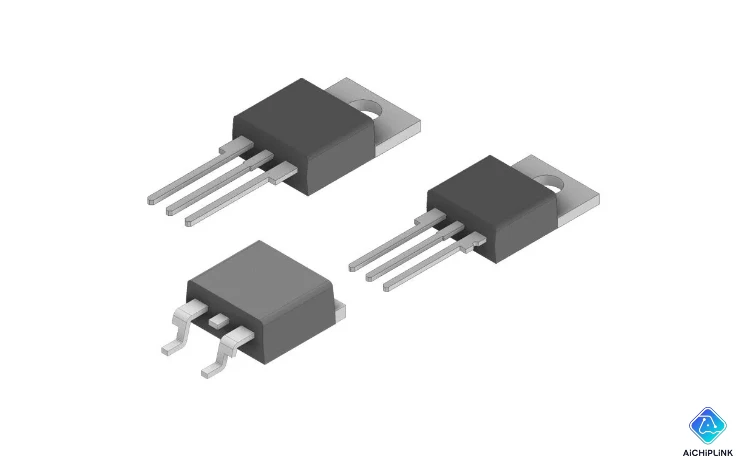
| Package | NI-780S (plastic, 4-lead) |
| Operating Temp | -40°C to +150°C (junction) |
Key Features
High Power Output:
- 25W average power (PEP higher in pulsed mode)
- Suitable for medium-power base stations
- Linear operation for complex modulation
- Rugged construction for industrial environments
LDMOS Technology:
- Silicon-based (vs GaN or GaAs)
- High breakdown voltage (>65V)
- Excellent thermal conductivity
- Cost-effective for infrastructure
2.1 GHz Band:
- Covers UMTS/WCDMA Band 1 (2.11-2.17 GHz uplink)
- 3G/4G base station frequencies
- Fixed wireless access (FWA)
- Point-to-point microwave links
Rugged Performance:
- High VSWR tolerance (10:1)
- ESD protection
- Stable across temperature range
- Long-term reliability (MTBF >1M hours)
Complete Specifications
Electrical Specifications (@ 28V, 2.14 GHz, 25°C)
| Parameter | Min | Typ | Max | Unit |
|---|---|---|---|---|
| Output Power | 23 | 25 | - | W |
| Power Gain | 14 | 16 | - | dB |
| Efficiency (Drain) | 25 | 28 | - | % |
| Quiescent Current | - | 100 | 200 | mA |
| Input Return Loss | - | -10 | - | dB |
| Output Return Loss | - | -12 | - | dB |
Frequency Performance
| Frequency (GHz) | Pout (W) | Gain (dB) | Efficiency (%) |
|---|---|---|---|
| 2.110 | 25 | 16.0 | 28 |
| 2.140 | 25 | 16.2 | 28 |
| 2.170 | 24.5 | 15.8 | 27 |
Linearity (WCDMA Signal)
| Parameter | Specification |
|---|---|
| ACPR @ ±5 MHz | -32 dBc (typical) |
| ACPR @ ±10 MHz | -42 dBc (typical) |
| ACLR1 | -33 dBc |
| ACLR2 | -43 dBc |
| Output Power (avg) | 6W (WCDMA) |
Thermal Specifications
| Parameter | Value |
|---|---|
| Thermal Resistance (θJC) | 2.5°C/W |
| Max Junction Temp | 150°C |
| Storage Temp | -65°C to +150°C |
| Case Temp (operating) | -40°C to +100°C |
Applications
Wireless Base Stations
3G/4G Infrastructure:
- UMTS/WCDMA base stations (Band 1: 2.11-2.17 GHz)
- Macro cell sites (medium power)
- Remote radio heads (RRH)
- Distributed antenna systems (DAS)
Typical Configuration:
- Power amplifier final stage
- 25W output per carrier
- Multi-carrier operation (2-4 carriers)
- Doherty or balanced amplifier topology
Broadcast Transmitters
FM/DAB Transmitters:
- Low-power FM transmitters
- Digital audio broadcast (DAB)
- Community radio stations
- Translator/repeater systems
Output Power:
- 25W transistor stage
- Combine multiple devices for higher power (50W, 100W)
- Efficiency critical for continuous duty
Industrial RF Applications
RF Heating & Plasma:
- Industrial heating (plastic welding)
- Plasma generation
- Materials processing
- Scientific instrumentation
Advantages:
- Continuous wave (CW) operation
- High VSWR tolerance
- Robust against load mismatch
Two-Way Radio & PMR
Professional Mobile Radio:
- Repeater stations
- Base station transmitters
- High-power handheld/mobile units
- Public safety communications
Design Guidelines
RF Amplifier Circuit
Basic Class AB Amplifier:
Input Matching → MRFE6VS25GNR1 → Output Matching → Load (50Ω)
    ↑                  ↑
  RF Drive         28V DC Supply
  (+10 dBm)        (Bias Circuit)

Required Drive: +9 to +10 dBm for 25W output
Gain: 16 dB typical
Input/Output Matching
Input Matching Network:
- Transform 50Ω source to device input impedance (~3-5Ω)
- Typically: series capacitor + shunt inductor (L-match)
- Minimize loss (<0.5 dB)
- Bandwidth: 60 MHz (2.11-2.17 GHz)
Output Matching Network:
- Transform device output (~1.5-2Ω) to 50Ω load
- Multi-section for broadband response
- Low-loss components (silver-plated, Teflon dielectric)
- Harmonic filter integrated (suppress 2f₀, 3f₀)
Bias Circuit
Gate Bias (VGS):
- Quiescent current: 100-200 mA
- Adaptive bias for linearity (tracking with temperature)
- Temperature compensation (NTC thermistor)
Drain Bias (VDD):
- 28V ±1V nominal
- Low-noise power supply (<100 mV ripple)
- Decoupling: 10µF tantalum + 0.1µF ceramic
- Current capacity: 1.5A minimum @ 25W
Thermal Management
Heatsink Requirements:
Power Dissipation @ 25W output:
Pₐᵥg = 25W / 0.28 efficiency = 89W input
Pdiss = 89W - 25W = 64W heat

Temperature Rise:
ΔT = Pdiss × (θJC + θCS + θSA)
θJC = 2.5°C/W (device)
θCS = 0.2°C/W (thermal interface)
θSA = 1.0°C/W (heatsink, forced air)
ΔT = 64W × 3.7°C/W = 237°C

For Tjmax = 150°C, Tcase must be <63°C
Requires forced airflow or larger heatsink
Cooling Solutions:
- Natural convection: 5-10W max (insufficient)
- Forced air (200 LFM): 25W feasible
- Liquid cooling: Optimal for continuous 25W
PCB Layout
Best Practices:
- 2-layer FR-4 PCB minimum (4-layer preferred)
- Ground plane on bottom layer (thermal, RF ground)
- Controlled impedance: 50Ω for RF traces
- Via stitching around RF path (ground continuity)
- Keep RF traces short (<λ/10 at 2.14 GHz ≈ 7mm)
- Separate RF and DC supply routing
Comparison & Alternatives
vs BLF188XR (NXP - 300W)
| Feature | MRFE6VS25GNR1 | BLF188XR |
|---|---|---|
| Output Power | 25W | 300W |
| Package | NI-780S (compact) | SOT539A (large) |
| Frequency | 2.11-2.17 GHz | 2.11-2.17 GHz |
| Application | Small/medium cells | Macro base stations |
| Cost | Low | High |
vs Qorvo TGA2595
| Feature | MRFE6VS25GNR1 (LDMOS) | TGA2595 (GaN) |
|---|---|---|
| Technology | Silicon LDMOS | GaN-on-SiC |
| Output Power | 25W | 30W |
| Efficiency | 28% | 35-40% |
| Bandwidth | 2.11-2.17 GHz | 2.0-2.7 GHz |
| Cost | Lower | Higher |
| Best For | Cost-sensitive | High efficiency |
Conclusion
The MRFE6VS25GNR1 delivers reliable 25W RF power amplification in the 2.11-2.17 GHz band with proven LDMOS technology, 16 dB gain, and 28% efficiency for wireless base stations, broadcast transmitters, industrial RF applications, and two-way radio systems requiring robust, cost-effective power amplification with high ruggedness and long-term reliability.
Key Advantages:
✅ 25W Output Power: Suitable for medium-power applications
✅ 2.11-2.17 GHz Coverage: UMTS/WCDMA Band 1, broadcast
✅ 16 dB Gain: Low drive requirements (+9-10 dBm)
✅ 28% Efficiency: Acceptable for infrastructure (AC-powered)
✅ High Ruggedness: 10:1 VSWR tolerance, ESD protection
✅ LDMOS Technology: Cost-effective, reliable silicon
✅ Wide Temp Range: -40 to +150°C junction operation
Designing RF power amplifiers? Visit AiChipLink.com for RF power transistor sourcing and amplifier design consultation.

Written by Jack Elliott from AIChipLink.
AIChipLink, one of the fastest-growing global independent electronic components distributors in the world, offers millions of products from thousands of manufacturers, and many of our in-stock parts is available to ship same day.
We mainly source and distribute integrated circuit (IC) products of brands such as Broadcom, Microchip, Texas Instruments, Infineon, NXP, Analog Devices, Qualcomm, Intel, etc., which are widely used in communication & network, telecom, industrial control, new energy and automotive electronics.
Empowered by AI, Linked to the Future. Get started on AIChipLink.com and submit your RFQ online today!
Frequently Asked Questions
What is MRFE6VS25GNR1 used for?
The MRFE6VS25GNR1 from NXP Semiconductors is used as an RF power amplifier in applications such as wireless base stations, broadcast transmitters, industrial RF systems, and communication repeaters, typically operating around 2.1 GHz.
How much drive power does MRFE6VS25GNR1 need?
The MRFE6VS25GNR1 requires about +9 to +10 dBm input drive to achieve its full 25W output power, with lower input levels producing proportionally lower output.
What is the efficiency of MRFE6VS25GNR1?
The device offers around 28% efficiency at full output power, with efficiency decreasing at lower power levels due to linearity requirements in communication systems.
What heatsink is required for MRFE6VS25GNR1?
Since the MRFE6VS25GNR1 can dissipate significant heat, it requires a low thermal resistance heatsink (around ≤1°C/W) with proper airflow to maintain safe operating temperatures.
Can MRFE6VS25GNR1 operate in pulse mode?
Yes, the MRFE6VS25GNR1 supports pulsed operation, making it suitable for applications like radar and pulsed RF systems, as long as the average power remains within safe limits.