Ballast vs LED Driver What’s the Real Difference
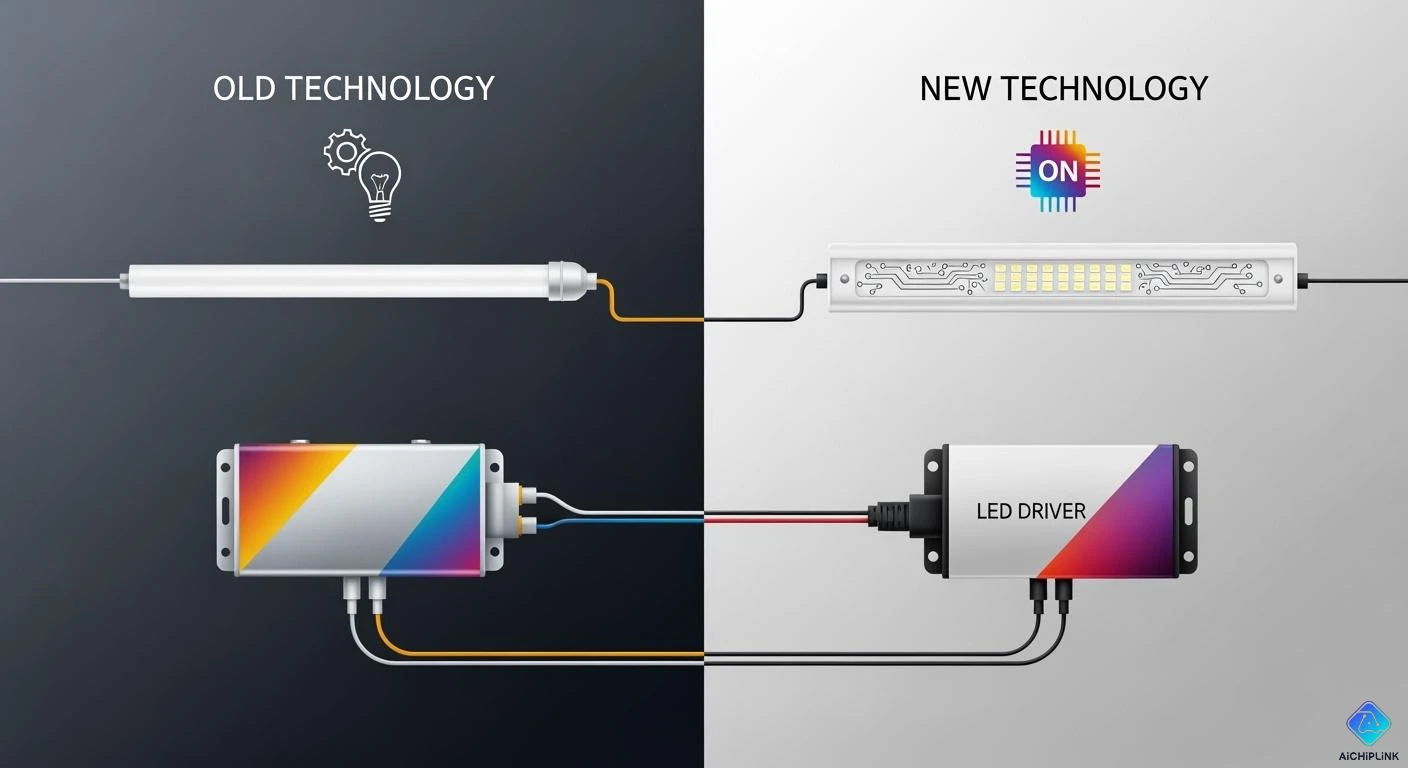
You might ask what makes ballast vs LED driver different. Ballasts manage current and voltage for fluorescent or HID lights, while LED drivers provide power to LEDs by converting AC into DC. Understanding the difference between ballast vs LED driver is crucial when you change or upgrade your lighting. Using the wrong device can lead to poor performance or even damage your lights. Knowing the right device helps you choose safe and effective options for your lighting needs.
Key Takeaways
-
Ballasts manage the flow of electricity for fluorescent and HID lamps. LED drivers change AC power into DC for LED lights.
-
It is important to use the right device. If you use a ballast with LEDs, the lights may flicker or break. If you use an LED driver with fluorescent lamps, the lights will not work.
-
LED drivers use less energy and are more efficient. They can help you save money on your electric bill. LED lights last longer than lights with ballasts.
-
If you switch to LED lighting, remove old ballasts. Use an LED driver for better lighting and reliability.
-
Always check your lighting system’s details. Make sure your ballast or LED driver matches your lights.
What Is a Ballast?
Ballast Definition
Ballasts help control how much electricity goes to certain lamps. A ballast is a device that manages the current for fluorescent or HID lamps. It gives the lamp enough voltage to turn on. Then, it lowers the current so the lamp does not get too hot. This keeps the lamp from breaking. If you do not use a ballast, these lamps can take in too much current and get ruined fast.
How Ballasts Work
Ballasts are important for safe and steady lighting. When you turn on a fluorescent or HID lamp, the ballast sends a high voltage to start it. After the lamp lights up, the ballast lowers the voltage and controls the current. These lamps have something called negative resistance. When more current flows, their resistance drops. This can make them pull in even more current. Ballasts stop this by limiting the current. This keeps your lights bright and safe.
Tip: Using the wrong ballast can make your lamp flicker, buzz, or burn out early.
Types of Ballasts
There are different types of ballasts, and each type works in its own way. The table below shows the main types and how they work:
| Type | Operation Description | Key Features |
|---|---|---|
| Magnetic Ballasts | Use coils to control current with electromagnetic induction. | Strong and reliable, but not energy-saving; big and can be noisy. |
| Electronic Ballasts | Use solid-state parts for better control at high frequencies. | Saves energy, less flicker and noise, small size, can dim lights. |
| Hybrid Ballasts | Mix magnetic and electronic parts for good performance. | Tries to save money and energy while working well. |
| Ferroresonant Ballasts | Special magnetic ballasts that keep voltage steady. | Good for lamps where voltage changes a lot. |
You see magnetic ballasts in older lights, but electronic ballasts are used in newer ones. Some lights use hybrid ballasts to save money and energy. Ferroresonant ballasts are best when voltage changes often. If you work with fluorescent ballasts, knowing the type helps you pick the right one to use or replace.
What Is an LED Driver?
LED Driver Definition
You need an LED driver to make your LED lights work. An LED driver changes the power from your wall into the right voltage and current for LEDs. It makes sure your LEDs get the correct electricity. This device turns alternating current into direct current. LEDs need direct current to light up. Without an LED driver, your LED lights will not work or could break.
Note: LED drivers keep your lights safe from power surges.
How LED Drivers Work
LED drivers are important for LED systems. They take electricity from your home and change it so LEDs can use it. Homes have alternating current, but LEDs need direct current. The driver changes and controls this power. This keeps your lights bright and steady. High-efficiency led drivers use most of the power and save energy. This helps lower your bills.
Here is a table that shows how different types of drivers work in LED systems:
| Driver Type | Description | Applications |
|---|---|---|
| Constant Current | Gives a steady current and changes voltage as needed. | LED panels, High bays, Troffers, Downlights |
| Constant Voltage | Gives a steady DC voltage, usually 12V or 24V. | LED strip lighting, Tape lighting, Signage |
| Efficiency | Uses 85 to 95 percent of power for electricity. | |
| Lifespan | Lasts 50,000 hours or more, often as long as the fixture. |
Types of LED Drivers
There are different types of led drivers for different jobs. Each type works best for certain LED lights. The main types are:
| Type | Output | Uses |
|---|---|---|
| Constant Current LED Driver | Steady milliamp current | Stand-alone fixtures like downlights, wall packs, area lights |
| Constant Voltage LED Driver | Steady DC voltage | Tape light, rope light, and other variable-length uses |
| Constant Power LED Driver | Steady wattage | Special uses like scoreboards, horticulture |
| AC LED Driver | Steady AC voltage | Low-voltage AC power lighting like some LED MR16s |
| LED Electronic Control Gear | -- | Replaces a ballast for type A LED tubes |
A constant voltage led driver is good for LED strip lights and tape lighting. If you want to upgrade or build new led systems, match the driver type to your lights. This helps your lights last longer and work better.
Ballast vs LED Driver Differences
Function and Operation
It is important to know how ballasts and LED drivers work. This helps you pick the right one for your lights. Ballasts control the current and voltage for fluorescent and HID lamps. LED drivers give the right power to LED systems. The table below shows the main ways they are different:
| Feature | Ballasts | LED Drivers |
|---|---|---|
| Functionality | Regulates current in fluorescent and HID lamps. | Regulates power supply to LED lamps. |
| Starting Mechanism | Provides initial high voltage to ignite the lamp. | Converts AC to DC power for LEDs. |
| Current Regulation | Limits current to a safe level after ignition. | Supplies either constant current or constant voltage to LEDs. |
| Sensitivity | Less sensitive to voltage variations. | Highly sensitive to voltage and current variations. |
| Application | Used in fluorescent and HID lighting systems. | Essential for efficient and safe operation of LED lighting. |
Ballasts and LED drivers do not do the same job. Ballasts start and run older lamps. LED drivers power new LED lights. You cannot use one in place of the other. Ballasts only work with fluorescent or HID lamps. LED drivers only work with LEDs. If you use the wrong device, your lights might not work or could break.
Compatibility and Wiring
You must use the right device for your lamp. Ballasts need to fit the lamp and fixture. LED drivers must match the voltage and current of the LED system. The table below shows how each device fits in your lighting setup:
| Compatibility Factor | Ballast-Based Operation | LED Driver-Based Operation |
|---|---|---|
| Power-Control Device | Ballast | LED Driver |
| Dependence on Existing Ballast | Required | Not required |
| Compatibility Requirements | Must match ballast specifications | Must match driver specifications |
| Existing Equipment Compatibility | Can continue using compatible ballast infrastructure | Typically operates independently of ballast infrastructure |
| Installation Flexibility | Limited by ballast compatibility requirements | Greater flexibility for system modifications |
| Upgrade Flexibility | May be constrained by existing ballast condition | Less dependent on legacy components |
| Future System Changes | May require ballast compatibility verification | Easier integration with modern LED systems |
| Incorrect Component Selection | May cause startup or operating problems | May result in improper operation or reduced service life |
| Input Voltage Verification | Must match ballast requirements | Must match driver requirements |
| Manufacturer Compatibility Guidance | Recommended for supported products | Recommended for proper driver selection |
When you upgrade a fixture, you might see ballast-compatible LED tubes. These tubes work with the old ballast, but problems can happen. You might see flickering or dim lights. The best way to upgrade is to remove the ballast and use an LED driver. This gives you better results and fewer problems later.
Tip: Always check the wiring diagram and product label before you put in or change a ballast or LED driver.
Efficiency and Lifespan
You want your lights to last long and use less energy. LED drivers help LED systems save more power than ballasts. The table below shows how each device compares:
| Feature | Fluorescent Ballasts | LED Drivers |
|---|---|---|
| Efficiency | Generally less efficient | Highly efficient |
LED lighting is now the best for saving energy and lasting longer. Ballasts use more power and need more repairs. LED drivers use less energy and help LEDs last longer. Industrial LED lights can last 50,000 to 100,000 hours. LED drivers often last 30,000 to 50,000 hours. Ballasts usually do not last as long and may stop working sooner.
LED drivers also help the environment. They use less energy and lower greenhouse gas emissions. Old magnetic ballasts may have harmful materials. You must throw them away safely.
Note: Both ballasts and LED drivers often have a 5-year warranty from big brands.
When you compare ballast vs LED driver, you see LED drivers are better for efficiency, life, and safety. Drivers vs ballasts also change how much you pay for energy and repairs. For the best results, use the right device for your lamp and wiring.
Retrofitting: Ballasts vs LED Drivers
Using LED Drivers in Retrofits
There are three main ways to upgrade old lights.
-
Some projects use TLEDs that work with the old ballasts. This way is quick and does not need new wiring.
-
Other projects take out the ballasts and connect TLEDs right to the power. This can make the lights more reliable, but you must be careful with the wiring.
-
The last way uses TLEDs with a special LED driver. This gives the best results and works well with dimming. It takes more time to install.
If you use an LED driver for a retrofit, follow these steps:
-
Make sure your wiring fits LED lighting.
-
Figure out how much power your new lights need.
-
Plan the work when fewer people are in the building.
-
Follow all safety rules.
-
Talk with your team about what to do and when.
Ballast-Compatible LED Lamps
Ballast-compatible LED lamps let you keep your old ballasts. This makes it fast to put in and saves money at first. You can also upgrade your lights in small steps. The table below shows the good and bad points:
| Advantages | Disadvantages |
|---|---|
| Quick to install | Ballast can still break |
| Lower labor costs | Must check if it works together |
| Upgrade in steps | Old ballasts may stop working soon |
| Less change to fixtures | Some energy is still wasted |
| Maintenance is still hard |
You need to check if your ballasts work with the new LED lamps. Some old ballasts, like T12 types, may not last much longer.
Choosing the Right Solution
You should think about a few things when picking between a ballast for led lights or an LED driver.
-
The ballast for led lights gives the right current and keeps things safe.
-
The ballast for led lights must work with your new led lamps.
-
Saving energy is important for your bills and the planet.
The table below compares your main choices:
| Type | Description | Benefits |
|---|---|---|
| Type A | Plug-and-play led lamps | Easy to put in, no ballast problems |
| Type B | Skip the old ballasts | No ballast cost, no problems with fit |
| Type C | Led tubes with remote driver | Best results, no problems with fit |
When you look at ballast vs led driver, led systems with their own drivers work best. You get better energy savings, fewer problems, and your led lamps last longer. Always pick what fits your needs and check all wiring and fit before you start.
You should know that ballasts work with fluorescent and HID lamps. LED drivers are used for LEDs. Using the right device keeps your lights safe and working well. If you switch to LED drivers, you might spend less on repairs. Your lights can also last longer. But you must be careful when you change the wiring. If you do not follow safety steps, you could cause sparks or even a fire.
Always check the voltage, current, and what your fixture needs before you make changes.
-
Pick LED drivers if you are putting in new LED lights.
-
Look at the wiring and safety rules before you change anything.
-
Talk to an expert if you are not sure what to do.

Written by Jack Elliott from AIChipLink.
AIChipLink, one of the fastest-growing global independent electronic components distributors in the world, offers millions of products from thousands of manufacturers, and many of our in-stock parts is available to ship same day.
We mainly source and distribute integrated circuit (IC) products of brands such as Broadcom, Microchip, Texas Instruments, Infineon, NXP, Analog Devices, Qualcomm, Intel, etc., which are widely used in communication & network, telecom, industrial control, new energy and automotive electronics.
Empowered by AI, Linked to the Future. Get started on AIChipLink and submit your RFQ online today!
Frequently Asked Questions
What happens if you use a ballast with LED lights?
You should not use a ballast with most LED lights. Ballasts work with fluorescent or HID lamps. Most LED lights need an LED driver. Using a ballast with LEDs can cause flickering, poor performance, or damage.
Can you replace a ballast with an LED driver?
Yes, you can replace a ballast with an LED driver when switching to LED lighting. You must follow the wiring instructions. Always check the voltage and current requirements for your new LED lights before making changes.
How do you know if your fixture uses a ballast or an LED driver?
Look at the label inside your light fixture. If you see words like "ballast," your fixture uses one. If you see "LED driver," it uses an LED driver. You can also check the lamp type. Fluorescent lamps use ballasts. LED lamps use drivers.
Do LED drivers last longer than ballasts?
LED drivers often last longer than ballasts. Many LED drivers work for 30,000 to 50,000 hours. Ballasts may fail sooner, especially older magnetic types. Using the right driver helps your LED lights last longer.
Are ballast-compatible LED tubes a good choice?
Ballast-compatible LED tubes let you upgrade quickly. You can keep your old ballast. This saves time and money at first. However, old ballasts may fail soon. You may need to replace them later for better performance.