Broadcom's New Wi-Fi 8 and 10G PON Chips Transform Fiber Broadband in 2026
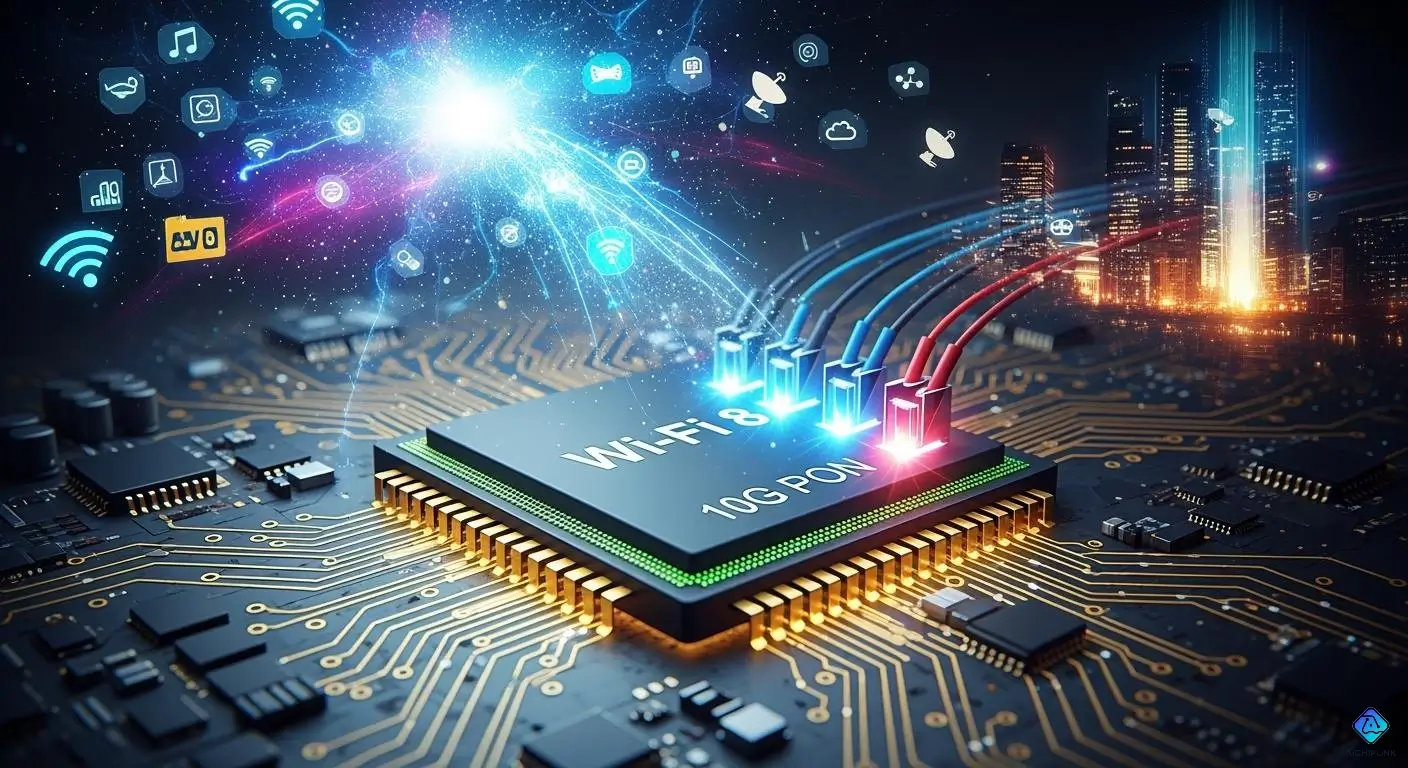
Broadcom starts a new era for mass-market broadband with Wi-Fi 8 and 10G PON chips. These chips help service providers and individuals achieve faster speeds. They also enhance connection stability and improve capacity. Wi-Fi 8 and 10G PON establish a new standard for reliability and user-friendly technology. The table below illustrates how these new chips outperform older generations:
| Feature | Wi-Fi 8 and 10G PON | Previous Generations |
|---|---|---|
| Broadband Performance | Significant boost in speed and capacity | Limited by outdated standards |
| Reliability | More stable and efficient | Frequently experiences disruptions |
| Technology Integration | Utilizes 10G PON with Wi-Fi 8 for modern connections | Incompatible with fiber-based solutions |
Broadcom is leading the charge by accelerating multi-gig mass-market broadband. It facilitates the availability of advanced fiber connections to a larger audience.
Key Takeaways
- Broadcom's Wi-Fi 8 and 10G PON chips make internet faster and more reliable. They work well for homes and businesses. These new technologies help service providers upgrade networks easily. This gives users quicker and steadier connections. Wi-Fi 8 has features like Enhanced Long Range and Non-Primary Channel Access. These features help in crowded places. They lower lag and make connections better. 10G PON technology helps move from old systems smoothly. It lets providers reach more people with fast fiber broadband. Broadcom's solutions are made to save money. Service providers can spend less and grow their broadband services.
Broadcom’s Optimized 10G PON and Wi-Fi 8 Solutions
Key Features of Wi-Fi 8 SoCs
Broadcom brings out new Wi-Fi 8 system-on-chips. These chips make wireless connections better for everyone. They help meet the needs of fast broadband and fiber internet. The table below shows what is new in Wi-Fi 8 compared to older chips:
| Innovation | Description |
|---|---|
| Two-stream Wi-Fi 8 radio | Uses 320 MHz channel for faster data speeds |
| Enhanced Long Range (ELR) Wi-Fi | Makes coverage and performance stronger |
| Non-Primary Channel Access (NPCA) | Cuts down waiting time for quicker responses |
| Improved LDPC coding | Spreads gigabit speeds all over the house |
| Bluetooth 6.0 | Lets more data move and supports more bands |
| 802.15.4 support | Works with Thread V1.4 and Zigbee Pro for smart homes |
| Sensing and secure ranging | Adds new ways to connect safely |
| Compliance | Follows IEEE 802.11bn and WFA Wi-Fi 8 rules |
Broadcom’s Wi-Fi 8 SoCs use Seamless Multi-Link Device technology. This lowers packet loss by about 25%. The BCM4918 processor has a quad-core ARMv8 CPU and Broadcom Neural Engine. This lets the chip run AI models right on the device. It checks the network and fixes problems by itself. These features give users faster and steadier connections, even in busy homes.
Wi-Fi 8 makes networks work better in crowded places. The table below shows how these features help users:
| Feature | Benefit |
|---|---|
| Inter-AP Coordination | Helps manage resources and lowers waiting in busy areas |
| Congestion Avoidance | Stops interference and keeps networks strong |
| Enhanced Multi-Link Operation | Boosts speed by using more links at once |
| Improved Reliability | Keeps connections steady with lots of devices |
| Higher Network Capacity | Lets more devices connect without slowing down |
| Lower Latency | Gives quicker answers for connected devices |
These new features make Wi-Fi 8 important for future broadband.
Advancements in Optimized 10G PON Technology
Broadcom’s 10G PON technology brings big changes to fiber broadband. The new chips work well with Wi-Fi 8. This helps providers give modern fiber internet to more people. The table below lists the main improvements:
| Advancement | Description |
|---|---|
| Integration with Wi-Fi 8 | Lets providers offer advanced fiber broadband to more customers |
| Migration Path | Gives a strong and cheap way to switch from copper and cable to fiber |
Broadcom’s 10G PON chips make broadband more reliable and bigger. They lower waiting times and raise speeds compared to old tech. These chips keep multi-gigabit speeds steady, which is needed for tough broadband markets. The design also saves energy, helping operators spend less while growing their networks.
-
Broadcom’s 10G PON chips give:
-
Better reliability and capacity for big networks
-
Much lower waiting times for real-time uses
-
Faster speeds for multi-gigabit Wi-Fi 8
-
Integration for Mass-Market Broadband
Wi-Fi 8 and 10G PON work together to make broadband stronger. Broadcom’s solutions help providers upgrade their networks fast and easily. This teamwork supports the need for 10G fiber broadband and Wi-Fi 8 in homes and businesses.
Note: Using Wi-Fi 8 and 10G PON together helps move from old networks to new fiber broadband. This makes sure users get fast, steady connections with few problems.
Broadcom’s platform helps operators reach more people with fiber broadband. The solutions make it easy to grow broadband services for cities and rural areas. With these new ideas, Broadcom becomes a leader in next-generation broadband.
Performance Impact on 10G Fiber Broadband
Speed and Reliability Improvements
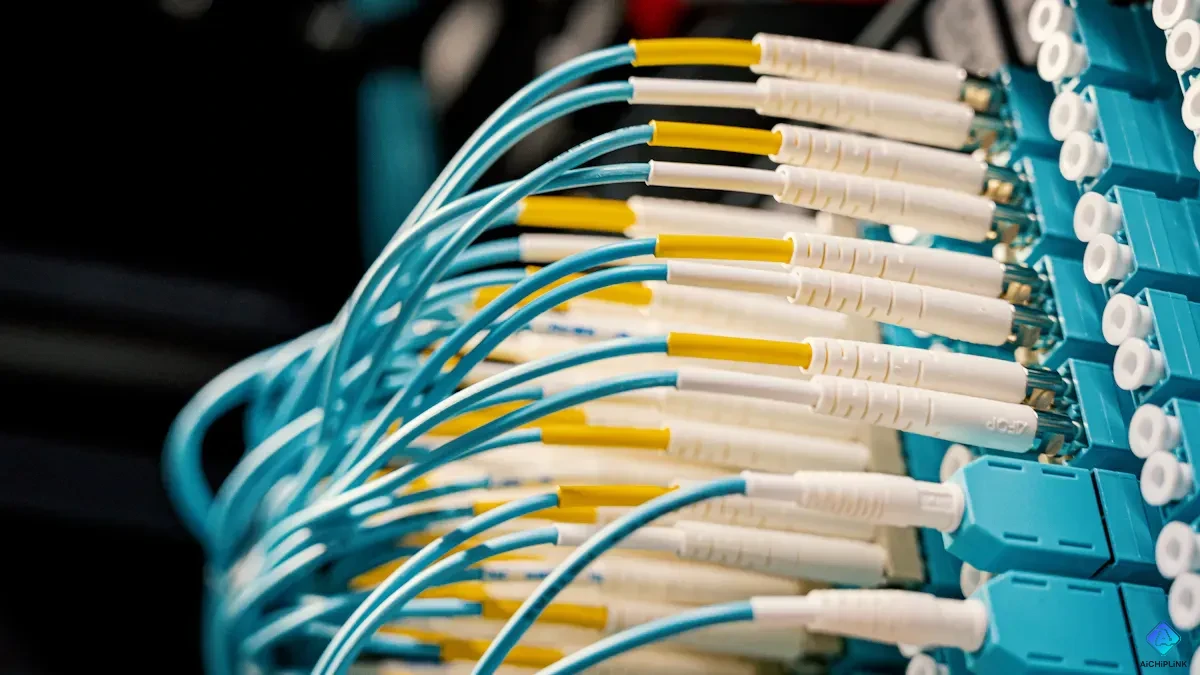
Broadcom’s new chips make 10g fiber broadband faster and more reliable. These chips give steady multi-gigabit wi-fi 8 speeds, even in crowded places. They use smart designs to stop common problems that can break networks. If one part breaks, the network keeps working. The chips can find and block broken parts, so users do not lose service. They also keep signals clear, which stops data loss and keeps connections strong.
| Feature | Impact on Network Reliability |
|---|---|
| Fault Tolerance | Eliminates traditional points of failure |
| Redundant Architecture | Ensures continued operation during partial failures |
| Integrated Reliability Mechanisms | Self-isolation of defective logic with zero downtime |
| Signal Integrity Maintenance | Mitigates packet loss and interference in networks |
Broadcom’s chips work well in important networks, like those used by big companies. They keep signals strong, even when many devices are connected. This stops delays and keeps data moving fast. These upgrades help fiber broadband give better service and fewer problems for everyone.
Enhanced Backhaul and Connectivity
Wi-fi 8 and 10g pon together make a strong base for broadband. This base gives steady wi-fi 8 speeds and lets more people use the network. The table below shows how backhaul is better now:
| Feature | Description |
|---|---|
| High-bandwidth fiber backbone | Supports consistent multi-gigabit speeds, enhancing overall network capacity. |
| Improved reliability | Reduces latency and increases throughput, leading to a more stable connection. |
| Economically viable pathway | Provides a robust option for telecom operators to upgrade from legacy systems. |
New fiber connections let companies give fast internet to lots of people. It is easier and cheaper to switch from old copper or cable systems. The next table compares optical and wireless backhaul for 10g fiber broadband:
| Feature | Optical Backhaul | Wireless Backhaul |
|---|---|---|
| Capacity | 10Gbps to 100Gbps+ | 1-10Gbps |
| Latency | Sub-millisecond | Variable delays |
| Scalability | Can scale to terabit | Limited scalability |
Now, companies can grow their networks to serve more people. This helps bring fast, steady internet to more homes and businesses.
Service Quality for Consumers
Broadcom’s chips make service better for people using 10g fiber broadband. Teams can check details about data loss, delays, and changes in the network. This helps them find and fix problems quickly. By watching how long it takes for data to go back and forth, teams keep delays low. They can also find which device has a problem and fix it fast. This means users get a better experience.
Note: These upgrades let people watch videos without pauses, download faster, and play games online with fewer problems. Multi-gigabit wi-fi 8 and 10g fiber broadband keep homes and businesses connected all the time.
Broadcom’s focus on strong and smart networks makes them a leader in fiber broadband. Using wi-fi 8 and 10g pon together helps both companies and users. It makes fast and steady broadband easy for everyone to get.
Benefits for Service Providers and End-Users
Cost-Effective Upgrades
Broadcom helps service providers save money in fiber broadband. It puts 2.4-GHz and 5-GHz radios together in one chip. This makes board design easier and lowers costs. Providers can compete better in broadband markets. Dual-band radios on the chip use less board space and power. This cuts down expenses and supports more wi-fi 8 at home. Broadcom’s chips make broadband cheaper to own. Their special silicon and networking tech use less energy but work well. The Jericho2c+ chip gives better performance and uses less power for each terabit. This helps providers control costs as they grow 10g fiber broadband.
Simplified Migration from Legacy Systems
Service providers have problems moving from old copper or fiber to new 10g systems. Broadcom makes switching easier with modular solutions. These fit into current switch families. The table below shows how Broadcom helps:
| Feature | Description |
|---|---|
| Modularity | Easy upgrades for existing switch families |
| Architecture | 2.5D or 3D designs help with cooling and making chips |
| Optical Modulation | Mach-Zehnder Modulator gives stable, fast links |
| Automation | Automated fiber coupling improves production |
| Ecosystem | Modular chipset speeds up fiber broadband market entry |
Providers can upgrade networks without big changes. They can quickly offer 10g fiber broadband and wi-fi 8 to homes and businesses.
Improved User Experience
Users get faster and steadier connections with wi-fi 8 and 10g fiber broadband. The table below shows how user experience gets better:
| User Experience Metric | Improvement Description |
|---|---|
| Energy Efficiency | Smart features lower power use |
| Real-time Network Insights | AI checks and improves network quality right away |
| Overall Connectivity | Seamless roaming and less congestion make connections more reliable |
Broadcom’s BCM4918 APU gives high speed and low delay. This helps smart home and IoT devices connect better. The wi-fi 8 platform supports real-time apps and has built-in security. AI acceleration and energy-saving features make daily use easier at home. Users can stream videos smoothly, download quickly, and keep all devices connected.
Market Outlook for Broadcom’s Broadband Solutions
Industry Adoption and Growth Opportunities
Broadcom is very important in the fiber broadband market. Many companies trust Broadcom for strong and steady connections. The wi-fi 8 and 10g pon chip help networks run faster and better. Broadcom’s technology lets companies switch from copper to fiber. This change helps cities and small towns grow their internet. Providers can reach more people with 10g fiber broadband. More people want fast internet every year. Broadcom’s chips help companies grow their networks and give new services.
The fiber broadband market is getting bigger as more homes and businesses want strong internet. Broadcom’s new ideas make it a leader as things change.
Deployment Timeline
Broadcom has always worked to improve broadband technology. The company began in 1991 and grew fast. It got bigger by joining with other companies. The table below lists big moments in Broadcom’s history:
| Year | Milestone |
|---|---|
| 1991 | Company founding and early analog/ASIC semiconductor focus |
| 2016 | Merger with Avago Technologies, creating a larger platform |
| 2019 | Acquisitions of CA Technologies and Symantec Enterprise Security |
| 2022 | Acquisition of VMware, adding virtualization and multicloud offerings |
| FY2024 | Revenue exceeded $50 billion, with AI-related semiconductor sales surpassing $10 billion |
Broadcom’s history shows it wants to keep growing and making new things. The company keeps putting money into new fiber broadband technology.
Future-Proofing Fiber Networks
Broadcom makes its chips ready for future broadband rules. The company leads in new optical connections. Its solutions use co-packaged optics and PCIe Gen6 over optics. These features help with AI and fast data centers. Broadcom also builds optical networks that move up to 100 terabits each second. The change from copper to optical will happen around 2027. The Tomahawk and Jericho products keep getting better for new needs. The table below shows how Broadcom plans for the future:
| Evidence Type | Description |
|---|---|
| Advanced Optical Connectivity | Continuous advancements in optical connectivity for AI infrastructure, including CPO and PCIe Gen6 over optics |
| Advanced Networking | Optical networking solutions capable of 100 terabits per second |
| Continuous Evolution | Tomahawk and Jericho product lines evolve to meet AI data center demands |
Broadcom’s wi-fi 8 and 10g pon chip help networks stay ready for what comes next. Service providers know Broadcom will keep up with new rules. The company’s plans help the fiber broadband market keep moving ahead.
Broadcom is making fiber gateway platforms better with wi-fi 8 chips and improved 10G PON. This sets a new level for very strong and super-fast internet. Providers get both basic and advanced wi-fi 8 features. This makes fiber internet cheaper and easy to grow. The table below shows how Broadcom leads the broadband industry and keeps making new things:
| Feature | Impact on Broadband Evolution |
|---|---|
| Integrated solutions | Faster, more reliable connections |
| Cost-effective upgrades | Easier transition for providers and users |
| Future-ready platforms | Supports global digital transformation |
Broadcom keeps changing broadband with solutions that help everyone for a long time.

Written by Jack Elliott from AIChipLink.
AIChipLink, one of the fastest-growing global independent electronic components distributors in the world, offers millions of products from thousands of manufacturers, and many of our in-stock parts is available to ship same day.
We mainly source and distribute integrated circuit (IC) products of brands such as Broadcom, Microchip, Texas Instruments, Infineon, NXP, Analog Devices, Qualcomm, Intel, etc., which are widely used in communication & network, telecom, industrial control, new energy and automotive electronics.
Empowered by AI, Linked to the Future. Get started on AIChipLink and submit your RFQ online today!