Broadcom Tomahawk Architecture Delivers Unmatched Scalability in 2026
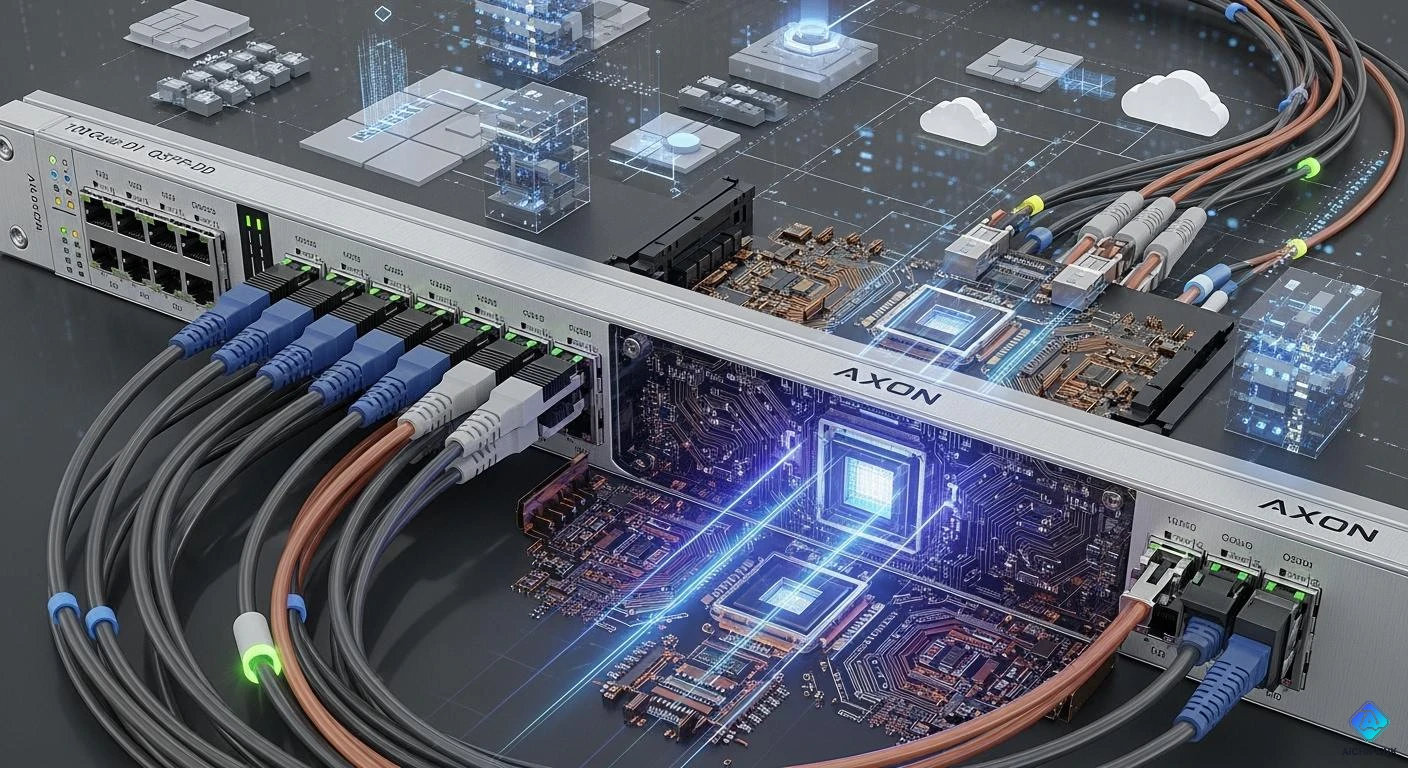
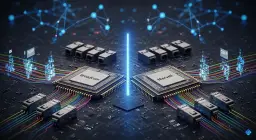
You will see the Tomahawk Architecture give amazing scalability in 2026. It can reach a huge 102.4 Tbps bandwidth. It can handle up to 64 ports at 1.6T or 512 ports at 200G on one chip. This architecture lowers the time it takes for GPUs to talk to each other. This helps AI training go much faster.
Key features for AI and high-performance data centers are:
| Feature | Description |
|---|---|
| Bandwidth | 102.4 Tb/sec Ethernet for AI-scale fabrics |
| Latency | Low latency interconnects with 200G SerDes support |
| Scalability | Up to 1,024 100G SerDes lanes for XPUs |
| Routing | Cognitive Routing 2.0 for traffic adaptability |
This design is great for big AI, machine learning, and growing data centers.
Key Takeaways
-
Tomahawk Architecture gives a huge 102.4 Tbps bandwidth. This lets data move faster for AI and high-performance computing.
-
It has low latency of 250 nanoseconds. This helps AI training work better. It is important for big data centers.
-
Cognitive Routing and shared buffering help manage traffic. They lower congestion and packet loss when work is heavy.
-
The architecture can scale up. This means networks can get bigger as AI clusters grow. It does not lose performance.
-
Tomahawk Architecture saves energy by using less power per bit. This lowers costs and helps the environment.
Data Center Scalability Challenges
Ethernet Limitations
Scaling your data center for AI and high-performance computing is hard. One big problem comes from Ethernet technology. Ethernet has been used for networks for many years. But now, it struggles to handle AI clusters and large data centers.
"Traditional Ethernet is a lossy technology. It causes higher latency and packet loss. It cannot give good performance for large clusters."
This issue shows up when connecting thousands of GPUs or servers. Traditional Ethernet can’t provide the very low latency AI needs. Normal switching fabrics can cause jitter and congestion. This hurts multi-node training and distributed inference. For example, NVLink offers 450 GB/s throughput, but Ethernet only gives 50 GB/s. This difference slows data movement between nodes.
Today’s AI training clusters need 800 Gbps to 1.6 Tbps connections between nodes. Latency must be measured in nanoseconds. New network designs are needed to meet these demands. Ultra-low latency protocols like RoCEv2 and better congestion control are now important.
Legacy Switch Bottlenecks
Old switch designs cause more problems when scaling. These switches were made for single-server tasks. They can’t handle the high needs of distributed AI and HPC. This causes bottlenecks, more latency, and bandwidth limits.
Using old switches leads to:
-
Congestion that raises latency and wastes resources.
-
Queuing delays and head-of-line blocking that can stop thousands of GPUs during AI training.
-
More operational problems and higher maintenance costs.
Edge computing and distributed cloud growth increase the need for better switches. Many companies put micro data centers near users to cut application latency. Old switches can’t support these needs well.
The global data center market is growing fast. In 2022, it was worth $195 billion. It is expected to grow at 10.9% per year from 2023 to 2030.
| Evidence Type | Description |
|---|---|
| Market Growth | The global data center market was worth $195 billion in 2022 and is expected to grow 10.9% yearly from 2023 to 2030. |
| Scalability Solutions | Modular designs and prefabricated modules help quick setup and growth, solving scalability problems. |
| Networking Advancements | Software-defined networking (SDN) and virtualization let resources scale based on demand. |
You need new switch designs and smarter networks to keep up with fast growth and AI and HPC needs.
Tomahawk Architecture Innovations
High Radix and Port Density
You want your network to move lots of data fast. Tomahawk Architecture helps by adding more ports and using high radix. High radix means the switch connects to many ports right away. This makes data travel fewer steps. It helps bandwidth and lowers latency.
Tomahawk 6, Tomahawk Ultra, and BCM78900/78910 go even further. Tomahawk 6 can switch up to 102.4 Tbps. That is twice as much as Tomahawk Ultra’s 51.2 Tbps. This lets you connect hundreds of fast ports on one chip.
| Metric | Tomahawk 3 | Tomahawk 5 | Tomahawk 6 / Ultra Series |
|---|---|---|---|
| Switching Capacity | 12.8 Tbps | 51.2 Tbps | Up to 102.4 Tbps (Tomahawk 6) |
| Supported Configurations | 32 x 400GbE, 64 x 200GbE, 128 x 100GbE | N/A | 64 x 1.6T or 512 x 200G ports |
| Power Reduction per 100Gbps | 40% | N/A | Further optimized for efficiency |
| Cost Reduction per 100Gbps | Up to 75% lower | N/A | Maintains cost-effectiveness |
Having more ports helps in many ways. AI and machine learning need fast data between GPUs and servers. Telecom companies use it for more 5G traffic. Banks need low latency for trading. Tomahawk Architecture helps with fewer switches and less trouble.
Low Latency and Cognitive Routing
Latency is important for AI training and big computing jobs. Tomahawk Architecture lowers latency with smart routing and better packet handling.
Tomahawk Ultra has very low latency at 250 nanoseconds. It also supports in-network collectives, or INC. INC lets the switch help with AI communication. This makes data move faster between nodes.
The Tomahawk 5 architecture brings Cognitive Routing. It picks the best path for data by checking for busy links. This helps lower latency, which is key for AI training. Advanced Shared Packet Buffering helps during busy times. It keeps data moving and stops packet loss.
Cognitive routing changes as the network changes. It balances traffic and avoids busy links. This means less jitter and faster data movement.
Here are some top features of Tomahawk Ultra for latency and speed:
| Feature | Tomahawk Ultra |
|---|---|
| Latency | 250 ns |
| Throughput | 51.2 Tbps |
| Packet Loss | Eliminated via LLR and CBFC |
| Header Overhead | Reduced from 46 to 10 bytes (78% improvement) |
| Packets Processed | Up to 77 billion packets per second |
| Collective Operations | Supported directly within the switch chip |
Shared-Buffer and Traffic Management
Your network must handle sudden traffic without dropping packets. Tomahawk Architecture uses a shared buffer to do this well. Instead of giving each port its own buffer, it shares memory. The switch gives buffer space where it is needed most.
Smart traffic tools work with the shared buffer. Cognitive Routing, Dynamic Load Balancing, and Global Load Balancing spread traffic out. These tools cut down delays and stop congestion before it starts.
You also get a big shared packet buffer of 267MB. This helps smooth out big bursts of data. Your network stays steady even when traffic is high.
Some benefits of this design are:
-
It absorbs bursts so you don’t lose packets
-
It spreads traffic to cut down waiting
-
It gives better service for things like AI clusters
Tomahawk Architecture’s shared buffer and traffic tools keep your data center running well, even with heavy AI and HPC work.
Performance and Competitive Edge
Bandwidth and Throughput Gains
You want your data center to move data faster. Tomahawk Architecture helps you do this. It gives you much more bandwidth and throughput. The newest models use 3nm FinFET technology. This new tech lets you double your throughput over older models.
| Model | Throughput (Tb/s) | Process Technology | Key Features |
|---|---|---|---|
| Tomahawk 5 | 51.2 | N/A | N/A |
| Tomahawk 6 | 102.4 | 3nm FinFET | Native 200G SerDes, optimized for AI clusters |
Now you can connect more devices than before. You can also move data at very high speeds. This helps you keep up with AI and cloud needs.
AI and HPC Optimization
AI and high-performance computing need fast networks. Tomahawk Architecture is made for these jobs. It gives you less than 400ns XPU-to-XPU latency. It also cuts Ethernet header overhead from 46 bytes to 10 bytes. Lossless fabric technology stops packet drops, even with lots of data.
“AI and HPC workloads are coming together in tight clusters. These clusters need supercomputer-class latency. This is important for inference, reliability, and smart networking,” said Kunjan Sobhani, lead semiconductor analyst, Bloomberg Intelligence.
Some important features are:
-
Less than 400ns latency between accelerators
-
Lossless fabric for reliable data movement
-
In-network collectives that help XPUs process less
These features let you train AI models faster. They also help HPC jobs run better.
Comparison with Competing Solutions
You may wonder how Tomahawk Architecture compares to other switches. It leads in bandwidth, scalability, and energy use.
| Parameter | Broadcom Tomahawk 5 | NVIDIA Spectrum-4 | Marvell Teralynx 10 | Cisco Silicon One G100/G200 |
|---|---|---|---|---|
| Forwarding Latency | ~250 ns | ~sub-300 ns | ~500 ns or lower | Low hundreds ns |
| Power Efficiency | High radix, low power-per-bit | 1.6× effective bandwidth in AI workloads | Low latency + cost-per-bit | Up to 77% lower power |
Tomahawk 6 can support up to 1,024 accelerators. Many other switches support fewer. It also uses up to 90% less energy. You get more bandwidth and save power. This saves money and helps the planet.
Future of Tomahawk Architecture
Scalability for AI Clusters
AI clusters are getting bigger every year. Networks need to grow too. Tomahawk Ultra makes latency less than 250 nanoseconds. This is much faster than older models with 500 nanoseconds. You can process over 77 billion packets each second. Your AI clusters can get bigger without slowing down.
New features like link-layer retry and credit-based flow control help a lot. They keep data moving smoothly, even with thousands of accelerators. Tomahawk 6 can switch 102.4 terabits per second. You can use co-packaged optics to save money and connect more devices. The architecture works for both scale-up and scale-out designs. This means you can grow your network any way you want.
“AI clusters are growing from tens to thousands of accelerators. The network becomes a big bottleneck but must give very high bandwidth and low latency. By going past 100Tbps and joining scale-up and scale-out Ethernet, Broadcom’s Tomahawk 6 gives hyperscalers an open, standards-based fabric. There is no lock-in, and it gives a clear path to the next wave of AI infrastructure.”
Industry Impact
You will see big changes in data center networking. Tomahawk Architecture sets new records for speed and flexibility. In October 2025, Broadcom launched Tomahawk 6 - Davisson. This is a third-generation Co-Packaged Optics Ethernet switch. It doubles the bandwidth of older models, reaching 102.4 terabits per second. It helps meet the needs of AI and cloud data centers.
Here are some ways Tomahawk Architecture changes the industry:
| Feature | Description |
|---|---|
| Switching Capacity | 102.4 Tbps, doubling current generation performance |
| Advanced Features | Cognitive Routing 2.0, congestion-aware flow control, high-resolution telemetry |
| Scalability | Supports both scale-up and scale-out for large AI deployments |
| Efficiency | Improved power use and bandwidth for AI clusters |
| Open Architecture | UEC-compliant, supporting a broad Ethernet ecosystem |
You will also see new trends in data centers. Direct liquid cooling helps control heat in dense AI networks. Enterprise SONiC makes it easier for companies to use these switches. Better observability lets IT teams manage big networks with less work.
The market for data center switches is growing fast. It could reach $24.8 billion by 2034. The Asia Pacific region is growing the fastest. AI infrastructure and the move to 400G and 800G Ethernet are driving this growth. Tomahawk Architecture gives you what you need to keep up and lead the next generation of networking.
You can see how Broadcom Tomahawk Architecture helps with today’s data center problems by using smart ideas.
-
More bandwidth lets networks move data faster as they grow.
-
Using less energy means less heat and your systems stay safe.
-
Cognitive routing and shared buffering make AI and machine learning work better.
The Tomahawk Ultra switch is a top choice for AI and HPC networks. It has very low latency and moves data without losing any. This platform helps you get your data center ready for the future:
| Feature | Benefit |
|---|---|
| Fully programmable switch | You can add new features without new hardware |
| Long investment protection | Your network can change as you need it to |
You will be ready for new technology and ideas.

Written by Jack Elliott from AIChipLink.
AIChipLink, one of the fastest-growing global independent electronic components distributors in the world, offers millions of products from thousands of manufacturers, and many of our in-stock parts is available to ship same day.
We mainly source and distribute integrated circuit (IC) products of brands such as Broadcom, Microchip, Texas Instruments, Infineon, NXP, Analog Devices, Qualcomm, Intel, etc., which are widely used in communication & network, telecom, industrial control, new energy and automotive electronics.
Empowered by AI, Linked to the Future. Get started on AIChipLink and submit your RFQ online today!
Frequently Asked Questions
What makes Tomahawk Architecture different from older switch designs?
You get more ports and faster data movement. It also has smarter ways to send data. Tomahawk Architecture uses shared buffers and cognitive routing. These features help your network move more data. They also keep AI clusters working well.
Can Tomahawk Architecture support future AI workloads?
Yes. You can make your network bigger as AI clusters grow. Tomahawk Architecture gives high bandwidth and low latency. This helps you get ready for new AI and machine learning jobs.
How does Tomahawk Architecture help reduce power use?
You save energy with better chip design and smart packet handling. Tomahawk Architecture uses less power for each bit of data. This lowers your costs and keeps your data center cooler.
Is Tomahawk Architecture compatible with open networking standards?
Yes. You can use Tomahawk Architecture with open Ethernet systems. This gives you more choices and stops vendor lock-in. You can upgrade your network when new tech comes out.
Who should consider using Tomahawk Architecture?
You should use Tomahawk Architecture if you run AI, HPC, or big cloud data centers. It helps you move data faster, grow easily, and get ready for the future.

.png&w=256&q=75)