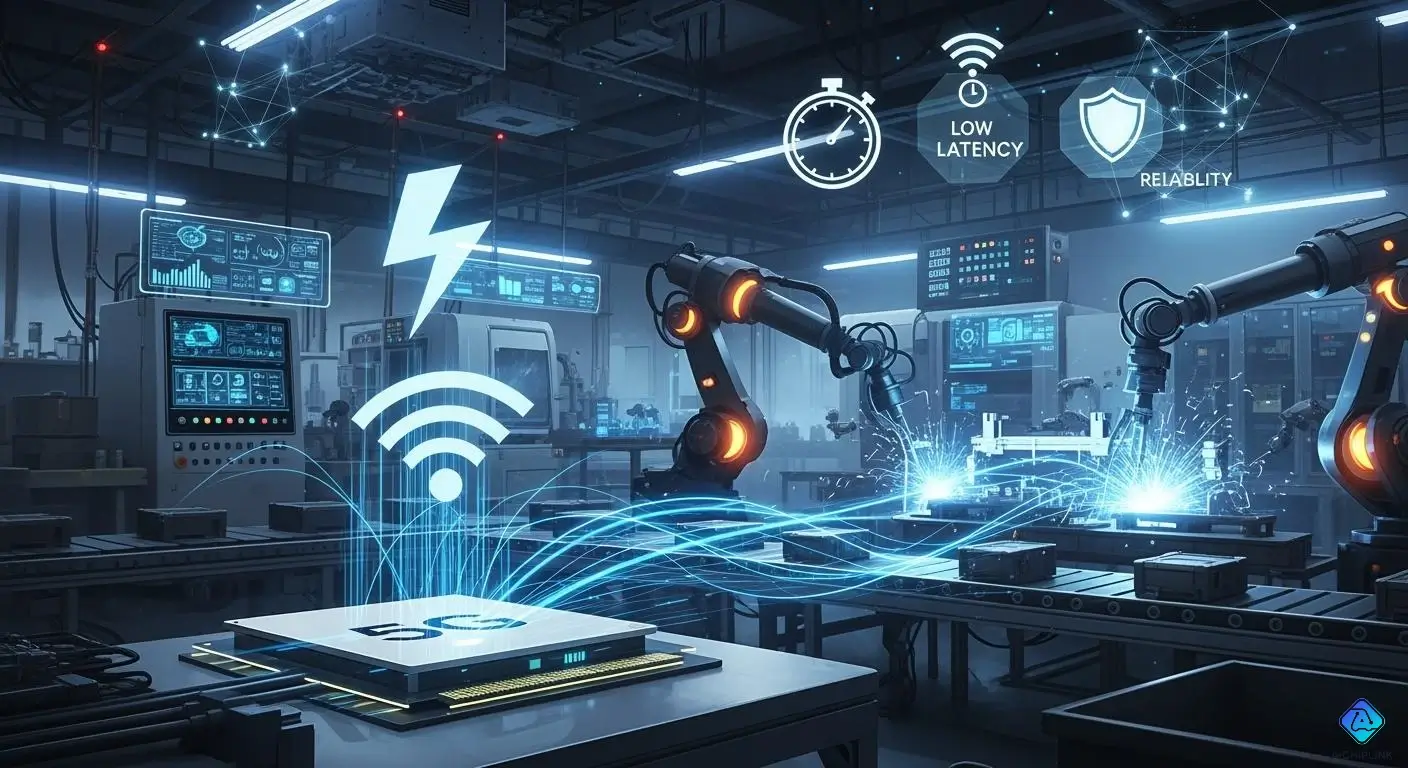
You can change your factory with 5G modules. These modules give very reliable and fast communication. Machines and systems can react almost right away. Before, wireless technologies like 3G were slower and less reliable. Now, 5G gives up to 20,000 Mbit/s speed. It also has low latency and high reliability. This big jump helps you make work safer and better. It also lets you find new ways to be flexible. Dr. Al Beydoun says 5G supports better broadband. It also helps many machines talk and gives very reliable fast communication.
Key Takeaways
-
5G modules can reach speeds up to 20Gbps. This lets factories handle data fast and easily.
-
Ultra-low latency of 1 millisecond helps control machines right away. This makes work safer and more exact.
-
5G modules are built to be very reliable. They work well even in tough places.
-
Using 5G can cut down production stops by up to 30%. This helps factories work better overall.
-
5G technology helps new things like remote monitoring and predictive maintenance. This makes factories smarter.
5G Modules: Speed, Latency, Reliability
Speed Enhancements
You can make your factory work better with 5G modules. These modules send data very fast. This helps machines do jobs quicker and smarter. In factories, 5G can reach speeds up to 20Gbps. Carrier aggregation helps download speeds go past 1Gbps. Fast speeds let you send lots of data quickly. Your network can handle more devices and harder jobs without slowing down.
-
5G modules can send data up to 20Gbps.
-
Carrier aggregation can make download speeds over 1Gbps.
With 5G modules, you can control machines and sensors right away. Your factory can react to changes fast. You can use more things like machine vision and remote monitoring. This is because your network moves data faster than before.
Here is a table that shows how 5G module speed helps real-time control in factories:
| Feature | Description |
|---|---|
| Ultra-Low Latency | Gets latency as low as 1ms for fast data in automation. |
| Reliable Performance | Keeps connection strong even with factory noise, so less downtime. |
| Enhanced Scalability | Lets you connect more devices for smart factory uses. |
Ultra-Low Latency
You need low latency for good control in factories. 5G modules give very low latency, sometimes just one millisecond. This is much faster than old tech. For example, 4G LTE usually has latency from 30 to 50 milliseconds. With 5G, you get less than 5 milliseconds. This big drop helps machines react almost at once. You can make your work safer and more exact.
-
5G gives latency of one millisecond.
-
5G modules in factories get latency less than 5 ms.
-
4G LTE usually has latency from 30 to 50 ms.
-
Lower latency with 5G helps control in making things.
Many things help 5G modules get very low latency in factories. You can see these important things in the table below:
| Key Factor | Description |
|---|---|
| High-frequency probing | Checks at mmWave and sub-THz to keep signals strong and fast. |
| Thermal testing | Tests in hot and cold to see how temperature changes latency. |
| Scalable probe cards | Works with chiplet and multi-die setups for full testing. |
| Massive MIMO and beamforming | Helps test many antennas at once. |
| mmWave frequencies | Handles problems like signal bounce and loss that affect latency. |
| Environmental conditions | Looks at heat or noise that can mess up signal timing. |
| Real-world simulation | Tests for movement, handoffs, and people getting in the way. |
| Wafer-level testing | Finds problems in RF modules early in design. |
| Thermal-aware testing | Makes sure it works well in different temperatures to keep latency low. |
Reliability in Automation
You want your factory network to work all the time, even when things get tough. 5G modules are made to be very reliable for automation. You can check reliability with things like Block Error Rate (BLER) and Signal-to-Interference-plus-Noise Ratio (SINR). These help you see if your network stays strong and clear.
-
Block Error Rate (BLER)
-
Signal-to-Interference-plus-Noise Ratio (SINR)
5G modules are built to keep working in hard places. Some have strong, fire-safe, and heat-proof cases. Some are safe for Class I, Division 2 places, so they work in dangerous spots. These modules can handle very hot or cold, from -20 °C to 74 °C. They also pass tests for dust, mist, salt spray, and sand dust. They go through tests for shaking, dropping, and hitting to make sure they last during use and travel.
-
Strong, fire-safe, and heat-proof cases and parts.
-
Safe for Class I, Division 2 (C1D2) places.
-
Made to handle -20 °C to 74 °C.
-
Pass dust and mist tests like salt spray and sand dust.
-
Pass shaking, drop, and hit tests.
You can count on 5G modules to keep your factory running well. These modules help you stop downtime and keep your work safe and smooth.
5G URLLC Benefits for Industry
Real-Time Response
5G can help your factory work faster and smarter. Ultra-reliable low-latency communications let machines and robots react right away. You see what happens on your production line almost instantly. This helps you control things quickly and with care. If there is a safety problem, you can stop a robot right away. You can change how things are made without waiting. Real-time automation is possible because 5G modules have less than 1 millisecond delay and are very reliable.
-
Machines and sensors can share data right away.
-
You can check equipment health and spot problems early.
-
You can change your production line fast for new needs.
Tip: Real-time response helps you stop downtime and makes your factory work better.
Here is a table that shows how 5G URLLC is different from old wired systems:
| Benefit | Description |
|---|---|
| Ultra-Low Latency | 5G URLLC can have delay as low as 1 ms, which is needed for real-time jobs. |
| High Reliability | It can reach 99.9999% reliability, which is important for big factory jobs. |
| Support for Advanced Apps | It lets you use new things like remote monitoring and motion control in Industry 4.0. |
Safety Improvements
5G can make your workplace safer. Real-time communication lets you stop machines right away if there is danger. You can use sensors to watch for risks and act fast. High reliability means your network will not stop when you need it most. You can keep workers and machines safe with quick and correct control.
-
You can use robots that stop if a person gets too close.
-
You can watch dangerous areas and send alerts right away.
-
You can help workers fix problems from far away, so they stay safe.
Note: 5G smart manufacturing helps you follow safety rules and keeps your team safe.
Smart Factory Innovations
5G lets you try new things in your factory. You can change your setup fast with flexible manufacturing. You can use robots and vehicles that move and work without wires. You can control machines from anywhere with remote monitoring. Real-time mass optimization helps you use your resources better and waste less.
Here is a table that shows some smart factory uses and their benefits:
| Application | Benefit |
|---|---|
| Autonomous shop floor ops | Lets you control and talk to machines in real-time, making work faster and better. |
| Remote control | Lets you manage machines from far away right away. |
| Prognostic and Health Mgmt | Lets you check machine health in real-time, so you can fix things before they break. |
| Real-time mass optimization | Helps you use your resources well and change your workflow as needed. |
-
You can get rid of expensive wires and use wireless 5G modules for flexible setups.
-
You can fix machines before they break with predictive maintenance.
-
You can cut down production downtime by up to 30% with real-time monitoring and control.
Block Quote: Experts say 5G URLLC’s very low delay and high reliability make it a big change for important factory jobs. It lets factories get rid of old wires that cost a lot and break often.
5G technology is changing how factories work. You get low delay, fast speed, and strong reliability. You can use real-time automation to make your factory safer, smarter, and more flexible.
Applications of 5G Modules
Flexible Manufacturing
5G modules help make factories more flexible. Machines can talk to each other right away. They also talk to control systems in real time. This lets you watch equipment and find problems early. You can change your production line fast for new needs. 5G supports robots that work with people and adjust quickly. You can track your supply chain better. This helps you manage inventory and guess demand more accurately.
-
Real-time data helps make production better.
-
Machines talk fast for quick choices.
-
Robots work together and adjust to changes.
-
Better tracking helps manage supply chains.
Machine Vision
5G lets you use machine vision in your factory. Fast speed and low latency send images and data right away. Cameras and sensors help check product quality fast. You can find defects quickly. Robots and automation work together to make lines smarter. You can use 5G to automate tasks and make your process smoother.
| Machine Vision Benefit | Description |
|---|---|
| Real-time inspection | Find defects as products move |
| Synchronized robots | Robots work together easily |
| AR/VR support | Use cool tools for training |
Remote Monitoring
5G lets you watch machines from anywhere. Real-time data shows equipment health and problems early. Engineers can check broken parts far away and help fast. Predictive maintenance keeps production steady and saves money. 5G RedCap uses less power, so monitoring is more efficient.
Tip: Remote monitoring with 5G modules helps stop failures and keeps your factory running well.
Energy Sector Use Cases
5G modules work in many energy jobs. Smart grid automation balances loads and finds faults fast. Power plants use digital monitoring for safe communication. You can link sensors for predictive maintenance and fix faults quickly. 5G helps manage renewable energy with smart balancing and analytics. Drones and robots check assets quickly and safely. In emergencies, 5G gives secure communication for fast action.
-
Smart grid automation for quick control
-
Power plant monitoring for safe work
-
Remote substation checks with IoT sensors
-
Renewable energy management with smart tools
-
Drone checks for speed and safety
5G modules open new doors for industry. These tools help you get more flexible, improve quality, and keep things safe.
Efficiency and Safety Gains
Downtime Reduction
5g modules help your factory work better. They process data close to where it starts. This means you get answers fast. Edge-computing helps you react quickly to changes. You do not wait for data to go far away. AI-powered tools help fix problems fast. Automated troubleshooting finds and solves issues before machines stop. Private 5g networks give strong and steady connections. You can make things faster and have less downtime. Your products stay good, and your team can handle new jobs quickly.
-
Edge-computing makes things faster.
-
AI-powered tools help run the network.
-
Private 5g networks make production quicker.
Tip: Quick fixes and strong networks help you avoid delays.
Worker Protection
5g automation helps keep workers safe. Real-time monitoring systems, like wearables, watch for danger. They alert your team right away. Better safety lets people work near AGVs without worry. 5g makes sure AGVs stop if someone is close. You see dangers as they happen and act fast. Watching all the time helps you find problems before accidents. Your workplace is safer, and your team feels better.
-
Real-time monitoring finds dangers.
-
People work safely near AGVs.
-
AGVs stop right away if needed.
-
Watching all the time finds risks.
-
Real-time info makes your site safer.
Sustainable Operations
5g modules help your factory be greener. You do not need as many wires. This saves materials and money. You can change your setup fast to meet new needs. Connected worker apps help you see what is happening and make smart choices. Mobile asset apps, like self-driving vehicles, make work faster and greener. Untethered assets use fewer materials and let you change things easily.
| Sustainability Benefit | Description |
|---|---|
| Less wired infrastructure | Saves materials and costs |
| Quick retooling | Changes setup fast for new needs |
| Connected worker apps | Helps you see and decide better |
| Mobile asset apps | Makes work faster with smart vehicles |
| Untethered assets | Makes changes easy and cuts waste |
Note: Using 5g in factories helps save resources and protect the planet.
Implementation Challenges
Security and Privacy
When you add 5g modules, you get new risks. Security and privacy become more important. Private wireless networks help keep your data safe. They keep your traffic away from public networks. You process important data close to where it is made. This lowers the chance of attacks. Strong encryption and good authentication keep your devices safe. You need to use safe ways to connect and check for weak spots in signaling protocols. Storing lots of data in the cloud can cause data leaks if you do not use good security. You must protect every device and update your security as threats change.
-
Private wireless networks keep traffic separate.
-
Local data processing lowers attack risks.
-
Strong encryption and authentication keep devices safe.
-
Safe connections and updates are needed.
Tip: Always check your security plan before you add more 5g connections.
Legacy System Integration
It can be hard to connect new 5g modules to old systems. 5g wireless networks do not support all OSI layers. You cannot use both Layer 2 and Layer 3 easily. Time synchronization protocols like PTP are missing. This makes it tough to automate workflows. Quality of service features are limited. Important jobs may not get the speed they need. You need to plan well to connect old and new systems.
-
OSI layer support is limited.
-
Time sync protocols are not there.
-
Quality of service features are missing.
Infrastructure Costs
You need a big budget to set up 5g modules. Private 5g networks can cost $250,000 to $1 million each. Fiber optic cables cost $25,000 to $100,000 for each kilometer. Edge computing sites cost $100,000 to $500,000 each. You must think about where you are, the rules, and how big your network is before you spend money.
| Infrastructure Component | Typical Cost Range |
|---|---|
| Private 5g network | $250,000 – $1 million |
| Fiber optic deployment | $25,000 – $100,000/km |
| Edge computing site | $100,000 – $500,000 |
Compliance Issues
You must follow strict rules when you use 5g modules in some industries. First, you get your documents and technical specs ready. You test devices in labs for RF and signal strength. You do field tests to check how the network works and how fast it is. Security and protocol checks make sure your devices protect data. After all tests, you get a certificate to use your devices everywhere. You need to keep checking rules as they change.
-
Get documents and specs ready.
-
Test devices in labs.
-
Do field tests in real places.
-
Check security and protocols.
-
Get a certificate for global use.
-
Keep checking rules over time.
Note: Following the rules keeps your business safe and running well.
Future Trends in 5G Automation
Edge Computing Integration
Factories will use edge computing in new ways. Edge computing works with smart software. Machines can make choices by themselves. The factory floor acts like it can think. Data gets handled right where it starts. You do not have to wait for answers. You can change machines and jobs right away. Edge computing with 5g gives less than 5 milliseconds delay. This is much quicker than old systems. Your factory can learn and change fast.
-
Edge computing lets you handle data right at the source.
-
You can make smart and quick choices with no waiting.
-
The factory floor reacts faster and works better.
Tip: Edge computing and 5g together help you build a smart factory.
Private 5G Networks
You can set up your own private network at your factory. This gives you more control and stronger security than public networks. Private 5g networks help you automate your production lines. Machines and robots work without stopping. You get strong performance and can set your own security rules. This is important for seeing things in real time and keeping everything reliable.
Private 5G networks help automate production lines with very reliable low delay communication. This means machines and robots work smoothly with no stops. Automation makes work faster and helps avoid mistakes.
Here is a table that shows how private and public networks are different:
| Feature | Private 5G Networks | Public 5G Networks |
|---|---|---|
| Control | High | Low |
| Customization | High | Low |
| Security | High | Moderate |
| Coverage | Reliable | Variable |
| Latency | Ultra-low | Higher |
| Quality of Service | Guaranteed | Best-effort |
| Scalability | High | Limited |
Emerging Innovations
Factories will see many new changes soon. Better connections now give download speeds close to one gigabyte per second. This lets you talk in real time. AI, IoT, and 5g work together to bring new tools. You get things like predictive maintenance and digital twins. Private networks are growing fast because they are safe and can be changed for your needs.
Here are some of the best new ideas:
| Innovation Type | Description |
|---|---|
| Integration with IoT | Lets you watch and control devices right away for better work. |
| AI Vision Cameras | Helps you check product quality from far away. |
| Remote Monitoring | Lets you manage machines and tools without being there. |
| Augmented Reality (AR) | Makes fixing and taking care of machines faster with digital help. |
| IIoT Sensors | Watches equipment all the time to stop breakdowns and save money. |
Note: These new ideas will help you make factories smarter, safer, and easier to change.
You can make your factory better with 5g modules. These tools give you faster speed and less delay. They also make your network stronger and more reliable. You should see if your machines can use 5g services. You might find new ways to make work safer and more efficient.
Keep learning about new 5g trends. This helps your business stay ahead.

Written by Jack Elliott from AIChipLink.
AIChipLink, one of the fastest-growing global independent electronic components distributors in the world, offers millions of products from thousands of manufacturers, and many of our in-stock parts is available to ship same day.
We mainly source and distribute integrated circuit (IC) products of brands such as Broadcom, Microchip, Texas Instruments, Infineon, NXP, Analog Devices, Qualcomm, Intel, etc., which are widely used in communication & network, telecom, industrial control, new energy and automotive electronics.
Empowered by AI, Linked to the Future. Get started on AIChipLink.com and submit your RFQ online today!
Frequently Asked Questions
What is URLLC in 5G industrial operations?
URLLC means ultra-reliable low-latency communication. It helps your network react almost right away. This lets you control machines and robots safely. URLLC works for many industrial iot jobs that need fast and steady data.
How does 5G improve network reliability for industrial IoT?
5G gives you a stronger network. URLLC keeps your connections steady, even in busy places. Your devices stay linked, so you avoid downtime. This helps your industrial iot systems work better and stay safe.
Why is low latency important for URLLC applications?
Low latency means your network sends data very fast. URLLC needs this speed to control machines right away. You can stop robots or fix problems fast. This keeps your factory safe and running well.
Can you use URLLC for remote monitoring in industrial IoT?
Yes, you can use URLLC for remote monitoring. Your network sends data from sensors and machines quickly. You see problems as soon as they happen. This helps you fix issues before they stop your work.
What are some common applications of URLLC in 5G industrial operations?
You use URLLC for many jobs. These include machine vision, remote control, and predictive maintenance. Your network helps robots, sensors, and other iot devices. URLLC lets you run your factory smarter and safer.