What are the key differences between rectangular and circular connectors?
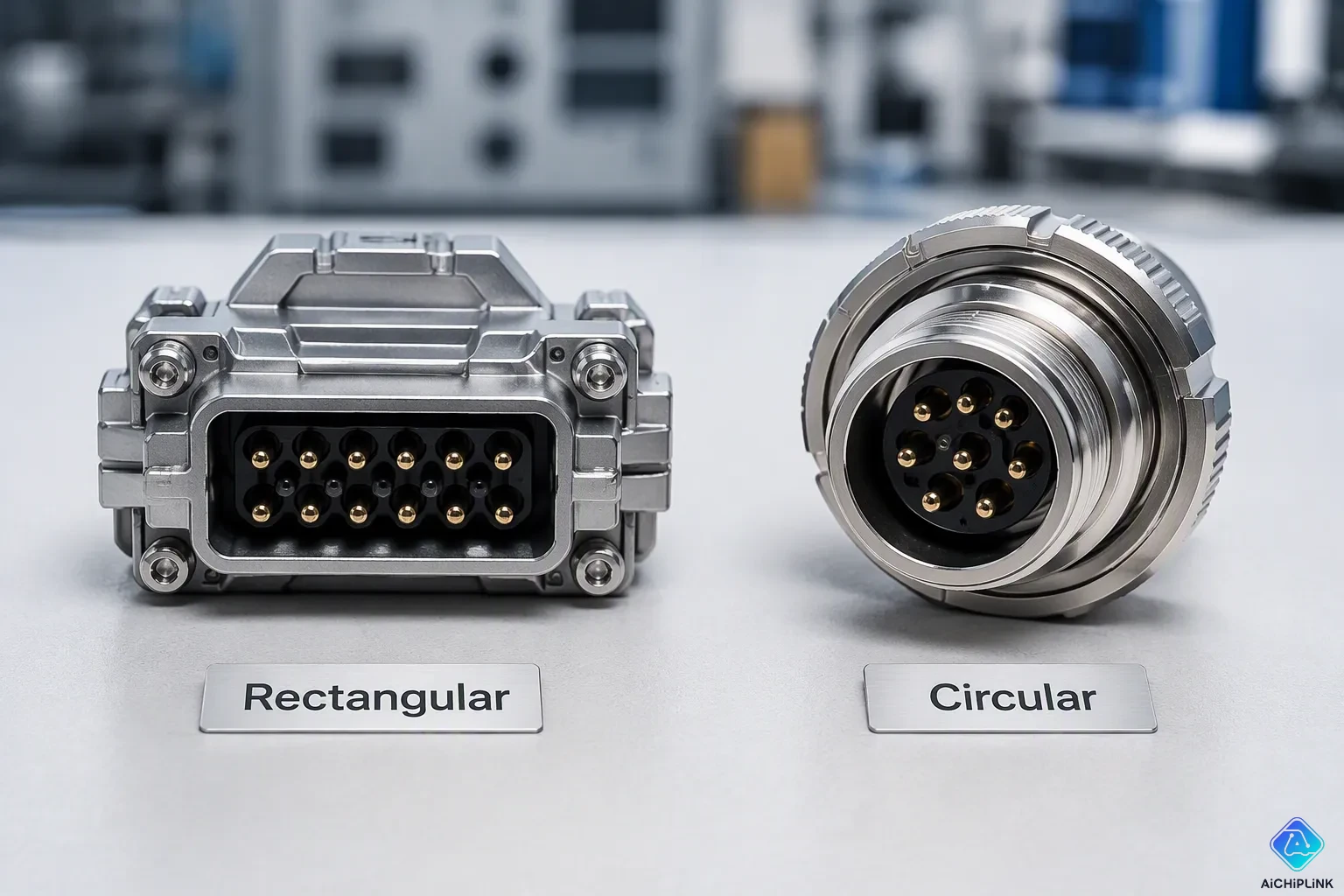
When comparing Rectangular Connectors vs Circular Connectors, your choice shapes your whole design. Rectangular connectors focus on high contact density and modularity. Circular connectors stand out in ruggedness and environmental sealing. Think of a PCB backplane inside a server rack—rectangular connectors fit perfectly there. Now picture an outdoor sensor link exposed to rain and vibration—circular connectors handle that job better.
These two connector families serve different purposes. You must look at several factors before deciding. Compare contact density, typical uses, environmental protection, durability, and ease of use. Each factor matters for your specific project. Knowing these differences helps you pick the right connectors for your needs. The choice affects performance, reliability, and long-term maintenance costs.
Key Takeaways
-
Rectangular connectors fit many pins in a small area and can be customized, which works well for indoor devices where space is limited.
-
Circular connectors seal better and hold up against shaking, making them great for outdoor or tough conditions.
-
Consider weather, space, and how often you connect it to choose the right connector.
-
Circular connectors cost more at first, but they need less upkeep over time in tough conditions.
Rectangular Connectors vs Circular Connectors: Core Trade-offs
Contact Density and Footprint Efficiency
The shape of a connector decides how many contacts fit in a certain space. Rectangular connectors use their flat sides very well. Makers place pins or sockets in neat rows and grids. This grid pattern uses every bit of space in the housing. You get more circuits in a rectangular area than you could ever get with a round design.
Circular connectors have a geometric problem. Their pins must go around the circle's edge. The middle often stays empty or holds just one thick pin. This setup limits how many contacts fit in the same space. When you compare both types at equal sizes, the rectangular option usually wins on density.
Think of a typical PCB backplane. You need hundreds of signal connections in a small area. Rectangular connectors give you this density because their flat layout creates more usable surface for contacts. The corners of the housing, which would be wasted in a round design, become useful space for extra pins.
Pin Count and Scalability
Pin count follows directly from this geometric fact. Rectangular connectors offer high pin density across their product lines. You can find versions with dozens or even hundreds of contacts in one housing. The grid layout scales well. Add another row of pins, and you boost the count a lot without making the connector much bigger.
Circular connectors usually carry moderate pin density. You can design them for high pin counts, but the round shape works against you. Each extra ring of pins needs a much larger diameter. The connector grows faster than its pin count increases. This makes circular connectors less space-efficient for dense uses.
Your choice depends on your specific needs. Rectangular connectors shine in PCB-mounted or rack-mounted systems where space is tight. You benefit from their scalability when your design may need future upgrades. Adding more pins to a rectangular layout is simple.
Circular connectors work better for simpler, lower-pin-count links. You might need only four, eight, or twelve connections for power and basic signals. The round housing handles these counts easily. You gain other benefits like better sealing and vibration resistance, which matter more than density in many cases.
The trade-off becomes clear when you look at real-world use. Indoor equipment with tight spacing needs rectangular connectors. Outdoor machinery with modest connection needs favors circular options. Understanding this core difference guides your first choice. You can then look at other factors like environmental protection and mechanical durability with confidence.
Common Applications and Industry Preferences
Rectangular Connectors in Data and Control Systems
Rectangular connectors are the top pick for indoor spaces where saving room and staying organized matter most. Servers, industrial control cabinets, and test equipment use these parts because they offer many pins and a flexible design. The flat shape lets you fit dozens of signal paths into a small area, which works great for tight PCB layouts.
Heavy-duty connectors (HDC) are a common rectangular type found inside control cabinets. These parts handle strong power and signal needs in tough industrial settings. They meet IEC 61984 standards and usually carry 10A to 200A per contact. Their modular build lets you combine power and signal lines in one housing, which cuts down on wiring mess. You will see them linking motor drives, PLCs, and I/O modules across factory machines.
DIN-rail terminal blocks give you another specialized rectangular choice. These snap onto standard 35mm rails that follow EN 50022. You can attach them without tools and set them up however you like. Options include feed-through, grounding, multi-level, fuse, and disconnect types. This standard design means parts from different brands work together. Typical ratings run from 6A to 150A with wire sizes from 0.14mm² to 240mm².
Circular Connectors in Harsh and Mobile Environments
Circular connectors shine when weather and tough conditions threaten your gear. Cars, planes, and outdoor machines all need steady connections despite shaking, wetness, and dirt. The round shape allows strong sealing that flat designs cannot match.
You will pick circular connectors for field jobs where breakdowns cost you time. Their threaded or bayonet locks stay tight under constant jarring. The round body spreads mechanical stress evenly, which shields inner contacts from harm. These connectors justify their higher price through dependable work in faraway or hard-to-reach spots.
Cost savings often favor rectangular connectors in busy, indoor settings. You spend less per connection when weather protection is not a big deal. However, circular connectors earn their extra cost in field use. One broken connection in outdoor gear can stop work and lead to pricey fixes. The dependability you get beats the upfront price gap.
Your best choice depends on where you operate. Go with rectangular connectors for controlled indoor areas that need many pins. Choose circular connectors for moving or exposed setups where sealing and toughness come first. Knowing these patterns helps you match the right connector type to your actual conditions.
Environmental Protection and Sealing Performance
IP Ratings and Ingress Resistance
When you pick connectors for outdoor or washdown environments, sealing performance becomes your top priority. Circular connectors achieve higher IP ratings because their cylindrical shape allows even sealing pressure around the mating interface. O-ring seals create a tight barrier against water and dust. These connectors commonly reach IP67 or IP68 for outdoor sensors and automation systems. The IP65 rating works for dust-tight protection against low-pressure water jets in conveyor systems. For food processing lines needing high-pressure steam cleaning, you find IP69K ratings on circular connectors. The IP68 rating handles continuous immersion for submersible sensors and irrigation systems.
Rectangular connectors do not seal as easily. Their flat mating surfaces require additional gaskets or custom enclosures to match similar protection levels. This adds cost and complexity to your design. For dusty environments, circular connectors remain the preferred choice because round shells seal more evenly without extra engineering effort. You must consider the specific IP rating your connectors need before making a final selection. The table below summarizes the sealing differences between the two types.
| Connector Type | Sealing / IP Rating | Suitability in Dusty Environments |
|---|---|---|
| Circular | IP67–IP69K (common) | Preferred; superior sealing due to round shell and O-rings/gaskets |
| Rectangular | Limited; requires additional engineering | Less suitable without extra design effort |
For outdoor exposure, washdown, dust, or moisture, a circular connector is the better starting point because round shells are often easier to seal evenly around the mating interface.
Material and Housing Design for Ruggedness
The material you choose affects both weight and long-term durability. Circular connectors often use metal shells for strength and corrosion resistance. In marine applications, you see tinned copper conductors, stainless steel hardware, and marine-grade plastics. Silicone or rubber seals prevent water ingress while remaining flexible across temperature ranges. These material choices give you reliability in harsh conditions. The correct material selection improves overall reliability of your system. The housing material also determines the connector's resistance to chemicals and UV exposure.
Rectangular connectors typically use plastic housings. These weigh less and cost less but offer lower corrosion resistance. For indoor applications where moisture is not a concern, this trade-off works well. However, if you need high reliability in outdoor settings, the metal-shell circular connector becomes the better option. Your material choice directly influences how long the connector lasts in the field. Manufacturers design their connectors for specific environments, so you should check the datasheet for material specifications. Circular connectors designed for outdoor use often include thicker wall sections and reinforced threads.
Durability, Mechanical Strength, and Ease of Use
Locking Mechanisms and Vibration Resistance
The locking mechanism you choose decides how well a connector handles shock and constant movement. Circular connectors usually come with threaded or bayonet locks. Threaded locks screw together tightly, making a strong connection that stands up to heavy vibration. These connectors resist strong pull forces better than any other type. You see them in aerospace and military gear where a loose link could cause a major failure.
Bayonet locks give you a faster twist-and-lock action. They need less force to engage, which makes installation quicker. But this ease comes with a downside. Bayonet pins take more stress under extreme tension. They cannot match threaded connectors when it comes to resisting pull-out force. For high-pressure settings or severe vibration, threaded circular connectors stay the safer pick.
Rectangular connectors usually use latch or screw locks instead. Latches snap shut with one motion. They make connecting fast and tool-free, which helps with panel-mounted equipment. Screw locks offer more clamping force than latches but take longer to tighten. Under constant vibration, these locks may loosen over time. You need to check them regularly in tough applications.
Mating Cycles and Field Maintenance
Mating cycles tell you how many times you can plug and unplug a pair before wear starts to affect performance. Circular connectors often last for more cycles because of their strong metal build. The threaded coupling spreads wear evenly across the mating surfaces. You can expect thousands of reliable connections from a good circular part.
Rectangular connectors may wear out faster, especially plastic latch versions. The repeated bending of latch arms slowly reduces their holding power. Yet their modular design makes replacement easy. You can swap out a worn rectangular connector without rewiring the whole system. This easy installation cuts downtime in busy production lines.
Field maintenance comes down to which connector you can service faster. Circular connectors with threaded couplings need tools and more turns to disconnect. Rectangular latch types release right away, speeding up routine checks. For jobs that need frequent disconnection, rectangular connectors offer better ergonomics. For permanent or semi-permanent setups, circular connectors give you better long-term durability and reliability.
Your choice balances these factors. Think about how often you will connect and disconnect the link. Think about the vibration levels in your environment. Both connector families serve specific needs well. Matching the locking style to your operational demands ensures dependable performance over the product's lifetime.
Rectangular connectors excel in indoor settings. They offer high density, modularity, and lower cost. Circular connectors dominate outdoor or harsh environments. They provide superior sealing, durability, and vibration resistance. Evaluate three factors: environmental exposure (IP rating), space constraints (pin density), and mating frequency (ease). This framework guides your choice between rectangular connectors vs circular connectors.
Check datasheets. Consider hybrid solutions, like a rectangular type inside a sealed enclosure. The modular rectangular connectors segment is projected to grow at a 10.0% CAGR. Applications in industrial automation, robotics, and rail transportation drive this growth. The military sector also shows strong growth for rugged connectors. The Asia-Pacific region leads this demand. As sealing technology improves, the line between rectangular connectors vs circular connectors will continue to blur.

Written by Jack Elliott from AIChipLink.
AIChipLink, one of the fastest-growing global independent electronic components distributors in the world, offers millions of products from thousands of manufacturers, and many of our in-stock parts is available to ship same day.
We mainly source and distribute integrated circuit (IC) products of brands such as Broadcom, Microchip, Texas Instruments, Infineon, NXP, Analog Devices, Qualcomm, Intel, etc., which are widely used in communication & network, telecom, industrial control, new energy and automotive electronics.
Empowered by AI, Linked to the Future. Get started on AIChipLink and submit your RFQ online today!
Frequently Asked Questions
Can rectangular connectors match the IP rating of circular connectors?
Yes, but they need extra gaskets or enclosures. Circular connectors reach IP67 or IP68 more easily. They use O-ring seals for protection. The round shape seals better than flat designs. The flat shape needs more work to seal.
Which connectors handle vibration best?
Circular connectors handle vibration best. Threaded locks keep these connectors secure. They resist loosening from movement. You see them in military equipment. Latch-type connectors may loosen over time.
Are circular connectors more expensive?
They often cost more upfront. Metal shells and seals raise the price. These connectors save money on repairs. Rectangular connectors cost less for indoor use. Check your application needs.
How do you choose between threaded and bayonet locks?
Choose threaded connectors for high vibration. Choose bayonet connectors for faster setup. Both connectors work well. Your specific applications guide the choice. Check the datasheet for these connectors.