Baseband Processor vs. Application Processor: Key Differences
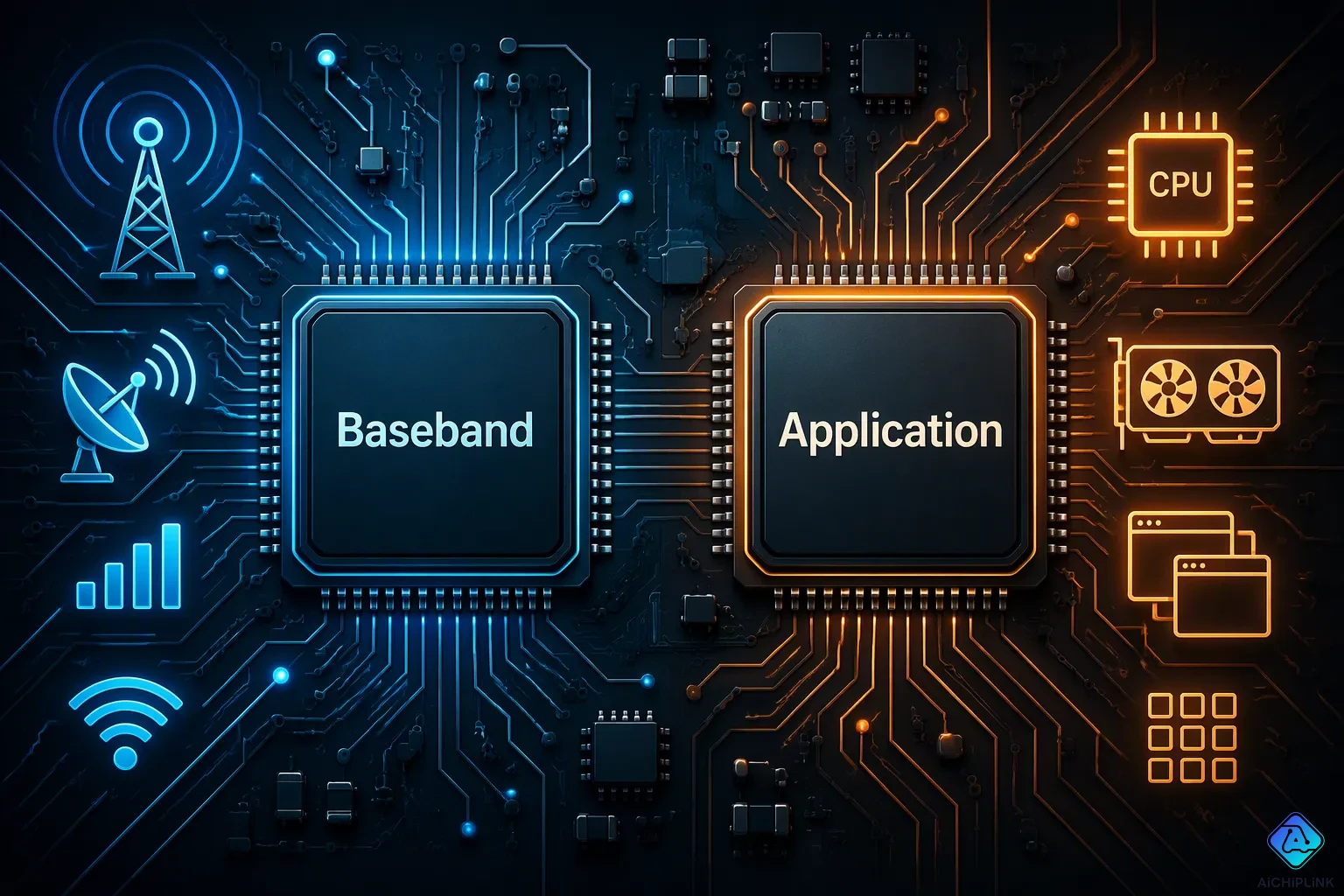
Why does your phone still make calls when an app crashes? The answer is in two separate chips. The baseband processor handles wireless communication. The application processor handles general computing tasks. Think of the baseband processor as a dedicated radio operator. It focuses only on sending and receiving signals. The application processor works like a general-purpose brain. It runs the operating system, apps, and touchscreen. This split keeps a smartphone stable. A frozen game never blocks an emergency call. These two chips differ in their roles, their functions, and their design. Understanding that division explains much about how modern devices work.
Key Takeaways
-
The baseband processor takes care of all wireless communication, such as calls and data.
-
The application processor handles apps, the operating system, and the touchscreen.
-
This split keeps your phone working well: a frozen app never stops an emergency call.
-
The baseband chip doesn't use much power, so your battery lasts longer.
-
Each chip gets its own updates, so install modem patches to stay safe.
What Is a Baseband Processor?
A baseband processor is a special chip inside a smartphone that manages all radio functions. It handles wireless communication and nothing else. The baseband chip changes digital information into correctly arranged digital streams. The RF processor then changes those streams into radio traffic. This split keeps the structure of a smartphone organized and reliable.
A baseband processor, also called a baseband processing unit, is a type of microprocessor used to manage and control signals for wireless communication systems, especially in mobile phones and other wireless devices.
The baseband processor handles voice calls, SMS, and internet access. It changes digital signals into analog signals for sending. It also changes incoming analog signals back into digital data. This work uses modulation, demodulation, error correction, filtering, and encoding. It runs network protocols like GSM, CDMA, LTE, and 5G. It handles handover, cell selection, and radio resource control. The RRC layer manages system information broadcasts and keeps connections alive. The PDCP layer handles ciphering and keeps data steady during handover. The MAC layer manages scheduling and Hybrid Automatic Repeat Request. These protocol stacks keep cellular data sessions reliable.
Key Functions of a Baseband Processor
The main jobs of a baseband processor include signal generation, modulation, and demodulation. The baseband processor runs protocols for sending data. It also handles voice, data, and video transmission. It processes signals to change raw network data into a usable format. Error correction and handling make sure communication is accurate. It manages different communication protocols to meet network standards.
A digital signal processor inside the baseband handles channel equalization and voice coding. The microprocessor handles multitasking scheduling and peripheral drivers. It runs a real-time operating system. The DSP subsystem handles all physical layer functions, such as channel coding, encryption, and demodulation. The baseband processor also supports control-plane functions like call setup, mobility, and handovers. It shares resources across users and cells in cellular networks.
Components of a Baseband Processor
The parts of a baseband processor include several sub-blocks. A typical baseband processor SoC architecture contains a CPU, channel coder, digital signal processor, modem, and interface module. The CPU controls timing, RF control, and power saving. The channel coder does channel coding and encryption. The modem also handles GMSK modulation and demodulation. The interface module has analog, digital, and human-machine interfaces.
The RF front-end includes a low noise amplifier, a power amplifier, an RF switch, and a frequency synthesizer. The digital subsystem contains a host controller interface, a link layer controller, and a digital baseband engine. The protocol processor manages connection setup, packet scheduling, and encryption. The RF interface module connects the baseband to the antenna. The SIM card stores subscriber data and checks the identity of the user. The SIM works with the baseband processor to set up cellular radio connections. It also holds network credentials. It enables secure communication, identifies the user, supports roaming, and protects privacy. The SIM remains essential. It links the device to the cellular network and completes the chain. The main uses of baseband processors extend beyond phones to tablets and IoT devices.
What Is an Application Processor?
An application processor is a system on a chip that powers mobile devices and embedded systems. It puts general processing cores, graphics cores, and input/output blocks onto one single chip. Many designs also include RAM on a separate chip connected right to the CPU cores. This chip holds most of the basic setup of a normal computer inside one package. It runs the operating system and all the apps a user touches. The application processor is the main general-purpose chip in a smartphone. It is usually faster and uses more power than simpler embedded processors.
Role in General Computing Tasks
The application processor handles general computing tasks. It runs app instructions, camera math, and AI model inferences every second. The ARM Cortex-A series is made for this high-performance work. It runs complex operating systems such as Linux and Android. Key features include:
-
Out-of-order superscalar execution to get the most single-thread performance
-
A full MMU for virtual memory management and OS process isolation
-
Large L1, L2, and L3 caches for high memory bandwidth workloads
-
NEON SIMD and SVE vector extensions for multimedia and AI tasks
Every major smartphone SoC uses ARM Cortex-A cores. Examples include the Apple A17 Pro, Qualcomm Snapdragon 8 Gen 3, Apple M3, Amazon Graviton3, and Raspberry Pi 5. ARM powers 99% of the world's smartphones. A GPU handles graphics rendering and parallel processing. A DSP handles real-time signal work like audio and video encoding. Memory controllers connect to external DDR SDRAM. These blocks work as independent computer systems on one chip.
Operating Systems and Apps
The application processor runs the operating system and its applications. It manages the user interface, touch input, and app switching. It also drives the camera, display, and storage. This chip is flexible and programmable. Developers write software for it without worrying about radio protocols. That freedom separates it from the baseband processor. The baseband chip handles wireless communication. The application processor handles everything else the user sees and does.
Baseband Processor vs. Application Processor: Main Differences
The baseband processor vs. application processor contrast comes down to one main split. The baseband processor takes care of communication functions. The application processor takes care of general computing tasks. This division shapes architecture, power consumption, and software design across every modern smartphone.
Communication vs. General Computing
The baseband processor focuses on real-time radio protocol deadlines. It must send and receive rf signals within strict timing windows. A missed deadline drops a call or corrupts data. The baseband runs a real-time operating system or no OS at all. Its digital signal processing pipeline stays tuned to data rates and tested use cases. The SIM works with the baseband to verify the user on the cellular network. The SIM stores subscriber credentials. The SIM allows secure roaming. The SIM also protects privacy during handover. Each SIM operation must finish within the protocol's timing budget.
The application processor puts throughput and multitasking first. It runs the operating system, apps, and user interface. It handles event-driven control tasks. It manages background work and soft real-time processing. This chip uses out-of-order execution and large caches to boost single-thread speed. It switches between apps without missing a beat.
Cloud-RAN baseband processing shows how deadlines drive design. Engineers size the system so a set number of cells finish within deadlines. They use a probability-of-deadline-exceedance target to decide how many cores they need. Scheduling strategies for virtualized network functions reveal a tradeoff. Parallel execution on separate cores competes with concurrent execution through processor sharing. Processor sharing can raise latency. Multitasking on one core forces context switching and memory splitting. A proof-of-concept implementation cuts latency by using multi-threading within a single process. It assigns threads to dedicated cores with real-time OS priority. It runs them non-preemptively to completion.
In DSP plus GPP SoC designs, the DSP side handles signal-processing pipelines and hard real-time I/O. It may run a small preemptive kernel or no OS. This maximizes MIPS for those pipelines. The ARM side handles control-plane work. That includes I/O handling, background tasks, and soft real-time processing. Throughput and multitasking matter more there. This partitioning keeps the signal path tuned while offloading event-driven tasks to the GPP.
Design Priorities and Power Use
The two chips differ sharply in design priorities. The baseband processor optimizes for latency, reliability, and low power. It spends most of its life in sleep mode. It wakes only to handle paging, signaling, or data bursts. The application processor optimizes for peak performance and flexibility. It consumes far more power under load. It drives the display, camera, and storage.
| Priority | Baseband Processor | Application Processor |
|---|---|---|
| Main goal | Real-time radio deadlines | Throughput and multitasking |
| --- | --- | --- |
| OS type | RTOS or none | Linux, Android, iOS |
| Power profile | Low, bursty | High, sustained |
| Key metric | Latency and reliability | Speed and responsiveness |
The baseband processor must meet hard deadlines for cellular communication. The application processor tolerates soft deadlines. A dropped frame in a game is annoying. A dropped packet in a call is unacceptable. This split affects software design too. Developers write apps for the application processor without touching radio protocols. Modem engineers tune the baseband for each network standard. The two teams rarely overlap. That separation keeps both chips focused on what they do best.
How These Processors Work Together
The application processor and the baseband processor need each other. They exchange messages all the time. Shared-memory ring buffers carry the data. Inter-processor interrupts tell each side that a message is waiting. Solicited messages use a request/response pattern. Unsolicited messages use an indication/reply pattern. This handshake keeps the smartphone stable. Dropped interrupts would break the cellular network connection.
Modem and Application Processor Coordination
A high-level channel sends AT commands from the application processor to the baseband. Each command line starts with "AT" and ends with a carriage return. Several commands can join with semicolons. This text language dates back to the Hayes Smartmodem. Standards from ITU-T V.250 and 3GPP TS 27.007 define the core commands. For example, AT+CREG? checks network registration status.
Modern chips use richer protocols. Qualcomm's QMI opens a control device such as /dev/cdc-wdm0 on Linux. Tools like libqmi and mmcli use QMI for session activation and SIM management. The RmNet driver handles high-speed data with MAP framing. Each packet data network gets a multiplexer ID. MBIM adds a cellular control channel over USB. That channel covers SMS, USSD, and SIM toolkit operations.
The SIM works with the baseband through APDU exchanges. The SIM stores subscriber credentials. The SIM supports roaming. Separate signal processing pipelines keep the data path tuned.
Separate Chips and System-on-Chip Designs
Early designs used separate chips. A dedicated baseband processor sat beside the main processor. Wires carried commands between them. Modern designs put both on one die. This setup forms the baseband processor SoC architecture. Every part talks over dedicated interconnects. DMA, ring buffers, mailboxes, and memory-mapped I/O connect the cores.
The smsg/sblock control channel sets up a data-plane Ethernet interface. The SIPA hardware module speeds up the IP data path. The rf front-end sits near the antenna. It holds the low noise amplifier and the power amplifier. The baseband processor handles rf signals for voice and data. Integration lowers latency and saves power. Users get better battery life and fewer dropped calls.
Why the Distinction Matters to Users
Battery Life and Signal Reliability
The baseband processor uses very little power. It rests most of the time and wakes up only for paging or data bursts. This design saves battery while the phone is on standby. A smartphone with a weak baseband runs out of power faster. That happens because the chip works harder to keep a signal. Users notice this as less screen-on time and a warm back panel.
Signal reliability also depends on the baseband. The chip handles handovers between cell towers. It manages the sim to verify the user on the network. A steady baseband keeps calls clear and data moving. A broken one drops connections or fails to register the sim. The sim stores subscriber credentials and supports roaming. Each sim operation must finish within strict timing limits. When the baseband misses those limits, the network rejects the sim. Users see "No Service" even when bars appear.
Performance and Software Updates
The application processor and the baseband processor get updates through separate paths. The application processor runs the operating system and apps. Its updates come through standard system updates. The baseband runs its own dedicated firmware. This firmware sits underneath the application sandbox. A modem-level compromise can bypass the permission model entirely. That is why baseband firmware updates come as separate modem patches.
This separation makes the attack surface bigger. The modem processes raw signaling data before the main processor checks it. A logic error in modem firmware can allow elevation of privilege with no user interaction. Google confirmed limited, targeted exploitation of such a flaw on Pixel devices. The patch arrived in the September 2026 Pixel security patch level. CISA added it to the Known Exploited Vulnerabilities catalog on September 16, 2026, with a three-day federal remediation deadline.
"There are indications that CVE-2026-58704 may be under limited, targeted exploitation"
Unisoc also disclosed a modem flaw rooted in improper input validation. An attacker within radio range can send malformed input. The modem enters a fault state and loses all cellular services. Unisoc rates the impact as availability loss only. Downstream device makers must integrate the fixed modem firmware into their own updates. Users who delay these patches leave the baseband exposed.
The baseband processor and the application processor cannot swap jobs. One takes care of connectivity. The other takes care of computing. Users need both brains working side by side. The baseband processor works as a chip built just for radio tasks. The application processor is a strong, flexible computing chip. This split keeps calls alive, apps responsive, and battery steady. As 5G spreads across more baseband designs, connected devices will rely on this partnership even more. The radio operator keeps the link solid. The general-purpose brain runs the experience. Together, they carry every smartphone into the next wave of connected life. Each one stays essential because modern life needs both steady signals and fast computation.

Written by Jack Elliott from AIChipLink.
AIChipLink, one of the fastest-growing global independent electronic components distributors in the world, offers millions of products from thousands of manufacturers, and many of our in-stock parts is available to ship same day.
We mainly source and distribute integrated circuit (IC) products of brands such as Broadcom, Microchip, Texas Instruments, Infineon, NXP, Analog Devices, Qualcomm, Intel, etc., which are widely used in communication & network, telecom, industrial control, new energy and automotive electronics.
Empowered by AI, Linked to the Future. Get started on AIChipLink and submit your RFQ online today!
Frequently Asked Questions
What does a baseband processor do?
A baseband processor handles all wireless communication. It changes digital data into radio waves and back again. It follows network standards like LTE and 5G. It also handles calls, texts, and mobile data. This chip only handles radio tasks, so it stays reliable even when apps freeze.
What does an application processor do?
An application processor controls the operating system, apps, and touchscreen. It deals with graphics, camera work, and AI jobs. It is faster and more flexible than a baseband chip. It uses more power when busy. This chip handles everything the user sees and touches.
Can one processor replace the other?
No. These two chips serve different roles. The baseband processor must meet strict real-time radio limits. The application processor manages general computing and multitasking. Losing a call packet is not okay, but losing a game frame is only a small issue. Each chip stays focused on its own job.
Why does a phone keep working when an app crashes?
The baseband processor runs by itself, separate from the application processor. A frozen app only harms the app side. The baseband chip keeps its radio link alive. So calls and texts still work when a game or browser stops responding.
Do both processors get software updates?
Yes, but through separate paths. The application processor gets standard system updates. The baseband processor has its own dedicated firmware, updated through modem patches. This split matters for security. A modem-level bug can bypass app permissions, so users should install modem patches right away.