What Is a Programmable Logic Controller and How Does It Work
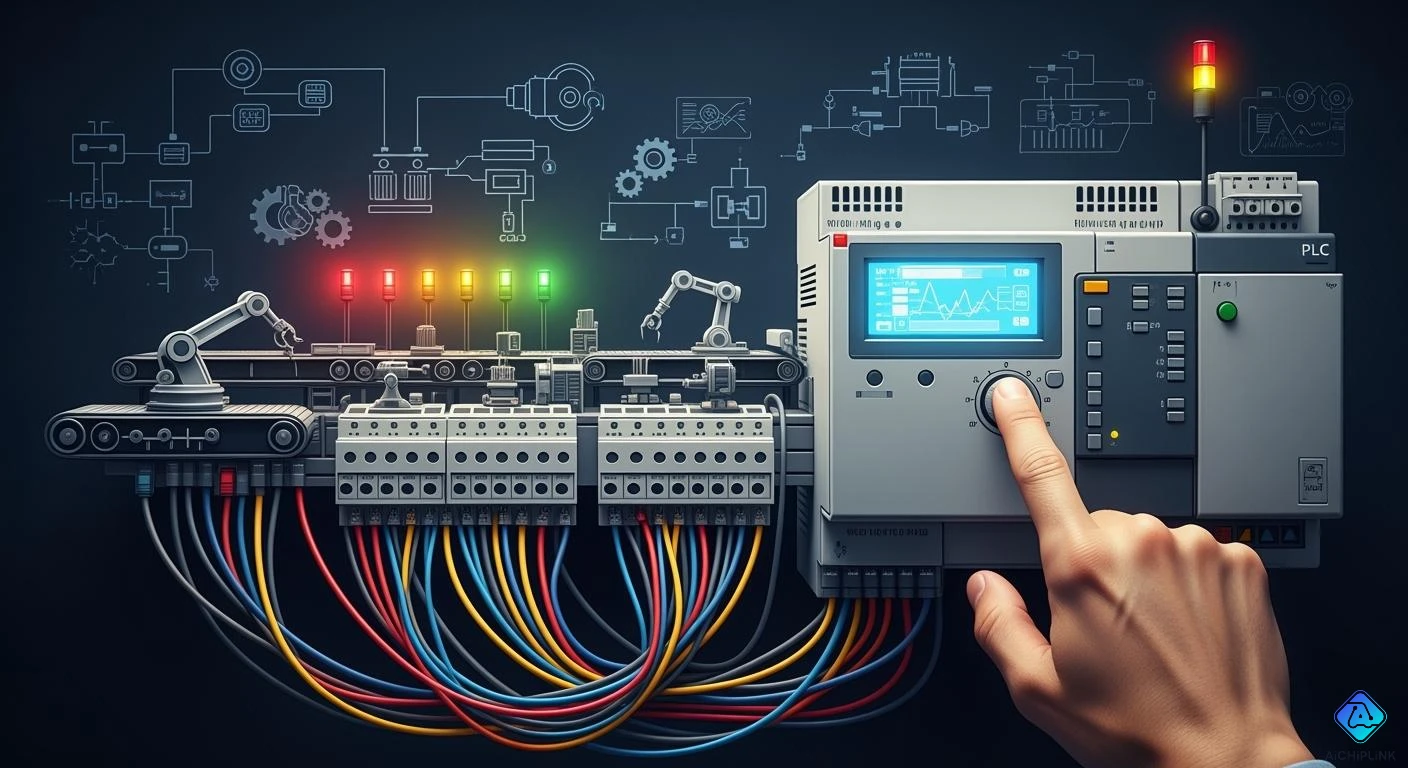
You use a programmable logic controller to control machines. It helps manage processes in factories. This small computer gets signals from sensors. It looks at the information and decides what to do. Then it sends instructions to control equipment. In the last ten years, programmable logic controllers became very important in manufacturing. Modern PLCs can control movement. They let you watch things online and keep records of data. You also see new changes in automation. These include AI working with PLCs, using the cloud, and designs you can change easily.
-
Compact PLCs are flexible and can grow with needs.
-
Better communication links PLCs to IoT for fast analytics.
Key Takeaways
-
Programmable Logic Controllers (PLCs) help control machines and processes in many industries.
-
You can program PLCs easily, so you can change them fast for new jobs or changes in work.
-
A PLC works in steps. It checks inputs, runs its program, updates outputs, and looks for mistakes.
-
PLCs make things work better by using less wiring and giving real-time control. This makes them great for automation.
-
There are different kinds of PLCs. Some are compact, some are modular, and some are large. Each type works best for certain jobs and places.
Programmable Logic Controller Basics
What Is a Programmable Logic Controller
A programmable logic controller is an electronic device. It helps you control machines and processes. It works like a small computer. It is strong and does not break easily. You can program it without much trouble. People use it where fast and safe control is needed.
A programmable logic controller uses input and output modules. These modules let you connect to sensors, switches, meters, relays, lights, valves, and drives. You can pick the modules you need for your job. This makes the plc useful in many factories and plants.
Note: You can use a plc instead of old relay panels. This makes your system faster and easier to repair.
Programmable logic controllers have good communication features. You can connect them to other systems like SCADA. This helps you share data and watch what is happening. Many plc systems have a human machine interface (HMI). This lets you see what is going on right now. You can use a display or touchscreen to check data and give commands.
Key Functions of PLCs
A plc can do the job of electromechanical relays. In the past, you needed many relays to control machines. Now, a plc can do this with less wiring and more choices. Each input, like a button or sensor, has its own address in the plc. The plc checks these inputs and makes decisions like relays do.
For example, you can set a plc to turn on a motor only if all safety switches are closed. The plc uses instructions that work like relay contacts. You can use ladder diagrams to program the plc. Each rung shows a step, like a relay wiring chart. You can use the same input or output more than once in your program. This gives you more options and power.
Here are some main features that make programmable logic controllers special:
-
Input/Output (I/O) Capabilities: You can connect many kinds of devices to the plc. This includes digital and analog signals.
-
Communication Protocols: You can connect the plc to other systems for sharing data and control.
-
Human Machine Interface (HMI): You can use displays or panels to control and watch your process.
| Feature | What It Means for You |
|---|---|
| I/O Capabilities | Connect many devices easily |
| Communication Protocols | Share data with other systems |
| HMI | See and control your process quickly |
Programmable logic controllers help connect software and real machines. You can write a program and watch it control equipment. You can change the program when you need to update your process. This makes the plc very important in modern automation.
How a Programmable Logic Controller Works
PLC Components (Inputs, CPU, Outputs)
You see three main parts inside every plc. These parts help you understand how a programmable logic controller works. The first part is the inputs. You connect sensors, switches, and buttons to the plc. These devices send signals to the plc. The second part is the CPU. The CPU acts as the brain. It reads the inputs and runs the program you write. The third part is the outputs. The plc sends instructions to devices like motors, lights, and alarms. These devices follow the plc’s commands.
You can find many types of input and output devices in factories. The table below shows common examples:
| Type | Examples |
|---|---|
| Input Devices | Sensors (thermocouples, pressure transducers), switches (limit, toggle) |
| Human Machine Interface (HMI) push buttons, proximity switches |
| Output Devices| Control valves, Variable Frequency Drives (VFDs), relays, motor starters | | | Stack lights, solenoids, alarms |
You use these inputs and outputs to control machines and processes. The plc connects software to real equipment. You can change the program to fit your needs. This makes programmable logic controllers very useful in industry.
Operation Cycle (Input, Processing, Output)
You want to know how a programmable logic controller works in real time. The plc follows a repeating cycle. This cycle helps you control machines quickly and safely. You can break the cycle into four steps:
-
Input Scan
The plc reads the state of all inputs. It checks sensors and switches to see what is happening. -
Program Scan
The CPU runs your program. It uses the input data to decide what actions to take. -
Output Scan
The plc updates the outputs. It sends signals to devices like motors and alarms. -
Housekeeping
The plc checks itself for errors and keeps everything running smoothly.
You see this cycle happen in milliseconds. The table below compares the speed of a plc to old relay systems:
| System Type | Typical Processing Speed |
|---|---|
| PLC | Around 10 ms or less |
| Relay Based Systems | Around 50 ms or more |
You get fast and reliable control with a plc. The plc scans all inputs, processes logic, and updates outputs. This scan cycle gives you real-time control. You can use a plc to run high-speed assembly lines or keep machines safe.
Tip: You can trust the plc to make quick decisions. It checks every input and adjusts outputs right away. This helps you keep your process running without delays.
You use programmable logic controllers to automate many tasks. You connect inputs like sensors to the plc. The plc reads these signals and runs your program. It sends instructions to outputs like motors and alarms. You see the plc control machines and processes with precision. You can change the program when you need to update your system.
You now know how a programmable logic controller works. You see how the plc reads inputs, processes logic, and controls outputs. You use this cycle to keep your machines running smoothly and safely.
PLC Programming
Programming Methods
You use software to write instructions for a plc. This software helps you make, test, and send your program to the plc. You can change your program when you want to update your system. Most industries use rules from IEC 61131-3. This rule lists five main ways to program a plc:
-
Ladder Diagram (LD)
-
Sequential Function Charts (SFC)
-
Function Block Diagram (FBD)
-
Structured Text (ST)
-
Instruction List (IL)
You often use more than one way in a project. This helps you fix different problems. It also makes your system easier to control and fix. Ladder Logic is the most popular method. Many factories use it because it looks like electrical drawings.
Common PLC Languages
You pick a language based on your job. Each language has its own good points. The table below shows how Ladder Logic compares to other languages:
| Aspect | Ladder Logic | Other Languages |
|---|---|---|
| Adoption Rate | Over 90% in discrete manufacturing | Varies widely |
| Ease of Use | Intuitive visual programming | Often requires text-based syntax |
| Growth in PLC Implementations | 15% annual growth | Varies by language and industry |
| Complexity Handling | Limited support for complex structures | Generally better support |
Ladder Logic uses symbols that look like relay circuits. It is easy to read and fix. Function block diagrams use blocks to show how signals move. You use them for process control and tasks that run all the time. Structured Text looks like computer code. You use it for math, loops, and working with data.
| Programming Language | Characteristics | Advantages | Use Cases |
|---|---|---|---|
| Ladder Logic | High-level graphical language resembling electrical schematics. | Easy to understand, debug, and monitor complex Boolean logic. | Ideal for electrical engineers and automation tasks involving relays and control panels. |
| Structured Text (ST) | Text-based language similar to higher-level programming languages like Python. | Better for computation, mathematical instructions, and looping (e.g., FOR, WHILE). | Suitable for heavy data manipulation, computation, and tasks requiring complex calculations. |
| Function Block Diagram | High-level graphical language resembling P&IDs used in process industries. | Simplifies continuous process control, especially with PID loops. | Recommended for process industries and continuous control tasks. |
You use plc programming and rules to make sure your system works with scada and iiot. This helps you connect your plc to other devices and systems. You can watch and control your process from anywhere. You see how important plc programming is for modern automation.
PLC Advantages & Disadvantages
Benefits of PLCs
You get many good things from using a programmable logic controller. PLCs work well in hard places. They keep working even if it gets hot or cold. They also work when there is a lot of electrical noise. This means you do not have to stop machines often in power plants or chemical factories. You can program a plc to do many jobs. You can also connect it to different devices. If you need more, you can add new parts to your system. If you want to change how things work, you can reprogram the plc fast.
PLCs help machines work better. They watch sensors all the time and make quick choices. This helps your machines react fast to changes. Your machines can do more work. You can also connect a plc to other systems. This lets you collect data and watch your machines. Your automation system becomes more flexible and works better.
Here is a table that shows some main benefits of using a programmable logic controller:
| Advantage | Description |
|---|---|
| Improved Reliability | PLCs use solid-state parts and store logic in memory, reducing wiring errors and breakdowns. |
| More Flexibility | You can update programs easily and make changes in the field. |
| Lower Cost | PLCs cost less than relay systems, especially when you need many relays. |
| Communication Capability | PLCs connect to other systems for better data and control. |
| Faster Response Time | PLCs react quickly to events, which is important for high-speed operations. |
| Easy to Troubleshoot | Built-in diagnostics help you find and fix problems fast. |
You also save money over time. A plc might cost more at first, but you spend less on software and fixing things. PLCs last for many years, so you get your money’s worth.
Tip: PLCs help you find problems early. They can set off alarms before a machine breaks. This helps you fix things before they stop working and saves money.
Limitations
You should also know about the limits of programmable logic controller systems. PLCs can have trouble with very hard jobs or when you need to control many things at once. Some brands use their own software, so it can be hard to use different PLCs together. You might also have problems with electrical noise or memory, which can make the plc not work right.
Here is a table that shows some common limits and problems of programmable logic controller systems:
| Limitation | Description |
|---|---|
| Capacity Issues | PLCs may not handle large or complex data sets, especially with analog inputs. |
| Interoperability | Different brands may not work well together due to unique software. |
| Vulnerability | PLCs can be affected by electronic noise or memory errors. |
You should think about these things when picking an automation system. For small jobs, a plc works great. For very big or hard jobs, you might need something else. Still, programmable logic controllers are a top choice for making machines work better and keeping them running.
PLC Types & Uses
Types of Programmable Logic Controllers
You can pick from different PLC types for your job. Each type works best for certain tasks and industries. The table below lists the main types, their features, and where you use them:
| Type of PLC | Description | Typical Use Cases |
|---|---|---|
| Compact PLCs | All-in-one units with fixed I/O. | Small machines, limited space |
| Modular PLCs | Flexible, add modules as needed. | Large factories, complex processes |
| Large PLCs | High power for complex operations. | Oil refineries, power plants |
| Micro PLCs | Small controllers for simple tasks. | HVAC, textile, small assembly lines |
| Nano PLCs | Ultra-compact for basic automation. | Standalone systems, simple controls |
| Others | Special PLCs for safety or advanced control. | Safety systems, automation controllers |
Compact PLCs have a set number of inputs and outputs. You use them for easy jobs. If you need more, modular PLCs let you add parts. This helps when your system needs to grow. Large PLCs are for the hardest jobs. You find them in places like nuclear plants. Micro and nano PLCs are good for small machines or simple tasks.
Tip: Modular PLCs are flexible. You can start with a few parts and add more later.
Industrial Applications
You see PLCs used in many places. They help control machines, keep things safe, and save energy. Here are some common ways people use PLCs:
-
In car factories, PLCs run robots and conveyor belts. They make sure each step happens in order.
-
In water plants, PLCs watch pumps and valves. They help save energy and stop breakdowns.
-
In oil and gas, PLCs make things safer and lower costs. They help control drilling and refining.
-
In food factories, PLCs keep food safe and control packaging.
-
In buildings, PLCs manage HVAC, lights, and security.
PLCs also help make electronics. They make work faster, cut downtime, and improve quality. You can change their program for new products or jobs. This makes PLCs important for modern automation.
Note: PLCs help smart factories by linking to IoT systems. This lets you watch machines and collect data right away.
You use PLCs in many fields because they work for lots of jobs. They help you control, watch, and improve your work every day.
You now know that a programmable logic controller is a strong, flexible computer for machines. You use it to read signals, make decisions, and control equipment. PLCs help you connect software to real-world actions.
-
You can use PLCs in many industries.
-
You can change programs quickly for new jobs.
Tip: Try using a PLC for your next automation project. You will see how much easier and safer your work becomes.

Written by Jack Elliott from AIChipLink.
AIChipLink, one of the fastest-growing global independent electronic components distributors in the world, offers millions of products from thousands of manufacturers, and many of our in-stock parts is available to ship same day.
We mainly source and distribute integrated circuit (IC) products of brands such as Broadcom, Microchip, Texas Instruments, Infineon, NXP, Analog Devices, Qualcomm, Intel, etc., which are widely used in communication & network, telecom, industrial control, new energy and automotive electronics.
Empowered by AI, Linked to the Future. Get started on AIChipLink and submit your RFQ online today!
Frequently Asked Questions
What is the main job of a PLC?
You use a PLC to control machines and processes. It reads signals from sensors. It makes decisions based on your program. It sends commands to motors, lights, and other devices.
Can you change a PLC program easily?
Yes, you can update a PLC program quickly. You use special software to write new instructions. You send these instructions to the PLC. This helps you adapt to new tasks.
How does a PLC connect to other systems?
You connect a PLC to other systems using communication protocols. Common protocols include Ethernet, Modbus, and Profibus. You can share data and control machines from a central location.
Is a PLC safe to use in harsh environments?
You can use a PLC in tough places. PLCs resist heat, cold, and electrical noise. They keep working when other computers might fail. You see them in factories, power plants, and outdoor sites.
What industries use PLCs the most?
You find PLCs in car factories, water treatment plants, oil refineries, and food processing. You also see them in building automation and electronics manufacturing. PLCs help many industries work better.