Emerging Trends in Grid-Scale Storage Electronics for 2026
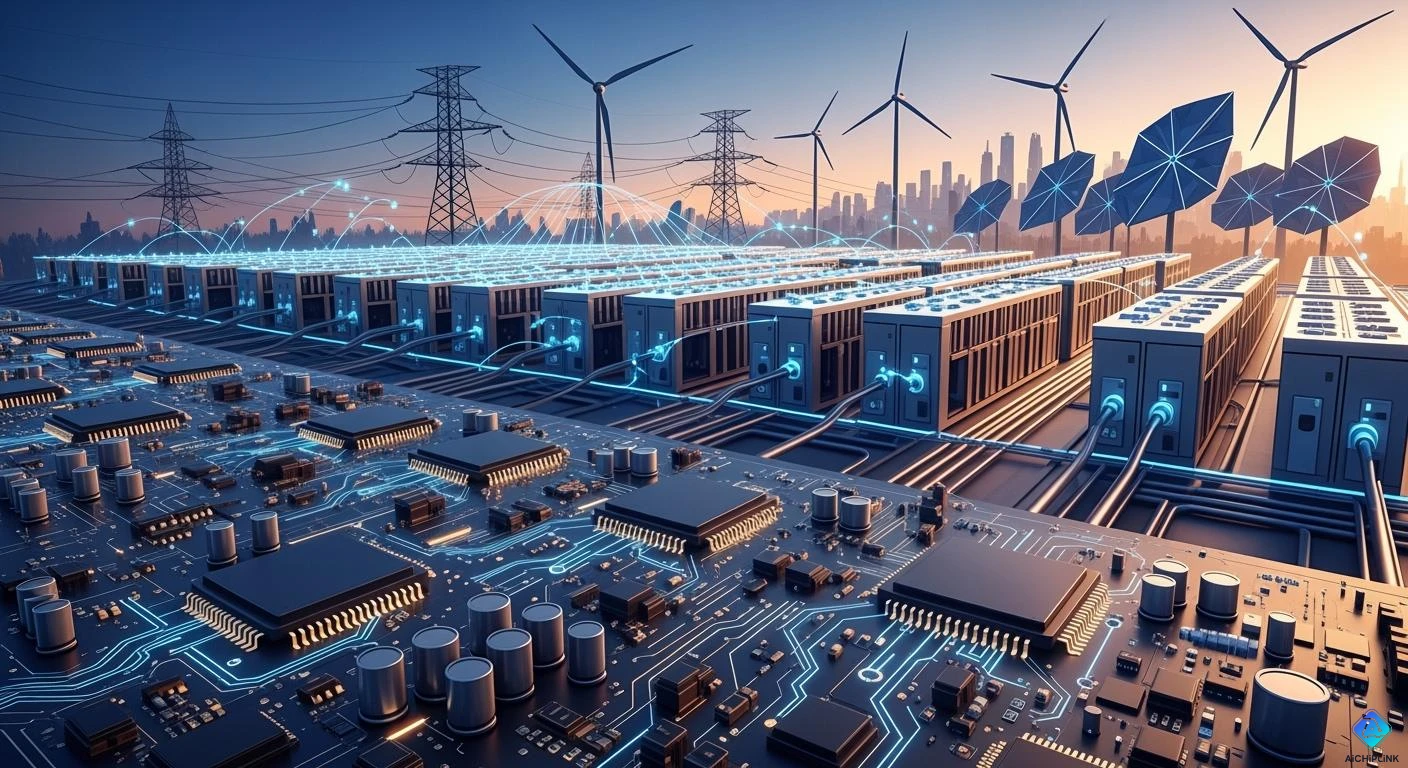
You can now see grid-scale storage changing how you use energy. New battery systems and better control electronics help balance supply and demand. They work even when the sun is not shining or the wind is not blowing. The market for grid-scale storage is growing very fast. It is worth $12.9 billion in 2024. It could reach $132.2 billion by 2034.
| Statistic | Value |
|---|---|
| Global grid-scale battery storage market size in 2024 | USD 12.9 billion |
| Expected market size by 2034 | USD 132.2 billion |
| CAGR (2024-2034) | 26.2% |
| Asia-Pacific market share in 2024 | 48.3% |
| Lithium-ion battery market share | 69.2% |
You get benefits from these new changes. They help use more renewable energy and keep your grid working well.
Key Takeaways
-
Grid-scale storage is important for keeping energy balanced. It helps when using renewable sources like solar and wind.
-
New technologies, like solid-state and flow batteries, offer safer and better ways to store energy. They last longer and work more efficiently.
-
AI-driven management makes grid-scale storage smarter. It helps use energy better and predicts what people will need. This saves money.
-
Hybrid storage solutions mix different technologies. This makes energy management easier and more flexible.
-
Putting money into grid-scale storage supports cleaner energy. It also keeps the power grid steady and lowers costs for people.
Grid-Scale Storage: Definition and Importance
What Is Grid-Scale Storage?
You might ask what grid-scale storage is. It means big systems that keep and give out electricity for the power grid. These systems help you use more energy from things like wind and solar. Grid-scale storage is special because it can:
-
Take in extra electricity when there is too much.
-
Give power back to the grid when people need more.
-
Make the grid work better and help power plants.
-
Give backup power if there is an emergency.
There are three main things that show what grid-scale storage is:
-
Discharge capacity: This tells the most power the system can give at one time.
-
Storage capacity: This shows how much energy the system can keep.
-
Duration: This tells how long the system can give its top power.
Role in Modern Power Grids
Grid-scale storage is very important in today’s power grids. It helps balance supply and demand by saving extra energy from wind and solar. When the sun is out or the wind is strong, these systems save the extra energy. Later, they give it back when people need more power. Grid-scale storage also helps keep the grid steady. It controls frequency and voltage, so your lights stay on and your devices work. You can pay less for energy because these systems lower demand when many people use power.
Tip: Grid-scale energy storage can help your town stop blackouts and keep the grid working well.
Impact on Energy Transition
You help move to cleaner energy by using grid-scale storage. These systems make it easier to use renewable energy, even when the weather changes. They keep extra energy when there is a lot and give it out when people need more. This helps make energy supply smoother and reach clean energy goals. Grid-scale storage also helps with peak shaving and frequency regulation, so the grid is more reliable as you use more renewables.
Emerging Technologies in Grid-Scale Storage
Solid-State and Next-Gen Lithium-Ion Batteries
Solid-state batteries and next-generation lithium-ion batteries are important for grid-scale storage. These batteries use solid parts instead of liquid. This makes them safer and more steady. They can hold more energy in a smaller space. Solid-state batteries last longer and charge faster than old batteries.
Here is a quick look at how these battery technologies compare:
| Battery Type | Key Advantages |
|---|---|
| Solid-State | Higher energy density, Improved safety and thermal stability, Longer cycle life, Faster charging potential |
| Flow | Long-duration energy storage, Independent scaling of power and energy, Extremely long cycle life, Minimal fire risk |
Solid-state batteries can charge in 10-15 minutes. Regular lithium-ion batteries need 30-60 minutes to charge. These batteries last for thousands of cycles. You do not have to replace them often. You save money because they last longer. Right now, solid-state batteries cost more. As technology gets better, prices will go down.
Note: The solid-state battery market is growing quickly. You will see more solid-state batteries in grid-scale storage and renewable energy projects by 2030.
Pumped-Storage Hydroelectricity
Pumped-storage hydroelectricity is the oldest and biggest way to store energy for the grid. This technology uses two water reservoirs at different heights. When there is extra energy, water is pumped up. When energy is needed, water flows down through turbines to make electricity.
-
In 2020, pumped-storage hydroelectricity had over 181 GW of installed capacity worldwide.
-
By 2025, this number will reach 200 GW, with 9000 GWh of energy storage.
-
By 2030, you could see 280 GW of global capacity.
| Advantages | Limitations |
|---|---|
| Large-scale energy storage | Geographical constraints |
| Rapid response to demand changes | High capital costs |
| Provides ancillary services like frequency regulation | Requires suitable elevation and water resources |
Pumped-storage plants give the grid flexibility. They help balance the grid and provide backup. These plants keep the system steady. They can last for many years, sometimes over a hundred. This is much longer than most batteries.
"Capital costs for pumped-storage plants are high, but their long service life makes them a reliable solution for grid scale storage."
Flow Batteries and Alternative Chemistries
Flow batteries and other new chemistries are used for long-term energy storage. Flow batteries store energy in liquid electrolytes. You can make them bigger by adding larger tanks. This is good for grid-scale storage when you need to store energy for many hours.
| Battery Type | Unique Benefits | Scalability |
|---|---|---|
| Flow Batteries | Long cycle life, suitable for long-duration storage, excellent scalability | High (depends on tank size) |
| Sodium-Ion Batteries | Cost-effective, emerging alternative for large-scale applications | Moderate |
Flow batteries, like vanadium and zinc-bromine, last a long time and can be deeply discharged. They work well for storing renewable energy to use later. Their round-trip efficiency is between 65% and 80%. These batteries are made to deliver energy for 4-12 hours. This helps manage changes in renewable energy.
Power Electronics and Control Systems
Advanced power electronics and control systems are needed for safe and reliable grid-scale storage. Power conversion systems (PCS) move energy between batteries and the grid. They help use energy well and keep the grid steady.
| Aspect | Description |
|---|---|
| Energy Conversion | PCS technologies ensure efficient energy exchange between storage and the grid. |
| System Integration | PCS technology impacts operational efficiency and revenue generation. |
| Advanced Materials | New materials improve the performance, safety, and reliability of devices. |
| Control Strategies | Intelligent controls boost performance, scalability, and safety. |
Safety systems like fire suppression, strong containers, and sensors protect energy storage. The Energy Management System (EMS) controls charging, discharging, and grid interaction. EMS helps balance the grid in real time. It lets you respond to demand and use energy better.
Tip: Advanced control systems and power electronics are very important for safe and effective grid-scale storage.
Hybrid Storage Solutions
You can mix different energy storage technologies for better results. Hybrid storage solutions combine batteries, pumped hydro, compressed air, or other systems. This gives high efficiency, fast response, and long storage in one system.
| Technology Type | Round-Trip Efficiency (%) |
|---|---|
| Lithium-ion BESS | 85–90% |
| Flow Batteries | 70–80% |
| CAES | 65–75% |
| Ammonia | 72% |
| Hybrid CAES-Pumped Hydro | 92% |
Hybrid solutions let you pick the right technology for your needs. Some systems react fast to changes. Others store energy for a long time. You also need to think about safety, cost, and how long each system lasts. Hybrid solutions help you get the most from your grid-scale storage.
AI-Driven Management for Grid-Scale Storage
Artificial intelligence can help manage grid-scale storage better. AI looks at real-time data from batteries and renewable sources. It predicts when you will need more or less energy. AI helps you charge and discharge at the best times. This saves money and makes batteries last longer.
-
AI algorithms study data to improve energy management.
-
They predict changes in demand and supply.
-
AI helps you charge batteries at the right time and cut costs.
-
Machine learning manages many endpoints at once.
With AI, energy storage becomes smarter. You can handle complex grid operations and make better choices. This new idea will change grid-scale storage and help you use more renewable energy.
Alert: AI-driven management is a big change for grid-scale storage. You will see more smart solutions soon.
Drivers and Challenges for Grid-Scale Energy Storage
Policy and Regulation
Policy and regulation help shape energy storage. Governments give incentives and tax breaks to speed up storage. Mandates push people to use more renewables and new technology. North America leads with federal incentives and state rules. Europe builds plans for grid balancing and flexibility. India starts storage tenders and grows renewables.
| Policy Type | Impact on Energy Storage Adoption |
|---|---|
| Government Incentives | Speeds up growth by giving money for new technologies |
| Tax Breaks | Makes clean energy easier for people to use |
| Mandates | Promotes renewables and helps new technology grow |
Supply Chain and Materials
Supply chain problems affect grid-scale storage materials. Delays and higher costs make storage harder. Battery safety gets more focus, so strict rules are needed. Fire incidents at sites mean better safety designs are important. Countries invest in local battery material processing. India builds gigafactories to get minerals for storage.
| Challenge | Impact on Deployment |
|---|---|
| Supply chain volatility for materials | Delays projects and raises costs |
| Heightened scrutiny around battery safety | More rules and checks for safety |
| Fire incidents at installations | Needs better safety steps and designs |
Market Demand and Scalability
Market demand for grid-scale storage is rising fast. The global market reached $7.51 billion in 2024. It will grow to $28.73 billion by 2029. People use more renewables and follow decarbonization policies. Battery prices drop, so large-scale storage is easier.
-
Using renewables boosts demand.
-
National policies support storage growth.
-
Lower battery costs help scale up storage.
Technical Barriers and Reliability
Technical barriers make scaling up storage hard. System integration and control need improvement. Current systems struggle to manage storage over different times. Better control designs are needed. Long-duration storage gaps push people to try new technology like flow batteries. Reliability matters, so safe and efficient storage is important.
-
System integration and control need new ideas.
-
Long-duration storage gaps lead to new technology.
-
Reliability and safety are key for storage.
Cybersecurity and Data Management
Grid-scale storage must be safe from cyber threats. Cybersecurity is a big part of energy storage. Storage systems connect to grid control, so risks like false data attacks exist. People use smart controllers and special tools to find and fix attacks. The US Department of Energy says grid cybersecurity is a national priority.
-
Cybersecurity is important for grid-scale storage.
-
New patents help protect cyber-physical security.
-
Advanced detection and recovery strategies are used.
Tip: You make your energy storage stronger by focusing on policy, supply chain, market demand, technical reliability, and cybersecurity.
Applications and Case Studies in Grid Scale Electricity Storage
Utility-Scale Battery Installations
You can find grid-scale storage at many big power sites. These places use batteries to keep energy from solar and wind. When people need more power, the batteries send it to the grid. The Moss Landing Energy Storage Facility in California has one of the world’s biggest battery systems. This site shows how large battery systems help keep the grid steady. They also help balance how much power is used and made. You get fewer blackouts and more steady prices for electricity. These storage systems also help you use more renewable energy every day.
Microgrid and Distributed Storage Projects
Microgrids and distributed storage bring grid-scale storage closer to your home. These projects give you more control and make your area stronger. Here are some ways these projects help you: Community microgrids can give backup power during outages. They make your local grid stronger. Distributed energy resources let microgrids work even if the main grid stops. Advanced controls with grid-scale storage help microgrids work better and keep your lights on. These projects make your neighborhood safer and more independent. You see new ideas as projects use batteries and smart controls to improve local energy.
International Pilot Programs
Countries around the world try new grid-scale storage ideas. In Australia, the Hornsdale Power Reserve uses big batteries to help the grid and react fast to changes. In Germany, grid-scale storage helps balance wind and solar power. These real-life projects show how new ideas can solve energy problems in different countries.
| Country | Project Name | Technology Used | Main Benefit |
|---|---|---|---|
| Australia | Hornsdale Power Reserve | Batteries | Fast grid response |
| Germany | EnspireME | Batteries | Renewable balancing |
| United States | Moss Landing | Batteries | Large scale storage |
Lessons from Early Adopters
You can learn from people who used grid-scale storage first. They found that: New energy management systems are important for safety and working well. Smart controls help you get more from your battery systems. Battery storage lets you use more solar power, handle peak times, and pay less for energy. Some projects, like the Iowa Stored Energy Park, had problems with their sites. These lessons help you plan for cost, rules, and technical issues. Collecting data during building helps you avoid problems and do better.
Tip: You should plan well and use smart controls when starting new grid-scale storage projects. This helps you get better results and have fewer problems.
Impacts of Grid Scale Storage on Economy and Environment
Cost Trends and Investment
Grid-scale storage is getting cheaper every year. This happens because technology gets better and factories grow bigger. Utilities spend more money to make the grid stronger and help switch to clean energy. You get help from new rules and tax breaks that make building storage easier. Many companies work together to build better batteries and storage systems. There is a big push for storage that lasts longer and for hybrid projects with renewables.
| Trend/Pattern | Description |
|---|---|
| Investment Momentum | Utilities spend money to make the grid stronger. |
| Focus on Long-Duration Storage | More money goes to projects that store energy for a long time. |
| Hybrid Installations | Renewables and storage together give more ways to earn money. |
| Policy Support | New rules and rewards make investors feel safer. |
| Strategic Partnerships | Utilities and tech companies work together for better ideas. |
Costs keep dropping as technology gets better and more companies join.
Environmental Benefits
Grid-scale storage helps protect the environment. You use less fossil fuel because storage replaces peaker plants when demand is high. When you save extra renewable energy, you can use it later and keep the grid steady. This lowers carbon emissions and helps fight climate change. You see more clean energy every day, which helps the planet.
-
You need fewer fossil fuel plants.
-
You save renewable energy to use later.
-
You help add more renewables to the energy mix.
Grid Stability and Resilience
Grid-scale storage helps keep your lights on during storms or heat waves. Batteries help utilities handle risks from bad weather. Storage lets you make small parts of the grid work even if the main grid stops. These systems help restart the grid after outages without diesel generators. You get steady power because storage keeps the grid’s frequency and voltage stable.
-
Batteries give backup power when there are outages.
-
Storage systems help control frequency and voltage.
-
Utilities use storage for black start and islanding.
Grid-scale storage makes your power more reliable and helps bring it back faster after problems.
Decentralized Energy Market Effects
Grid-scale storage changes how you use energy. Storage lets you and your neighbors manage energy better, especially when demand is high. New markets start, like peer-to-peer trading and demand response programs. You can sell extra energy back to the grid. In the EU, new rules mean more storage, which creates jobs and helps manufacturers. In the U.S., you can help balance the grid by changing how you use energy during busy times.
-
Decentralized storage helps balance supply and demand.
-
You can join new programs to trade or save energy.
-
More storage means more chances for everyone in the energy market.
Grid-scale storage helps you and your community use energy in smarter ways.
Future Outlook for Grid-Scale Storage
Predictions for 2026 and Beyond
Grid-scale storage will be a big part of the power grid. Battery storage projects with 8-hour duration will become normal. Most new systems will use lithium iron phosphate batteries. Long-duration energy storage solutions like iron-sodium batteries will grow. These solutions will help handle winter peaks and keep the grid steady.
Antonio Baclig, CEO of Inlyte Energy, says, "8-hour battery storage will be normal for new projects. LFP will still be the main battery in 2030. Long-duration energy storage, like iron-sodium battery storage, will become more common. This is because the grid needs to handle winter peaks that last over 24 hours."
You will see these trends:
-
The global battery energy storage market will be over $10.8 billion by 2026.
-
Asia-Pacific will have the biggest battery storage market.
-
Lithium-ion battery pack prices will go below $100 per kWh.
Many states and countries are using large battery storage systems for renewable energy parks. You will see more big projects, like NTPC REL’s 2500 megawatt Battery Energy Storage System.
Opportunities for Stakeholders
You can get benefits from new energy storage solutions. Utilities invest in grid-scale storage to make the grid more reliable. Infrastructure funds see battery storage as a long-lasting asset. Long-duration storage projects help shift energy and delay capacity needs. Hybrid renewable-plus-storage installations give many ways to earn money. Digital energy management platforms make things work better. Emerging markets give you a chance to be first. Policy-driven electrification makes investors feel more confident.
Grid-scale storage systems give strong energy and power services. These solutions balance supply and demand and help renewable generation. You can join this new wave of innovation and growth.
Strategic Recommendations
You should use these strategies to do well with grid-scale storage:
-
Make advanced control systems to manage storage at different times. AI-driven methods help microgrid operation.
-
Put cybersecurity first in storage systems. New tools find and fix attacks.
-
Bring long-duration storage technologies like flow batteries to market. Try iron-air batteries and gravity storage.
-
Build hybrid storage portfolios if you are a utility or grid operator.
-
Lower costs and make software better if you develop technology.
-
Create market rules that value storage and support recycling if you make policy.
Tip: You can help drive new ideas by focusing on system integration, cybersecurity, and new energy storage solutions.
Grid-scale storage will grow quickly. These solutions will change how energy works and create new chances for everyone.
You can see grid-scale storage is changing quickly. The market will grow a lot in five years. In 2024, it is worth $7.51 billion. By 2029, it will be $28.73 billion.
| Year | Market Value (USD) | CAGR (%) |
|---|---|---|
| 2024 | 7.51 billion | N/A |
| 2029 | 28.73 billion | 30.9 |
You get new energy technology like AI-driven control and better cybersecurity. These tools help you use more clean energy and keep the grid safe. You should look for these new trends:
-
Multi-timescale optimization for storage dispatch
-
AI for microgrid operation
-
Hybrid storage portfolios for different needs
Stay up to date and ready for changes. You can help shape the future of grid-scale storage and energy.

Written by Jack Elliott from AIChipLink.
AIChipLink, one of the fastest-growing global independent electronic components distributors in the world, offers millions of products from thousands of manufacturers, and many of our in-stock parts is available to ship same day.
We mainly source and distribute integrated circuit (IC) products of brands such as Broadcom, Microchip, Texas Instruments, Infineon, NXP, Analog Devices, Qualcomm, Intel, etc., which are widely used in communication & network, telecom, industrial control, new energy and automotive electronics.
Empowered by AI, Linked to the Future. Get started on AIChipLink and submit your RFQ online today!
Frequently Asked Questions
What is the main benefit of grid-scale storage for you?
You get more reliable electricity. Grid-scale storage helps balance energy from solar and wind. You see fewer blackouts and more stable power at home.
How does AI help manage grid-scale storage?
AI looks at real-time data. You get better control over when to charge or discharge batteries. This saves money and makes your energy use smarter.
Can you use grid-scale storage with renewable energy?
Yes! You can store extra solar or wind energy during the day. Later, you use this stored energy when the sun sets or the wind stops.
Is grid-scale storage safe for your community?
Most systems use strong safety features. You see fire suppression, sensors, and smart controls. These keep your community safe and protect the grid.
Will grid-scale storage lower your energy costs?
You may pay less for energy. Storage lets you use cheaper, stored power during peak times. This can help lower your monthly bills.