Semiconductor vs Microchip vs Integrated Circuit: What's the Difference?
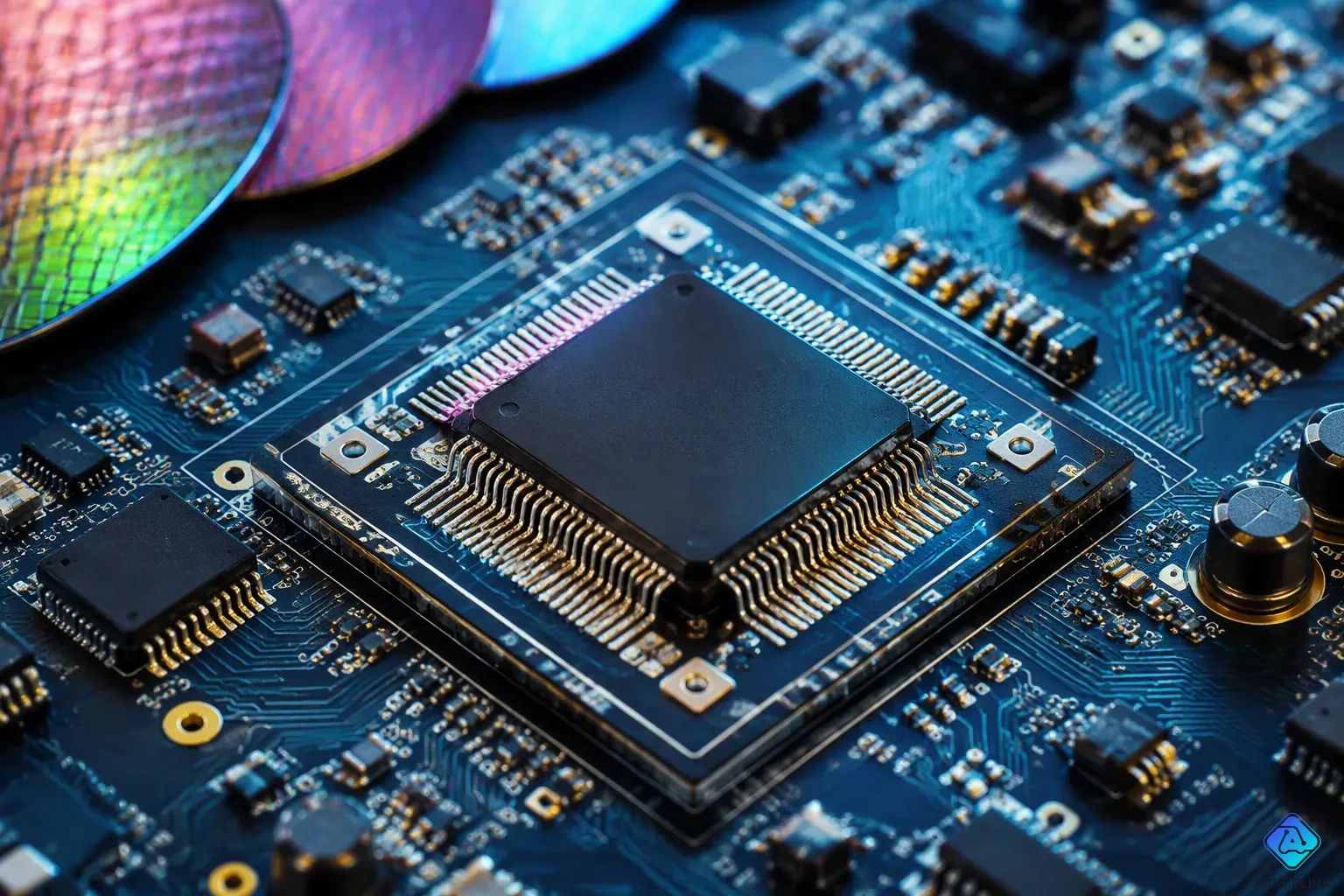
Have you ever wondered if your phone's 'chip' is the same as its 'semiconductor'? You're not alone. People often use these words as if they mean the same thing, but they don't. Semiconductors are materials with special electrical traits. Integrated circuits are complex designs built on those materials. Chips are the physical packages that hold the circuits. This guide explains the difference between semiconductors, integrated circuits, and chips. These parts are in almost every electronic device you own. The question 'Semiconductor vs Microchip vs Integrated Circuit' has a simple answer. Each term describes a different layer of technology. You see chips every day. Your phone has many chips. Your computer depends on chips. Even your car uses chips. These chips are vital. Each chip holds an integrated circuit. That circuit is made from semiconductors.
Key Takeaways
-
A semiconductor is a material, such as silicon, that manages the flow of electricity.
-
An integrated circuit is a design with many tiny parts on a chip.
-
A microchip is the protective case that holds the integrated circuit.
-
Silicon is popular because it is inexpensive and dependable.
-
Knowing these terms helps you understand how your devices work.
Semiconductors: The Material Foundation
Defining a Semiconductor Material
Think of a dimmer switch on your living room light. You can make the light brighter or dimmer, based on what you need. A semiconductor works the same way with electricity. It sits between a conductor, like copper wire, and an insulator, like rubber. Under some conditions, it lets electricity flow easily. Under other conditions, it stops the flow completely. This special ability makes semiconductors very useful for controlling electronic signals.
So, what makes something a semiconductor? It's a material with this adjustable electrical behavior. You can change how well it conducts by adding impurities, applying heat, or exposing it to light. This tunable nature lets engineers build tiny switches and amplifiers. These parts form the base of all modern electronics.
However, a semiconductor is not the final product. Think of it as flour for a cake. You don't eat raw flour. You mix it with other ingredients, bake it, and make something new. In the same way, semiconductor materials are the raw ingredients. Manufacturers clean them, shape them, and mix them with other elements. The result becomes a working electronic device. The material itself is just the beginning.
Why Silicon Dominates the Industry
You might wonder why silicon shows up in almost every electronic device. The answer comes down to three key factors: abundance, cost, and predictability. Silicon makes up over 25% of the Earth's crust by mass. That makes it the second most common element on our planet. You can find it in ordinary sand and quartz. Because it's so plentiful, it costs very little to get.
Silicon also behaves in predictable ways. Engineers can easily control its electrical properties. They can purify it to very high levels. They can add exact amounts of other elements to change its behavior. This reliability makes silicon perfect for semiconductor manufacturing. The process of turning sand into usable wafers has become very refined over many years.
Other materials exist too. Germanium offers high electron mobility. Gallium compounds provide speed and power for special uses. Silicon carbide handles high voltages in electric vehicles. Each material has its strengths. Yet silicon remains the top choice for most applications. Its mix of low cost and steady performance makes it the standard option. When you hold a silicon chip, you're holding a piece of Earth's crust, changed through semiconductor technology into something amazing.
Integrated Circuits: The Electronic Blueprint
Think of a tiny city. In fact, that is an integrated circuit. It holds millions of parts on one piece of silicon. This comparison answers what an integrated circuit is. To understand integrated circuits, know their parts. Your phone has dozens of chips. They work together very well.
What Makes Up an Integrated Circuit
An integrated circuit has several main parts. The most important is the transistor. Transistors work like tiny switches. Resistors control current flow. Capacitors hold electrical energy. Diodes allow electricity to flow one way. All these parts connect through metal lines on the chip. These chips are the backbone of modern electronics. Every device you use depends on integrated circuits.
An IC is a group of electronic parts — resistors, transistors, capacitors, etc. — all placed into a tiny chip and connected together to do a common job.
Modern integrated circuits use many layers of wires. Complex integrated circuits can have ten or more layers. These semiconductor chips power almost every device you own. The design of an integrated circuit decides its function. The number of parts in integrated circuits has grown very fast. Early chips had hundreds of millions of transistors. Mainstream desktop chips have billions. High-end server chips can hold over 100 billion transistors. Different types of integrated circuits do different jobs. Each type of integrated circuit has a specific job.
From Simple Circuits to Microprocessors
Not all integrated circuits are the same. There are many types of integrated circuits. Some handle simple signal boosting. Others do complex math. The most powerful type is the microprocessor. A microprocessor is a programmable integrated circuit. This type of integrated circuit powers your computer. These chips show the power of modern engineering.
The Intel 4004 had only 2,300 transistors. The Apple M1 chip has 16 billion transistors. The Nvidia Blackwell B200 holds 208 billion transistors. This is a 90 million-fold increase since 1971. These chips keep getting more powerful every year. Modern chips are very complex. The number of chips in a modern car is over a thousand.
When you ask about ICs, you are asking about the heart of modern electronics. These integrated circuits power everything from calculators to supercomputers. The story of integrated circuits is the story of modern computing. These chips shape our digital world. Learning about integrated circuits helps you enjoy the technology in your pocket.
Microchips: The Physical Package
Think of a house. The blueprint shows every room. The foundation gives it strength. But you live in the finished house. A microchip works the same way. Integrated circuits provide the design. Semiconductors provide the raw material. The microchip is the finished product.
The Chip as a Finished Product
What is a microchip? It is the physical package. It protects the integrated circuits inside. The package has three parts. The silicon die holds the integrated circuits. The plastic casing shields the die. The metal pins let the chip connect to other parts. Without the package, these circuits would break. The package keeps everything safe.
These integrated circuits come in many sizes. A VQFN package with 24 pins measures 4 mm by 4 mm. A VQFN with 32 pins measures 5 mm by 5 mm. These packages hold complex integrated circuits. The global packaging market was worth USD 27 billion in 2022. Experts predict it will reach USD 55 billion by 2032. That growth shows how much the world relies on these chips.
When you buy a chip for your computer, you buy a microchip. The integrated circuits sit inside. You see a black plastic package with metal legs. It turns the fragile integrated circuits into a durable component. The industry processes these semiconductors into wafers first.
How Microchips Connect to the World
Microchips connect to circuit boards through their pins. Different packages use different methods. Dual In-line Packages have two rows of pins. Quad Flat Packages have pins on all four sides. Ball Grid Arrays have solder balls under the chip.
Each package type has a specific pin count. A TQFP-44 package has 44 pins. A CLCC-48 package has 48 pins. A μSOP-8 package has 8 pins. QFP packages can have between 16 and 240 pins. TQFP packages range from 32 to 144 pins. More pins mean more connections. More connections mean more complex chips.
You find these chips everywhere. A modern car contains between 1,000 and 3,000 semiconductor chips. Each one contains integrated circuits. Your phone has dozens of chips. Your computer has hundreds of chips. Many devices use these chips. The integrated circuits inside them are the brains.
These chips are remarkable. A wafer holds many integrated circuits. A machine cuts the wafer into dies. Each die becomes a silicon chip. The manufacturer packages the die. Modern chips hold billions of integrated circuits. These chips power everything you use. All these chips work together.
Next time you hold a chip, remember what is inside. The integrated circuits do the work. The package protects them. Together, they form a microchip you rely on every day.
Chips vs Semiconductors vs Integrated Circuits: How They Connect
Now you know what each term means by itself. But how do chips vs semiconductors vs integrated circuits fit together? This question comes up often when people talk about electronics. Understanding these terms helps you see how technology works. The link between semiconductors, integrated circuits, and chips gives you the full picture of modern electronics. Learning about semiconductors is the first step to understanding the whole process. The connection between these three follows a clear path from raw material to finished product. Each layer builds on the one before it. Seeing this journey helps you appreciate the complexity inside your phone. The answer becomes simple when you look at the full process. Modern electronics depend on semiconductors completely. The comparison between semiconductor and microchip is about material versus package.
The Journey from Sand to Device
The story starts with sand. Ordinary sand contains silicon dioxide. Manufacturers purify this material using chemical methods like the Siemens process. They turn it into polycrystalline silicon rods. The purity level reaches 99.9999999%, or 9N. This extreme purity makes silicon suitable for semiconductor integrated circuits. The semiconductor manufacturing process begins at this purification step. Semiconductors enable the switching behavior that circuits need.
Next, workers grow a single crystal ingot. They place a seed crystal in molten silicon and slowly pull it out. This creates a large cylindrical ingot. Diamond blades slice the ingot into thin wafers. These wafers are 200mm or 300mm wide. Workers polish them to a mirror-like finish. The wafer is now ready for integrated circuits to be built on its surface. Integrated circuits are built on wafers made from semiconductors.
The wafer enters the fabrication facility. This is where integrated circuits come to life. Workers apply a light-sensitive coating called photoresist. They expose the wafer to ultraviolet light through a patterned mask. This transfers the circuit design onto the wafer. Development removes the unwanted photoresist. Etching removes material not covered by the pattern. Dry etching uses gases. Wet etching uses chemical baths. These steps define the integrated circuit on the silicon surface.
Ion implantation follows. Specific ions like boron or phosphorus enter the silicon. This changes how well it conducts electricity. The process repeats many times. Each layer adds more complexity. Advanced chips can have over 175 layers in structures like 3D NAND. The design of integrated circuits determines what the finished chip will do. Modern integrated circuits contain billions of transistors.
After all layers are complete, the wafer goes to inspection. A probe tests each chip on the wafer. Defective chips get marked for removal. Then comes dicing. Diamond blades rotate at 30,000 RPM to cut the wafer into individual dies. Laser dicing offers another option. Stealth dicing uses a two-step laser process. Die sizes range from 35mm on a side down to 0.1mm square. Each die contains one complete integrated circuit.
Each die gets packaged. Wire bonding connects the die to lead frame terminals. Fine gold or copper wires make these connections. Resin encapsulates the finished component. This protects it from physical damage. The finished product is a microchip. The number of chips in a modern car can reach several thousand. Each one holds semiconductor integrated circuits that power the vehicle's systems.
Think of it this way. The semiconductor is the raw material, like wood. The integrated circuit is the blueprint and the assembled furniture. The microchip is the finished, polished piece ready for sale. This analogy makes the semiconductor vs microchip vs integrated circuit question easy to understand. The difference between integrated circuits and chips becomes clear when you see the packaging step. The integrated circuit is the design. The chip is the physical package that holds it. An integrated circuit performs a specific function based on its design.
Clearing Up Common Misconceptions
People often use these terms incorrectly. You hear someone say "semiconductors" when they mean "chips." This is the most common mistake. A semiconductor is a material. It is not the final product. When you say "semiconductor chips," you combine two concepts. The chip is the package. The semiconductor is the material inside. The microchip vs integrated circuit distinction matters when you buy components. You buy a microchip that contains an integrated circuit.
The semiconductor manufacturing process creates the connection between all three parts. The global supply chain depends on this understanding. The United States contributes 39% of the supply chain value. Japan, Europe, Taiwan, and South Korea contribute 53% collectively. Each region specializes in different parts of the process. Taiwan leads in advanced manufacturing. Europe leads in photolithography tools. Japan leads in materials. The US leads in design and R&D. Understanding semiconductor manufacturing helps you appreciate the complexity of modern electronics. The global supply chain for semiconductors involves many countries working together.
When you ask about chips vs semiconductors vs integrated circuits, you ask about three layers of the same technology. The chips vs semiconductors vs integrated circuits framework clarifies the industry. The material, the design, and the package. Each layer depends on the one before it. The semiconductor vs microchip vs integrated circuit relationship is a hierarchy. Material becomes design. Design becomes package. Package becomes the component in your device.
The key takeaway is simple. Semiconductors are the foundation. Integrated circuits are the structure. Chips are the finished product. Next time you hear "chip," remember the journey. It started as sand. It became a carefully processed material. Engineers designed integrated circuits on it. The chip in your hand holds all of that history.
A semiconductor is the base material. An integrated circuit is the complex electronic design. A microchip is the physical, packaged part. This process starts with sand. It turns into silicon. Engineers build those circuits on that silicon. They package those circuits into chips. These chips power your phone, your car, and your computer. Chips show up in everyday items. You depend on chips all the time. Modern chips hold billions of transistors. Knowing the difference between chips vs semiconductors vs integrated circuits helps you understand how these chips work. The terms are connected. They are not identical. Each layer builds on the one before, from raw material to finished product. Next time you hear "chip," you'll understand it's not just a piece of silicon—it's a tiny, complex world of circuits, all packed together for your device.

Written by Jack Elliott from AIChipLink.
AIChipLink, one of the fastest-growing global independent electronic components distributors in the world, offers millions of products from thousands of manufacturers, and many of our in-stock parts is available to ship same day.
We mainly source and distribute integrated circuit (IC) products of brands such as Broadcom, Microchip, Texas Instruments, Infineon, NXP, Analog Devices, Qualcomm, Intel, etc., which are widely used in communication & network, telecom, industrial control, new energy and automotive electronics.
Empowered by AI, Linked to the Future. Get started on AIChipLink and submit your RFQ online today!
Frequently Asked Questions
Is a semiconductor the same as a chip?
No. A semiconductor is a material that can change how it conducts electricity. Silicon is the most common one. A chip is the final physical package. That package holds the semiconductor material and the circuits built on it. You can hold a chip in your hand. You cannot hold raw semiconductors. The semiconductor becomes part of the chip during manufacturing.
Why do people use these terms interchangeably?
People often say "semiconductors" when they mean chips. This is because the terms are closely linked in daily talk. The media also mixes them up. But the difference is important for clear understanding. Semiconductors are the raw materials. Integrated circuits are the designs. Chips are the final products. Knowing the difference helps you understand how electronics work.
Is a CPU a type of integrated circuit?
Yes. A CPU is a programmable integrated circuit. It does calculations and follows instructions. The integrated circuit has billions of transistors. Those transistors turn on and off to process data. The CPU is packaged as a chip. That chip connects to your motherboard. So the CPU you buy is a chip that holds an integrated circuit built on semiconductors.
How can you tell which part is which?
Look at the physical object. A chip has a black plastic body with metal pins. That is the microchip. Inside that chip is the integrated circuit. The integrated circuit is the electronic design etched onto a silicon die. That silicon die comes from semiconductors. You cannot see the integrated circuit without opening the chip. You cannot see semiconductors at all in the final product.
Do all electronic devices contain integrated circuits?
Almost all of them do. Your phone has dozens of chips. Your computer has hundreds of chips. Each chip holds at least one integrated circuit. Those integrated circuits need semiconductors to work. Even simple devices like calculators use integrated circuits. The number of chips in a modern car can be several thousand. Each one depends on semiconductor materials to work.