how to select film capacitors for EV inverter applications
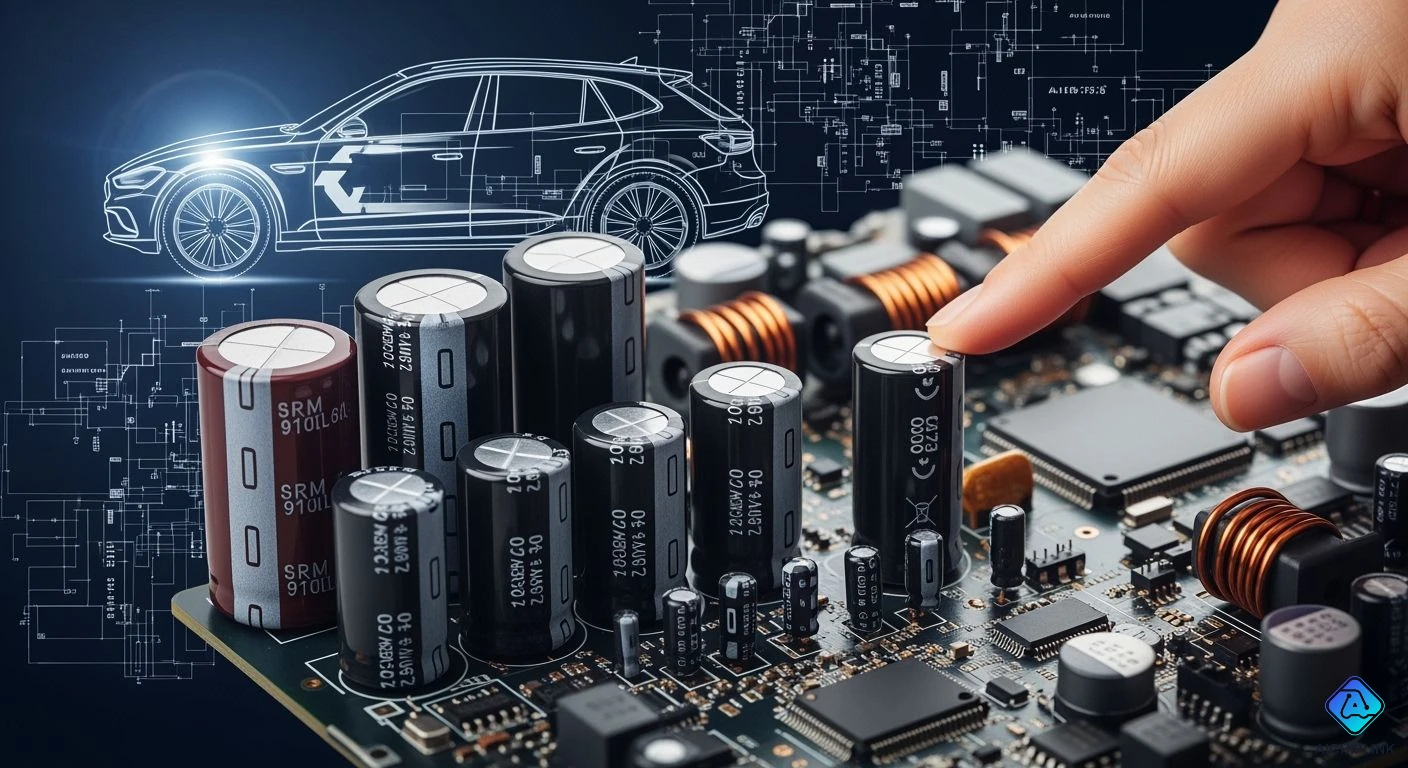
Before you pick film capacitors for electric vehicles, you need to look at some key things. Use this checklist to help you choose:
| Criteria | What You Should Look For |
|---|---|
| Withstand Voltage | Make sure the capacitor can take high voltages. This is important for safety. |
| Capacitance Stability | Choose capacitors that keep their value steady when it gets hot or cold. |
| Heat Generation | If the capacitor makes less heat, your system will work better with heavy use. |
| Electrode Structure | Short current paths make your system work more smoothly. |
| Equivalent Series Inductance | Low ESL helps Film Capacitors in EV Inverters work at many frequencies. |
| Size and Volume | See if the capacitor will fit in your design space. |
| Reliability | Always pick parts that last a long time and work well. |
| Supplier Expertise | Work with suppliers who know a lot about electric vehicles. |
Key Takeaways
-
Pick film capacitors that can handle high voltages. This helps keep your electric vehicle safe.
-
Choose capacitors that stay stable when temperatures change. This makes sure they work well all the time.
-
Find capacitors with low Equivalent Series Resistance (ESR). This helps them work better and keeps them cooler.
-
Make sure the capacitor fits in your design space. This stops problems when you install it in your inverter.
-
Check that the capacitors have safety certifications. This proves they are reliable in tough conditions.
Film Capacitors in EV Inverters
Role in Power Conversion
Film capacitors help your electric car work well. They lower electrical noise and keep voltage steady. They handle high ripple currents. You find them between the battery and motor. They are also in chargers and DC-DC converters. When you drive, film capacitors filter ripple current. They absorb voltage spikes from switching devices. They give quick current when the load changes. They protect the inverter from harm. Large film capacitors release stored energy safely after you stop. This keeps your car from having problems.
Tip: Pick capacitors that handle high ripple currents. Choose ones that keep voltage steady. This helps your inverter give reliable power to the motor.
| Function | Description |
|---|---|
| Noise Suppression | Film capacitors lower electrical noise in inverter circuits. |
| Voltage Smoothing | They keep voltage steady for stable power. |
| High Ripple Current | They handle high ripple currents better than aluminum electrolytics. |
Types of Film Dielectrics (PP, PET)
You should know the main types of film dielectrics. Polypropylene (PP) and polyethylene terephthalate (PET) are common. PP has very low dielectric losses. It gives great insulation resistance. It works up to 105°C with little drift. PP has high dielectric strength and self-healing behavior. You use PP for DC link and AC filtering. It works well in tough conditions.
| Property | Polypropylene (PP) | Polyethylene Terephthalate (PET) |
|---|---|---|
| Dielectric Losses | Very low (tan δ < 0.0002) | N/A |
| Insulation Resistance | Excellent | N/A |
| Temperature Stability | Works up to 105°C with little drift | N/A |
| Dielectric Strength | ~700 V/μm | N/A |
| Self-Healing Behavior | Superior | N/A |
| Applications | Good for DC link and AC filtering | N/A |
Common Capacitor Applications
Film capacitors are used for many things in ev inverters. They give reliable solutions for electric and hybrid cars. You need capacitors that meet strict rules for metalized film materials. Clean energy cars need advanced power electronics. Film capacitors are important for this. Inverters change DC power from the battery to AC power for the motor. High power and small size matter for these systems. Pick capacitors that resist heat and stay light. This fits the needs of electric cars.
-
Used in inverters (between battery and motor)
-
Used in on-board chargers
-
Used in DC-DC converters
Key Selection Criteria for Capacitors
When you pick film capacitors for a traction inverter, you must match their properties to your system. You need to check voltage, capacitance, current handling, impedance, temperature, reliability, safety, and size. Each thing helps your inverter work safely and well in electric vehicles.
Voltage and Capacitance
You must pick a capacitor with the right voltage rating. If the voltage is too low, your traction inverter might not work. Capacitance affects how the capacitor smooths voltage and stores energy. You need to match these values to what your inverter needs.
Here is a table showing common voltage and capacitance ranges for film capacitors used in electric vehicles:
| Series | Voltage Rating | Capacitance Range | Applications |
|---|---|---|---|
| EPCOS (TDK) B3277X | Up to 1300V DC | 1uF to 100uF | Motor drives, renewable energy inverters, DC-DC converters |
| KEMET C4AQ | Up to 1100V DC | 1uF to 75uF | Electric vehicle inverters, industrial converters, DC-DC power supplies |
| Vishay MKP1848 | Up to 1300V DC | 2uF to 100uF | High-power inverters, energy storage systems, power conversion circuits |
Tip: Always pick a capacitor with a voltage rating higher than your inverter’s maximum voltage.
Current Handling and Impedance
Film capacitors must handle high ripple currents without getting too hot. You need to check the ripple current rating and make sure it fits your inverter’s needs. Impedance affects how well the capacitor works at different frequencies.
| Specification | Details |
|---|---|
| Voltage Rating | Max test voltage set by rated voltage |
| Capacitance | 320µF–500µF based on controller power |
| Ripple Current Handling | Must handle ripple currents without overheating |
| Temperature Tolerance | High temperature tests up to 115°C |
| Compact Design | Integrated packaging for space-saving |
| Material | Metalized polypropylene film for low ESR and high-frequency performance |
Note: If you use a capacitor with poor current handling, your inverter may get too hot and stop working well.
Temperature and Reliability
You must check the operating temperature range for film capacitors. Most capacitors work up to 85°C. Some can handle even higher temperatures. If your inverter gets hot, you need capacitors that stay stable and reliable.
| Parameter | Value |
|---|---|
| Maximum Operating Temperature | 85°C |
| Minimum Operating Temperature | N/A |
Film capacitors keep their capacitance and low ESR even when temperatures change. They show great stability across a wide temperature range. You can trust them to last longer in tough inverter jobs.
-
Film capacitors keep capacitance and low ESR better than other types.
-
They show great stability over wide temperature ranges.
-
They handle high temperatures without much damage, which helps reliability.
ESR/ESL Considerations
You need to look at ESR and ESL. Low ESR means less heat and better efficiency. Low ESL helps the capacitor work well at high frequencies.
-
ESR values for film capacitors: 1.5mΩ maximum, 0.8-1.0 typical.
-
ESL values: 45nH typical, some as low as 20nH.
Tip: Low ESR and ESL help your inverter work better and last longer.
Safety and Certifications
You must pick capacitors that meet safety standards. Look for certifications like UL, IEC, or automotive-grade ratings. These show the capacitor can handle tough conditions in electric vehicles.
-
Check for self-healing features.
-
Make sure the capacitor has passed endurance and surge tests.
-
Pick capacitors from trusted suppliers with proven expertise.
Size and Form Factor
You need to fit the capacitor into your inverter design. Film capacitors come in many shapes and sizes. Pick a form factor that matches your space and mounting needs.
-
Compact designs save space.
-
Integrated packaging helps with easy installation.
-
Make sure the capacitor fits your inverter’s layout.
Reminder: Always match the capacitor’s specs to your inverter’s needs and the place where you use it.
Selection Process for Film Capacitors
Matching Specs to EV Inverter Needs
You need to follow steps when picking film capacitors for your traction inverter. First, learn what voltage, current, and temperature your inverter needs. Next, find capacitors with specs that match these needs.
Here is a simple guide you can use:
-
List Your Inverter’s Electrical Demands
Write down the highest voltage, current, and switching frequency. These numbers show what your capacitors must handle. -
Choose the Right Capacitance Value
Use a spreadsheet to compare bulk capacitance options. You can list bulk and snubber capacitors separately. Snubber capacitor values are often picked by experience. Sometimes, you choose them based on how the layout looks and feels. -
Check Voltage Ratings
Always pick a capacitor with a voltage rating above your inverter’s highest voltage. This keeps your system safe. -
Review Ripple Current and ESR
Make sure your film capacitors can handle high ripple currents. Look for low ESR values. This helps your inverter stay cool and last longer. -
Consider Temperature and Reliability
Check the temperature range. Your capacitors must work well from cold starts to hot days. Pick types known for lasting a long time and staying stable. -
Think About Physical Size and Mounting
Make sure the capacitor fits your inverter’s design. Small film capacitors help you save space.
Tip: For high-voltage inverters like 300VDC, film capacitors work best. For lower voltage systems, you can use electrolytic and ceramic capacitors together.
Example Calculation
Let’s say your inverter runs at 800V and needs to handle 100A ripple current at 15kHz. You check your spreadsheet and see a 50μF film capacitor rated for 1000V and 120A ripple current fits your needs. For snubber capacitors, you might pick a 1μF, 1200V part based on your layout.
DC-Link Capacitor Selection
DC link capacitors are important in your traction inverter. They keep voltage steady during fast switching and give instant power when your motor needs it. You must pick dc link capacitors that meet strict requirements.
| Requirement | Specification |
|---|---|
| High Switching Frequency | 8–20 kHz, handles large ripple currents. |
| Temperature Range | -40°C to +125°C, works in extreme conditions. |
| Vibration and Mechanical Stress | Withstands shocks from driving and road bumps. |
| Capacitance Density | Over 10 μF/cm³ for small size. |
| Equivalent Series Resistance | Below 10 mΩ to cut energy loss. |
| Ripple Current Handling | Above 150A RMS for strong performance. |
| Safety Standards | Meets AEC-Q200 and ASIL-D for safety. |
You should use film capacitors for dc link capacitors in high-voltage inverters. These capacitors keep your system stable and safe. Film capacitors do not lose performance in high temperatures or high frequencies. This gives you better reliability and longer life.
-
DC link capacitors keep voltage steady during fast switching.
-
They give instant power during peak loads.
-
Film capacitors last longer and work better than electrolytic types in tough jobs.
Custom Capacitor Options
Sometimes, your inverter needs special solutions. Custom film capacitors can help you meet unique size, safety, or power needs.
| Feature | Description |
|---|---|
| High safety | Built-in fuse stops ignition or smoke if something goes wrong. |
| Miniaturization | Uses thin, strong PP film to make the capacitor smaller. |
| High power output | Special vapor deposition lowers ESR, so the capacitor handles more power. |
You can ask suppliers for custom dc link capacitors that fit your inverter layout. These options give you more flexibility and help you reach your reliability goals. Custom film capacitors can also include extra safety features, like fuses, to protect your electric vehicles from accidents.
Note: Always talk to your supplier about custom options if your inverter has special needs. This helps you get the best performance and safety.
Mistakes to Avoid with Film Capacitors
Underestimating Electrical Demands
Some people think picking a capacitor is simple. They often look only at capacitance. This can make the capacitor fail early. You must check ESR and ripple current too. If you forget about temperature ratings, the capacitor might not last. Always pick a capacitor that handles the highest ripple current. Keep capacitors away from hot parts like MOSFETs. This stops overheating and aging.
| Mistake | Consequence | Better Practice |
|---|---|---|
| Choosing by capacitance only | Fails early | Check ESR and ripple current |
| Forgetting temperature rating | Shorter life | Pick 105°C or higher if needed |
| Ripple current too low | Gets too hot | Pick enough ripple current margin |
| Next to MOSFET | Ages faster | Make PCB layout and airflow better |
| Minimum voltage rating | Breaks during spikes | Use voltage derating |
Tip: Always use a voltage rating above your inverter’s max voltage. This keeps your system safe from sudden spikes.
Ignoring Dielectric Type
You must pay attention to the dielectric material. Polypropylene (PP) and polyethylene terephthalate (PET) are different. If you ignore the type, you may get bad performance or short life. PP is good for high voltage and high heat. PET works for smaller, easier jobs. Match the dielectric to what your inverter needs.
Overlooking EMI/Safety Requirements
Electromagnetic interference (EMI) can cause big trouble. If you skip EMI filtering, charging may not work right. It can hurt your electric vehicle. Nearby electronics may stop working. Good EMI filtering keeps your system safe and follows rules.
-
EMI can mess up charging.
-
It can damage electric vehicles.
-
Nearby electronics may not work right.
-
EMI filtering is needed for safety and rules.
EMI is unwanted energy that hurts electronics. EMC means your system works well and does not bother others. You must fix EMI and safety needs to keep your inverter reliable.
Neglecting Environmental Factors
You must think about where your inverter will be used. If you ignore the environment, your capacitor may break. High heat, vibration, and humidity can make it fail sooner. Pick capacitors made for tough conditions your car will face. Look for automotive-grade parts that handle heat and vibration.
Reminder: Always check the environment and match your capacitor to it. This keeps your electric vehicle safe and reliable.
Best Practices for Reliability in Electric Vehicles
Choosing Automotive-Grade Capacitors
You should pick capacitors that follow strict car rules. These parts must work well in heat, shaking, and wet air. When you pick a film capacitor, use these tips:
-
Pick a capacitance value that fits your inverter’s needs.
-
Choose a voltage rating 20–30% higher than your circuit’s voltage.
-
Pick the right dielectric material. Polypropylene is good for high-frequency and low-loss jobs.
-
Check the temperature range. Make sure the capacitor works in hot and cold places.
-
Look at frequency response. Low ESR helps at high switching speeds.
-
Think about the environment. Moisture-resistant types last longer in tough places.
-
Check reliability. High endurance ratings mean the part will last many years.
-
Look for certifications. Find UL, IEC, or automotive-grade marks.
Tip: Always use capacitors that meet car standards. This keeps your electric vehicle safe and reliable.
Installation and Maintenance
Good installation and care help your capacitors last longer. You should do these things:
-
Use cooling systems and watch temperatures to stop overheating.
-
Balance voltage across flying capacitors. This stops early problems and keeps things steady.
-
Set the right switching frequency. Lower frequencies cut heat stress and help parts last.
-
Use sensors to check for wear. Plan repairs before big problems start.
| Practice | Benefit |
|---|---|
| Cooling systems | Stops overheating |
| Voltage balancing | Prevents early failure |
| Frequency optimization | Cuts heat stress |
| Condition monitoring | Helps with early repairs |
Manufacturer Guidelines
You need to follow the maker’s instructions for best results. Here are some main rules:
-
Pick higher voltage and ripple current margins. This keeps your inverter safe during spikes and heavy loads.
-
Put capacitors where air can flow or use heat sinks. This helps get rid of heat fast.
-
Use film capacitors for high reliability and low losses.
-
Make sure capacitors can take shaking and bumps. They must survive in your car.
Note: Following the maker’s rules helps your capacitors work well and last longer in electric vehicles.
You can choose the right film capacitors for your EV inverter by using easy steps.
-
Look at voltage, capacitance, and current ratings.
-
Choose the dielectric type that fits your needs best.
-
Make sure the capacitor fits in your space and meets safety rules.
Picking carefully helps your inverter work well and last longer. Use smart steps and avoid mistakes. This makes your electric vehicle strong and reliable.

Written by Jack Elliott from AIChipLink.
AIChipLink, one of the fastest-growing global independent electronic components distributors in the world, offers millions of products from thousands of manufacturers, and many of our in-stock parts is available to ship same day.
We mainly source and distribute integrated circuit (IC) products of brands such as Broadcom, Microchip, Texas Instruments, Infineon, NXP, Analog Devices, Qualcomm, Intel, etc., which are widely used in communication & network, telecom, industrial control, new energy and automotive electronics.
Empowered by AI, Linked to the Future. Get started on AIChipLink and submit your RFQ online today!
Frequently Asked Questions
What is the main advantage of film capacitors in EV inverters?
Film capacitors last a long time. They lose less energy. They handle high ripple currents well. They keep voltage steady. You see them a lot in EV power electronics.
How do you choose the right voltage rating for a film capacitor?
First, check your inverter’s highest voltage. Pick a capacitor with a voltage rating at least 20% higher. This protects your system from voltage spikes.
Why does the dielectric type matter?
Polypropylene works for high voltage and low loss jobs. PET is good for smaller tasks. The dielectric affects how well the capacitor handles heat and stays reliable.
What certifications should you look for?
Look for UL, IEC, or automotive-grade marks. These show the capacitor meets safety rules. You can trust parts with these certifications.
Can you use film capacitors in harsh environments?
Automotive-grade film capacitors work in tough places. They resist heat, shaking, and wet air. This helps EV power electronics last longer.