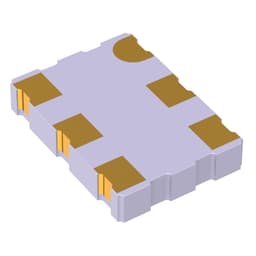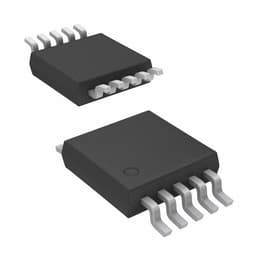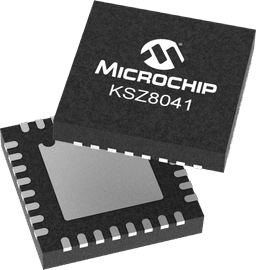
The transition to Wi-Fi 6 (802.11ax) required a new generation of silicon. It wasn't just about faster speeds; it was about efficiency (OFDMA) and capacity (MU-MIMO) to handle the explosion of smart home devices.
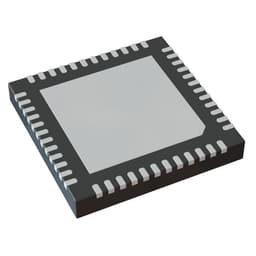
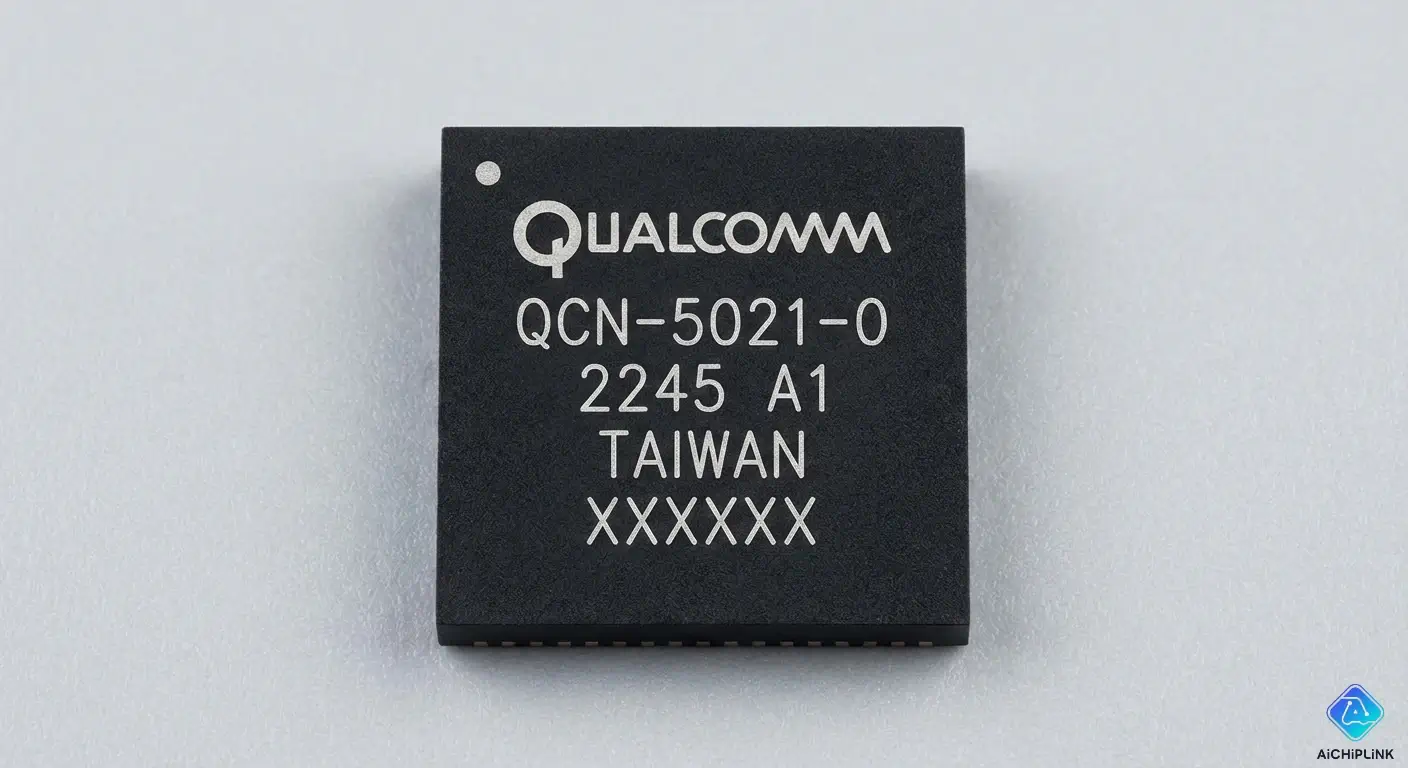
At the heart of many affordable Mesh systems and Carrier Gateways sits a critical, yet often overlooked component: the Qualcomm QCN-5021-0.
Unlike a "System on Chip" (SoC) that runs the router's operating system, the QCN-5021 is a specialized Companion Radio Chip. It provides the muscle behind the 5GHz signal in many popular 2x2 Wi-Fi 6 routers.
This guide explores its technical specifications, its relationship with IPQ host processors, and how it differs from its high-end sibling, the QCN5022.
Table of Contents
- 1. Decoding the Silicon: QCN-5021-0 Specs
- 2. Architecture: 2x2 MU-MIMO & OFDMA
- 3. System Design: Pairing with IPQ5018
- 4. Comparison: QCN5021 vs. QCN5022 vs. QCN5052
- 5. Conclusion
1. Decoding the Silicon: QCN-5021-0 Specs
The QCN-5021-0 is part of Qualcomm's "Immersive Home" and "Networking Pro" infrastructure platforms. It is designed specifically to handle the heavy lifting of RF modulation and demodulation for the 5GHz band.
Key Specifications Matrix
| Feature | Specification | Impact |
|---|---|---|
| Standard | Wi-Fi 6 (802.11ax) | Supports modern features like Target Wake Time (TWT) and BSS Coloring. |
| Frequency Band | 5 GHz | Optimized for high-speed data traffic (video, gaming). |
| Spatial Streams | 2x2 MIMO | Two transmit (Tx) and two receive (Rx) antennas. |
| Modulation | 1024-QAM | Delivers ~25% higher raw throughput than Wi-Fi 5 (256-QAM). |
| Channel Width | 80 MHz (Typical) | Note: This is the key differentiator from QCN5022. |
| Interface | PCIe / WSI | High-speed dedicated connection to the Host SoC. |
| Package | DRQFN | Compact footprint allows for smaller router PCBs. |
The Role of a "Companion Chip"
The QCN5021 cannot work alone. It does not have the CPU power to run the router's OS (like OpenWrt or a proprietary firmware).
- The Brain: Usually a Qualcomm IPQ5018 or IPQ6000 series SoC.
- The Muscle: The QCN5021 connects to the Brain. The Brain says "Send this data packet," and the QCN5021 handles the complex RF physics to transmit it to your phone.
Price Analysis & Stock Availability
This chip is a staple in the router manufacturing supply chain.
Procurement Tip: Ensure you are buying the correct revision (suffix -0). [Check Stock for QCN-5021-0 at Aichiplink] to view inventory from verified distributors.
2. Architecture: 2x2 MU-MIMO & OFDMA
The QCN-5021 brings enterprise-grade features to home routers.
OFDMA Efficiency
OFDMA (Orthogonal Frequency-Division Multiple Access) is the game-changer of Wi-Fi 6.
- Old Way (OFDM): The router sends a truck (data packet) to one house (device) at a time, even if the truck is mostly empty.
- New Way (OFDMA): The QCN5021 can fill the truck with packages for multiple houses. It splits the radio channel into smaller "Resource Units" (RUs), allowing it to communicate with multiple low-bandwidth IoT devices simultaneously.
MU-MIMO Capacity
With 2x2 Downlink and Uplink MU-MIMO, the QCN5021 can steer signal beams to communicate with two compatible devices at the exact same time, effectively doubling the efficiency for supported clients compared to SU-MIMO (Single User).
3. System Design: Pairing with IPQ5018
A very common reference design (AP.HK01 or similar) used by manufacturers pairs the IPQ5018 with the QCN5021.
The Reference Design
- The IPQ5018 SoC: Handles the routing logic, packet inspection, and usually contains the built-in 2.4GHz Wi-Fi 6 radio.
- The QCN5021: Is added externally via PCIe lanes to provide the 5GHz Wi-Fi 6 radio.
Result: This creates a cost-effective "AX3000" or "AX1800" dual-band router. The IPQ5018 handles the legacy 2.4GHz IoT devices, while the QCN5021 provides the high-speed lane for phones and laptops.
FEM Requirements
To achieve good wall-penetrating performance, the QCN5021 is almost always paired with an external FEM (Front End Module).
- Chips from Skyworks or Qorvo amplify the signal coming out of the QCN5021 before it hits the antenna.
- Repair Tip: If a router has weak 5GHz signal but the QCN5021 gets hot/active, the fault is often in the external FEM, not the QCN chip itself.
4. Comparison: QCN5021 vs. QCN5022 vs. QCN5052
Qualcomm's naming convention can be subtle. Choosing the wrong chip can limit your router's maximum speed.
| Feature | QCN5021 (This Chip) | QCN5022 | QCN5052 |
|---|---|---|---|
| Spatial Streams | 2x2 | 2x2 | 4x4 |
| Max Bandwidth | 80 MHz | 160 MHz | 80 MHz / 160 MHz |
| PHY Rate | ~1.2 Gbps | ~2.4 Gbps | ~2.4 - 4.8 Gbps |
| Target Market | Entry/Mid Mesh | Performance Mesh | High-End AP |
| Cost | Lowest | Medium | High |
Verdict:
- Choose QCN5021 for budget-friendly AX1800 routers where 160MHz bandwidth is not a requirement.
- Choose QCN5022 if you need the "HE160" marketing claim, which allows compatible laptops to reach gigabit+ speeds over Wi-Fi.
6. Conclusion
The Qualcomm QCN-5021-0 is the unsung workhorse of the Wi-Fi 6 revolution. It enabled the mass adoption of Mesh networking by providing a reliable, efficient, and affordable 5GHz radio solution. While it lacks the 160MHz speed of the 5022, its 2x2 OFDMA performance makes it perfect for the congested, device-heavy smart home.
Sourcing Qualcomm Networking ICs Building a new router or repairing a mesh node? Visit Aichiplink.com to search for QCN-5021-0 and compatible FEMs.

Written by Jack Elliott from AIChipLink.
AIChipLink, one of the fastest-growing global independent electronic components distributors in the world, offers millions of products from thousands of manufacturers, and many of our in-stock parts is available to ship same day.
We mainly source and distribute integrated circuit (IC) products of brands such as Broadcom, Microchip, Texas Instruments, Infineon, NXP, Analog Devices, Qualcomm, Intel, etc., which are widely used in communication & network, telecom, industrial control, new energy and automotive electronics.
Empowered by AI, Linked to the Future. Get started on AIChipLink.com and submit your RFQ online today!
Frequently Asked Questions
What is the Qualcomm QCN-5021-0 used for?
It is a 5GHz Wi-Fi 6 companion radio chip used in mesh routers and carrier gateways.
Is QCN5021 a router SoC?
No. It requires a host SoC (such as IPQ5018) to operate.
Does QCN5021 support 160MHz bandwidth?
No. It supports up to 80MHz channel width only.
What Wi-Fi class does QCN5021 enable?
Typically AX1800 or AX3000, depending on system design.
What is the main difference between QCN5021 and QCN5022?
QCN5022 supports 160MHz, while QCN5021 does not.