Definition and explanation of leakage current types
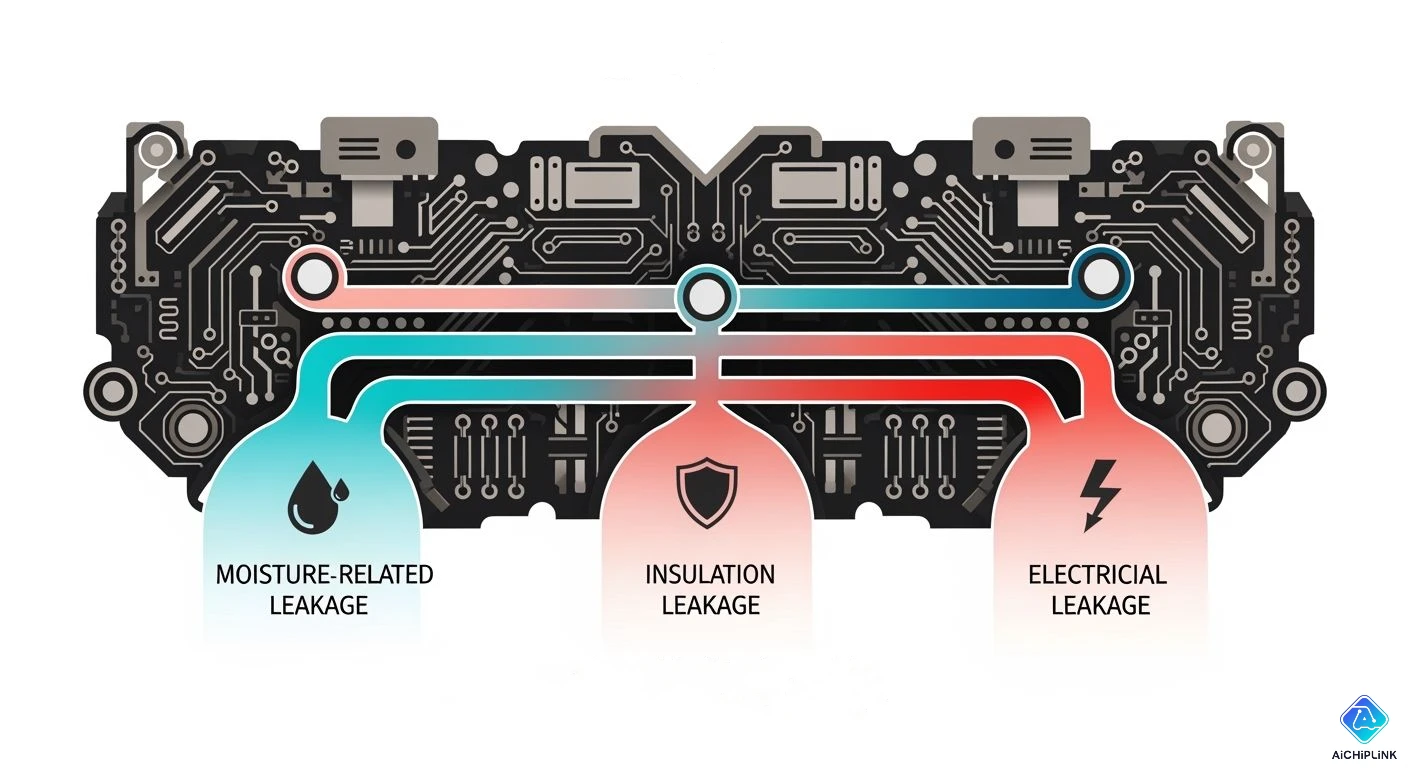
Leakage current means electricity goes where it should not. It leaves the main circuit path. Many devices have leakage current. It can be dangerous and cause problems. Leakage can move through insulation, enclosures, or parts. You should watch for leakage current. It can mess up how devices work. It can also make measurements wrong. New research shows leakage current can cause mistakes in battery systems. This makes it hard to know how long batteries will last. It also makes it hard to know if batteries are reliable. You will learn more in the next part called Leakage Current Explained.
Leakage current is important for your safety. It also helps devices work right. Finding leakage current early helps you stop problems.
Key Takeaways
-
Leakage current happens when electricity goes the wrong way. This can make devices stop working and cause safety problems.
-
Moisture, dust, and old insulation often cause leakage current. Doing regular checks can help stop these problems.
-
There are different types of leakage current. Earth leakage and patient leakage need special care. This keeps people safe and devices working well.
-
It is important to measure leakage current the right way. Use clamp meters and insulation testers to find problems.
-
To lower leakage current, keep things clean and dry. Pick parts with low leakage. Do safety checks often.
Leakage Current Explained
What Is Leakage Current
Leakage current means electricity leaves its normal path. This can happen in any device. You measure leakage current in tiny units. These units are nanoamperes or picoamperes. Leakage current can happen even if things work fine. Sometimes, it shows there is a problem with insulation. It can also show there is a design mistake. Leakage current can mess up sensitive measurements. It can make devices not work well. Leakage current is any electricity that flows outside the main circuit.
How Leakage Current Occurs
Leakage current moves through insulation or between parts with different voltages. Moisture, dust, and chemicals make leakage worse. You see leakage current in many ways:
-
Tunneling leakage happens when charge carriers go through thin insulation.
-
Subthreshold conduction happens in MOS transistors in low-power circuits.
-
Capacitive leakage flows through unwanted capacitances when AC voltage is there.
-
Resistive leakage moves through insulation that is damaged or wet.
-
Earth leakage travels from live wires to the ground. This is important for safety.
-
Touch current flows through you when you touch a device. This can be dangerous.
Leakage current makes devices use more power. It can cause circuits to fail. It also messes up measurements and creates paths you do not want.
Common Sources
There are many sources of leakage current at home or work. Insulation gets old and breaks down. Manufacturing mistakes can cause problems. Moisture is a common cause. Dust or cleaning products can make surfaces conduct electricity. Bad grounding and poor circuit design let leakage escape. High heat and humidity lower resistance and increase leakage. Solar panels can have leakage when it rains or is humid. The environment affects how much leakage you get.
Tip: Keep devices dry and clean. Check insulation often. Make sure grounding is good to reduce leakage.
| Source of Leakage Current | Description |
|---|---|
| Insulation degradation | Leakage from stress and aging over time |
| Manufacturing defects | Voids or contamination in insulation |
| Moisture and contamination | Conductive films on surfaces |
| Improper grounding | Leakage paths that are not expected |
| Component selection | Parts with high leakage specifications |
| Circuit design | Bad layout and short creepage distances |
| Temperature effects | High temperatures make leakage worse |
| Humidity | Moisture lowers resistance |
Types of Leakage Current
Enclosure Leakage Current
Enclosure leakage current happens when electricity leaves the device’s shell. This happens if insulation does not work well. The current can move through the ground wire, signal cables, or weak insulation. You need to test for enclosure leakage current to keep devices safe.
-
Enclosure leakage current is found in computers, refrigerators, and machines.
-
Common paths are:
-
Through the ground wire.
-
Through signal cables.
-
Through cracks in insulation.
-
Ignoring enclosure leakage current can cause equipment to break. It can also cause shocks or false alarms.
Keep devices dry and check insulation often. Good care stops enclosure leakage current from causing problems.
Earth Leakage Current
Earth leakage current flows from live wires to the ground or metal parts. This happens even when equipment works fine. You see earth leakage current in homes, offices, and factories.
Leakage current means electric current moves in a path it should not under normal conditions. This can happen from insulation faults or as a normal part of devices, especially those with capacitors.
Leakage current moves in unwanted paths, usually from live wires to ground or metal parts, even when devices work right. This is not a fault but a normal part of electrical systems.
You notice earth leakage current when a device uses capacitors or has bad insulation. If you touch a device with earth leakage current, you might feel a shock. Damaged or wet wires can also cause earth leakage current.
Real-world example:
You plug in a washing machine. If water leaks and touches wires, earth leakage current can go to the metal case. If you touch the case, you may get shocked. Safety devices like GFCIs help protect you from earth leakage current.
Patient Leakage Current
Patient leakage current is the current that flows through medical devices touching a patient. This type is watched closely because it can hurt people. You see patient leakage current in hospitals and clinics.
-
Patient leakage current can flow through:
-
Capacitive leakage from stray capacitance.
-
Resistive leakage from bad insulation.
-
Circuit wiring leakage in cables.
-
Patient leakage current is found in heart monitors, infusion pumps, and X-ray machines. If you do not control patient leakage current, patients can be at risk.
Hospitals test medical devices often to keep patient leakage current safe.
Component-Level Leakage Current
Component-level leakage current happens inside parts like transistors, capacitors, and diodes. This happens when electricity moves through tiny paths that should block it. The causes include subthreshold conduction in MOS transistors and reverse-bias leakage in diodes.
-
Component-level leakage current is found in phones, computers, and sensors.
-
Common paths are:
-
Through semiconductor junctions.
-
Across thin insulation.
-
Through PCB traces with bad design.
-
If you ignore component-level leakage current, devices may use more power, get hot, or stop working. You need to pick parts with low leakage and design circuits well.
Operational Leakage Current
Operational leakage current shows up during normal use of electrical systems. You see this type in AC circuits, power supplies, and devices with capacitors. Causes include capacitive leakage and earth leakage.
| Type of Leakage Current | Description |
|---|---|
| Earth Leakage Current | Happens from insulation failure, causing current to flow to the ground and shock risks. |
| Capacitive Leakage Current | Happens in AC circuits because of stray capacitances in insulation. |
| Leakage Current in Semiconductors | Happens in semiconductor devices from reverse-bias junctions, causing small leakage current. |
Operational leakage current is found in air conditioners, TVs, and LED lights. If you do not manage operational leakage current, you may waste energy or get false alarms.
Tip: Use good circuit design and test often to keep operational leakage current low.
Conductive Leakage Current
Conductive leakage current moves through unwanted paths. You see this type in places where safety is important, like hospitals and factories. Causes include moisture, dust, or bad insulation making a path for electricity.
-
Conductive leakage current can be dangerous in hospitals.
-
Hospitals follow strict rules like IEC60601-1 to limit conductive leakage current.
-
Limits for earth leakage current have gone up to make things safer.
-
Regular safety tests are needed after repairs and for maintenance.
Real-world example:
You work in a hospital. After fixing a patient monitor, you must test for conductive leakage current. If the current is too high, the device cannot be used.
Always test equipment after repairs. Maintenance keeps conductive leakage current under control.
Measuring Leakage Current
Leakage Current Measurement Methods
There are different ways to measure leakage current. Direct measurement is very accurate. But you must turn off the system first. Indirect measurement does not need you to disconnect anything. It is less accurate than direct measurement. Differential current measurement finds imbalances that show leakage. Insulation resistance testing checks if insulation is good. This test can give clues about leakage. Hipot testers are important for measuring leakage current. They can find very small amounts of leakage. Some can even find leakage as tiny as picoamps. Clamp meters help you check for leakage by clamping around the ground wire. This is a good way to measure leakage to ground and find where it comes from.
| Method | Advantages | Limitations |
|---|---|---|
| Direct Measurement | Accurate measurement of leakage current | Requires system shutdown |
| Indirect Measurement | Less intrusive, can be performed without disconnecting | May be less accurate than direct measurement |
| Differential Current Measurement | Can detect imbalances indicating leakage | Requires knowledge of incoming and outgoing currents |
| Insulation Resistance Testing | Useful for preventive maintenance | Indirect measurement, may not indicate real-time leakage |
Tip: Try using the tracking method with an injected signal. This helps you find leakage points fast.
Tools for Measuring Leakage Current
You can use many tools to measure leakage current. Clamp meters are fast and do not need you to open anything. Digital multimeters give exact numbers if you use the right parts. Insulation resistance testers check if insulation is strong and show possible leakage. Oscilloscopes let you see the shape of the current and spot quick leaks. Electrical safety testers help you test the same way every time and follow rules. Hipot testers are needed to check for safety and find very small leaks. Testing for leakage current keeps you safe from shocks when current goes to ground.
| Measurement Tool | Application Context | Accuracy Considerations |
|---|---|---|
| Electrical Safety Testers | Compliance Testing | Controlled conditions improve repeatability. |
| Precision Measurement Tools | Engineering Characterization | Accuracy depends on input impedance and performance. |
| Clamp Meters | Non-intrusive Measurement | Portable and quick for maintenance checks. |
| Digital Multimeters | General Measurement | Precise with attachments; used with other tools. |
| Insulation Resistance Testers | Assessing Insulation Quality | Can infer leakage current levels. |
| Oscilloscopes | Analyzing Current Waveforms | Detect transient leakage currents. |
Interpreting Measurement Results
You need to look at leakage current results with care. Safe limits change based on the device type. Medical devices follow IEC 60601-1 rules. Their normal limits are 100 to 500 µA. If there is a single fault, the limit is up to 5 mA. Consumer devices follow UL standards. Their normal limits are 0.25 to 3.5 mA. Laboratory equipment uses IEC 61010. The normal limit is 3.5 mA. If you see current to ground above these limits, fix the device. Look for signs of damage or heat stress. Advanced tests and rules help you check for safety. Some changes in leakage current are normal. But high values mean something is wrong.
| Equipment Type | Normal Condition Limits | Single Fault Limits |
|---|---|---|
| Medical (IEC 60601-1) | 100-500 µA | 1-5 mA |
| Consumer (UL standards) | 0.25-3.5 mA | 2x normal limits |
| Laboratory (IEC 61010) | 3.5 mA | 2x normal |
Note: Always check your leakage current against the standard for your device. High leakage means there is a risk.
Impact and Management
Effects on Electronic Devices
Leakage current can cause problems in devices. When leakage gets higher, your device uses more power. It may not work as well. Insulation can break down over time. This makes leakage worse. Your device can get hot or stop working early. High-impedance circuits are sensitive to leakage. Even small leakage can cause big errors. Sensors may give wrong readings. Equipment may not pass safety tests. Some effects are:
-
More energy used and wasted
-
Errors in sensitive circuits
-
Parts get hot and fail early
-
Trouble with safety tests
Managing leakage current helps devices last longer and work better.
Safety Considerations
Safety is important when dealing with leakage current. If leakage goes to ground or metal, you can get shocked. High leakage can start fires or break equipment. Hospitals need to be careful because patients can be at risk. Devices may fail safety checks even if they seem fine. Humidity, dust, and bad insulation make leakage worse. This increases shock risk. Always check leakage current to keep systems safe.
Note: Watching and controlling leakage current stops shocks, equipment problems, and wasted energy. High leakage can cause serious safety dangers.
Reducing Leakage Current
You can do many things to lower leakage current. Follow safety rules for spacing and insulation. Make space around high-voltage parts to stop leakage. Clean circuit boards to remove dust and moisture. Use guard rings for sensitive spots to block leakage. Pick parts with low leakage, especially for hot devices. Do not send signals to devices that are off. This can cause unwanted leakage. Disconnect high-value dividers during sleep modes to save energy. Test devices in real conditions like different temperatures and humidity. Check cables and connectors for good insulation and cleanliness.
| Step | How It Helps |
|---|---|
| Increase spacing | Stops leakage paths to ground |
| Clean PCBs | Removes dust and moisture |
| Use guard rings | Blocks leakage in sensitive spots |
| Choose low-leakage parts | Lowers leakage current |
| Test in real conditions | Finds hidden leakage problems |
Tip: Regular checks and tests help you find and fix leakage before it becomes dangerous.
You now know the main types of leakage current. These are important for safety and how devices work. Measuring leakage current well helps you stay safe. Managing leakage current stops problems. To lower leakage current, you should:
-
Look at wires to see if they are broken.
-
Make sure the earthing is working right.
-
Use RCCB or ELCB to help protect you.
-
Do simple checks and tests often.
-
Get an expert if you see something wrong.
You can learn more from articles, videos, and classes about leakage current safety. Use what you learned to keep your electrical work safe and working well.

Written by Jack Elliott from AIChipLink.
AIChipLink, one of the fastest-growing global independent electronic components distributors in the world, offers millions of products from thousands of manufacturers, and many of our in-stock parts is available to ship same day.
We mainly source and distribute integrated circuit (IC) products of brands such as Broadcom, Microchip, Texas Instruments, Infineon, NXP, Analog Devices, Qualcomm, Intel, etc., which are widely used in communication & network, telecom, industrial control, new energy and automotive electronics.
Empowered by AI, Linked to the Future. Get started on AIChipLink and submit your RFQ online today!
Frequently Asked Questions
What is the main danger of leakage current?
Leakage current can give you an electric shock. It can also damage your devices. You should always check for leakage to stay safe.
How do you measure leakage current at home?
You can use a clamp meter. Clamp it around the ground wire. This tool shows you if there is any leakage current flowing.
Why does moisture increase leakage current?
Moisture lowers the resistance of insulation. This lets more current escape. You should keep your devices dry to prevent this problem.
Can small leakage currents cause problems?
Yes. Even small leakage currents can affect sensitive electronics. They can cause errors in measurements or make devices fail safety tests.
How often should you check for leakage current?
You should check your devices every few months. If you see signs of damage or feel a shock, test right away.