Why Do AI Servers Need DDR5?
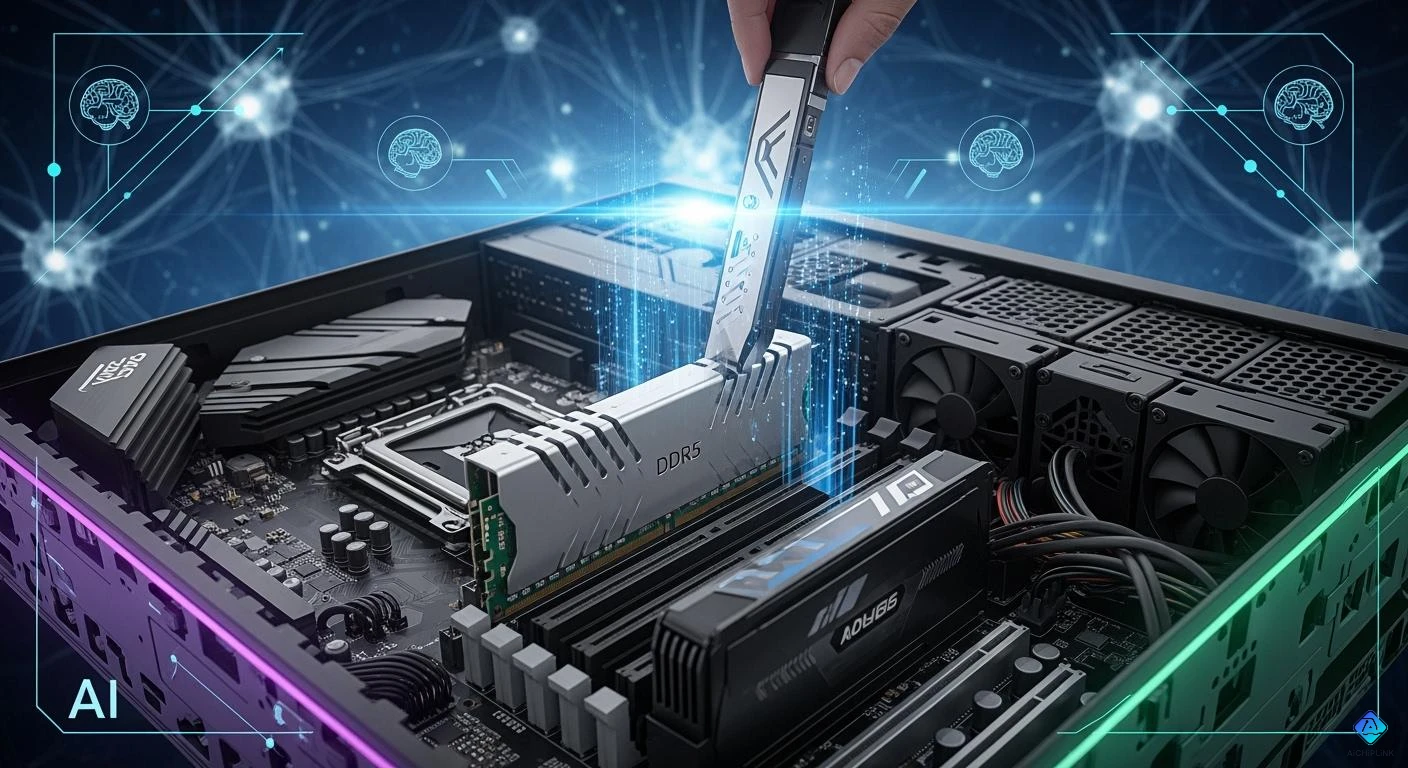
You need DDR5 for your AI Servers because AI models are getting bigger and harder to run. By 2025, experts think model sizes will grow a lot. Only memory with lots of space and fast speed can keep up. DDR5 gives up to 6400 MT/s, which is twice as fast as DDR4 memory. > DDR5’s new features help you work with huge datasets, keep things running all day, and control heat better in crowded places.
Key Takeaways
-
DDR5 memory is faster and has more bandwidth. This helps AI servers work with big AI models and lots of data easily.
-
DDR5 lets AI servers use more memory. This makes things run smoother and cuts down on waiting for data.
-
DDR5 uses power better. It helps save energy and keeps servers cool when they run all the time.
-
Switching to DDR5 can help your AI setup last longer. It will work with new tech and do hard jobs better.
-
Think about the full cost of moving to DDR5. This means hardware, power, and cooling. Make sure it fits your budget and what you want to achieve.
AI Servers And Memory Demands
Bandwidth Needs
AI Servers need fast memory bandwidth to work well. They handle a lot of data every second. If memory is slow, the server cannot keep up. The whole system will slow down. Look at the table below to see the difference:
| Memory Type | Minimum Capacity | Typical Capacity | Bandwidth Improvement |
|---|---|---|---|
| DDR4 | 64 GB | 256 GB | 3200 MT/s |
| DDR5 | 64 GB | 512 GB - 1 TB | 6400 MT/s |
AI workloads use very large datasets. Fast memory is needed for this job. Some AI Servers use High Bandwidth Memory (HBM) to move data faster. Old servers cannot reach these speeds. Using old memory can cause problems. You might see batch size collapse or memory stalls in GPUs.
Dataset Size Challenges
Big datasets are another problem for AI Servers. New AI models use more data than before. In 2022, the market for special memory in AI was $15 billion. Experts think this market will grow by 32% each year until 2027. Every new AI model needs 40-50% more memory bandwidth. Most old servers have only 1–2 TB of memory. This is not enough for new AI tasks. Without enough memory, your system cannot work well.
24/7 Processing
AI Servers often work all day and night. They do not take breaks. This puts more stress on memory. Nonstop work needs steady data and model running. If memory is too slow, your system may lag or crash. You need strong memory for high demand. DDR5 helps AI Servers run well, even with nonstop work.
DDR5 Benefits For AI Servers
Speed & Bandwidth
You need fast memory to keep up with the demands of modern AI Servers. DDR5 brings a big jump in speed and bandwidth compared to older memory. This means your server can move more data at once, which is important for training and running large AI models. The table below shows how DDR5 outperforms DDR4:
| Memory Type | Maximum Data Rate (MT/s) | Effective Bandwidth Improvement |
|---|---|---|
| DDR4 | 3200 | N/A |
| DDR5 | 4800 | 1.87 times |
DDR5 starts at 4800 MT/s and can go beyond 8400 MT/s. This higher data rate helps your AI Servers process huge datasets quickly. You get faster training times for deep learning models. DDR5 also uses two independent 32-bit sub-channels per DIMM. This design lets your server handle more tasks at the same time. You avoid memory bottlenecks and keep your system running smoothly, even when many users or processes need access at once.
Tip: Faster memory means your AI Servers can finish jobs sooner and handle more work without slowing down.
Higher Capacity
AI Servers need more memory as models and datasets grow. DDR5 supports much larger memory modules than DDR4. You can use up to 512 GB per DIMM. This lets you build servers with much more total memory. Here are some ways higher capacity helps you:
-
You can run bigger AI models without splitting them across many servers.
-
More memory per server means less time spent moving data between nodes.
-
You reduce delays from network traffic and keep your AI workloads running smoothly.
-
Higher memory density lets you fit more computing power in the same space.
When you use DDR5, you can handle the largest AI models and datasets with fewer servers. This makes your system easier to manage and more efficient.
Power Efficiency
Running AI Servers all day uses a lot of energy. DDR5 helps you save power in several ways:
-
DDR5 has voltage regulators on each memory module. This allows for better control of power use.
-
DDR5 runs at 1.1V, which is lower than DDR4’s 1.2V. This can save 8-10% in power for large server setups.
-
Improved power management features can cut total energy use by 10-20% compared to DDR4.
-
New refresh schemes, like Same Bank Refresh and Fine Granularity Refresh, lower idle power draw.
These features help your servers stay cool and use less electricity. You spend less on cooling and power, which is important when you run many AI Servers. Better efficiency also means your servers can work harder without overheating.
Note: Lower power use not only saves money but also helps your data center stay green.
DDR5 vs DDR4
Performance Gains
You want your server to be fast. DDR5 is quicker than DDR4. The table below shows how they compare:
| Aspect | DDR4 Performance | DDR5 Performance |
|---|---|---|
| Speed | Lower than DDR5 | Higher than DDR4 |
| Bandwidth | Limited compared to DDR5 | Improved significantly |
| Latency | Lower latency | Higher latency |
| Power Management | Standard efficiency | Improved per bit, but higher overall consumption |
| Signal Integrity | Less susceptible | More susceptible to interference |
| Cooling Solutions | Standard air cooling | May require advanced cooling solutions |
| Compatibility with AI frameworks | Optimized for DDR4 | May need updates for DDR5 |
DDR5 moves data faster and has more bandwidth. This helps your server finish jobs quickly. DDR5 has higher latency than DDR4. Some AI tasks may slow down because of this. Most jobs still finish faster with DDR5.
Scalability
You need memory that grows with your needs. DDR5 lets you use bigger memory sticks than DDR4. DDR5 can use up to 64GB per stick. DDR4 stops at 16GB per stick. You can build servers with more memory in the same space. This helps you train bigger models and use larger datasets. DDR5 has on-die ECC to keep your data safe.
-
DDR5 speeds can go over 8000 MT/s.
-
You get more memory and better reliability.
-
Power management is improved as you add more memory.
Advanced AI Workloads
Modern AI jobs need fast and reliable memory. DDR5 has features that help with these tasks:
-
DDR5 uses an 8-bank group design and on-die ECC for better data integrity.
-
Each module can reach up to 51.2 GB/s. This helps with real-time AI inference.
-
DDR5-6400 C36 is 25% faster than DDR4-4000 C16 in y-cruncher tests.
-
Adobe Lightroom runs 28% faster with DDR5.
-
DDR5 works better for tough jobs like video editing and big AI model training.
You get more speed, more memory, and better error correction. DDR5 is a good choice for AI Servers that need to handle lots of data quickly and safely.
Deployment Considerations
Compatibility
Before you upgrade your servers, you must check if your hardware and software work with DDR5. Many new CPUs from Intel and AMD support DDR5, but older ones do not. You might need to update your server’s BIOS or firmware. Some AI workloads need software updates to use DDR5’s full speed. AI libraries may not run as fast on DDR5 unless you update them. You should also think about cooling. DDR5 gets hotter than older memory. Liquid cooling is often better than air cooling for powerful servers.
-
DDR5’s better power management helps you save energy. This is important when your workloads change a lot.
-
DDR5’s improved error handling makes your server more reliable. But it can also make your server work a little harder.
-
DDR5 has higher CAS latency. This can slow down some jobs that need quick answers.
Note: Always think about the total cost. This includes hardware, power, and cooling before you upgrade.
Scalability & Future-Proofing
You want your servers to last a long time. DDR5 helps you get ready for the future. DDR5 can reach clock speeds up to 5600MT/s. This means it moves data faster for real-time analytics. The dual-channel design gives you more channels. Your server can do more jobs at once. On-Die Error Correction Code keeps your data safe. This is important for AI and big data jobs. DDR5 supports bigger memory modules. You can run larger models and more virtual machines without running out of memory.
-
DDR5 works well with new CPUs.
-
You get better performance for deep learning and real-time inference.
-
Big jobs in finance, genomics, and recommendation engines do better with DDR5’s higher bandwidth.
Implementation Challenges
Upgrading to DDR5 can be hard. DDR5 is new and not easy to find. It costs more than DDR4. You might have to wait longer to get it. Your budget might feel tight because of these higher costs. You need to think carefully about replacing or upgrading your servers. Some groups find DDR5 does not always make AI inference much faster. You should think about the benefits and the price.
| Challenge | Impact |
|---|---|
| High procurement costs | Raises your budget needs |
| Long lead times | Makes server upgrades take longer |
| Price premium | May not match the speed improvements |
| Transition complexity | Needs careful planning and testing |
Tip: Plan your upgrade well. Make sure DDR5’s benefits are right for you before you spend a lot of money.
You need DDR5 to make your AI Servers fast and dependable. DDR5 gives you more bandwidth and uses power better. This helps you work with bigger models and more data. Recent studies found these things:
-
DDR5 makes servers work faster and helps with tough jobs.
-
It saves energy, but you should check for power and delay problems.
-
Some jobs might need different memory for the best results.
Pick DDR5 if you want your group to do well in AI.

Written by Jack Elliott from AIChipLink.
AIChipLink, one of the fastest-growing global independent electronic components distributors in the world, offers millions of products from thousands of manufacturers, and many of our in-stock parts is available to ship same day.
We mainly source and distribute integrated circuit (IC) products of brands such as Broadcom, Microchip, Texas Instruments, Infineon, NXP, Analog Devices, Qualcomm, Intel, etc., which are widely used in communication & network, telecom, industrial control, new energy and automotive electronics.
Empowered by AI, Linked to the Future. Get started on AIChipLink and submit your RFQ online today!
Frequently Asked Questions
What makes DDR5 better for AI servers than DDR4?
You get faster speeds and more memory with DDR5. DDR5 lets your AI server handle bigger models and datasets. You see less lag and more efficient processing.
Do you need special hardware to use DDR5?
Yes, you need a motherboard and CPU that support DDR5. Check your server specs before upgrading. Most older systems only work with DDR4.
How does DDR5 help with energy savings?
DDR5 uses less voltage and has better power management. You save money on electricity and cooling. Your server stays cooler and runs longer.
Can DDR5 improve real-time AI tasks?
You see faster data movement and better multitasking with DDR5. Real-time AI jobs finish quicker. Your server responds faster to new data.
Is DDR5 worth the higher price for AI workloads?
You get more speed, capacity, and efficiency. If you run large AI models or need nonstop processing, DDR5 gives you better results. The investment pays off over time.