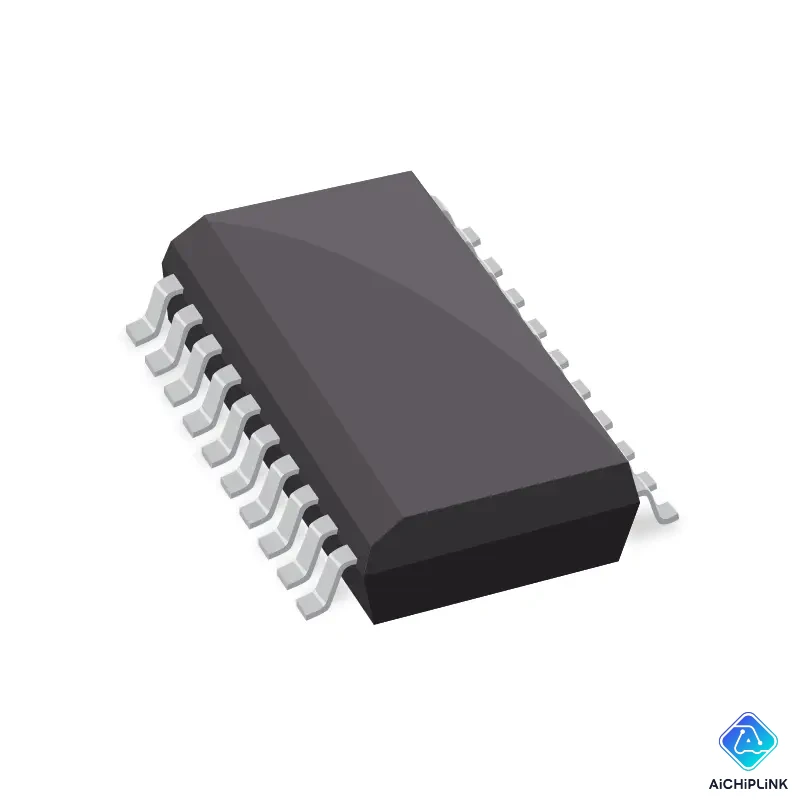
Introduction
Are you designing industrial control systems, precision data acquisition equipment, or automated test systems requiring high-resolution analog-to-digital conversion? The ADS8681IPWR represents Texas Instruments' proven solution for applications demanding 16-bit resolution, high throughput, and integrated input protection in a compact package optimized for industrial temperature ranges and rugged environments.
The ADS8681IPWR is a single-channel, 16-bit successive approximation register (SAR) analog-to-digital converter manufactured by Texas Instruments, delivering 100 kSPS throughput with integrated analog input range protection (±12V overvoltage tolerance), flexible input ranges (±10V, ±5V, ±2.5V, 0-10V, 0-5V), and standard SPI/serial interface. Operating from -40°C to +125°C, it targets industrial automation, process control, precision instrumentation, and test equipment where reliable high-resolution conversion with built-in input protection simplifies system design and enhances robustness.
According to industry analysis, industrial data acquisition systems increasingly demand higher resolution and integrated protection to reduce external component count, improve reliability, and lower system cost. The ADS8681IPWR addresses these requirements by combining 16-bit precision with ±12V overvoltage protection, programmable input ranges, and low power consumption (17 mW typical) in space-efficient TSSOP-16 package.
In this comprehensive guide, you'll discover the ADS8681IPWR's architecture, complete specifications, performance analysis, proven application circuits, SPI interface implementation, and competitive positioning for industrial data acquisition designs.
ADS8681IPWR Technical Overview
The ADS8681IPWR is a precision SAR ADC that integrates input protection, programmable gain amplifier (PGA), and reference in a single-chip solution optimized for industrial applications.
Core Specifications Summary
| Parameter | Specification | Significance |
|---|---|---|
| Resolution | 16 bits | 65,536 discrete levels |
| Throughput | 100 kSPS max | 100,000 samples per second |
| Input Ranges | ±10V, ±5V, ±2.5V, 0-10V, 0-5V | Programmable via SPI |
| Overvoltage Protection | ±12V | Integrated analog input protection |
| INL | ±2 LSB max | Excellent linearity |
| SNR | 88 dB typ | High signal quality |
| Interface | SPI/Serial | Industry-standard digital interface |
| Supply Voltage | 5V analog, 1.8-5V digital | Flexible power options |
| Package | TSSOP-16 | Compact surface-mount |
| Operating Temp | -40°C to +125°C | Extended industrial range |
Part Number Decoder
Understanding Texas Instruments nomenclature for ADS8681IPWR:
- ADS = Analog-to-Digital converter, Sigma-delta/SAR family
- 8681 = Product series/model
- I = Industrial temperature range (-40°C to +125°C)
- PW = TSSOP package
- R = Tape-and-reel packaging
Key Advantages
Integrated Input Protection:
- ±12V overvoltage tolerance on analog inputs
- Eliminates external protection diodes/clamps
- Reduces component count and cost
- Improves reliability in harsh environments
Programmable Input Ranges:
- Software-configurable via SPI
- Optimizes resolution for signal amplitude
- Five ranges: ±10V, ±5V, ±2.5V, 0-10V, 0-5V
- No hardware changes required
High Integration:
- Internal 4.096V reference (or external option)
- Integrated PGA (Programmable Gain Amplifier)
- Built-in input buffers
- Temperature sensor channel
Low Power:
- 17 mW typical at 100 kSPS
- Auto-shutdown mode available
- Suitable for battery-powered applications
SAR ADC Architecture
Understanding successive approximation register (SAR) architecture reveals how the ADS8681IPWR achieves high resolution and throughput.
SAR Conversion Principle
Binary Search Algorithm:
SAR ADC Conversion Process (4-bit example):

Step 1: Test MSB (8/16)
Input > 8/16? → Bit3 = 1 or 0

Step 2: Test Bit2 (±4/16)
Input > (Result + 4/16)? → Bit2 = 1 or 0

Step 3: Test Bit1 (±2/16)
Input > (Result + 2/16)? → Bit1 = 1 or 0

Step 4: Test LSB (±1/16)
Input > (Result + 1/16)? → Bit0 = 1 or 0

Result: 16-bit code (for ADS8681IPWR)
Time: 16 clock cycles + acquisition time
ADS8681IPWR Conversion Timing:
- 16-bit resolution = 16 comparison cycles
- Total conversion time: ~10 μs (at 100 kSPS)
- Acquisition + conversion + readout
Internal Block Diagram
ADS8681IPWR Functional Blocks:

AIN ──┬─► [Input Protection] ──┬─► [PGA] ──┬─► [SAR ADC] ──► Digital Output
      │    (±12V OVP)          │            │    16-bit
      │                        │            │
      └─► [Input MUX] ◄────────┘            │
          (Range select)                    │
                                            │
      [4.096V Reference] ─────────────────►│
      (Internal/External)                   │
                                            │
      [Control Logic] ◄───────────────── [SPI Interface]
      (Registers)                         CS, SCLK, DIN, DOUT
Key Components:
- Input Protection Circuit: Clamps inputs to ±12V, protecting ADC core
- Programmable Gain Amplifier (PGA): Scales input to ADC range
- SAR Core: 16-bit successive approximation conversion
- Reference: Internal 4.096V or external precision reference
- SPI Interface: Configuration and data readout
Input Range Selection
PGA Gain Settings:
| Range | PGA Gain | ADC Input | LSB Size | Use Case |
|---|---|---|---|---|
| ±10V | 0.5× | ±5V | 305 μV | General industrial |
| ±5V | 1× | ±5V | 153 μV | Standard signals |
| ±2.5V | 2× | ±5V | 76 μV | Precision measurement |
| 0-10V | 0.5× | 0-5V | 153 μV | Unipolar signals |
| 0-5V | 1× | 0-5V | 76 μV | Logic-level signals |
LSB Calculation:
LSB = Full Scale Range / 2^16
    = 20V / 65536 = 305 μV (for ±10V range)
Electrical Specifications
Let's examine the detailed specifications defining the ADS8681IPWR's performance.
DC Accuracy Specifications
| Parameter | Conditions | Typical | Maximum | Units |
|---|---|---|---|---|
| Resolution | - | 16 | - | bits |
| INL (Integral Nonlinearity) | ±10V range | ±1 | ±2 | LSB |
| DNL (Differential Nonlinearity) | ±10V range | ±0.5 | ±1 | LSB |
| Offset Error | ±10V range | ±0.05 | ±0.1 | % FSR |
| Gain Error | ±10V range | ±0.05 | ±0.15 | % FSR |
| Offset Drift | - | ±1 | - | ppm/°C |
| Gain Drift | - | ±1 | - | ppm/°C |
Key Specifications Explained:
INL (±2 LSB max):
- Maximum deviation from ideal transfer function
- ±2 LSB = ±610 μV (at ±10V range)
- Excellent linearity for 16-bit ADC
DNL (±1 LSB max):
- Guarantees no missing codes
- Each digital code represents valid analog range
- Critical for precision measurements
Dynamic Performance
| Parameter | Conditions | Typical | Units |
|---|---|---|---|
| SNR (Signal-to-Noise Ratio) | 100 kSPS, ±10V | 88 | dB |
| THD (Total Harmonic Distortion) | 1 kHz input | -98 | dB |
| SFDR (Spurious-Free Dynamic Range) | 1 kHz input | 98 | dB |
| SINAD | 1 kHz input | 88 | dB |
| ENOB (Effective Bits) | 1 kHz input | 14.3 | bits |
Performance Analysis:
SNR (88 dB):
- Theoretical 16-bit SNR = 98 dB (6.02 × 16 + 1.76)
- Actual 88 dB indicates ~10 dB noise floor
- Excellent for industrial applications
ENOB (14.3 bits):
- Effective resolution after noise
- From SINAD: ENOB = (SINAD - 1.76) / 6.02
- Realistic performance metric
Timing Specifications
| Parameter | Typical | Maximum | Units |
|---|---|---|---|
| Throughput | 100 | - | kSPS |
| Conversion Time | 9.8 | 10 | μs |
| Acquisition Time | Programmable | - | μs |
| SPI Clock Frequency | - | 48 | MHz |
Power Supply Specifications
| Parameter | Value | Units |
|---|---|---|
| AVDD (Analog Supply) | 5V ±5% | V |
| DVDD (Digital Supply) | 1.8V to 5V | V |
| Power Consumption (100 kSPS) | 17 | mW |
| Power-Down Current | 1 | μA |
Performance Characteristics
How does the ADS8681IPWR perform in real-world data acquisition applications? Let's examine key characteristics.
Resolution and Accuracy
16-Bit Resolution:
Number of levels = 2^16 = 65,536

For ±10V range:
LSB = 20V / 65,536 = 305 μV

For ±2.5V range (highest resolution):
LSB = 5V / 65,536 = 76 μV
Practical Accuracy:
- INL ±2 LSB = ±610 μV error (worst case, ±10V range)
- Offset error: ±0.1% FSR = ±20 mV (max)
- Total error budget: ~30-40 mV (including gain, offset, INL)
Input Range Optimization
Choosing Optimal Range:
| Signal | Best Range | LSB | Reason |
|---|---|---|---|
| ±9V industrial | ±10V | 305 μV | Accommodates full swing |
| ±4V sensor | ±5V | 153 μV | 2× better resolution |
| ±1.8V signal | ±2.5V | 76 μV | 4× better resolution |
| 0-8V unipolar | 0-10V | 153 μV | Matches signal polarity |
Rule: Use smallest range that accommodates signal + margin.
Noise Performance
SNR Analysis:
SNR = 88 dB typical

RMS noise = Vref / (2^ENOB × √12)
          = 4.096V / (2^14.3 × 3.46)
          = 4.096V / 72,704
          = 56 μV RMS

Effective resolution ≈ 14.3 bits
Noise Sources:
- Thermal noise (kT/C)
- Reference noise
- Quantization noise
- Clock jitter
Throughput vs Accuracy
Trade-off:
- Maximum throughput: 100 kSPS
- Lower sampling rate → better SNR (averaging)
- Higher sampling rate → faster response, slightly higher noise
Typical Usage:
- Industrial control: 1-10 kSPS (averaged)
- Fast transients: 50-100 kSPS
- Precision measurements: <1 kSPS with averaging
Application Circuits
Let's examine proven application circuits demonstrating the ADS8681IPWR in typical industrial scenarios.
1. Basic Single-Ended Input
Minimum Configuration:
Single-Ended Input Circuit:

Signal ──┬─── 100Ω ───┬─── AIN (ADS8681IPWR)
         │            │
        ═╪═ 1nF      ═╪═ 10nF
         │            │
        GND          AGND

AVDD (5V) ───┬─── 10μF ───┬─── 0.1μF ──┬─► AVDD pin
             │             │            │
            GND           GND          GND

Key components:
- 100Ω series resistor: Limits input current
- 1nF + 10nF caps: Anti-aliasing filter
- Power supply bypassing
Design Notes:
- Series resistor protects against ESD
- RC filter prevents aliasing (cutoff ~160 kHz for 1nF||10nF + 100Ω)
- Adequate decoupling critical for SNR
2. Differential Input Configuration
Improved Noise Rejection:
Differential Measurement:

Signal+ ─── 100Ω ───┬─── AIN+ (ADS8681)
                    │
                   ═╪═ 10nF
                    │
                   CM (common-mode node)
                    │
Signal- ─── 100Ω ───┴─── AIN- (via external diff amp)

Use external instrumentation amplifier if true differential input needed
(ADS8681 is pseudo-differential with respect to AGND)
3. 4-20mA Current Loop Input
Industrial Current Loop Interface:
4-20mA Input Conversion:

Loop ──┬─── 250Ω ───┬─── ADC Input
       │            │     (0-5V range)
      20mA         5V
       │            │
      4mA          1V
       │            │
      GND         GND

Conversion:
I = 4-20 mA → V = 1-5V
V = I × 250Ω

Scaling in software:
Engineering units = (ADC_code × 5V / 65536 - 1V) / (250Ω)
                  = ADC_code × 305μV / 250Ω
4. Thermocouple Interface
Type K Thermocouple with Cold Junction Compensation:
Thermocouple Amplification:

TC+ ────► [Instrumentation Amp] ────► ADS8681
TC-         Gain = 100-200×           (±2.5V range)

Cold Junction Sensor → Software compensation

Type K: 41 μV/°C sensitivity
After 100× gain: 4.1 mV/°C
ADC resolution: 76 μV (±2.5V range)
Temperature resolution: 76μV / 4.1mV/°C = 0.018°C
5. Precision Voltage Measurement
High-Accuracy Voltage Monitoring:
Reference Voltage Monitoring:

Vref_DUT ─── [Voltage Divider] ─── ADC Input
            (if >10V)              (±10V range)

For 0-10V signals:
Use 0-10V range directly
Resolution: 153 μV
Accuracy: ±0.1% FSR + ±2 LSB = ±10mV + ±306μV
SPI Interface and Design
The ADS8681IPWR uses standard SPI interface for configuration and data readout. Let's examine implementation details.
SPI Signals
Interface Pins:
- CS (Chip Select): Active low, initiates communication
- SCLK (Serial Clock): Up to 48 MHz
- DIN (Data In): Configuration/command from host
- DOUT (Data Out): Conversion data to host
Configuration Registers
Key Registers:
| Register | Address | Function |
|---|---|---|
| DEVICE_ID | 0x00 | Device identification |
| RST_PWRCTL | 0x04 | Reset and power control |
| SDI_CTL | 0x08 | Serial interface control |
| DATA_CNTL | 0x0C | Data output control |
| RANGE | 0x14 | Input range selection |
Range Selection Example:
Write to RANGE register (0x14):
- 0x00 = ±10V
- 0x01 = ±5V
- 0x02 = ±2.5V
- 0x03 = 0-10V
- 0x04 = 0-5V
Typical Read Sequence
Conversion and Readout:
SPI Transaction Timing:

CS ──┐   ┌───────────────────────────┐   ┌──
     └───┘                           └───┘

SCLK __|¯|_|¯|_|¯|_..._|¯|_|¯|_|¯|_

DIN  ─────< Command >──────────────────

DOUT ─────────────────< 16-bit Data >──

Steps:
1. Assert CS low
2. Send command (16 bits)
3. Receive conversion result (16 bits)
4. Deassert CS high
Microcontroller Interface Example
Arduino/STM32 Example (Pseudocode):
// Initialize SPI
SPI.begin();
SPI.setClockDivider(SPI_CLOCK_DIV4); // ~4 MHz

// Configure range to ±10V
digitalWrite(CS, LOW);
SPI.transfer16(0x1400); // Write to RANGE register
SPI.transfer16(0x0000); // Value = ±10V
digitalWrite(CS, HIGH);

// Read conversion
digitalWrite(CS, LOW);
uint16_t result = SPI.transfer16(0x0000); // Dummy write to read data
digitalWrite(CS, HIGH);

// Convert to voltage
float voltage = (int16_t)result * 20.0 / 65536.0; // ±10V range
Comparison and Selection
How does the ADS8681IPWR compare to alternative precision ADCs?
Texas Instruments ADS86xx Family
| Model | Channels | Resolution | Throughput | Input Protection | Key Difference |
|---|---|---|---|---|---|
| ADS8681IPWR | 1 | 16-bit | 100 kSPS | ±12V | Single-channel |
| ADS8684 | 4 | 16-bit | 100 kSPS | ±12V | 4-channel MUX |
| ADS8688 | 8 | 16-bit | 100 kSPS | ±12V | 8-channel MUX |
| ADS8661 | 1 | 16-bit | 100 kSPS | ±12V | Lower cost variant |
Selection Criteria:
- Single-channel needs → ADS8681IPWR
- Multi-channel → ADS8684 (4-ch) or ADS8688 (8-ch)
- Cost-optimized → ADS8661 (fewer features)
Competitive Alternatives
| Manufacturer | Part Number | Resolution | Throughput | Protection | Notes |
|---|---|---|---|---|---|
| TI | ADS8681IPWR | 16-bit | 100 kSPS | ±12V | Integrated PGA |
| Analog Devices | AD7606 | 16-bit | 200 kSPS | ±10V | 8-channel simultaneous |
| Linear Tech | LTC2326 | 16-bit | 250 kSPS | - | No OVP, lower cost |
| Maxim | MAX11644 | 12-bit | 500 kSPS | - | Lower resolution |
ADS8681IPWR Advantages:
- Integrated ±12V overvoltage protection
- Programmable input ranges (5 options)
- Extended temperature range (-40°C to +125°C)
- Low power (17 mW)
Conclusion
The ADS8681IPWR represents Texas Instruments' proven precision SAR ADC solution, delivering 16-bit resolution with 100 kSPS throughput, integrated ±12V overvoltage protection, and programmable input ranges in rugged industrial-temperature package. With excellent specifications (88 dB SNR, ±2 LSB INL), flexible configuration via SPI interface, and low power consumption (17 mW), this device simplifies industrial data acquisition designs while enhancing reliability and reducing component count.
Key Advantages:
✅ High Resolution: 16-bit (65,536 levels) for precision measurements
✅ Integrated Protection: ±12V overvoltage tolerance eliminates external components
✅ Programmable Ranges: Five input ranges optimize resolution
✅ Fast Throughput: 100 kSPS enables real-time monitoring
✅ Industrial Grade: -40°C to +125°C operation
✅ Low Power: 17 mW typical, suitable for portable systems
For industrial control engineers, test equipment designers, or system architects requiring reliable high-resolution analog-to-digital conversion with integrated protection, the ADS8681IPWR delivers proven performance for demanding applications.
Designing precision data acquisition systems? Visit AiChipLink.com for technical resources and expert consultation on ADC selection and implementation.

Written by Jack Elliott from AIChipLink.
AIChipLink, one of the fastest-growing global independent electronic components distributors in the world, offers millions of products from thousands of manufacturers, and many of our in-stock parts is available to ship same day.
We mainly source and distribute integrated circuit (IC) products of brands such as Broadcom, Microchip, Texas Instruments, Infineon, NXP, Analog Devices, Qualcomm, Intel, etc., which are widely used in communication & network, telecom, industrial control, new energy and automotive electronics.
Empowered by AI, Linked to the Future. Get started on AIChipLink.com and submit your RFQ online today!
Frequently Asked Questions
What is ADS8681IPWR?
ADS8681IPWR is a single-channel, 16-bit SAR ADC from Texas Instruments that supports up to 100 kSPS, offers multiple programmable input ranges (±10 V, ±5 V, ±2.5 V, 0–10 V, 0–5 V), and integrates ±12 V input overvoltage protection for direct connection to industrial signals.
What input ranges does ADS8681IPWR support?
ADS8681IPWR provides five programmable ranges—±10 V, ±5 V, ±2.5 V, 0–10 V, and 0–5 V—allowing designers to select the smallest suitable range to maximize measurement resolution while maintaining enough headroom to avoid clipping.
What is the maximum sampling rate of ADS8681IPWR?
The maximum throughput of ADS8681IPWR is 100 kSPS, corresponding to a typical conversion time of about 10 µs per sample, which is well suited for precision industrial data-acquisition systems.
How is ADS8681IPWR connected to a microcontroller?
ADS8681IPWR communicates through a standard 4-wire SPI interface (CS, SCLK, DIN, DOUT), enabling easy integration with common microcontrollers and allowing configuration of input ranges and data reads through simple SPI commands.
What are the typical applications of ADS8681IPWR?
ADS8681IPWR is commonly used in PLC analog input modules, industrial automation, process control, test and measurement equipment, and 4–20 mA current-loop systems where high resolution and built-in input protection are required.