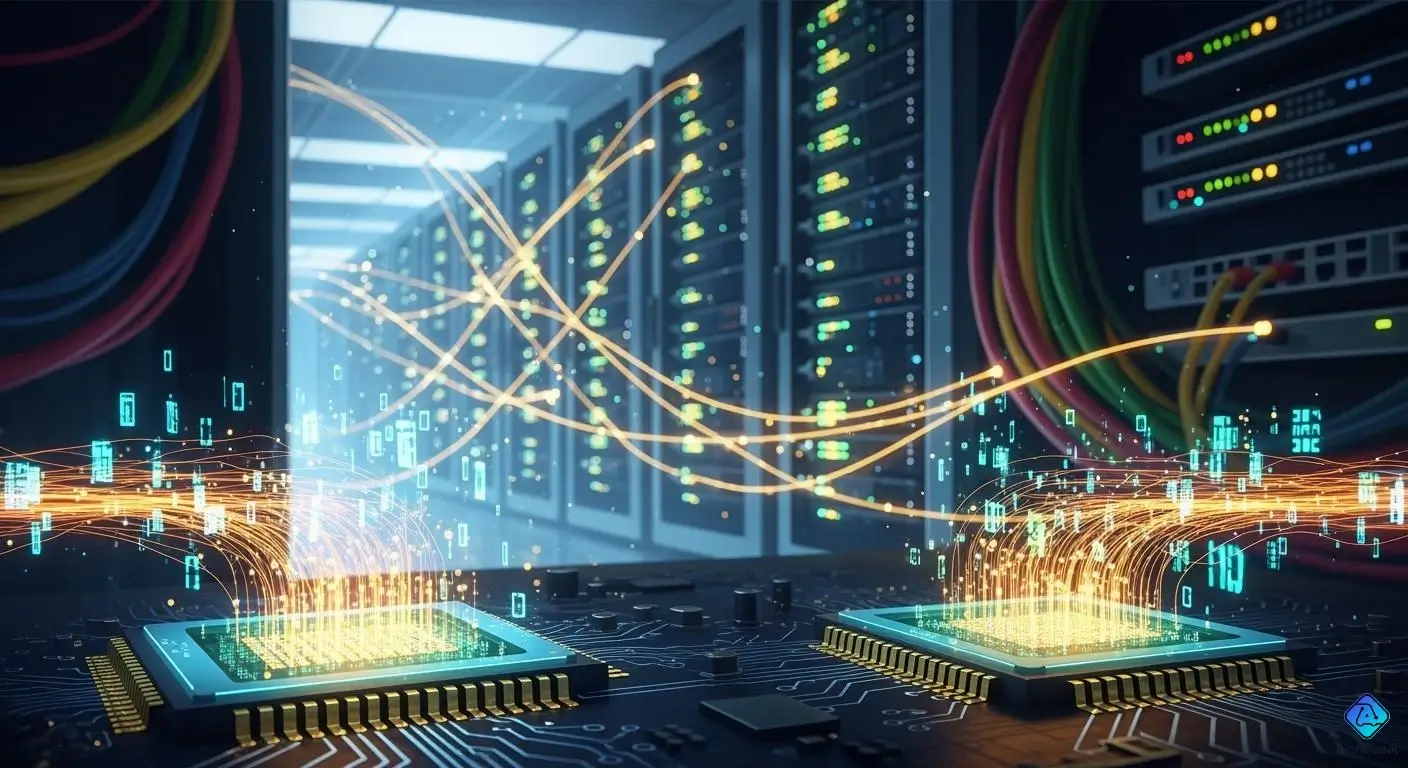
You can use RDMA to move data right between devices’ memory in modern data centers. This skips the CPU and operating system, making data move faster. RDMA helps modern data centers work better and quicker. Look at the table below to see how RDMA changes data centers:
| Metric | Improvement |
|---|---|
| Average Latency | 96.3% reduction |
| Throughput | 95.1% improvement |
| CPU Utilization | 85.6% decrease |
RDMA makes moving data fast and easy in modern data centers. You get better performance and use fewer resources.
Key Takeaways
-
RDMA lets data move straight between devices' memory. This makes data transfer faster and uses less CPU power.
-
Using RDMA can make latency and throughput much better. It helps the whole data center work faster.
-
RDMA is very important for new things like AI and cloud computing. It gives quicker data access and helps manage resources better.
-
To use RDMA, you need special hardware. This includes RDMA-enabled NICs and switches for the best speed.
-
Planning to add RDMA can prepare your data center for the future. It helps your center handle more data as it grows.
RDMA Technology Overview
What Is Remote Direct Memory Access?
Remote direct memory access is a way to move data between computers. It does not slow down your system. RDMA lets you send information right from one device’s memory to another. The CPU and operating system do not need to help with this. This makes your data move faster and uses less power.
RDMA works in a special rdma network. You can reach the memory of other devices directly. Old networks need the operating system for every message. RDMA skips this part. You get lower wait times and better speed. Your apps can talk to each other fast and easy.
RDMA uses some important parts to work. Check the table below to see what helps rdma in a data center:
| Component | Description |
|---|---|
| Host Channel Adapter | Connects your device to the rdma network and changes addresses so your apps can reach memory right away. |
| Subnet Manager | Gives each port its own ID and makes a routing table. This helps connect many devices in a big rdma network. |
| Switches | Moves data between devices, controls traffic, and stops jams. Some switches also help set up the rdma network by having a Subnet Manager. |
How RDMA Works
You use rdma to send data right from one memory to another. The CPU does not need to handle each move. RDMA lets your apps reach the memory of other devices in the rdma network. You skip the wait that comes from using the operating system.
Here is how rdma is not like old ways:
-
RDMA gives you direct access to memory in the rdma network.
-
You do not need the operating system to move messages.
-
RDMA lets you move data from memory to memory, skipping the CPU and TCP/IP stack.
-
You get lower wait times and less CPU use.
-
Old ways like TCP need the operating system and many switches between user and kernel space. This makes things slower.
When you use rdma, your data moves faster and your system works better. You can move more data and keep your resources free for other things. RDMA helps you build a data center that is ready for big jobs and fast links.
RDMA Benefits for Modern Data Centers
Performance and Efficiency
You want your data center to be fast and smart with resources. RDMA helps you do this. With RDMA, data moves right between devices’ memory. The CPU and operating system do not get used. This makes moving data quick and easy.
RDMA gives you less waiting time. The operating system does not slow down each message. You get direct access to data, so apps answer faster. In big companies, RDMA means fewer steps to move data. The CPU works less and things run better. RDMA storage can handle more requests, so you get more data moved.
Tip: If you use machine learning or remote storage, RDMA helps you talk to other devices better. You use less CPU power and your system works better.
Here is a table that shows how RDMA helps with speed, waiting time, and CPU use in big computer groups:
| Benefit | Description |
|---|---|
| Low Latency | You get very low waiting time for messages and shared storage. |
| High Throughput | You move lots of data fast, which helps with science and tests. |
| CPU Efficiency | You free up the CPU by letting RDMA move data, so your system can do more work. |
You can see RDMA helps your data center do big jobs with less waiting and more speed. You get better use of your network and hardware.
RDMA and CPU Utilization
RDMA makes the CPU work less in data centers. You get fast and smooth communication. Your apps run better and you do not have problems from too many things using resources. The CPU can do important jobs, not just move data.
-
RDMA gives you fast and smooth communication.
-
You use less CPU power than old networks.
-
Your system works better, especially for machine learning and remote storage.
Scalability and Resource Optimization
Data centers need to grow and handle more data all the time. RDMA helps you add more devices and users without slowing down. You get fast data access and quick transfers.
RDMA helps big data centers use resources well. You get fast and smooth communication. You use direct memory access and skip the operating system. This makes your network work better. RDMA’s zero-copy feature keeps waiting time and delays low. You get smooth work, even when things are busy like with AI and HPC.
-
RDMA helps you use resources and balance work better.
-
Cloud companies use RDMA to let the CPU do more important things.
-
You get better network use and faster data for everyone.
Here is a table that shows how RDMA is different from old networks:
| Feature | RDMA | TCP/IP Networking |
|---|---|---|
| Latency | Very low (microseconds) | Higher (microseconds to ms) |
| CPU Overhead | Very little | More |
| Hardware Requirements | Special NICs (RoCE) | Regular Ethernet NICs |
You can see RDMA helps you grow and use resources better. You can run big databases, analytics, and cloud storage that need low waiting time. Kubernetes storage with lots of needs also gets help from RDMA.
Note: RDMA helps your data center grow and handle more data without losing speed or wasting resources.
You get direct data access, fast transfers, and better speed. RDMA gets your data center ready for the future and big jobs.
RDMA Protocols and Hardware
Transport Protocols
You need the right transport protocols to use RDMA. These protocols help move data fast and safe. RoCE is a popular protocol. RoCE has two versions. RoCE v1 works at Layer 2. It needs a lossless network. RoCE v2 works at Layer 3. It also needs a lossless setup. For RoCE v1, you must set up global pause or PFC. For RoCE v2, you use PFC with VLANs and DSCP mapping.
| Protocol | Layer | Lossless Requirement | Additional Configuration |
|---|---|---|---|
| RoCE v1 | Layer 2 | Yes | Global pause or PFC |
| RoCE v2 | Layer 3 | Yes | PFC priority-enabled VLAN, DSCP mapping |
You can also use iWARP. It works over normal TCP/IP networks. These protocols use zero copy networking. This means you move data without extra steps. Your system gets faster and works better.
Tip: When you pick a protocol, check if your network has lossless features. This helps you get the best speed.
Hardware Requirements
You need special hardware to use RDMA. The most important part is the rdma-enabled nic. This network card lets you use zero copy networking. It moves data right from one memory to another. The CPU does not need to help each time. This gives you less waiting and more speed.
RDMA NICs have many good points:
-
They skip the CPU, so you get less delay.
-
You can move more data at once.
-
They use RoCE and iWARP for fast networking.
Some RDMA NICs, like ConnectX, support speeds from 10 Gb/s to 400 Gb/s. You can use them for big jobs that need fast data. These cards are good for zero-copy networking. They help with jobs that need lots of bandwidth.
You also need special switches. These switches work with RDMA. They help you build a strong network. They keep your data moving fast and smooth.
| Component Type | Description |
|---|---|
| RDMA-capable NICs | Network cards that support RDMA for direct memory access. |
| Special switches | Switches made to work with RDMA for high-speed networking. |
Note: With the right hardware, you can use zero copy networking. You get the most from your data center.
RDMA Applications in Data Centers
Cloud and AI Workloads
RDMA helps cloud data centers and computers that run AI jobs. It moves data fast between memory and storage. This helps AI jobs get data right away. AI can use the GPU more and the CPU less. RDMA takes care of moving data, so the CPU does not have to. When you use RDMA with S3-compatible storage, you get faster speeds and less waiting. This is important for training big AI models and doing analytics.
-
RDMA lets AI apps reach memory directly, so data streams faster.
-
You get quick networking, so AI jobs finish sooner.
-
RDMA works with RoCE to make a strong Ethernet network for AI.
-
You can use RDMA with your current Ethernet, so you save money and time.
| Improvement Type | Description |
|---|---|
| Reduced Latency | RDMA makes S3 GET and PUT requests faster, which helps train AI. |
| Improved Throughput | You can move more data at once, which is good for AI with lots of GPU use. |
| Efficiency Gains | RDMA lets the CPU focus on training and analyzing AI models. |
Storage Networks
You need storage that is fast and works well in big data centers. RDMA gives you very low waiting and high speed in your storage network. You can move big files fast and keep your system working well. RDMA does not need the CPU to help, which is important for real-time media and high-quality data.
-
RDMA helps storage grow without slowing down.
-
You use your resources better because RDMA moves data, not the CPU.
-
Your storage can hold more media and serve more users.
Virtualization Solutions
RDMA makes virtualization better in powerful computers. It lets virtual machines move data between servers and storage without using the CPU or operating system. This means data moves faster and you wait less. Sageconnect has Mellanox network cards that help move virtual machines easily. RDMA networking for virtual machines lowers extra work, which helps when many users share the system.
| Implementation | Description |
|---|---|
| Azure Stack HCI | Uses RDMA for fast access, so you can run more virtual machines in the cloud. |
| Remote Paging Systems | Uses RDMA for quick transfers, which helps manage memory well. |
You get better use of your resources and more efficiency. Memory virtualization at the kernel level lets you use more physical resources without changing your apps. RDMA helps you run more virtual machines and handle lots of work at once.
You see RDMA changing how data centers work. It gives you faster speeds, lower latency, and better use of resources. As AI and big data grow, you need networks that keep up. Experts say RDMA is key for future data centers. Many companies now move from old Fibre Channel to Ethernet with RDMA. Growth rates show RDMA software could reach over $5 billion by 2033.
-
RDMA helps you handle more data with less delay.
-
You should check your network and plan for RDMA to stay ahead.
| Main Challenge | What to Watch For |
|---|---|
| Implementation steps | Hardware and expertise needs |
Tip: Start learning about RDMA now to keep your data center ready for the future.

Written by Jack Elliott from AIChipLink.
AIChipLink, one of the fastest-growing global independent electronic components distributors in the world, offers millions of products from thousands of manufacturers, and many of our in-stock parts is available to ship same day.
We mainly source and distribute integrated circuit (IC) products of brands such as Broadcom, Microchip, Texas Instruments, Infineon, NXP, Analog Devices, Qualcomm, Intel, etc., which are widely used in communication & network, telecom, industrial control, new energy and automotive electronics.
Empowered by AI, Linked to the Future. Get started on AIChipLink.com and submit your RFQ online today!
Frequently Asked Questions
What is the main advantage of using RDMA in modern data centers?
RDMA lets you move data faster with less waiting. You send data right between devices. This helps data centers do more work and run better.
How does RDMA help with high-speed networking?
RDMA lets you skip the CPU and operating system. You send data fast over the RDMA network. This means you get more speed and less delay.
Do I need special hardware for RDMA?
You need an RDMA-enabled NIC and special switches. These let you use zero-copy networking. Your data center gets more speed and uses less CPU.
Can RDMA improve cloud data centers?
RDMA gives cloud data centers low-latency networking. Your apps get data faster. Big data centers use RDMA to work better and save resources.
What is zero copy networking and why is it important?
Zero copy networking moves data without extra steps. You do not copy data between buffers. This saves time and helps computers and data centers work faster.