Introduction
Are you designing circuits requiring effective electromagnetic interference (EMI) suppression, clean power delivery, or signal integrity improvement? The BLM15PX121SN1D represents Murata Manufacturing's proven solution for high-frequency noise filtering in compact 0402 package, delivering 120Ω impedance at 100 MHz for space-constrained applications in mobile devices, IoT systems, and high-density PCB designs.
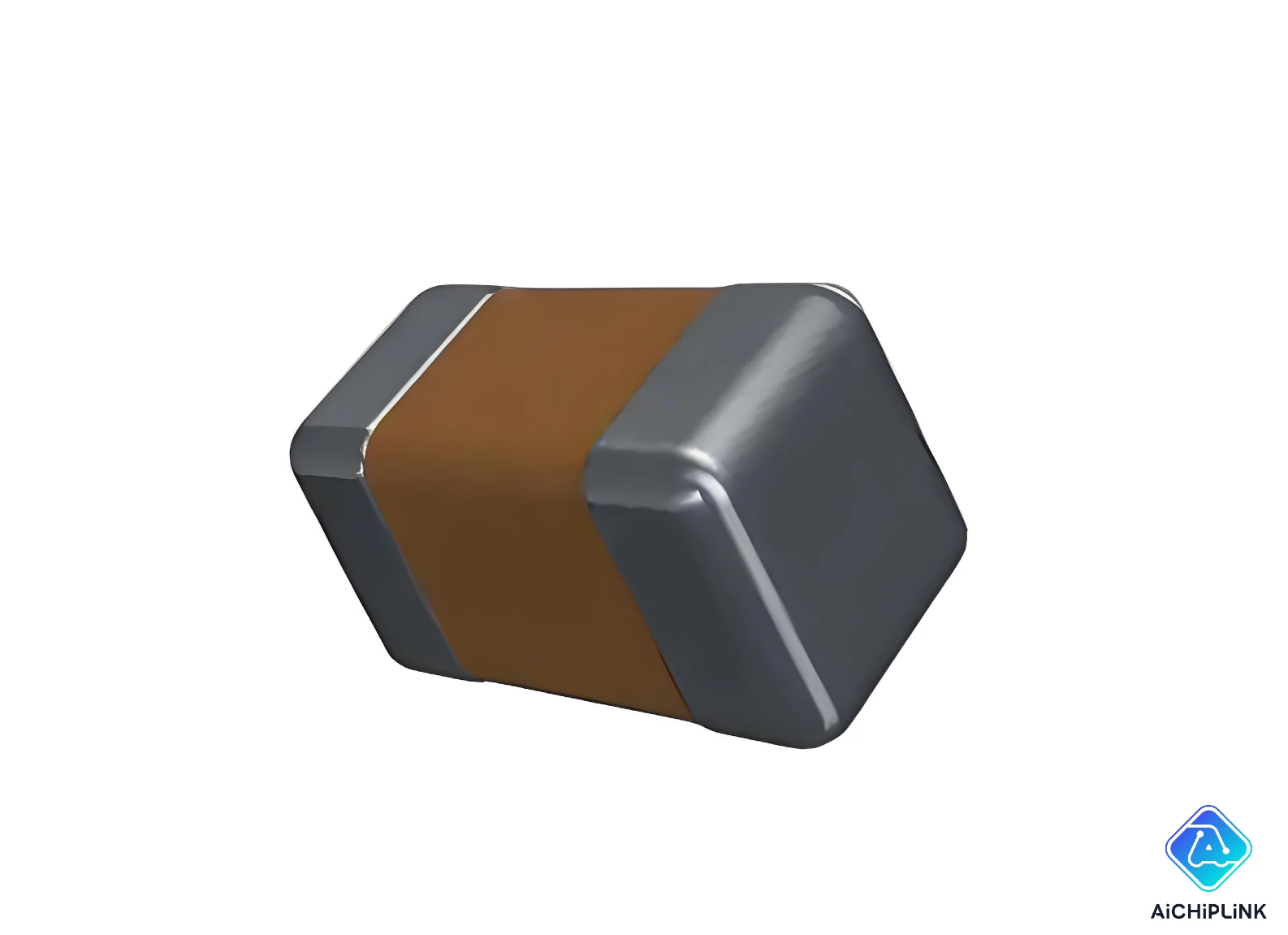
The BLM15PX121SN1D is a chip ferrite bead manufactured by Murata Manufacturing, the world's leading producer of EMI suppression components. This miniature device combines ferrite material with multilayer construction in a 0402 (1.0mm × 0.5mm) surface-mount package, providing effective high-frequency noise attenuation while maintaining low DC resistance. Designed for power supply filtering, signal line conditioning, and EMI/EMC compliance, it enables engineers to suppress unwanted high-frequency noise without significantly impacting DC voltage or low-frequency signals.
According to EMC regulatory requirements (FCC Part 15, CE marking, VCCI), electronic products must meet strict electromagnetic emission limits. The BLM15PX121SN1D addresses these challenges by providing cost-effective, space-efficient noise suppression that helps products achieve compliance while maintaining signal integrity in modern high-speed digital systems.
In this comprehensive guide, you'll discover the BLM15PX121SN1D's specifications, ferrite bead technology fundamentals, EMI filtering performance, proven application circuits, PCB layout best practices, and selection guidance for EMI suppression component design.
BLM15PX121SN1D Technical Overview
The BLM15PX121SN1D is a chip ferrite bead optimized for high-frequency EMI suppression in ultra-compact applications requiring miniature surface-mount components.
Core Specifications Summary
| Parameter | Specification | Significance |
|---|---|---|
| Impedance @ 100 MHz | 120Ω ±25% | Primary EMI filtering specification |
| DC Resistance | 0.15Ω max | Minimal voltage drop |
| Rated Current | 300 mA | Maximum continuous DC current |
| Package Size | 0402 (1.0×0.5×0.5mm) | Ultra-miniature footprint |
| Operating Temp | -55°C to +125°C | Wide temperature range |
| Material | Ferrite (NiZn) | Nickel-Zinc ferrite composition |
Part Number Decoder
Understanding Murata's nomenclature for BLM15PX121SN1D:
- BLM = Chip ferrite bead series
- 15 = Size code (0402 package)
- P = Impedance grade
- X = Special characteristics
- 121 = Impedance value (120Ω @ 100 MHz)
- SN1D = Tolerance and packaging code
Key Advantages
Ultra-Compact Size:
- 0402 package (1.0mm × 0.5mm)
- 70% smaller than 0603 package
- Enables high-density PCB layouts
- Critical for mobile and wearable devices
Low DC Resistance:
- 0.15Ω maximum DCR
- Minimal power loss (P = I²R)
- At 300 mA: 13.5 mW dissipation
- Suitable for power supply filtering
Wide Frequency Response:
- Effective from 10 MHz to >1 GHz
- Peak impedance typically 200-300 MHz
- Attenuates switching noise and harmonics
Ferrite Bead Technology
Understanding ferrite bead operating principles reveals how the BLM15PX121SN1D achieves EMI suppression through resistive loss rather than capacitive filtering.
Ferrite Material Properties
Nickel-Zinc (NiZn) Ferrite:
- Spinel crystal structure
- High resistivity (low eddy current loss)
- Excellent high-frequency performance (>10 MHz)
- Curie temperature >200°C
Loss Mechanism:
- Magnetic domain wall motion
- Converts electromagnetic energy to heat
- Resistive loss (dissipation) at high frequencies
- Minimal energy storage (unlike inductors)
Impedance vs Frequency Characteristics
Impedance Curve (BLM15PX121SN1D):

Ohms
300 |         ╱─────╲
    |        ╱       ╲
    |       ╱         ╲
200 |      ╱           ╲
    |     ╱             ╲
120 |────●               ╲─────
    |   ╱  (100MHz)      ╲
100|  ╱                   ╲
   | ╱                     ╲
 0 |──┬────┬────┬────┬────┬────
   1M  10M 100M  1G  10G
              Frequency

Note: Peak impedance ~200-300 MHz
      Inductive below peak
      Resistive near peak
      Capacitive above peak
Equivalent Circuit Model
Ferrite Bead Equivalent Circuit:

    Rs     Ls
  ──╱╲╲╲──⚪⚪⚪──
  │            │
  │    Rp      │   Cp
  ├───╱╲╲╲────┼──╫─┤
  │            │
 ─┴─          ─┴─

Rs = Series resistance (DCR)
Ls = Series inductance
Rp = Parallel resistance (loss)
Cp = Parasitic capacitance
Electrical Specifications
Let's examine the detailed specifications defining the BLM15PX121SN1D's performance.
Impedance Specifications
| Parameter | Value | Tolerance | Conditions |
|---|---|---|---|
| Impedance @ 100 MHz | 120Ω | ±25% | Per JEITA standard |
| Impedance @ 1 GHz | ~100Ω | - | Typical |
| DC Resistance | 0.15Ω | Maximum | At 25°C |
Impedance Tolerance:
- ±25% standard (90Ω to 150Ω range)
- Tighter tolerances available in other variants
- Design circuits to accommodate tolerance
Current and Power Ratings
| Parameter | Rating | Notes |
|---|---|---|
| Rated Current | 300 mA | Continuous DC |
| Saturation Current (Isat) | ~1A | Impedance drops 30% |
| Power Dissipation | ~200 mW | At 85°C ambient |
Derating:
- At 125°C: Derate to 50-70% of rated current
- Consider worst-case operating temperature
- Monitor component temperature in high-current applications
Physical and Environmental
| Parameter | Specification |
|---|---|
| Package | 0402 (1005 metric) |
| Dimensions | 1.0 × 0.5 × 0.5 mm (L×W×H) |
| Termination | Nickel barrier + tin plating |
| Operating Temp | -55°C to +125°C |
| Storage Temp | -55°C to +125°C |
| Moisture Sensitivity | MSL 1 (unlimited) |
EMI Suppression Performance
How does the BLM15PX121SN1D perform in real-world EMI filtering applications? Let's examine effectiveness and design considerations.
Insertion Loss
Insertion Loss Calculation:
For 50Ω system:
IL (dB) = 20 × log₁₀[(Z_ferrite + 100) / 100]

At 100 MHz (Z = 120Ω):
IL = 20 × log₁₀(220/100) = 6.8 dB

At 300 MHz (Z = 250Ω typ):
IL = 20 × log₁₀(350/100) = 10.9 dB
Typical Attenuation:
- 10 MHz: 3-4 dB
- 100 MHz: 6-8 dB
- 300 MHz: 10-12 dB
- 1 GHz: 8-10 dB
Common Applications
Power Supply Filtering:
DC Power Line with Ferrite Bead:

VCC ──┬─── BLM15PX121SN1D ───┬─── VCC_filtered
      │                      │
     ═╪═ 10μF               ═╪═ 0.1μF
      │   (bulk)             │   (bypass)
     GND                    GND

Purpose: Suppress switching regulator noise
Frequency: 100 kHz - 1 GHz
Attenuation: 10-20 dB typical
Signal Line Filtering:
- High-speed digital signals
- Clock lines (when acceptable)
- I/O interfaces
- Antenna feeds
Frequency Response Analysis
| Noise Source | Frequency | BLM15PX121SN1D Effectiveness |
|---|---|---|
| Switching regulators | 100 kHz - 10 MHz | Moderate (inductive region) |
| Digital clocks | 10 MHz - 500 MHz | ✅ Excellent (resistive peak) |
| RF interference | 500 MHz - 2 GHz | Good (capacitive region) |
| ESD transients | >1 GHz | Moderate (parasitic effects) |
Application Guidelines
Where should you use the BLM15PX121SN1D and how should it be configured? Let's examine proven applications and design rules.
Power Supply Applications
1. Switching Regulator Output Filtering:
Buck Converter with Ferrite Bead:

Regulator ─── L ───┬─── FB ───┬─── Load
              ↓    │          │
             GND  ═╪═        ═╪═
                   │          │
                  GND        GND

L = Inductor
FB = BLM15PX121SN1D
Caps = Bulk + Bypass
Design Considerations:
- Place ferrite bead AFTER bulk capacitor
- Add bypass capacitor after ferrite bead
- Monitor DC voltage drop (I × 0.15Ω)
2. Multiple Rail Filtering:
Single Supply → Multiple Filtered Rails:

VCC_main ───┬─── FB1 ───→ VCC_digital
            │
            ├─── FB2 ───→ VCC_analog
            │
            └─── FB3 ───→ VCC_RF

Each FB = BLM15PX121SN1D
Isolates noise between domains
Signal Line Applications
Clock Line Filtering:
Clock Source with Series Ferrite:

CLK_source ─── FB ─── CLK_load
               │
              ═╪═ (optional)
               │
              GND

⚠️ WARNING: Adds series impedance
Check signal integrity (rise time)
Use only for non-critical clocks
Interface Protection:
- USB data lines (with caution)
- UART/SPI/I2C (low-speed)
- Antenna feeds (RF matching required)
Current Capacity Selection
| Application | Current | BLM15PX121SN1D Suitability |
|---|---|---|
| Low-power sensors | <50 mA | ✅ Excellent (large margin) |
| Digital ICs | 50-200 mA | ✅ Good (within rating) |
| LED drivers | 200-300 mA | ⚠️ At limit (check temp) |
| Motor drivers | >300 mA | ❌ Use higher-current bead |
PCB Design and Layout
Proper PCB design is critical to realize the BLM15PX121SN1D's full EMI suppression capability.
Placement Guidelines
Optimal Placement:
PCB Layout Example:

Power Source    Noise Source     Load
     │               │            │
     ├─ Bulk Cap ─ Ferrite Bead ─┴─ Bypass Cap ─
     │                            │
    GND ──────────────────────── GND

Distance: <5mm between components
Key Rules:
- Place ferrite bead close to noise source
- Add bypass capacitor immediately after ferrite bead
- Keep traces short and direct
- Avoid vias in current path (if possible)
Pad Layout
Recommended Footprint (0402):
Top View:

  ┌────┐  1.0mm  ┌────┐
  │ P1 │←───────→│ P2 │
  └────┘         └────┘
    ↕              ↕
  0.6mm         0.6mm
  (pad width)   (pad width)

Pad dimensions: 0.6mm × 0.5mm
Spacing: 0.4mm between pads
Grounding Practices
Ground Plane Connection:
- Solid ground plane under ferrite bead
- Avoid splits or cutouts under component
- Wide traces for high-current applications
- Multiple vias to ground plane
Ground Loop Prevention:
- Star grounding for sensitive circuits
- Separate digital and analog grounds
- Connect at single point after filtering
Thermal Considerations
Temperature Rise:
ΔT = P × θJA

Where:
P = I² × DCR
  = (0.3A)² × 0.15Ω
  = 13.5 mW

θJA ≈ 200°C/W (typical for 0402)

ΔT = 13.5mW × 200°C/W = 2.7°C
Cooling:
- Good for <300 mA applications
- Monitor temperature in dense layouts
- Provide adequate airflow if needed
Selection and Alternatives
How do you select the right ferrite bead and what are the alternatives to BLM15PX121SN1D?
Murata BLM15P Family
| Part Number | Impedance @ 100MHz | DCR (max) | Rated Current |
|---|---|---|---|
| BLM15PX101SN1D | 100Ω | 0.15Ω | 300 mA |
| BLM15PX121SN1D | 120Ω | 0.15Ω | 300 mA |
| BLM15PX221SN1D | 220Ω | 0.35Ω | 200 mA |
| BLM15PX601SN1D | 600Ω | 0.70Ω | 100 mA |
Selection Criteria:
- Higher impedance → Better attenuation, higher DCR
- Lower impedance → Less voltage drop, lower attenuation
- BLM15PX121SN1D = Good balance for general use
Size Comparison
| Package | Dimensions | BLM Part | Typical Use |
|---|---|---|---|
| 0402 | 1.0×0.5mm | BLM15PX121 | Mobile, wearables |
| 0603 | 1.6×0.8mm | BLM18PX121 | General electronics |
| 0805 | 2.0×1.25mm | BLM21PX121 | Higher current (500mA+) |
Trade-offs:
- Smaller package → Space savings, lower current rating
- Larger package → Higher current, easier assembly
Competitive Alternatives
| Manufacturer | Part Number | Package | Impedance | Notes |
|---|---|---|---|---|
| Murata | BLM15PX121SN1D | 0402 | 120Ω | Industry standard |
| TDK | MPZ1005S121C | 0402 | 120Ω | Direct equivalent |
| Taiyo Yuden | FBMJ1005HS121-T | 0402 | 120Ω | Alternative source |
| Samsung | CIB17P121NC | 0402 | 120Ω | Cost-competitive |
Conclusion
The BLM15PX121SN1D represents Murata's proven solution for EMI suppression in ultra-compact applications, delivering 120Ω impedance at 100 MHz in space-efficient 0402 package. With low DC resistance (0.15Ω), adequate current rating (300 mA), and wide frequency response (10 MHz to >1 GHz), this ferrite bead enables effective noise filtering for power supplies, signal lines, and I/O interfaces while maintaining minimal impact on DC signals and low-frequency operation.
Key Advantages:
✅ Ultra-Compact: 0402 package (1.0×0.5mm) for high-density layouts
✅ Effective Filtering: 120Ω @ 100MHz provides 6-12dB attenuation
✅ Low DC Resistance: 0.15Ω minimizes voltage drop
✅ Adequate Current: 300mA rating for most applications
✅ Wide Temperature: -55°C to +125°C operation
✅ Industry Standard: Broad availability and proven reliability
For EMI/EMC engineers, power supply designers, or system architects requiring effective noise suppression in space-constrained applications, the BLM15PX121SN1D delivers professional-grade EMI filtering at competitive cost, enabling regulatory compliance and signal integrity in modern high-density electronic systems.
Designing EMI-compliant systems? Visit AiChipLink.com for technical resources, application notes, and expert consultation on EMI suppression component selection and EMC design best practices.
Achieve EMC compliance with proven ferrite bead technology—the BLM15PX121SN1D delivers effective noise suppression in miniature footprint.

Written by Jack Elliott from AIChipLink.
AIChipLink, one of the fastest-growing global independent electronic components distributors in the world, offers millions of products from thousands of manufacturers, and many of our in-stock parts is available to ship same day.
We mainly source and distribute integrated circuit (IC) products of brands such as Broadcom, Microchip, Texas Instruments, Infineon, NXP, Analog Devices, Qualcomm, Intel, etc., which are widely used in communication & network, telecom, industrial control, new energy and automotive electronics.
Empowered by AI, Linked to the Future. Get started on AIChipLink.com and submit your RFQ online today!
Frequently Asked Questions
What is BLM15PX121SN1D?
BLM15PX121SN1D is a chip ferrite bead manufactured by Murata Manufacturing for EMI noise suppression.
What are the main specifications of BLM15PX121SN1D?
It provides 120 Ω impedance at 100 MHz, comes in a 0402 (1.0 × 0.5 mm) package, and supports up to 300 mA rated current.
What is BLM15PX121SN1D mainly used for?
BLM15PX121SN1D is used for EMI and high-frequency noise filtering on power lines and signal lines in mobile devices, IoT products, and high-density PCBs.
Is BLM15PX121SN1D an inductor?
No. BLM15PX121SN1D is a ferrite bead, designed to absorb and dissipate high-frequency noise, not to store energy like an inductor.
Can BLM15PX121SN1D be used on high-speed signals?
It is suitable for low-speed or non-critical signal lines, but it is not recommended for high-speed interfaces such as USB, HDMI, or Ethernet due to signal integrity impact.
.png&w=256&q=75)