SMD Resistors Explained Types and Where They Are Used
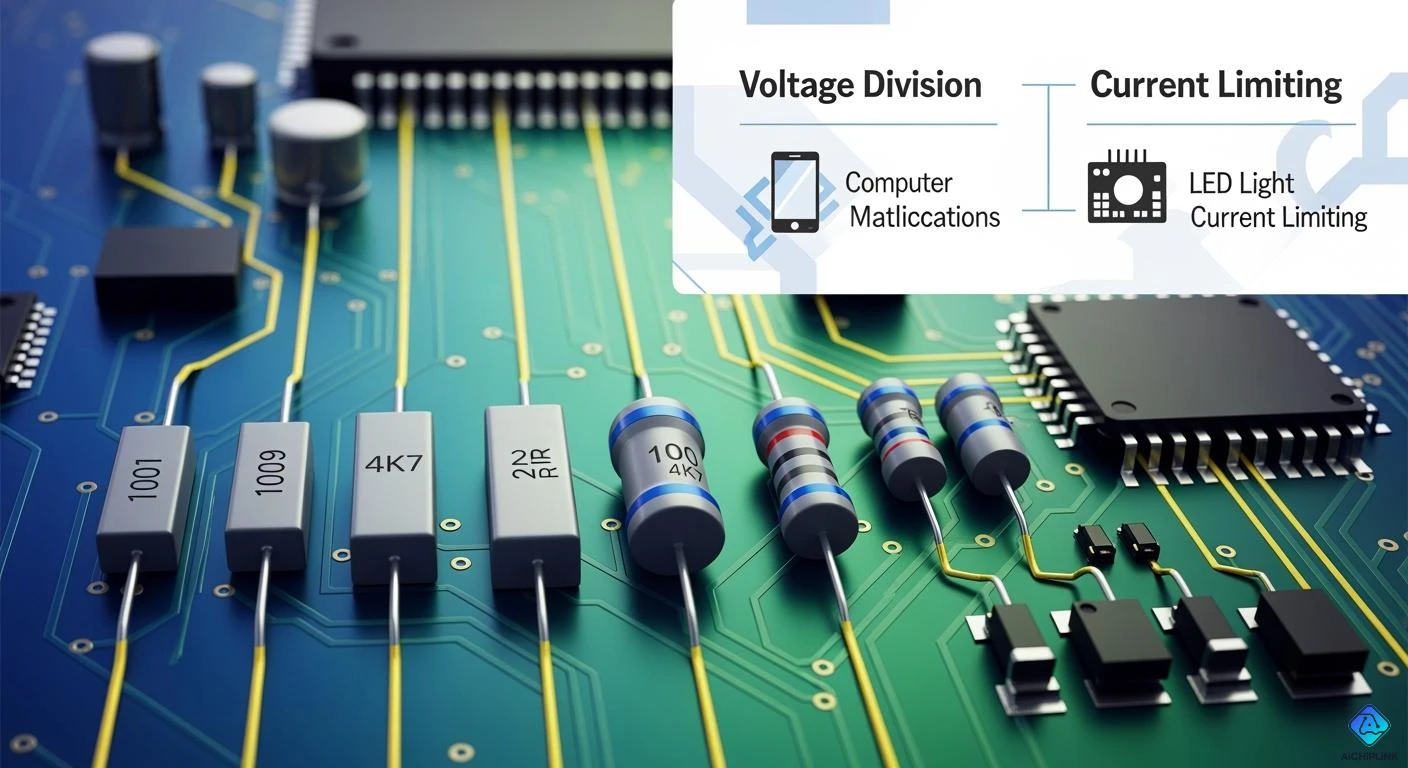
You see SMD resistors in almost all modern electronics. These tiny parts help make small pcb designs. They let circuits fit into small spaces. SMD resistors work well in crowded layouts. This makes smartphones, tablets, and smart gadgets possible. New ways of making them, like laser trimming, make them work better and last longer. People want smaller and more accurate resistors for things like IoT, 5G, and electric cars. You can use SMD resistors for school projects, engineering work, or DIY electronics.
Key Takeaways
-
SMD resistors are very important in electronics today. They help make devices smaller, like smartphones and tablets.
-
It is important to know SMD resistor codes. These codes show resistance values and tolerances. This helps you pick the right resistor.
-
Pick the SMD resistor type that fits your project. Chip resistors are good for general use. Thin film resistors are best for precision.
-
Look at package sizes and power ratings. This makes sure your circuit can handle energy and heat.
-
Automated machines can place SMD resistors quickly. This saves time and makes your projects work better.
What Are SMD Resistors?
SMD Resistor Basics
You use smd resistors in almost every modern electronic circuit design. SMD stands for surface mounted device. These resistors sit directly on the surface of a printed circuit board. You do not need to push wires through holes. SMD resistors use a special code to show their value. For example, a code like "683" means 68,000 ohms. If you see "5R6," it means 5.6 ohms. This system helps you quickly find the right resistor for your project.
SMD resistors are much smaller than traditional resistors. A typical smd resistor can measure just 1.6mm by 0.8mm. You can fit many of them on a small board. This makes them perfect for high-density circuits. You see them in smartphones, laptops, and other tiny gadgets.
Tip: When you work with smd resistors, you can use automated machines to place them on the board. This saves time and makes building high-density circuits easier.
Advantages of SMD
You get many benefits when you use smd resistors in electronic circuit design. Their small size lets you put more parts on a single board. This is important for making devices smaller and lighter. SMD resistors also help your circuits work better. They have short connections, so they reduce unwanted signals and heat. This means your devices can run faster and last longer.
-
Space efficiency: SMD resistors let you build compact and powerful devices.
-
Improved performance: They handle heat well and keep signals clear.
-
Automated assembly: You can use machines to place them, which lowers costs.
-
Flexibility: You can find many values and sizes to fit your needs.
You find smd resistors in almost every device you use daily. They help make your phone, tablet, and computer reliable and efficient.
SMD Resistor Types
You can find many kinds of smd resistors in electronics. Each kind has its own shape, material, and job. You need to know these types to choose the right smd resistor for your project.
Chip Resistors
Chip resistors are the most common smd resistors. They look like small, flat rectangles on circuit boards. You use chip resistors for simple jobs like controlling current, dividing voltage, and protecting circuits. Their flat shape lets you put them close together. You see chip resistors in phones, computers, and smart devices.
Note: Chip resistors are good for automated assembly. Machines can place them fast and accurately.
MELF Resistors
MELF means Metal Electrode Leadless Face. MELF resistors are tiny cylinders. They look different from chip resistors. You use MELF resistors when you need strong parts that do not break easily. MELF resistors handle heat and stress better than chip types. You find them in industrial equipment and car electronics.
-
MELF resistors are very reliable.
-
You use them where vibration or heat is a problem.
Thick Film and Thin Film
You see thick film and thin film smd resistors in many devices. These types use different ways to make the resistive layer.
| Type | Manufacturing Process |
|---|---|
| Thick Film | Screen printing metal powder paste onto a base, then firing to make a thick resistive layer. |
| Thin Film | Putting an ultrathin resistive layer onto a base using vapor deposition. |
Thick film smd resistors cost less and handle more power. You use them in cars and hybrid circuits. Thin film smd resistors give you high precision and stability. You use them in medical devices and laboratory tools.
-
Thick film smd resistors are good for general electronics and car parts.
-
Thin film smd resistors are best where you need accuracy, like test equipment.
| Type of SMD Resistor | Description | Applications |
|---|---|---|
| Thin Film Resistors | Ultrathin resistive layer, high precision and stability. | Laboratory tools, medical devices. |
| Thick Film Resistors | Thicker resistive layer, higher power handling. | Car electronics, hybrid circuits. |
| Metal Foil Resistors | Thin foil of resistive alloy, low temperature change. | Precision current sensing, feedback circuits. |
| Wire-wound Resistors | High purity wire, high power jobs. | Power supplies, motor controllers. |
| Carbon Film Resistors | Cost-effective, higher noise and poorer tolerance. | General consumer electronics. |
Tip: Thin film smd resistors give you better accuracy and less noise. Thick film smd resistors give you more power and lower cost.
Special Types (Current Sensing, High-Power)
You need special smd resistors for jobs like current sensing and handling high power. Current sensing smd resistors have low resistance. You use them to measure current in circuits. High-power smd resistors handle lots of energy in small spaces.
| Feature | Description |
|---|---|
| Low resistance for current sensing | Accurate current detection |
| High power rating | Handles lots of power in small sizes |
| Metal foil construction | Stable and precise resistance values |
| AEC-Q200 compliant | Reliable for car use |
| Lead free | Meets RoHS rules |
| Advanced primary overcoating | Durable and high performance |
You use high-power smd resistors in power supplies, amplifiers, and motor controllers. These resistors work well in circuits with high current or high temperature. You also find them in test equipment and places where you need strong parts.
-
Power supplies and amplifiers need high-power smd resistors.
-
Motor controllers and high voltage test equipment use current sensing smd resistors.
| Application Type | Description |
|---|---|
| High Current Circuits | Handles lots of current, keeps circuits reliable and working well. |
| High Temperature Environments | Good for managing heat, gives a safety margin. |
| High Power Density Applications | Small parts with high power ratings, helps with heat. |
Callout: When you pick smd resistors for special jobs, check the power rating and resistance value. This helps your circuit stay safe and reliable.
You can see that smd resistors come in many shapes and types. Each kind fits a special job. You pick the right smd resistor to make your circuit work well and last longer.
SMD Resistor Identification
Package Sizes (01005, 0603, etc.)
You find many smd resistor package sizes in electronics. Each size changes how much power it can handle. It also affects how well it deals with heat. Small sizes like 01005 and 0201 have less thermal mass. They get hot fast and are best for low-power circuits. Big sizes like 1206, 1812, and 2512 have more ceramic inside. They can handle more power and lose heat better. You must pick the right smd resistor size for your circuit.
| Package Size | Power Rating (W) | Thermal Capacity |
|---|---|---|
| 01005 | 0.031 | Limited thermal mass leads to rapid temperature rise |
| 0201 | 0.05 | Limited thermal mass leads to rapid temperature rise |
| 0402 | 0.063 | Limited thermal mass leads to rapid temperature rise |
| 0603 | 0.10 | Better thermal stability |
| 0805 | 0.125 | Better thermal stability |
| 1206 | 0.25 | More ceramic volume for heat dissipation |
| 1210 | 0.33 | More ceramic volume for heat dissipation |
| 1812 | 0.75 | More ceramic volume for heat dissipation |
| 2512 | 1.0 | More ceramic volume for heat dissipation |

Marking Codes
You can tell what value an smd resistor has by its marking code. These codes use numbers and letters to show resistance and tolerance. The EIA-96 system helps you read values for small sizes like 0603. You see a three-character code on the resistor. The first two numbers match a value in a special chart. The letter tells you the multiplier. You need to look at a chart to know the exact value.
-
SMD resistors use short marking codes.
-
The first two or three numbers are the main value.
-
A letter like M or G shows how big the number is.
-
If the value is under 100 ohms, there may be no letter.
-
Tolerance is shown as F (±1%), G (±2%), J (±5%), or K (±10%).
-
Extra marks can show temperature or date.
-
Three-digit codes: first two numbers are the value, third is the multiplier.
-
Four-digit codes: first three numbers are the value, fourth is the multiplier.
-
"R" means a decimal point for small values.
Selection Tips
You pick smd resistors by checking the size, code, and what your circuit needs. You avoid mistakes by reading the codes carefully. You keep the connections short and put resistors close to important parts. You place matched resistors in a balanced way. You use wide traces and good grounding to stop problems. You pick the right size and use thermal reliefs to help with heat.
| Mistake Description | Implication |
|---|---|
| Misreading SMD resistor codes | Wrong values make the circuit not work right. |
| Confusing 103 vs 1003 | Both mean 10kΩ, but swapping them can cause problems. |
| Wrong Multiplier Interpretation | Reading 220 as 220 ohms instead of 22 ohms is a mistake. |
| Confusing "R" Marking with Tolerance Letter | Mixing these up gives the wrong tolerance. |
| Misreading Due to Flux Residue | Dirty parts make it hard to read codes and swap parts. |
| Measuring Resistors In-Circuit | Other paths can give wrong readings. |
Tip: You check solder joints with X-ray or special cameras. You use good solder paste and set the oven right for strong assembly.
You make your circuit work well by picking the right smd resistor size and reading codes right. You avoid mistakes and make high-power and high-frequency designs better.
SMD Resistor Applications
SMD resistors are used in many electronic devices. You see them in things you use every day, in factories, and in computers. Their small size and good performance make them popular with engineers and designers.
Consumer Electronics
You find SMD resistors inside smartphones, tablets, and smartwatches. Their small shape lets you add more features to tiny gadgets. SMD resistors help control how much current flows. They also split voltage and keep signals steady. For example, they protect LEDs and microcontrollers by stopping too much current. They also set voltage levels and help match impedance in fast circuits. Machines can place SMD resistors quickly because they are flat.
-
Current control keeps parts safe from damage.
-
Voltage division gives each part the right voltage.
-
Signal conditioning helps your device work well.
-
Impedance matching makes wireless signals better.
Note: SMD resistors help make small and fast electronics for everyone.
Industrial and Automotive
You use SMD resistors in machines and cars to manage power and control signals. These resistors can sense current, limit inrush, and act as snubbers. They measure current in batteries and motors. In cars, SMD resistors must handle heat, shaking, and tough places. Good performance is important for safety and long life.
| Specification | Details |
|---|---|
| Package | 0603, 0805, 1206 (strong types) |
| Tolerance | ±1% to ±5% |
| Temperature Coefficient (TC) | ±100 ppm/°C or better |
| Special Requirements | AEC-Q200, -55°C to +155°C, anti-sulfur |
| Key Considerations | Reliability, temperature stability, vibration resistance |
Callout: Pick SMD resistors that pass hard tests for heat, shaking, and wetness in cars.
Computing and Precision Circuits
You see SMD resistors in computers, servers, and lab tools. They help split voltage and protect circuits. For example, two resistors in a row can set a special output voltage. SMD resistors also limit current to keep LEDs and other parts safe. In precise circuits, they set gain in amplifiers and help bias transistors. Their steady values and low noise make them great for fast and accurate systems.
-
Small size lets you build tiny, quick computers.
-
Short leads help with high-frequency signals.
-
High precision keeps your circuits working right for a long time.
| Resistor Configuration | Input Voltage (V_in) | Resistor Values (R1, R2) | Output Voltage (V_out) |
|---|---|---|---|
| Series (200 Ω, 400 Ω) | 6 V | 200 Ω, 400 Ω | 4 V |
Tip: SMD resistors help you make strong, small, and high-speed electronic systems.
SMD resistor uses show how these parts make modern electronics work. You get safe, space-saving designs for phones, cars, and computers.
You make your circuit work better when you pick the right SMD resistor. Every part of the resistor is important.
| Parameter | Why It Matters |
|---|---|
| Package Size | Fits your board and meets power needs |
| Resistance Value | Sets current and voltage levels |
| Tolerance | Affects accuracy |
| Power Rating | Handles heat and energy |
| Temperature Stability | Keeps performance steady |
If you know about resistor types, you can fix problems quickly. You use thin-film resistors for jobs that need to be exact. You use thick-film resistors for normal, everyday circuits. You should learn about new things like very tiny resistors, anti-sulfur types, and laser trimming. These new ideas help you get better results in your projects.

Written by Jack Elliott from AIChipLink.
AIChipLink, one of the fastest-growing global independent electronic components distributors in the world, offers millions of products from thousands of manufacturers, and many of our in-stock parts is available to ship same day.
We mainly source and distribute integrated circuit (IC) products of brands such as Broadcom, Microchip, Texas Instruments, Infineon, NXP, Analog Devices, Qualcomm, Intel, etc., which are widely used in communication & network, telecom, industrial control, new energy and automotive electronics.
Empowered by AI, Linked to the Future. Get started on AIChipLink and submit your RFQ online today!
Frequently Asked Questions
What does SMD stand for?
SMD means Surface Mounted Device. You place these parts directly on the surface of a circuit board. You do not need holes for mounting.
How do you read SMD resistor codes?
You check the numbers and letters printed on the resistor. For example, "103" means 10,000 ohms. If you see "R" in the code, it shows a decimal point.
Why do you use SMD resistors instead of through-hole resistors?
You use SMD resistors to save space and make devices smaller. Machines can place them quickly. You get better performance in high-speed circuits.
Can you solder SMD resistors by hand?
You can solder SMD resistors with tweezers and a fine-tip soldering iron. You need steady hands and good lighting. Practice helps you get better.
Where do you find SMD resistors in everyday devices?
You find SMD resistors in phones, computers, cars, and smartwatches. They help control current, divide voltage, and protect circuits.