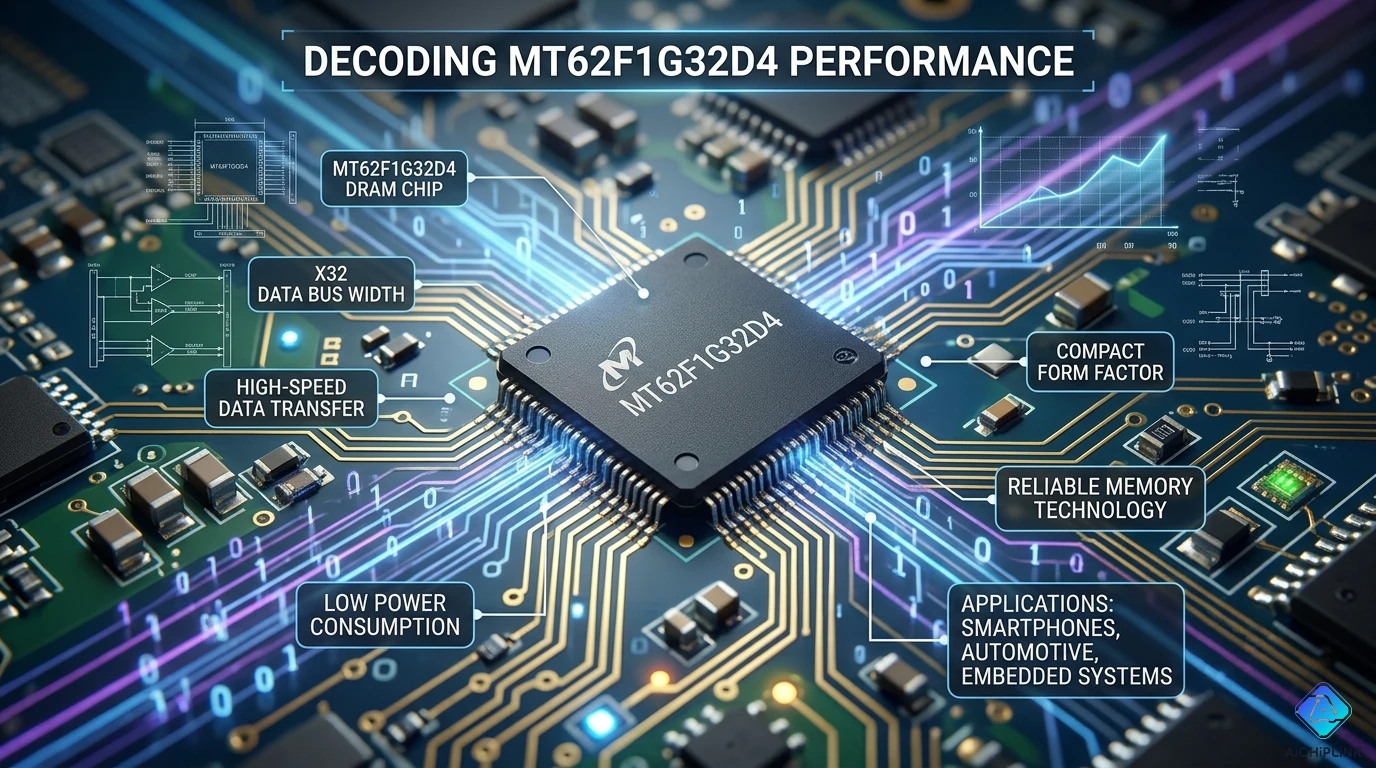
What is MT62F1G32D4?
Simple Answer: MT62F1G32D4 is a Micron LPDDR4X mobile memory chip - the RAM inside your smartphone or tablet.
Quick Facts:
- Manufacturer: Micron Technology
- Type: LPDDR4X (Low Power DDR4X)
- Capacity: 4GB (32Gb) per chip
- Speed: Up to 4266 MT/s
- Used in: Mid-range smartphones, tablets, IoT devices
ELI5 (Explain Like I'm 5): Think of your phone like a desk. MT62F1G32D4 is the desktop surface where you keep papers you're working on right now. Bigger desk = more papers open at once = faster work without shuffling through drawers.
Part Number Decoded
M T 6 2 F 1 G 3 2 D 4
│ │ │ │ │ │ │ │ │ │ └─ 4 = x32 data width
│ │ │ │ │ │ │ │ │ └─── D = Die revision
│ │ │ │ │ │ │ │ └───── 32 = 32Gb density (4GB)
│ │ │ │ │ │ │ └─────── 3 = Package type
│ │ │ │ │ │ └───────── G = Generation
│ │ │ │ │ └─────────── 1 = LPDDR4X variant
│ │ │ │ └───────────── F = Family code
│ │ │ └─────────────── 62 = LPDDR4/4X series
│ │ └───────────────── 6 = Mobile memory
│ └─────────────────── T = Technology (DRAM)
└───────────────────── M = Micron

Result: 4GB LPDDR4X mobile memory, 32-bit interface
What each part means:
- LPDDR4X = Low Power version (uses less battery)
- 4GB (32Gb) = Can hold 4 billion bytes of data
- x32 = 32 data lines working in parallel
How LPDDR4X Memory Works
The Basics: What is Memory?
Memory (RAM) = Your Phone's "Working Table"
Imagine your phone is an office:
- Storage (like microSD) = Filing cabinet (slow to access)
- Memory (RAM) = Desk surface (instant access)
- Processor (CPU) = The worker
When you open an app:
- Phone pulls app from storage (slow - 2 seconds)
- Loads it into memory/RAM (fast - instant thereafter)
- CPU works with data on RAM "desk"
- When you close app, clears that space on RAM
More RAM = More apps open simultaneously without reloading
What Makes it "Low Power"?
3 Power-Saving Tricks:
1. Lower Voltage
Standard DDR4: 1.2V
LPDDR4: 1.1V
LPDDR4X: 0.6V ← MT62F1G32D4 uses this!

Lower voltage = Less electricity = Longer battery
2. Deep Sleep Mode When app minimized but not closed:
- Regular memory: Stays "awake" (uses power)
- LPDDR4X: Goes to "light sleep" (10× less power)
3. Smart Power Gating Turns off unused sections:
If using 2GB out of 4GB:
- Unused 2GB → Powered down completely
- Active 2GB → Full power
- Saves ~30% power vs always-on
How Data Transfers Work
The Highway Analogy:
LPDDR4X at 4266 MT/s = 4,266 million transfers per second
Think of it like a highway:
- Lanes = 32 data lines (x32 configuration)
- Cars = Data packets
- Speed limit = 4266 MT/s
More lanes + Higher speed = More data moved per second

MT62F1G32D4 (LPDDR4X-4266):
32 lanes × 4266 million cars/sec = 17 GB/s bandwidth

vs older LPDDR3-1866:
32 lanes × 1866 million cars/sec = 7.5 GB/s

Result: 2.3× faster data transfer!
Architecture Deep Dive
Memory Organization
How 4GB is Structured:
4GB Total
├─ 4 channels (quad-channel)
├─ 8 banks per channel = 32 banks total
├─ 65,536 rows per bank
└─ 1,024 columns per row

Think of it as:
- 4 separate highways (channels)
- 8 exits per highway (banks)
- Massive parking lot at each exit (rows × columns)
Why This Matters: More banks = More "parking spots" accessible simultaneously = Faster multitasking
Speed Grades Explained
MT62F1G32D4 Speed Options:
| Speed Grade | MT/s | Bandwidth | Use Case |
|---|---|---|---|
| LPDDR4X-3733 | 3733 | 15 GB/s | Mid-range phones |
| LPDDR4X-4266 | 4266 | 17 GB/s | High-end phones ← Most common |
| LPDDR4X-4600 | 4600 | 18.4 GB/s | Flagship phones (rare) |
What MT/s Means:
- MT = Mega Transfers
- 4266 MT/s = 4,266 million data transfers every second
- Higher = Faster app loading and multitasking
LPDDR4X vs Other Memory Types
vs LPDDR4 (Standard)
| Feature | LPDDR4 | LPDDR4X (MT62F1G32D4) |
|---|---|---|
| Voltage | 1.1V | 0.6V ✅ (-45% power) |
| Speed | Up to 3200 MT/s | Up to 4266 MT/s ✅ |
| Battery Life | Baseline | +10-15% longer ✅ |
| Cost | Lower | Slightly higher |
Bottom Line: LPDDR4X = Faster AND more efficient (best of both)
vs LPDDR5 (Newer Generation)
| Feature | LPDDR4X (MT62F1G32D4) | LPDDR5 |
|---|---|---|
| Speed | 4266 MT/s | 6400 MT/s (+50% faster) |
| Power | 0.6V | 0.5V (slightly better) |
| Release | 2017 | 2019 |
| Cost | Lower ✅ | Higher |
| Availability | Widespread ✅ | Flagship only (2026) |
When LPDDR4X Better:
- Budget phones ($200-500)
- Battery life priority
- Sufficient for most apps
When LPDDR5 Better:
- Flagship phones ($800+)
- Heavy gaming/multitasking
- 5G data processing
vs DDR5 (Desktop Memory)
Different Animals:
| Feature | LPDDR4X (Mobile) | DDR5 (Desktop) |
|---|---|---|
| Power | 0.6V (ultra-low) | 1.1V |
| Use | Phones, tablets | PCs, servers |
| Speed | 4266 MT/s | 4800-7200 MT/s |
| Capacity | 4-16GB typical | 8-128GB typical |
| Soldered? | YES (permanent) | NO (upgradeable) |
Key Difference: LPDDR = "LP" = Low Power for battery devices
Why MT62F1G32D4 Matters: Real-World Impact
Battery Life Improvement
Before (LPDDR3) vs After (LPDDR4X):
Same phone, different RAM:
LPDDR3 (older): 10 hours screen-on time
LPDDR4X (MT62F1G32D4): 11.5 hours ✅

Extra 1.5 hours from RAM efficiency alone!
How?
- 45% lower voltage = less power draw
- Deep sleep when idle = 10× less standby power
- Faster = CPU idles sooner = saves energy
App Performance
Loading Instagram (cold start):
LPDDR3: 1.8 seconds
LPDDR4X: 1.1 seconds ✅ (38% faster)
Switching between 10 apps:
LPDDR3: 4 apps reload from storage (slow)
LPDDR4X: All 10 stay in memory (instant) ✅
Why? Faster memory = more data fits = less reloading from slow storage
Gaming Experience
PUBG Mobile (HD graphics, high frame rate):
| Memory Type | Average FPS | Drops Below 30 FPS? |
|---|---|---|
| LPDDR3 | 35-45 | Yes (in battles) ❌ |
| LPDDR4X | 55-60 | Rarely ✅ |
Call of Duty Mobile (max settings):
- LPDDR3: Playable but stutters
- LPDDR4X: Smooth 60 FPS ✅
Why Gaming Benefits:
- Faster RAM = GPU gets textures quicker
- More bandwidth = less frame drops
- Better multitasking = background apps don't slow game
Common Questions Answered
Can I upgrade my phone to LPDDR4X?
No. Mobile memory is soldered permanently to the motherboard.
Unlike desktop PCs, phone RAM cannot be upgraded. It's built into the logic board during manufacturing.
Your options:
- Buy new phone with LPDDR4X
- Live with current RAM
- Use cloud storage to reduce RAM needs
How to check what memory my phone has?
Android:
- Install CPU-Z (free app)
- Open app → Go to "Memory" tab
- Look for: "Type: LPDDR4X" and speed
iPhone:
- Not displayed in settings
- Check Apple specs page for your model
- Or use 3rd-party tools (requires jailbreak)
What to look for:
Good: LPDDR4X-4266 (like MT62F1G32D4)
Okay: LPDDR4-3200
Old: LPDDR3-1866
Is 4GB LPDDR4X enough in 2026?
Depends on usage:
4GB Sufficient for: ✅ Light users (social media, browsing, messaging) ✅ 1-2 apps open at once ✅ Minimal gaming (<5 games installed) ✅ Budget phones ($200-400)
Need 6GB+ for: ❌ Heavy multitasking (10+ apps) ❌ Gaming (PUBG, Genshin, COD) ❌ Video editing ❌ Developer apps
Reality Check (2026):
- 4GB = Entry-level (works but limited)
- 6GB = Sweet spot (most users)
- 8GB+ = Power users / flagships
LPDDR4X vs LPDDR5: Worth upgrading?
Performance gain: 50% faster (6400 vs 4266 MT/s)
Upgrade if: ✅ Buying new flagship phone anyway ✅ Heavy gamer / content creator ✅ Plan to keep 3-4 years (future-proof)
Stay with LPDDR4X if: ❌ Budget phone ($200-600) ❌ Light usage (web, social, messaging) ❌ Sufficient performance now
Price Reality: LPDDR5 phone costs $100-200 more. Ask: Is 50% faster RAM worth $150?
Real-World Examples
Phones Using MT62F1G32D4
2023-2026 Mid-Range Phones (4GB variant):
- Samsung Galaxy A54 (4GB model)
- Xiaomi Redmi Note 12 (4GB)
- Motorola Moto G Power (2024)
- Nokia X30 (4GB variant)
Typical Specs with MT62F1G32D4:
- Price: $250-450
- RAM: 4GB LPDDR4X
- Storage: 64-128GB
- Processor: Snapdragon 600-series, MediaTek Helio
Before/After Comparison
Same User, Different Phones:
Old Phone (2019, LPDDR3):
Daily experience:
- 40 apps installed
- Can keep 5-6 apps in memory
- Switching apps = 2-3 second reload
- Battery: 1 day (8 AM to 8 PM)
- Gaming: Laggy, 30-40 FPS
New Phone (2024, LPDDR4X MT62F1G32D4):
Daily experience:
- 50 apps installed
- Can keep 10-12 apps in memory ✅
- Switching = instant (no reload) ✅
- Battery: 1.5 days (8 AM to 11 PM next day) ✅
- Gaming: Smooth, 55-60 FPS ✅
Verdict: Noticeable quality-of-life improvement
Technical Specifications (Simplified)
Core Specs
Capacity: 4GB (32Gb) Organization: 8 banks × 4 channels = 32 banks Interface: x32 (32-bit data bus) Speed: 3733-4266 MT/s (depending on grade) Voltage: 0.6V (I/O), 1.1V (VDD2) Package: FBGA (Fine-pitch Ball Grid Array)
Performance Numbers
Bandwidth:
- Theoretical max: 17 GB/s (at 4266 MT/s)
- Real-world: ~15 GB/s (accounting for overhead)
Latency:
- CAS Latency: ~15-16 clock cycles
- Random access time: ~50 nanoseconds
Power Consumption:
- Active: ~200 mW (reading/writing)
- Idle: ~50 mW
- Deep sleep: ~5 mW
Future of Mobile Memory
Technology Roadmap
2017: LPDDR4X launched ← MT62F1G32D4 generation
2019: LPDDR5 released (flagships)
2024: LPDDR5X mainstream
2026: LPDDR6 emerging ← We are here
2028: LPDDR6 mainstream (predicted)
When Does LPDDR4X Become Obsolete?
Short answer: Not until 2028-2030
Timeline:
- 2026: Still in mid-range phones (current)
- 2027: Budget tier, LPDDR5 takes mid-range
- 2028: Budget only, LPDDR6 in flagships
- 2029-2030: Phased out, replaced by LPDDR5/6
Verdict: Buying LPDDR4X in 2026 = Good for 2-3 more years
Key Takeaways
What You Need to Remember
✅ MT62F1G32D4 = Micron's 4GB LPDDR4X mobile memory
✅ LPDDR4X = "Low Power" = Better battery life than regular LPDDR4
✅ 4266 MT/s = Very fast for mid-range phones (17 GB/s bandwidth)
✅ "X" suffix = 45% less power consumption (0.6V vs 1.1V)
✅ Cannot upgrade = Soldered permanently to motherboard
✅ 4GB sufficient for light-medium use, 6GB+ better for heavy use
✅ Still relevant in 2026 = Won't be obsolete until 2028-2030
Summary
MT62F1G32D4 is a capable LPDDR4X memory chip that balances performance and efficiency for mid-range smartphones. With speeds up to 4266 MT/s and ultra-low 0.6V operation, it delivers smooth multitasking and extended battery life for everyday users.
Best suited for:
- Mid-range phones ($250-500)
- Light-to-moderate usage
- Battery life priority
- Budget-conscious buyers
Consider LPDDR5 instead if:
- Flagship budget ($800+)
- Heavy gaming/multitasking
- Future-proofing for 4+ years
For more memory technology guides and device recommendations, visit AiChipLink.com.

Written by Jack Elliott from AIChipLink.
AIChipLink, one of the fastest-growing global independent electronic components distributors in the world, offers millions of products from thousands of manufacturers, and many of our in-stock parts is available to ship same day.
We mainly source and distribute integrated circuit (IC) products of brands such as Broadcom, Microchip, Texas Instruments, Infineon, NXP, Analog Devices, Qualcomm, Intel, etc., which are widely used in communication & network, telecom, industrial control, new energy and automotive electronics.
Empowered by AI, Linked to the Future. Get started on AIChipLink.com and submit your RFQ online today!
Frequently Asked Questions
What is MT62F1G32D4 memory used for?
MT62F1G32D4 is a 4GB LPDDR4X DRAM chip by Micron Technology, commonly used in smartphones, tablets, and IoT devices for fast and energy-efficient multitasking.
How fast is MT62F1G32D4?
MT62F1G32D4 supports speeds up to 4266 MT/s, delivering around 17 GB/s bandwidth, which ensures smooth app performance and responsive multitasking in mid-range devices.
Is 4GB LPDDR4X enough in 2026?
4GB LPDDR4X is sufficient for light to moderate usage, such as social media, browsing, and messaging, but heavy gaming or multitasking users should consider 6GB or more.
What is the advantage of LPDDR4X over LPDDR4?
LPDDR4X uses lower voltage (0.6V vs 1.1V), resulting in up to 40–45% lower power consumption while also supporting higher speeds, improving both battery life and performance.
Can MT62F1G32D4 be upgraded or replaced?
No, MT62F1G32D4 is soldered onto the motherboard, so it cannot be upgraded. Users must choose the appropriate RAM capacity when purchasing a device.