Mini LED vs OLED Which Display Technology Wins
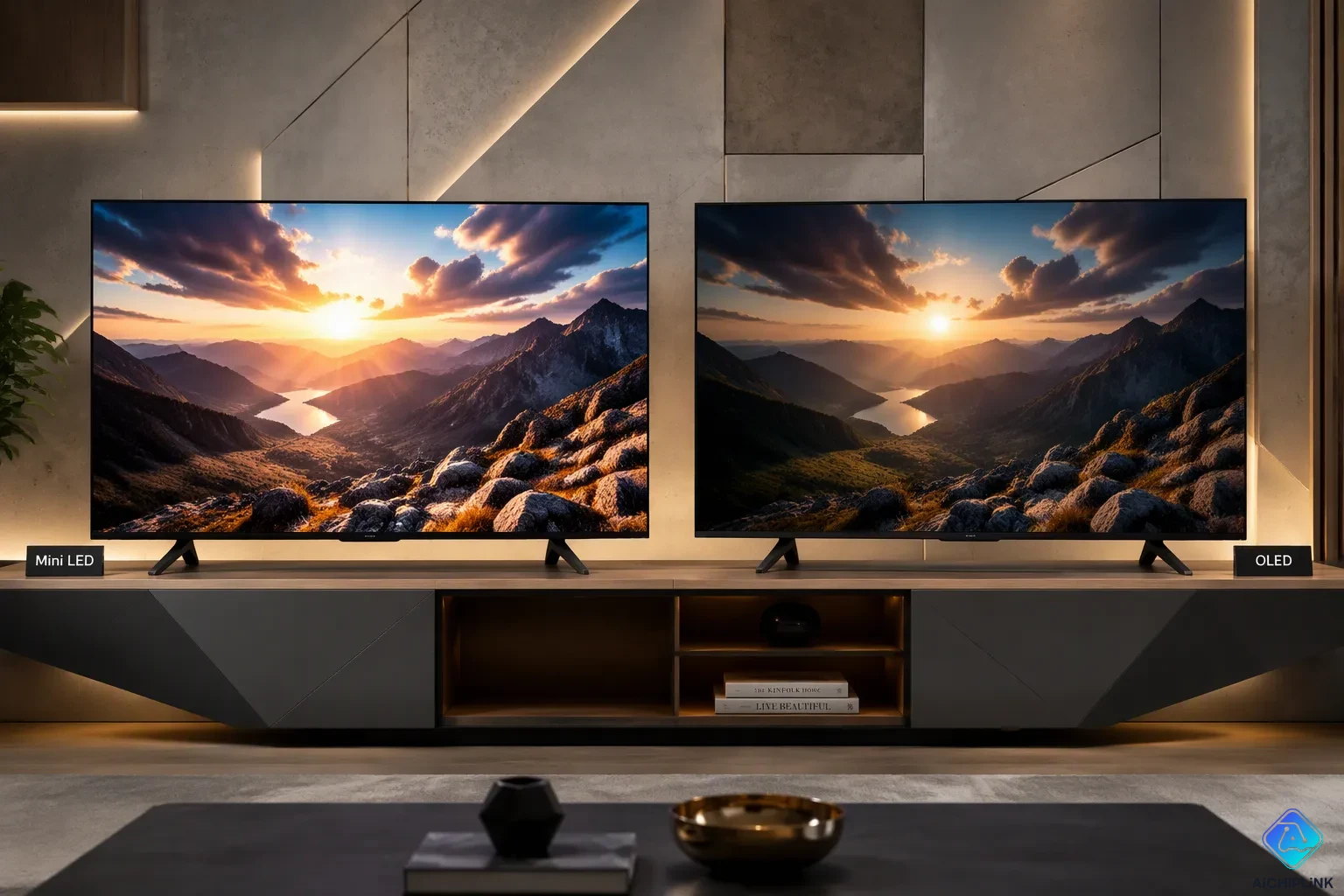
So which one actually wins, Mini LED or OLED? You will not find a single champion here. The right pick hinges on your brightness needs, your room lighting, your viewing habits, and your budget. A sun-drenched living room asks different questions than a dim home theater. This mini led vs. oled matchup covers brightness, contrast, color, response time, viewing angles, and longevity. Each factor carries real weight for real setups. You get a clear verdict at the end, not a hedge. Read on, weigh your own room and routines, and the mini led vs oled decision becomes far simpler than the spec sheets suggest. Every oled panel and every backlight design has trade-offs. Your job is matching those trade-offs to how you actually watch.
Key Takeaways
-
Mini LED displays produce very bright pictures. They work well in sunny rooms and make HDR highlights pop.
-
OLED displays create perfect blacks and deep contrast. They shine in dark rooms and home theaters.
-
OLED offers wider viewing angles and faster pixel response. This means less blur and better motion for sports and gaming.
-
Mini LED has no burn-in risk and lasts long. It is a safe choice for static content like news tickers or desktop work.
-
Your room and habits decide the winner. A bright room favors Mini LED. A dark room favors OLED.
The Difference Between Mini LED and OLED Displays
You cannot judge the mini led vs. oled debate without knowing how each screen makes light. The difference between mini led and oled displays starts at the light source. One technology lights the screen from behind. The other builds light into every dot of the picture.
How Mini LED Works
A mini led display uses thousands of tiny light-emitting diodes as a backlight. These diodes sit in zones behind the screen. Each zone dims or brightens on its own. A blue backlight shines through quantum dot color converters. Those converters turn the blue light into pure green and red. This design gives mini led technology precise control over brightness across the panel.
The mini led vs oled difference in this layer is simple. Mini LED still needs a backlight. Light passes through a liquid crystal layer before it reaches your eyes. Zone control decides how dark a region can get.
How OLED Works
An oled display takes a different path. Each pixel makes its own light. This self-lighting nature of oled means no backlight sits behind the panel. An oled doesn't need a backlight at all. Each pixel switches off completely to produce true black. That is the core of the oled vs mini led difference.
QD-OLED adds one twist. It uses quantum dot color converters, much like mini led and oled panels from Samsung. The self-lighting nature of oled still drives the picture. So the difference between oled and mini led comes down to light source, not color science. The oled vs mini led difference shapes every comparison ahead. Keep this foundation in mind. Brightness, contrast, and motion all flow from it.
Brightness and HDR
Brightness decides how much punch your picture carries. It also decides how well the screen survives a room full of daylight. This is the ground where the mini led and oled fight turns most visible.
Peak Brightness in Mini LED
Mini led tvs produce a wide brightness range through their small LED backlighting. That headroom comes from the backlight design. Thousands of small diodes drive light through the panel, and local dimming zones shape where that light lands. A mini led display can therefore hit hard highlights without washing out the rest of the frame.
OLED tvs take a different route to brightness. Each pixel makes its own light, and Brightness Booster helps push output on some sets. Even so, the raw ceiling stays lower than what mini led technology delivers.
| Aspect | Mini LED | OLED |
|---|---|---|
| Brightness capability | Wide range via small LED backlighting, strong HDR expression | Per-pixel lighting plus Brightness Booster |
| HDR mechanism | High brightness plus local dimming zones | Individual pixel control, deep blacks |
| Bright-room performance | Suits rooms with ambient light | Bright output with outstanding contrast |
| Ideal HDR content | Bright, vivid HDR material | Dark, high-contrast content |
Bright Rooms and Glare
Higher brightness pays off in a sunlit living room. A bright panel fights reflections and keeps shadow detail readable. Strong brightness performance also makes HDR highlights pop, from a sun glint on water to a streetlamp at night.
Mini LED is known for its brightness and ability to enhance HDR with small LED backlighting, whereas OLED is known for creating deep blacks and stark contrast by lighting each pixel individually.
That trade-off explains why many reviewers call mini led better than oled for daytime viewing. Your room decides which strength matters more.
Contrast and Black Levels
Per-Pixel vs Zone Dimming
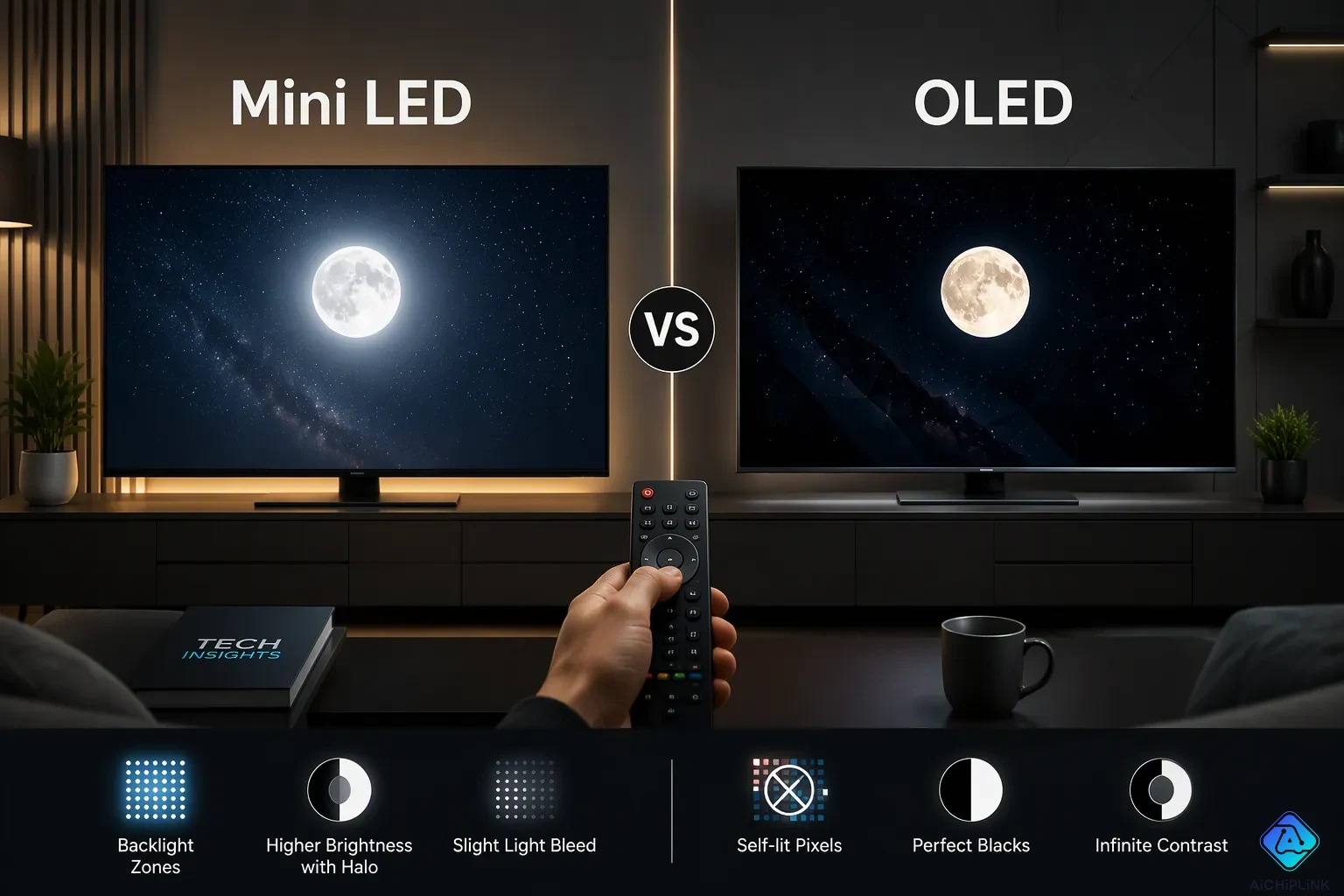
Black levels and contrast decide how deep a picture feels. This is where the mini led vs oled for black levels debate gets interesting. An oled panel controls light at the pixel level. Each pixel switches on and off on its own. That design lets oled pixels turn off completely, so dark scenes show true black with no glow behind them.
A mini led screen works in larger blocks. Mini led uses dimming zones, and each zone covers many pixels at once. The panel dims a whole region instead of a single dot. More dimming zones mean finer control and a better contrast ratio. Fewer zones mean coarser control and a weaker contrast ratio in tricky scenes. This gap sits at the heart of any mini led vs. oled comparison.
Blooming and Halos
Zone-based lighting creates one visible artifact. Light from a bright object bleeds into nearby dimmed areas. You see a soft glow around the object. A white cursor on a black screen shows this clearly. So does a star field at night. The halo comes from the backlight, not from the pixels themselves.
| Aspect | Mini LED | OLED |
|---|---|---|
| Root cause | Backlight light bleeds into neighboring dimmed zones | Not applicable, since pixels emit their own light |
| Why it happens | Some light always passes through the panel | Self-emissive pixels produce true blacks |
| Severity factors | Zone count, local dimming zones algorithm quality, scene complexity | No blooming or backlight bleeding |
| Trade-offs | More zones reduce blooming | Burn-in risk and lower sustained brightness |
The fix depends on hardware and software. A higher zone count shrinks the halo. A smarter algorithm balances brightness against bleed. The mini led and oled gap here favors oled, which shows no blooming at all. Still, the mini led vs oled contest for contrast depends on your content. Dark, moody films reward oled. Bright, busy scenes hide the difference.
Color and Viewing Angles
Color Accuracy at High Brightness
OLED is known for accurate color because every pixel makes its own light. That keeps color pure all across the screen. Samsung OLED panels use this strength for rich, high-contrast content. Deep shadows and bright highlights stay clear and do not wash out.
Brightness can still change the picture. When a panel is pushed hard, color volume can drop. Mini LED keeps color strong at high output because its backlight sends strong light through quantum dot converters. The color difference between mini led and oled shows up in bright, saturated scenes. Mini LED stays punchy at the top end. OLED gives up some peak brightness for better separation in dark scenes. Neither one wins everywhere.
Off-Angle Performance
Where you sit matters as much as what you watch. OLED tvs keep color steady even at extreme angles. Self-emissive pixels remove the color shifting that comes from a liquid crystal layer. You can sit far off to the side and still see the same image.
Mini LED works differently. The LCD layer filters directional light, so color shifts as you move off-axis. Quantum dot layers help, but physics limits the result. Brightness also drops at wide angles, and contrast drops with it. Blooming and halos get worse at those extreme angles.
| Aspect | OLED | Mini LED |
|---|---|---|
| Color shift off-axis | Minimal, pixels emit their own light | Noticeable, LCD layer filters directionally |
| Brightness drop off-axis | Minimal | Noticeable falloff |
| Overall viewing angle | Inherently wide | Improved by diffusion and optical films, still limited |
OLED displays keep color more consistent at extreme angles, while Mini LED displays show some brightness and contrast loss at extreme angles compared to OLED.
The mini led and oled split here favors OLED for group seating. A wide couch full of guests rewards the wider viewing angle.
Response Time and Motion
Pixel Response and Blur
Pixel response time measures how fast a pixel changes from one color to another. A slow pixel leaves a trail behind moving objects. You see this as blur or smearing during fast action. The gap between the two technologies here is large.
| Display Technology | Pixel Response Time (GTG) |
|---|---|
| OLED | 0.01–0.03 ms (e.g., 0.03 ms on ViewSonic VX2738-2K-OLED) |
| Mini LED (IPS panel) | 1–4 ms typical |
An oled pixel switches almost instantly. Each pixel makes its own light, so it needs no backlight to catch up. Fast camera pans and quick cuts stay crisp. A mini led screen relies on an IPS panel, and that panel takes 1–4 ms to change state. The result is still good for most content. Demanding motion scenes reveal the difference.
Gaming Considerations
Gamers feel response time in their hands. A fast pixel response keeps aim tracking smooth and cuts ghosting behind moving targets. OLED panels hold an edge here, and many gaming monitors now use them for that reason. High refresh rates pair well with near-instant pixel switching.
The mini led and oled choice for gaming also depends on brightness and burn-in worries. Mini LED brings strong brightness for daytime play and no burn-in risk from static HUD elements. OLED brings cleaner motion and deeper blacks in dark game scenes. Weigh your play habits against both strengths before you commit.
Burn-In Risk and Longevity
OLED Burn-In Realities
Burn-in happens when a still image leaves a permanent ghost on the screen. Picture a news ticker, a channel logo, or a game HUD that never moves. Those bright, fixed elements wear down the organic pixels unevenly. The damaged pixels grow dim, and the ghost stays visible.
Modern oled tvs fight this problem with pixel shifting, logo detection, and screen refresh routines. Panel makers have also improved the organic materials. Burn-in still exists as a risk, though. Heavy desktop use with fixed toolbars raises the danger. Varied content lowers it. You control much of the outcome through your habits.
Mini LED Durability Over Time
A mini led screen has no organic material in its light source. The backlight diodes age slowly and evenly. Static logos and taskbars pose no burn-in threat. This makes mini led technology a safer pick for desktop work, long gaming sessions, and any setup with fixed on-screen elements.
Lifespan numbers tell a similar story. Samsung estimates OLED panels last 50,000–100,000 hours, roughly 10–20 years of normal viewing. LG claims its panels can reach 100,000 hours, about 30 years of typical home use. Mini LED lands near 100,000 hours under normal use.
| Display Type | Expected Lifespan (hours) | Usage Condition |
|---|---|---|
| OLED | 50,000–100,000 | Typical usage, varies with content and habits |
| Mini LED | ~100,000 | Typical usage |
The mini led and oled comparison on longevity favors mini led for worry-free ownership. An oled panel rewards careful habits with excellent picture quality. Choose based on how you use the screen, not just how long it lasts.
Which Tech Fits Your Setup
Your room and your habits decide this matchup. The mini led vs. oled question has no single answer, but a few clear patterns point most buyers toward one panel type.
Bright Rooms and Big Screens
A sunlit living room rewards raw light output. You fight window glare every afternoon. A mini led tv better than oled handles that fight with headroom to spare. Thousands of small diodes drive the backlight, and dimming zones shape where that light lands. A large mini led screen keeps highlights punchy and shadow detail readable at midday. Big-screen buyers also gain from cost. Mini led tvs scale to very large sizes at prices that undercut rival panels. You get brightness and size together, and that pairing suits family rooms, sports weekends, and open-plan spaces.
Dark Rooms and Monitors
A dim home theater flips the priorities. Here the oled panel shines. Self-emissive pixels yield a superior contrast ratio with deep blacks and vibrant colors, producing lifelike images. True blacks and a wider color gamut create a more vibrant, immersive viewing experience for movies and visual content. Fast response times and higher refresh rates ensure smooth, blur-free motion for action movies and sports. The depth and realism from self-emissive pixels make viewing high-definition movies more immersive than other display technologies.
Monitors follow the same logic. Desktop work in a dark office benefits from precise brightness control. Self-emissive panels allow exact brightness and contrast adjustment, which reduces eye fatigue while keeping image clarity in low light. HDR support such as VESA DisplayHDR TrueBlack 500 delivers ultra-deep blacks and high peak brightness, adding depth and realism as creators intended. No backlight leakage spoils dark scenes, unlike VA panels that leak light and lower accuracy.
"I like the OLED better, especially for daytime but in a dark room the gap closes greatly." — a forum user noting that OLED's advantage over competing technologies narrows in dark-room viewing.
That quote carries a useful lesson. The mini led and oled gap depends on context, not absolutes. One buyer sees a clear winner, and another sees a close call.
The debate has also moved. Years ago, buyers weighed black levels against brightness. Today, both panels deliver strong pictures. The real friction now sits in software and daily use. Menu systems, smart platforms, and setup quirks shape satisfaction as much as panel specs. A clunky interface can annoy you more than a slight contrast difference. Panel performance has become table stakes. Usability decides the rest.
So match the screen to the space. A bright room with a wide couch favors mini led. A dark room, a monitor desk, or a cinema-first habit favors oled. Neither choice is wrong. The right one fits how you live.
Mini LED wins on brightness and worry-free longevity; OLED wins on contrast, viewing angles, and motion. Use this checklist to settle the mini led vs. oled question for your own room.
| Decision factor | Mini LED guidance | OLED guidance |
|---|---|---|
| Room brightness | Best for bright rooms with unshaded windows | Viable if you can manage daylight |
| Primary use | Daytime sports, news, static content | Dark-room movies, cinematic gaming |
| Screen size | Very large sizes stay affordable | Excellent at common sizes |
| Budget | Strong value for secondary rooms | Premium justified for movie quality |
Weigh these four factors, and the mini led and oled gap narrows to your own habits. Either panel can win. Your room and priorities pick the champion.

Written by Jack Elliott from AIChipLink.
AIChipLink, one of the fastest-growing global independent electronic components distributors in the world, offers millions of products from thousands of manufacturers, and many of our in-stock parts is available to ship same day.
We mainly source and distribute integrated circuit (IC) products of brands such as Broadcom, Microchip, Texas Instruments, Infineon, NXP, Analog Devices, Qualcomm, Intel, etc., which are widely used in communication & network, telecom, industrial control, new energy and automotive electronics.
Empowered by AI, Linked to the Future. Get started on AIChipLink and submit your RFQ online today!
Frequently Asked Questions
Is Mini LED brighter than OLED?
Yes, in most cases. Mini LED produces a wide brightness range through its small LED backlighting. OLED relies on per-pixel lighting plus Brightness Booster. You get stronger HDR highlights and better glare handling from the brighter panel.
Does OLED burn-in still happen?
It can. Fixed logos, tickers, and desktop toolbars wear pixels unevenly over time. Modern sets add pixel shifting and logo detection to reduce the risk. Varied content and lower brightness settings protect the panel.
Which panel suits gaming better?
OLED wins on motion. Pixel response lands near 0.01–0.03 ms, so fast action stays crisp. Mini LED takes 1–4 ms on an IPS panel. Pick mini LED if static HUDs worry you, since it carries no burn-in risk.
Do viewing angles really differ?
They do. OLED keeps color and brightness steady from the side. Mini LED loses brightness and contrast off-axis. A wide couch full of guests favors OLED. A single centered seat narrows the gap.
How long does each panel last?
Samsung estimates OLED panels last 50,000–100,000 hours. Mini LED lands near 100,000 hours under normal use. Both figures assume typical viewing habits. Your content and brightness settings shift the real number.