Diodes Inc. Releases Multi-Phase SPI Boost Controller for Auto Lighting
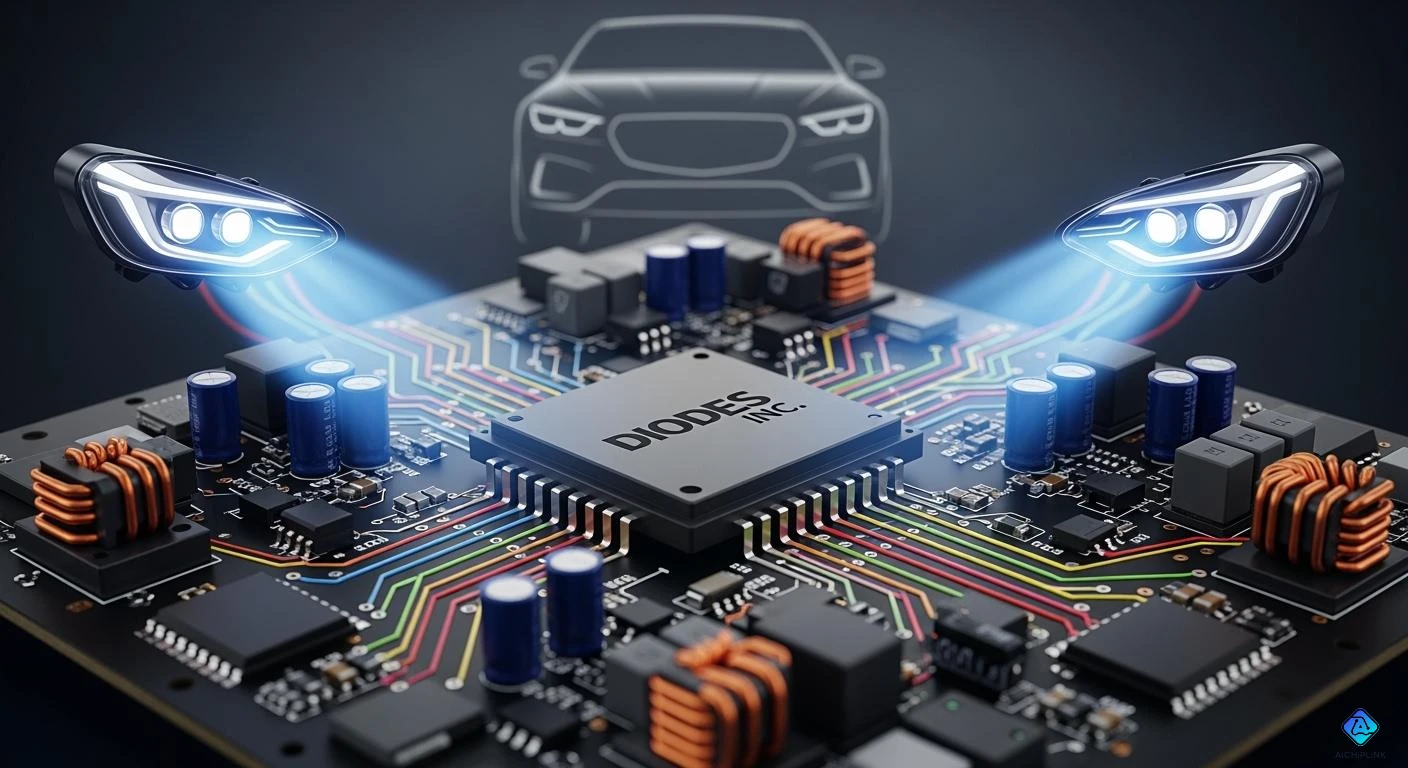
The AL8859Q Multi-Phase SPI Boost Controller from Diodes Inc. is a new product for car lights. The car lighting market is getting bigger. This is because people want lights that work well and keep them safe.
| Year | Market Size (USD Billion) | CAGR (%) |
|---|---|---|
| 2024 | 35.82 | N/A |
| 2035 | 49.21 | 2.93 |
This controller uses a multi-phase design and has smart checks. It gives steady power and strong protection. These features help car makers follow tough EMI and safety rules for new headlights.
Key Takeaways
-
The AL8859Q Multi-Phase SPI Boost Controller helps car lights work better. It can reach up to 95% efficiency, so less energy is wasted.
-
Engineers can set the AL8859Q to change voltage and current limits. This lets them use it in many different car models.
-
The controller follows strict EMI rules. This means it will not mess with other car electronics. This helps keep cars safer.
-
Its multi-phase design gives power to many outputs. So, it works for many car lights, like headlights and turn signals.
-
The AL8859Q is small and has built-in features. This makes it easy to install and a good choice for new car lighting systems.
Multi-Phase SPI Boost Controller Overview
AL8859Q and AL8853AQ Product Line
Diodes Inc. made the AL8859Q and AL8853AQ for new car lights. Each multi-phase spi boost controller works with advanced LED headlights. These controllers use a special design to share power evenly. This keeps the system steady. The AL8859Q and AL8853AQ are for cars that need strong lighting. They help car makers build lights that work well and last long.
The AL8859Q is a multi-phase spi boost controller with programmable SPI control. Engineers can adjust voltage and current limits with this feature. The AL8853AQ has a wide input range and high output voltage. Both products let car makers use flexible designs for different cars.
Key Technical Specs and Efficiency
The AL8859Q and AL8853AQ have strong technical features for car lights. Their input voltage range and power output fit many types of cars.
-
The AL8853AQ works with input voltages from 4.5 V to 65 V.
-
It can give output voltages up to 100 V.
-
The AL8859Q supports input voltages from 4.5 V to 60 V.
The multi-phase spi boost controller design helps make the system efficient. The AL8859Q can reach up to 95% efficiency. This means less power is wasted in car lights. The built-in design needs fewer extra parts. This makes the boost system more reliable and simple to set up.
Both controllers help stop electromagnetic interference. The AL8859Q meets CISPR 25 Class 5 EMI standards. This means the multi-phase spi boost controller will not mess with other car electronics. The boost design and SPI programmability help engineers make lighting safer and better.
Note: The AL8859Q and AL8853AQ are a good base for new car lights. Their multi-phase spi boost controller technology helps make designs that are efficient, safe, and flexible.
Headlight Control Unit Features
Power Density and Multi-Phase Design
The AL8859Q helps headlight control units work better. It makes power stronger and more steady. The multi-phase design gives many good things to car lights. Engineers can pick power from 100W to 400W for different cars. The system can be up to 95% efficient. This means it saves energy and does not get too hot. The controller keeps working well even when cars face tough conditions. The multi-phase setup is the main part for steady voltage in smart headlights. It works with high beams, low beams, daytime running lights, turn signals, fog lights, and cornering lights. These features help car makers build headlights that last and work great.
SPI Control and System Integration
SPI control is important for putting car lighting systems together. The AL8859Q uses SPI to talk to other devices and control lights. The table below lists the main good things about SPI control in cars:
| Advantage | Description |
|---|---|
| Simplified Design | SPI is simple, so it makes hardware and software easier to build. |
| High-Speed Data Transfer | SPI can send data very fast, up to 50 MHz, which is good for car lights. |
| Flexible Architecture | The master-slave setup lets many devices connect, so systems work together better. |
| Precise Timing Control | SPI gives exact timing, which is important for controlling lights. |
| Low Latency | SPI sends and gets data at the same time, so lights respond fast. |
| Minimal Overhead | SPI moves data well, so it works great in cars with limited resources. |
SPI control helps engineers make sure lights work at the right time and react quickly. This makes car lights work better and easier to connect with other car systems.
EMI and Functional Safety
The AL8859Q controls electromagnetic interference by using spread-spectrum modulation. This spreads noise over many frequencies. It helps the controller meet CISPR 25 Class 5 EMI rules. By lowering peak noise, the system needs fewer extra filter parts. This makes the headlight unit more reliable and saves energy. For safety, the AL8859Q has checks and protection features. These let the system find and fix problems right away. This makes car lights safer and less likely to fail. The table below shows the standards the controller meets:
| Standard Type | Compliance Level |
|---|---|
| EMI | CISPR 25 Class 5 |
| Safety | Functional Safety Capabilities |
These features make sure the headlight control unit is safe, works well, and gives good light for new cars.
Automotive Lighting Benefits
Enhanced LED Performance
Car lighting keeps getting better. The AL8859Q boost controller helps LED lights work well. It gives high efficiency and steady power. Engineers see good results in tough car lighting systems. The controller keeps voltage and current steady. This helps LED headlights shine bright and last long. It supports advanced features like adaptive beams and matrix LED headlights. These upgrades make driving safer at night and in bad weather.
The AL8859Q can reach 95% efficiency. This means less energy is wasted and the system stays cool. The controller gives exact voltage, so LED drivers get steady power. Its small size fits easily in modern cars. It also helps make strong solder connections. The table below shows important reliability facts for car LED lighting:
| Metric | Description |
|---|---|
| Power Output | Can drive 100W to 400W of output power. |
| System Efficiency | Gets about 95% efficiency, so less energy is wasted. |
| Thermal Management | Gives balanced heat and very low ripple current. |
| Voltage Accuracy | Has voltage accuracy of ±0.5% at 50V (typ.), so LED drivers get steady power. |
| Packaging | Comes in a small 4mm x 4mm package, so soldering is reliable in cars. |
Reliability and Flexibility
Reliability is very important for car lights. The AL8859Q boost controller is trusted for strong reliability. It manages heat well and keeps ripple current low. Engineers know it works well in tough places. Its voltage accuracy and small size make car LED lights more reliable.
Flexibility is also needed for car lights. The AL8859Q works with different car power systems and lighting setups. Its multi-phase design lets three or four devices work together. The controller supports a wide input voltage range. It works with 5 V, 12 V, 24 V, and 48 V systems. Engineers use the SPI digital interface to set output voltage, switching frequency, current limits, and protection levels. These features help car makers build many kinds of car LED lights.
-
Multi-phase design lets three or four devices work together.
-
Wide input voltage range (4.5 V to 60 V) fits different car power systems.
-
Programmable SPI interface lets engineers set voltage, frequency, current limits, and protection levels.
Car lighting systems are now more reliable and flexible. Drivers get brighter and safer headlights. Car makers build lights that last longer and work with new technology.
Automotive Applications
Matrix LED Headlights
Matrix LED headlights help drivers see better at night. The AL8859Q multi-phase SPI boost controller gives steady power to these headlights. It also lets engineers control the lights exactly how they want. This controller works with voltages from 4.5V to 60V. It can be up to 95% efficient, so it saves energy. The controller can use 2, 3, or 4 phases to handle more power. Engineers can use the SPI interface to set voltage, frequency, and current for each light part. The controller meets EMI rules for cars and uses spread-spectrum modulation to lower noise. It has built-in OTP memory, so it is more reliable and does not need extra microcontroller help.
| Feature | Description |
|---|---|
| Input Voltage Range | 4.5V–60V |
| Efficiency | Up to ~95% |
| Phase Operation | Supports 2–4-phase operation |
| Power Output | 100W–400W systems |
| Voltage Accuracy | ±0.5% at 50V (typ.) |
| SPI Control | Programmable for precise tuning |
| EMI Compliance | Meets CISPR 25 Class 5 requirements |
| Built-in OTP Memory | Enhances reliability |
| Spread-Spectrum Modulation | Reduces need for bulky external filtering |
Adaptive Driving Beam Systems
Adaptive driving beam systems help drivers see well but do not blind others. The AL8859Q multi-phase SPI boost controller gives quick and exact control for these lights. It helps with high beams and low beams by giving steady voltage first. The SPI interface lets engineers dim lights and switch modes fast. This controller keeps the light even and meets car safety rules. The multi-phase design helps handle lots of power and keeps the system cool. The controller is very reliable, so it is good for adaptive front lighting systems.
Note: The AL8859Q lets engineers make adaptive driving beam systems that change fast for road and traffic.
Other Automotive LED Lighting Uses
The AL8859Q works in many car lighting systems. It fits in headlight control units for new cars, even electric ones. The controller helps with daytime running lights, turn signals, fog lights, and cornering lights. It also works in adaptive front lighting systems. The multi-phase SPI design gives steady power and control for each light. The table below shows where it is used:
| Compatible Uses | Description |
|---|---|
| Headlight Control Units | Used in modern vehicles, including EV platforms |
| Adaptive Front Lighting Systems | Functions as a constant-voltage pre-stage |
| Daytime Running Lights | Integrated for daytime visibility |
| Turn Indicators | Supports signaling functions |
| Fog Lights | Enhances visibility in foggy conditions |
| Cornering Lights | Provides extra illumination when turning |
The AL8859Q multi-phase SPI boost controller gives safe and flexible solutions for all these car lights. It helps car makers build lighting systems that work well and last long.
Diodes keeps making new ideas for car lights. Their multi-phase SPI boost controller helps headlights use less energy and work better. Engineers notice the system is more reliable and safe. It also meets EMI rules. The AL8859Q lets engineers control many car systems easily. Some main features are:
-
High-efficiency multi-phase boost control for modern LED lighting
-
Wide input voltage range for versatile automotive use
-
Programmable control for adaptation across platforms
-
Integrated diagnostics for robust operation and safety
Diodes gives engineers tools to make better car lights with exact control. Car experts should look at these products for their next projects.

Written by Jack Elliott from AIChipLink.
AIChipLink, one of the fastest-growing global independent electronic components distributors in the world, offers millions of products from thousands of manufacturers, and many of our in-stock parts is available to ship same day.
We mainly source and distribute integrated circuit (IC) products of brands such as Broadcom, Microchip, Texas Instruments, Infineon, NXP, Analog Devices, Qualcomm, Intel, etc., which are widely used in communication & network, telecom, industrial control, new energy and automotive electronics.
Empowered by AI, Linked to the Future. Get started on AIChipLink and submit your RFQ online today!
Frequently Asked Questions
What is the main advantage of a multi-phase SPI boost controller in automotive lighting?
A multi-phase SPI boost controller makes power stronger and more efficient. It spreads current so each part gets the same amount. This design keeps the system cooler and helps car lights last longer.
How does the AL8859Q help meet automotive EMI standards?
The AL8859Q uses spread-spectrum modulation to lower noise. This feature spreads out electromagnetic noise so it is not too strong. It helps the system follow CISPR 25 Class 5 EMI rules.
Can engineers program the AL8859Q for different car models?
Yes. The AL8859Q has a programmable SPI interface. Engineers can set voltage, current limits, and protection features. This lets the controller work in many kinds of cars.
Which automotive lighting applications use the AL8859Q?
The AL8859Q is used in matrix LED headlights, adaptive driving beam systems, daytime running lights, turn signals, fog lights, and cornering lights. It works in both regular and electric cars.