What is RF Technology and How Does It Work
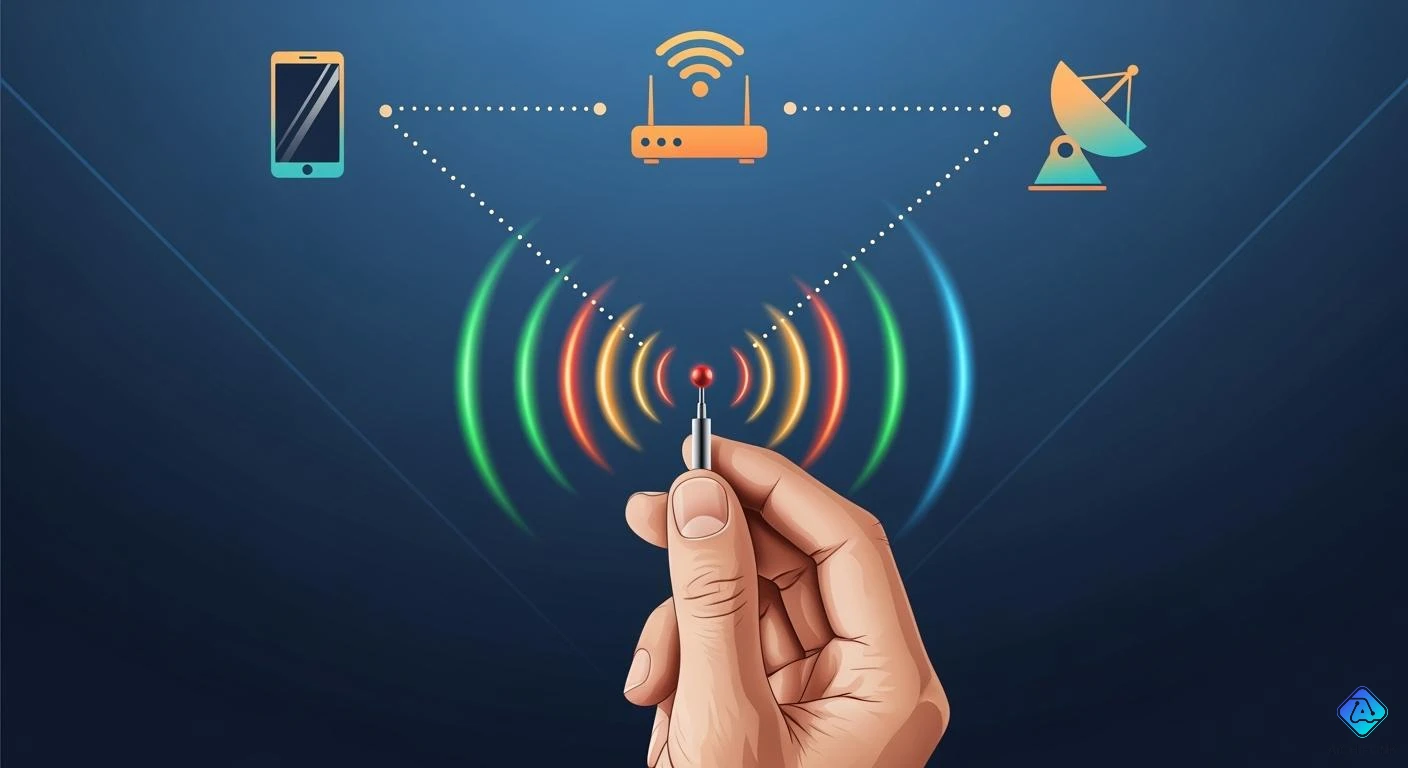
You use rf technology every day. You may not notice it. This technology sends signals with radio waves. It also receives signals with radio waves. You use rf technology to connect to Wi-Fi. You use it to make phone calls. You use it to heat food in a microwave oven. It helps you find objects with devices. It helps you measure distances with devices.
| Function | Description |
|---|---|
| Heating | You heat food in microwave ovens. You use rf in some medical treatments. |
| Sensing | Devices find objects by looking at rf signals. |
| Information Transfer | You use Wi-Fi, cell networks, and Bluetooth to talk and share data. |
Key Takeaways
-
RF technology sends and gets signals with radio waves. It does not need wires. This lets you use Wi-Fi, call people, and use many gadgets.
-
Modulation is important to know. It helps send your voice or data in a clear way. This makes talking and sharing data better with RF signals.
-
Antennas are very important in RF technology. The right antenna and where you put it can make signals stronger. It also helps signals reach more places.
-
Interference can mess up RF signals. Keep your devices away from big electronics and thick walls. This helps stop problems with signals.
-
Learn about rules and safety steps. Following these rules keeps RF technology safe and working well.
RF Technology Basics
What is RF Technology
You use rf technology when you send or get information with radio waves. This technology lets you talk on your cell phone. You can listen to the radio or use Wi-Fi because of it. Rf technology sends signals through the air. It does not need wires. You can find rf in many devices at home, school, and hospitals.
Rf technology is different from other wireless ways. For example, rf uses radio waves. Infrared (IR) uses light you cannot see. Rf can go through walls and travel far. IR cannot do this. Here is a simple chart:
| Technology | Transmission Method | Susceptibility to Interference |
|---|---|---|
| RF | Uses radio waves | Susceptible to RF interference |
| IR | Uses infrared light | Not susceptible to RF interference |
Rf technology uses many frequencies. Each one has its own job. For example, very high frequency (VHF) is for FM radio. Ultra high frequency (UHF) is for mobile phones and Wi-Fi. Here are some common frequency bands and what they do:
| Frequency Band | Frequency Range | Typical Applications |
|---|---|---|
| Extremely Low Frequency (ELF) | 22 Hz | Underwater communication, pipeline transportation |
| Medium Frequency (MF) | N/A | AM radio broadcasting |
| High Frequency (HF) | N/A | Shortwave radio, aviation communications |
| Very High Frequency (VHF) | N/A | FM radio, similar to HF applications |
| Ultra High Frequency (UHF) | N/A | Mobile phones, Wi-Fi, GPS |
| Super High Frequency (SHF) | N/A | Wireless communications, satellite links |
| Extremely High Frequency (EHF) | 1-10 mm | Terrestrial communication, astronomy, remote sensing |
Key Features of RF
Rf technology has many important features that help you every day:
-
You can use rf to send signals far away.
-
Rf technology uses electromagnetic frequency. This makes it different from other ways to send information.
-
You can use rf in many wireless systems like cell phones, Bluetooth, and Wi-Fi.
-
Rf systems can be hard to build. They must work with many frequency bands and weak signals.
-
Modulation is a big part of rf technology. It helps you send more information and keep signals clear.
Rf systems use many parts to work well. Each part has a special job. Here is a table that shows some main parts and what they do:
| Component | Function |
|---|---|
| RF Filters | Let good frequencies pass and block bad signals to stop interference. |
| Low-Noise Amplifiers | Make weak signals stronger and keep noise low. This is important for receivers and long-range systems. |
| Power Amplifiers | Make signals stronger for sending. Pick these based on how well they work. |
| RF Switches | Move signals between different paths or antennas. How they work can change performance. |
| Mixers and Oscillators | Change signals and make steady rf carrier signals. This helps with good communication. |
| Couplers, Splitters, and Attenuators | Sample, split, or lower rf signals. These are used in many rf systems. |
| RF Connectors, Cables, and Adapters | These are needed for good rf performance. How good they are depends on their quality and specs. |
Tip: You can find rf in many places. It helps you use your phone, listen to music, and heat your food. When you use wireless devices, you use rf technology.
How RF Works
Electromagnetic Waves
You use rf every day, but you might not know how it works. Rf uses electromagnetic waves to send and get signals. These waves move energy very fast. They travel at the speed of light, which is about 186,000 miles each second. You do not need wires for these waves to move. They can go through walls, air, and even space.
Electromagnetic waves have special traits that help rf work:
-
They move fast, so you get signals right away.
-
They do not need anything to travel through, so rf works almost anywhere.
-
Frequency tells how many waves pass a spot each second. You measure this in Hertz (Hz).
-
Wavelength is the space between the tops of waves. It can be short or long.
-
The electric and magnetic fields are always at a right angle to the way the wave moves.
This is how rf signals travel from one place to another:
| Step | Description |
|---|---|
| 1 | A transmitter makes radio waves and sends them to an antenna. |
| 2 | The antenna sends these waves out into the air. |
| 3 | Another antenna catches the waves and sends them to a receiver. |
| 4 | The receiver works with the signals. Different frequencies let rf send information near or far. |
Note: Light from the sun is also an electromagnetic wave. It takes about 8 minutes to reach Earth. This shows how fast these waves move.
Modulation and Transmission
Rf technology uses modulation to send messages. You cannot send your voice or data as a radio wave by itself. Modulation changes a carrier wave so it can carry your message. This lets you send signals far and share the same frequency with others.
Here is a simple way to see how rf modulation and transmission work:
-
A microphone changes your voice into an electrical signal.
-
An amplifier makes the signal stronger.
-
A carrier wave is made to hold your signal.
-
Modulation changes the carrier wave to match your voice or data.
-
The rf signal goes to an antenna, which sends it out as an electromagnetic wave.
-
A receiving antenna picks up the wave.
-
The receiver makes the signal stronger and turns it back into sound or data.
Rf systems use different kinds of modulation:
-
Analog Modulation: Amplitude Modulation (AM), Frequency Modulation (FM), Phase Modulation (PM)
-
Digital Modulation: Binary Phase Shift Keying (BPSK), Quadrature Phase Shift Keying (QPSK), Quadrature Amplitude Modulation (QAM), Orthogonal Frequency Division Multiplexing (OFDM)
Each type has its own good points. For example, AM is easy but can get noise. FM gives better sound because it blocks interference. Digital ways help you send more data and keep signals clear.
Tip: Picking the right modulation helps rf systems work better. It keeps your calls clear and your Wi-Fi fast.
Antennas in RF
Antennas are very important in rf technology. They send and get signals by changing electrical energy into electromagnetic waves and back again. You find antennas in cell phones, Wi-Fi routers, radios, and cars.
There are two main kinds of antennas:
| Antenna Type | Description |
|---|---|
| Omni-directional | Sends and gets signals in all directions |
| Uni-directional | Sends signals in one main direction |
You use omni-directional antennas for Wi-Fi at home. They cover a big area. Uni-directional antennas are good for TV towers or long-distance links. They send rf signals farther in one direction.
How you design and place antennas is very important. If you put more antennas in a place, you get better signal strength. You also need to think about walls, furniture, and other things that can block rf signals. Good placement helps you get strong, clear signals everywhere you need them.
-
More antennas give better coverage in busy places.
-
You need to watch out for things that cause interference, like other electronics.
-
Checking your system often helps keep rf systems working well.
Note: When you use your phone or Wi-Fi, you depend on antennas to keep your connection strong. The right antenna in the right spot makes a big difference.
RF Principles
Frequency Spectrum
You use the radio frequency spectrum every day. You connect to Wi-Fi or listen to the radio. The spectrum is part of the electromagnetic spectrum. It is set aside for communication services. In the United States, two groups manage this spectrum. The Federal Communications Commission (FCC) handles non-federal use. The National Telecommunications and Information Administration (NTIA) manages federal use. This careful setup stops interference. It keeps communication clear. You benefit because many devices can work together. They do not cause problems for each other.
| Regulatory Body | Role |
|---|---|
| FCC | Manages and regulates all domestic non-federal spectrum use. |
| NTIA | Manages the Federal government's use of spectrum. |
| ITU | Oversees RF spectrum and satellites internationally. |
Signal Modulation
You depend on signal modulation to send and get information. Modulation changes the carrier wave. This lets it carry your voice, data, or video. Different ways help you get faster speeds and clearer signals. Here are some common modulation methods:
-
Amplitude Shift Keying (ASK): Changes the amplitude of the carrier signal. Used in RFID and sensor networks.
-
Frequency Shift Keying (FSK): Alters the frequency to encode information. Used in paging and telemetry.
-
Phase Shift Keying (PSK): Modifies the phase of the carrier signal. You find this in Wi-Fi and cell networks.
-
Quadrature Amplitude Modulation (QAM): Varies both amplitude and phase. Used in Wi-Fi and LTE for high data rates.
-
Orthogonal Frequency Division Multiplexing (OFDM): Splits data across multiple sub-carriers. Used in WLAN and LTE.
Modulation lets you send more bits per symbol. This boosts your data rates. QAM and OFDM help you stream videos and download files quickly.
Propagation and Range
You notice signal strength changes as you move around. Many things affect how far and how well radio frequency signals travel:
-
Frequency
-
Terrain
-
Weather
-
Obstacles
-
Antenna height
-
Power output
Signals can bounce off surfaces. This is called reflection. They can bend around obstacles. This is called diffraction. Signals can scatter when hitting small objects. Atmospheric pressure, temperature, and humidity also change how signals act. High-pressure systems can make signals go farther. Low-pressure systems may make them travel less. Rain, fog, and snow weaken signals, especially at higher frequencies. Seasons matter too. Leaves in spring and summer block signals. Winter lets signals travel farther.
You can improve signal range by putting antennas higher or using repeaters. Knowing these things helps you get the best performance from your wireless devices.
Radio Frequency Technologies in Use
Wireless Communication
You use radio frequency technologies to talk and share data. You make calls, send texts, and use Wi-Fi every day. Bluetooth lets you listen to music or send files. You pay with your phone using near-field communication. You use remotes to control smart home devices. RFID tags help track packages as they move. Radar systems help planes and ships find their way. Wireless sensor networks watch the environment for changes. The Internet of Things connects devices in homes and cities.
-
Mobile communications let you talk and text anywhere you go.
-
Smart home systems help you control lights and other things.
-
Wi-Fi connects your devices without wires.
-
Bluetooth links headphones and speakers for music.
-
RFID technology helps track items and control who gets in.
-
Zigbee and Z-Wave connect smart gadgets at home.
-
LoRaWAN and NB-IoT help machines talk to each other.
-
Ultra-wideband gives fast, short-range connections.
You count on radio frequency technologies to send information quickly and safely. These systems make it easy to talk and share data.
Sensing and Detection
You use radio frequency technologies to sense and find things. Airport security scanners use millimeter-wave imaging to check people. Radar systems spot planes, ships, and check car speeds. Motion sensors in alarms help keep homes safe. Body scanners are used instead of metal detectors. Factories and hospitals use RF to measure materials without damage. RF sensing helps watch for movement, distance, and gestures.
-
Smart homes use RF sensing for safety and automation.
-
Cars use RF sensing to help with driving and avoid crashes.
-
Security systems use RF sensors to find intruders.
-
Healthcare uses RF sensing to watch patient health.
-
Factories use RF sensing to control how things are made.
Radio frequency technologies help you get information about what is around you. You get good data for safety, health, and comfort.
Heating Applications
You use radio frequency technologies to heat food in microwaves. Factories use RF heating to dry things and weld plastics. Doctors use RF heating to treat body tissues. Bakeries use RF drying to take out moisture from bread.
The radio frequency welding process works by making molecules inside a material move using radio frequency energy and electromagnetic radio waves. These waves make the molecules vibrate and rub together, which creates heat inside the plastic. The heat forms inside, not outside, so the plastic gets soft evenly. This lets pressure join the layers into one strong piece.
You see RF heating works at lower temperatures. It keeps food and materials safe from harm. It dries things from the inside, not just the outside. This stops cracks and keeps things good. Production is faster and results are better.
You rely on radio frequency technologies to send information, sense things, and heat objects. These systems help make your life better every day.
Radio Frequency Challenges
Interference Issues
You can have problems when other signals mess with your radio frequency devices. These problems can make your devices not work right or even stop. Interference can come from many places:
-
Natural radiators: Lightning, the sun, and other things in nature send out electromagnetic energy.
-
Unintentional radiators: Things like computers or power lines can send out radio waves by mistake.
-
Intentional radiators: Devices like Wi-Fi routers, cell phones, and radios send out signals on purpose.
Interference can make your devices lose accuracy or not work. You might have dropped calls, slow Wi-Fi, or sensor errors. Problems can come from inside or outside your home. You need to check for interference to keep your devices working well.
Tip: Move your devices away from big electronics or thick walls to help stop interference.
Regulatory Compliance
You have to follow rules to use radio frequency technology safely and legally. These rules keep you and others safe from bad signals. Each country has its own rules. In the United States, the FCC makes many of these rules. Europe uses the EMC Directive. Here are some important rules:
| Regulation | Description |
|---|---|
| FCC Part 15 | Sets rules for radio frequency immunity and emissions. |
| EMC Directive | Makes sure devices work together without causing interference. |
The FCC also has limits for how much radio energy your body can take in. This is called Specific Absorption Rate (SAR). Devices must stay under these limits if they work between 100 kHz and 100 GHz. You need to make sure your devices follow these rules before you use them.
Security and Privacy
You need to keep your information safe when you use radio frequency technology. Security and privacy worries can make people use new devices more slowly. For example, in healthcare, people want to keep patient data safe. Some people are afraid others could track or watch them without asking. These worries are bigger because there are not enough security rules or laws for collecting personal data with RFID and similar systems.
You can do a few things to keep your data safe:
-
Use strong security steps and follow rules like FISMA.
-
Encrypt data on tags, when sending, and when storing.
-
Make people prove who they are before they use your devices.
Note: Good security and privacy steps help you trust and use radio frequency technology without worry.
You use RF technology all the time. It helps you talk to people, find things, and heat food. You see RF in your phone, Wi-Fi, and microwave oven.
-
RF sends signals through the air, not with wires.
-
Antennas and modulation help devices talk to each other.
-
Many things use RF to keep you safe and make life easier.
Keep learning about RF technology. You will notice it more as new gadgets come out. Knowing about RF helps you use your devices in a smarter way.

Written by Jack Elliott from AIChipLink.
AIChipLink, one of the fastest-growing global independent electronic components distributors in the world, offers millions of products from thousands of manufacturers, and many of our in-stock parts is available to ship same day.
We mainly source and distribute integrated circuit (IC) products of brands such as Broadcom, Microchip, Texas Instruments, Infineon, NXP, Analog Devices, Qualcomm, Intel, etc., which are widely used in communication & network, telecom, industrial control, new energy and automotive electronics.
Empowered by AI, Linked to the Future. Get started on AIChipLink and submit your RFQ online today!
Frequently Asked Questions
What is radio frequency and how do you use it?
Radio frequency sends signals through the air. You use it to connect things like phones, radios, and Wi-Fi routers. It helps you talk, listen, and share information without using wires.
How does wireless radio frequency technology help you every day?
Wireless radio frequency technology lets you use phones, Wi-Fi, and Bluetooth. You can listen to music, send messages, and control smart devices. You do not need cables. You can move around and stay connected.
What is the difference between radio and radio frequency?
A radio is a device for listening to music or news. Radio frequency is a group of waves that carry signals. You use radio frequency in radios, Wi-Fi, and other devices.
How does RFID work in radio frequency identification?
RFID uses radio frequency identification to track things. You use RFID tags to find packages, pets, or products. Radio frequency sends signals between the tag and the reader. This gives you fast and easy tracking.
Can radio frequency cause interference with other devices?
Radio frequency can cause interference. You might have dropped calls, slow Wi-Fi, or static on radios. Wireless radio frequency technology needs careful setup. You can move devices or change channels to fix problems.