Introduction
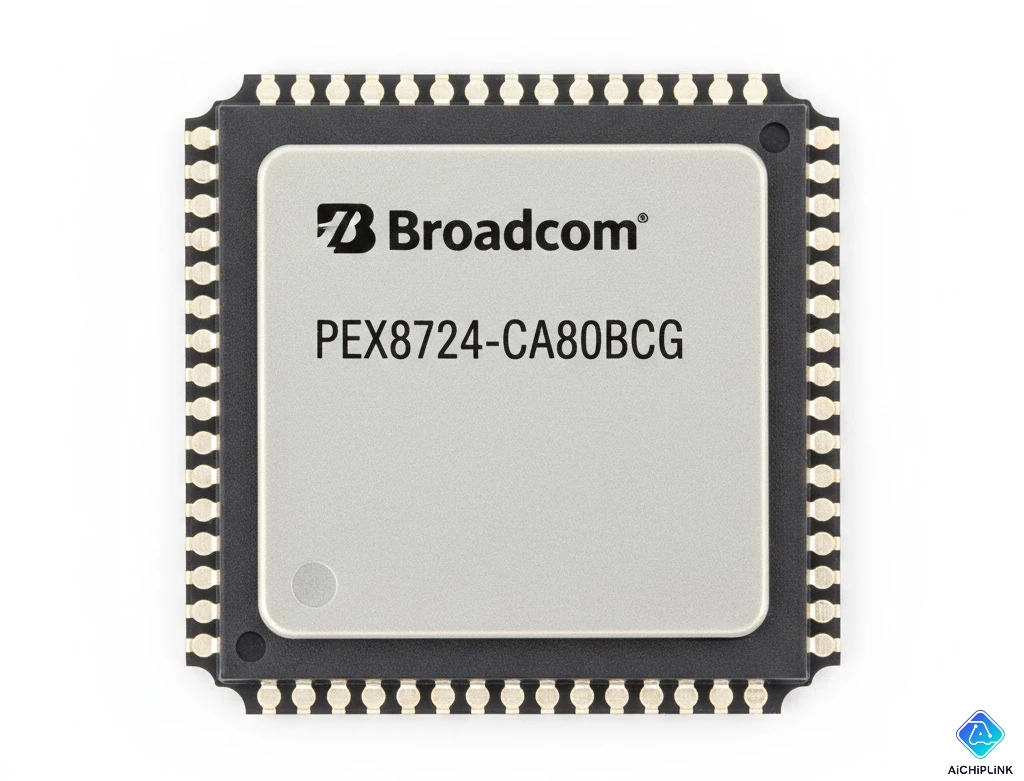
Struggling to expand PCIe lanes for multiple NVMe SSDs, GPUs, or network cards in your server or storage array? The PEX8724-CA80BCG from Broadcom (formerly PLX) is the professional-grade solution engineers trust for high-bandwidth PCIe fan-out and multi-root applications.
This 24-lane, 6-port PCIe Gen3 switch delivers up to 8.0 GT/s per lane, multi-host support, and advanced features like peer-to-peer traffic and low-latency switching — making it ideal for data centers, AI servers, and high-performance storage systems.
In 2025, the PCIe switch market is growing rapidly as NVMe adoption surges, with demand for reliable Gen3/Gen4 switches increasing over 30% year-over-year according to industry reports. The PEX8724-CA80BCG remains a proven, widely available choice for cost-effective lane expansion.
In this ultimate PEX8724-CA80BCG review, you’ll discover step-by-step configuration, detailed comparisons, NVMe adapter builds, full specifications, and current pricing. Whether you’re a system integrator or DIY builder, this guide will help you make the right choice. Let’s get started.
1.0 How to Configure the PEX8724-CA80BCG
Configuration is key to unlocking the full potential of this versatile PCIe switch.
1.1 Step-by-Step Configuration Guide
- Connect the switch to your host via upstream port and downstream devices.
- Use Broadcom’s PLX SDK or Linux drivers to access configuration space.
- Set lane configurations, port modes (upstream/downstream), and multi-root settings.
- Enable features like peer-to-peer DMA and power management.
- Validate with tools like lspci and bandwidth tests.
1.2 Software Tools and Register Programming
Broadcom provides the ExpressLane configuration utility and detailed register maps. For custom setups, direct register writes via I2C or SMBus are supported.
1.3 Common Configuration Issues
- Port link training failures? Check power sequencing and clock stability.
- Multi-host conflicts? Properly set virtual switch partitioning.
“The PEX8724 has been rock-solid in our 4U storage servers for years — excellent lane flexibility and Broadcom support is top-tier.”
— Senior hardware engineer at a major cloud provider
Watch this practical NVMe adapter build video to see real-world PCIe switch configuration in action.
2.0 PEX8724-CA80BCG vs PEX8725: Which PCIe Switch Wins?
Choosing between these two popular Broadcom switches depends on your lane and port needs.
2.1 Key Specification Differences
| Feature | PEX8724-CA80BCG | PEX8725-CA80BCG |
|---|---|---|
| Lanes / Ports | 24 lanes / 6 ports | 28 lanes / 8 ports |
| Gen3 Speed | 8.0 GT/s | 8.0 GT/s |
| Package | 324-FCBGA | 676-FCBGA |
| Multi-Root Support | Yes | Enhanced |
2.2 Performance and Use Case Comparison
The PEX8724 excels in compact 6-port designs with lower power, while the PEX8725 offers more expansion for larger systems.
2.3 When to Choose Each Model
Choose the PEX8724-CA80BCG for cost-sensitive 24-lane projects and the PEX8725 for maximum scalability.
External link: Full details in the official Broadcom PEX8724 datasheet.
3.0 Building NVMe Adapters with the PEX8724-CA80BCG
This switch is extremely popular for creating high-performance multi-NVMe solutions without motherboard bifurcation.
3.1 U.2 and M.2 Multi-Drive Designs
Connect up to 4–6 NVMe drives via downstream ports with full Gen3 bandwidth sharing.
3.2 Real-World Server and Storage Projects
Common in 2U/4U servers, JBOD enclosures, and AI training rigs for massive parallel storage.
3.3 Performance Benchmarks
Expect near line-rate performance with proper cooling and firmware tuning — up to 6 GB/s+ aggregate reads in Quad NVMe setups.
4.0 Complete Specifications, Pinout and Package
4.1 Technical Specifications Overview
- 24 PCIe Gen3 lanes (8.0 GT/s)
- 6 ports with flexible upstream/downstream assignment
- Low power: ~6W typical
- Advanced features: SR-IOV, ACS, peer-to-peer, hot-plug support
- Operating temperature: 0°C to +70°C
4.2 Pinout and Footprint Details
The 324-FCBGA (19x19 mm) package uses a standard ball map — refer to datasheet for exact pin assignments.
4.3 Package Options and Thermal Considerations
FCBGA package requires good PCB thermal vias and heatsink for sustained high-load operation.
5.0 Where to Buy PEX8724-CA80BCG and Pricing
5.1 Current Market Prices (2026)
Single units typically range from $85–$130 depending on quantity and supplier. Bulk pricing drops significantly below $70.
5.2 Trusted US Suppliers and Alternatives
Authorized distributors: Digi-Key, Mouser, Avnet. For alternatives, consider Microchip PM8533 or newer Broadcom Gen4 switches.
Conclusion
The PEX8724-CA80BCG continues to be a go-to PCIe switch for engineers needing reliable 24-lane Gen3 expansion with excellent multi-root and peer-to-peer capabilities. Its balance of performance, power efficiency, and availability makes it perfect for modern storage servers, NVMe arrays, and custom accelerator platforms.
As PCIe Gen4 and Gen5 adoption grows, the PEX8724 remains the smart, proven choice for cost-effective legacy and mid-tier designs well into 2026 and beyond.
Ready to integrate the PEX8724-CA80BCG into your next build? Visit aichiplink.com today for current stock, competitive pricing, and expert technical support. Your high-performance PCIe project starts here!

Written by Jack Elliott from AIChipLink.
AIChipLink, one of the fastest-growing global independent electronic components distributors in the world, offers millions of products from thousands of manufacturers, and many of our in-stock parts is available to ship same day.
We mainly source and distribute integrated circuit (IC) products of brands such as Broadcom, Microchip, Texas Instruments, Infineon, NXP, Analog Devices, Qualcomm, Intel, etc., which are widely used in communication & network, telecom, industrial control, new energy and automotive electronics.
Empowered by AI, Linked to the Future. Get started on AIChipLink.com and submit your RFQ online today!
Frequently Asked Questions
What is the PEX8724-CA80BCG used for?
It is a 24-lane, 6-port PCIe Gen3 switch ideal for lane expansion, multi-NVMe storage, and multi-host server architectures.
Is the PEX8724-CA80BCG still relevant in 2026?
Yes — it remains one of the most cost-effective and widely supported Gen3 switches for storage and embedded applications.
Does the PEX8724-CA80BCG support bifurcation?
It provides flexible port configuration that achieves similar results to bifurcation without motherboard support.
What is the difference between PEX8724 and PEX8725?
The PEX8725 offers more lanes (28) and ports (8) in a larger package, while the PEX8724 is more compact and power-efficient.
Can I use the PEX8724-CA80BCG with Gen4/Gen5 devices?
It operates at Gen3 speeds; backward compatible but will negotiate down to Gen3.