What Is a Linear Voltage Regulator?
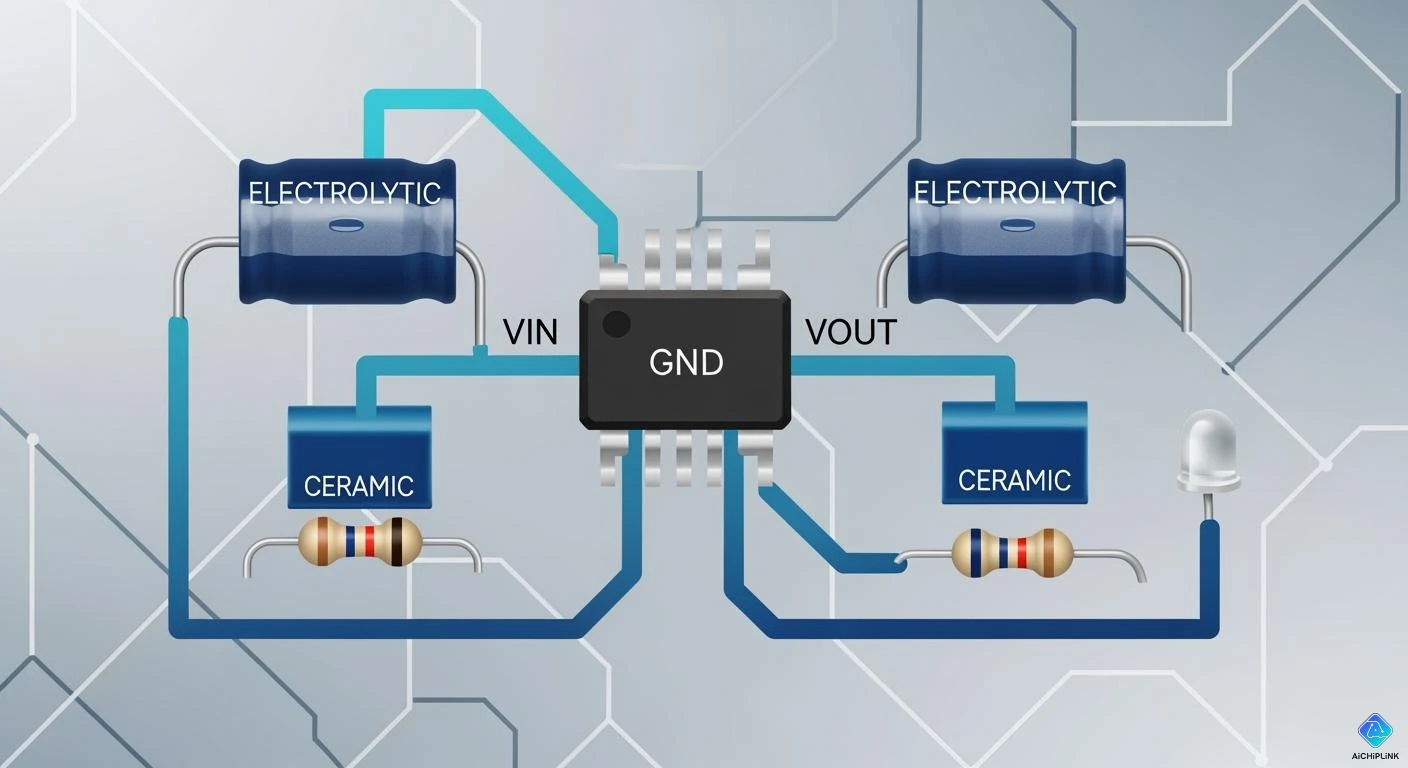
A linear voltage regulator keeps voltage steady in devices. You use this regulator to make high voltage lower and safe. Many industries use this technology and trust it.
- The market for these regulators may grow to $9.10 billion by 2033.
Key Takeaways
- A linear voltage regulator makes voltage lower in devices. It keeps the output steady for circuits that need it. - Managing heat is very important. Use heat sinks and good design to stop overheating. This helps the device work well. - Pick the right regulator by looking at its details. Check the input and output voltage. Look at the dropout voltage and current ratings too.
Linear Voltage Regulator Operation
Step-Down Conversion Principle
A linear voltage regulator helps lower voltage in a circuit. It acts as a step-down converter. The output voltage is always less than the input voltage. The regulator needs a small voltage gap, called dropout voltage, to work right.
-
The regulator has a feedback loop. This loop checks the output voltage. It changes the circuit to keep the voltage steady.
-
The active pass element is important. It changes how much current flows to control the voltage when the load changes.
-
An op-amp in the loop helps the regulator react fast. If the load or input voltage changes, the regulator changes the current to keep the voltage the same.
Power Transistor Function
The power transistor is the main part of the regulator. It works like a resistor that can change. It changes how much current flows to match the needs of the circuit. When the input voltage or load changes, the transistor changes the current. This keeps the output voltage steady.
-
The transistor keeps the voltage the same across the load.
-
It changes its resistance when the circuit needs it.
-
There are different types of transistors in regulators. Here is a table with some types and their dropout voltage:
| Transistor Type | Dropout Voltage |
|---|---|
| PNP | 200mV |
| CMOS | 50mV |
Heat Dissipation
A linear voltage regulator turns extra energy into heat. It works like a resistor. It drops the voltage and gives off the extra as heat. If the input voltage is much higher than the output, more energy becomes heat. This makes the regulator less efficient.
| Input Power (W) | Output Power (W) | Power Dissipated as Heat (W) |
|---|---|---|
| 0.3 | 0.1 | 0.2 |
You must control heat to keep the regulator safe. Here are some tips:
-
Use heat sinks to move heat away.
-
Make a good PCB layout with thermal vias and wide lines.
-
Pick regulators with thermal shutdown.
Linear voltage regulators are about 30% to 60% efficient. This is less than switching regulators, which are 80% to 95% efficient. If you do not control heat, the regulator can break. It can fail from too much heat, too much electricity, bad weather, or poor design.
Tip: Always check how the regulator works and how you manage heat. This helps keep your circuits safe and working well.
Linear Regulator Pros, Cons, and Types
Advantages
A linear voltage regulator has many good points. The design is easy and uses only a few parts. It is small, so it saves space. It does not cost much money. You can pick from many different products. The regulator gives a steady output voltage and makes very little noise. This is good for sensitive analog circuits. The regulator does not make switching noise. This keeps signals clean and reliable. This is important for audio and medical devices.
-
Simple design with minimal components
-
Low noise characteristics
-
Compact size, saving space
-
Cost-effective
-
Wide variety of products available for selection
Note: Linear voltage regulators give a steady output voltage. They do not make switching noise. This helps keep signals clear in sensitive circuits.
Disadvantages
There are some problems with linear regulators. They can only lower voltage, not raise it. They make a lot of heat if the input voltage is much higher than the output. You need heat sinks to help with this heat. They do not work well for high-power jobs. Big parts can make the regulator large and heavy. Too much heat can make the regulator not last as long.
-
Large loss and poor efficiency with significant input-output voltage differences
-
High heat generation requiring effective heat dissipation measures
-
Limited to step-down operations (only lowering voltage)
-
Size: Requires large components, increasing overall size and weight
-
Heat generation impacts reliability and lifespan
| Regulator Type | Noise and Ripple Characteristics |
|---|---|
| Linear Voltage Regulators | Provide very low noise and ripple, ideal for sensitive applications. |
| Switching Regulators | Can generate noise due to fast switching, may require additional filtering. |
Common Types
There are many types of linear regulators for different uses. The LM78xx series gives positive output voltages like 1.8 V, 2.5 V, 3.3 V, 5 V, and 12 V. These can give up to 1A of current. The LM79xx series gives negative output voltages for special circuits. Other types like LM2940, MIC2940A, MCP1700, MCP1711, TPS7A05, and XC6206 have different voltage and current ratings. People use these regulators in audio gear, medical devices, and analog circuits where low noise is needed.
| Type | Typical Voltage Ratings | Typical Current Ratings |
|---|---|---|
| LM78xx series | 1.8 V, 2.5 V, 3.3 V, 5 V, 12 V | Up to 1A |
| LM79xx series | Negative voltages | Up to 1A |
| LM2940 / MIC2940A | Up to 40 V | 1A |
| MCP1700 / MCP1711 | 1.8 V, 3.3 V, 5 V | 250 mA |
| TPS7A05 | 1.2 V to 20 V | 1A |
| XC6206 | 1.5 V to 5 V | 500 mA |
Choosing a Linear Regulator
Key Specifications
When you pick a linear regulator, you must check some important details in the datasheet. These details help you find the right regulator for your circuit. Here are the main things to look at:
-
Input voltage range: Make sure your power supply fits what the regulator can handle.
-
Output voltage range: Pick a regulator that gives the correct output voltage for your device.
-
Output voltage accuracy: Choose one with good accuracy to keep your circuit working well.
-
Output current: Check the highest current the regulator can give.
-
Dropout voltage: This is the smallest gap between input and output voltage for the regulator to work right.
-
Transient response: See how quickly the regulator changes when the load changes.
-
Ripple rejection ratio: Find out how well the regulator stops unwanted voltage changes.
Dropout voltage is very important. A regulator with low dropout voltage is good for battery-powered devices. It lets you use lower input voltage and helps save energy.
| Specification | Why It Matters |
|---|---|
| Output voltage | Keeps your device safe |
| Dropout voltage | Helps batteries last longer |
| Output current | Gives your circuit the power it needs |
| Thermal performance | Stops overheating and damage |
Selection Tips
Here are some tips to help you choose the best linear regulator for your project:
-
Use a regulator with low dropout voltage for battery-powered devices. This keeps your output voltage steady even if the input voltage drops.
-
Pick a linear regulator for low-power things like small speakers or LED lights. It works best when the input voltage is just a little higher than the output voltage.
-
Always figure out how much power will turn into heat. Use this formula: P = (input voltage - output voltage) × load current.
-
Control heat with heat sinks or thermal vias. This keeps your regulator and circuit safe.
-
Try not to make common mistakes. Make sure the input voltage is higher than the output voltage. Check the dropout voltage and how accurate the voltage is. Watch for changes in load and line regulation.
Tip: Take care of heat problems early when you design your circuit. This helps your voltage regulator last longer and keeps your circuit working well.
Now you know that a linear voltage regulator keeps voltage steady. Here are some important things to remember:
-
It uses a feedback loop to keep voltage right.
-
It works best when the voltage drop is small.
-
The design is simple, makes little noise, and reacts fast.
-
Be careful about heat and always check the specs first.
| Advantages | Disadvantages |
|---|---|
| Easy to use | Can waste power |
| Makes little noise | Gets hot |
| Reacts quickly | Needs cooling |
You can use what you learned to build or fix circuits with more confidence.

Written by Jack Elliott from AIChipLink.
AIChipLink, one of the fastest-growing global independent electronic components distributors in the world, offers millions of products from thousands of manufacturers, and many of our in-stock parts is available to ship same day.
We mainly source and distribute integrated circuit (IC) products of brands such as Broadcom, Microchip, Texas Instruments, Infineon, NXP, Analog Devices, Qualcomm, Intel, etc., which are widely used in communication & network, telecom, industrial control, new energy and automotive electronics.
Empowered by AI, Linked to the Future. Get started on AIChipLink and submit your RFQ online today!
Frequently Asked Questions
What is the main job of a linear voltage regulator?
A linear voltage regulator keeps the output voltage steady. It helps protect your circuit from voltage changes.
Why do linear regulators get hot?
Linear regulators get hot because they turn extra voltage into heat. This happens when the input voltage is much higher than the output voltage.
Can you use a linear regulator for high-power devices?
You should not use a linear regulator for high-power devices. It wastes energy as heat and may need big heat sinks.