What is a Conductivity Sensor?
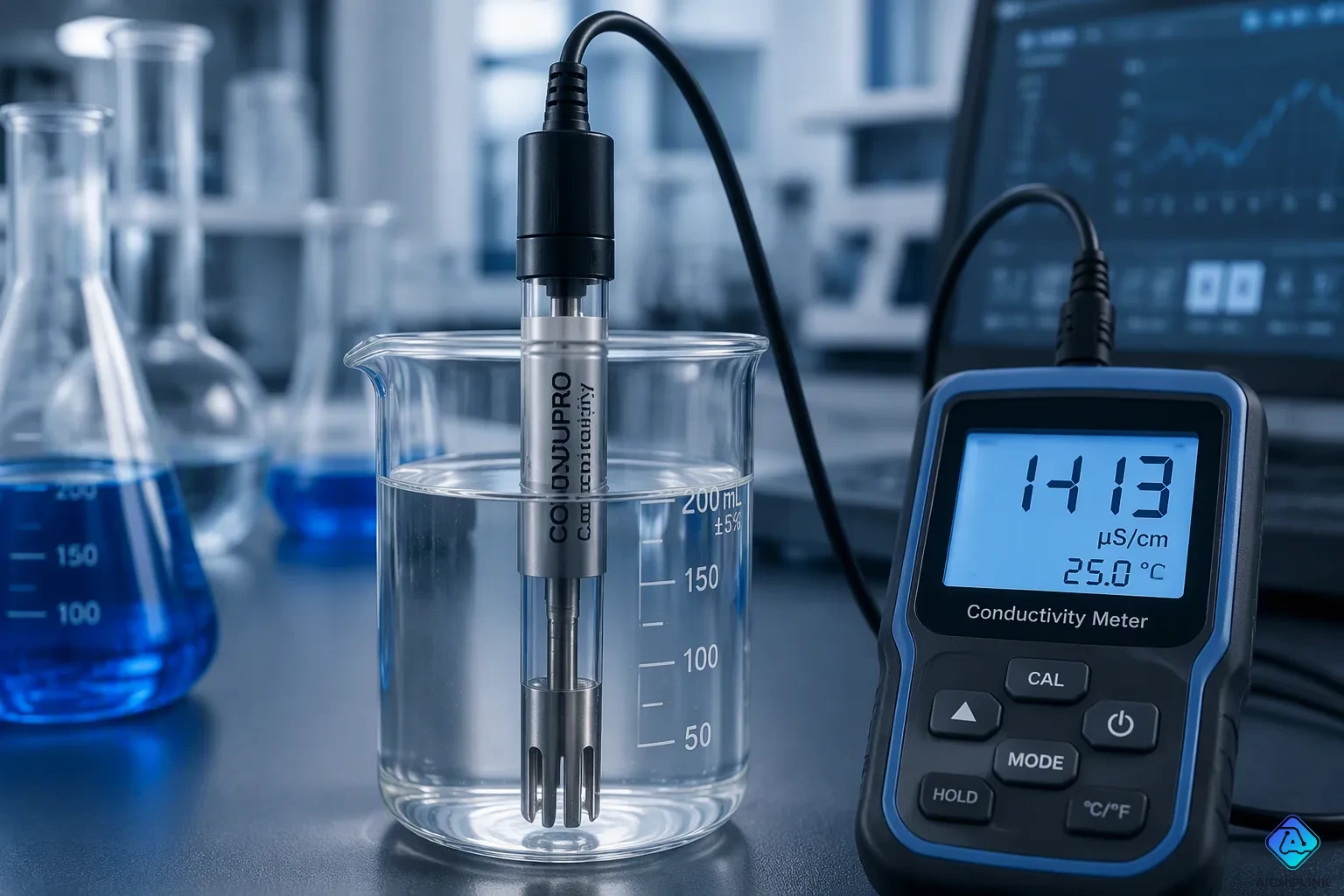
A conductivity sensor is a tool that checks how well water can carry an electrical current. Think of pure water as a poor carrier, like a plastic pipe that blocks flow. Saltwater, though, carries electricity easily because dissolved ions move the charge along. The sensor measures this ease of flow, giving you a live, trustworthy sign of total dissolved solids or ion levels.
This measurement is key for quality control in many fields. The worldwide market for these tools in water quality monitoring shows their importance.
| Metric | Value |
|---|---|
| Market value in 2024 | USD 24.5 billion |
| Projected market value by 2034 | USD 99.1 billion |
| Compound annual growth rate (2025–2034) | 15.0% |
This growth points to a rising need for accurate conductivity meter tech to handle water resources well.
Key Takeaways
-
A conductivity sensor measures water's ability to conduct electricity, indicating ion levels.
-
Pick the correct sensor type: use contacting for clean water, and inductive for tough or dirty conditions.
-
Temperature affects readings, so use automatic compensation and calibrate regularly for accuracy.
-
Use the cell constant that matches your sample's conductivity range to prevent errors.
-
Cleaning the sensor often and storing it the right way helps it last longer and keeps the data it gives you dependable.
How a Conductivity Sensor Works
A conductivity sensor operates on a straightforward principle. Two electrodes apply an alternating current (AC) voltage across a liquid sample. The electronics measure the resulting current flow. Dissolved ions carry the charge through the solution. The measurement of electrical conductivity depends on both the concentration and mobility of these ions. More dissolved solids mean more current. This direct relationship gives you a real-time window into the sample's purity or contamination level. The sensor uses AC rather than direct current. This choice prevents polarization of the electrodes. Polarization would create a buildup of ions on the electrode surface and distort the reading. AC voltage avoids this problem by constantly reversing the polarity.
The Role of Electrodes and Cell Constant
The electrodes form the active part of any conductivity probe. Their material must resist chemical attack from the process liquid. Common choices include:
-
PVDF (Polyvinylidene Fluoride): Resists acids and oxidizers like sodium hypochlorite or nitric acid.
-
PP (Polypropylene): Lightweight and resistant to many caustics and solvents.
-
PTFE (Teflon): Inert and ideal for extremely aggressive chemicals such as hydrofluoric acid.
Graphite conductivity electrodes last longer than metal electrodes in harsh chemicals because they resist corrosion and surface reactions.
Researchers continue exploring novel materials like conductive ceramics and titanium alloys alongside traditional metals such as platinum, stainless steel, copper, and silver.
The spacing and size of these electrodes define the sensor's measurement capability. Engineers express this geometry as the cell constant (K). The cell constant equals the distance between electrodes divided by their surface area. A smaller gap with larger area produces a low cell constant suitable for liquids with low ion levels. A wider gap with smaller area produces a high cell constant for concentrated solutions. Manufacturers design each probe with a specific cell constant. You must select the right constant for your expected measurement range. A mismatched constant leads to unreliable data.
| Cell Constant | Measurement Range | Accuracy Impact |
|---|---|---|
| Smaller (e.g., 0.03/cm) | Tighter range (e.g., 0–1,000 µS/cm) | Suitable for low conductivity; if too high for low measurements, readings appear lower than actual |
| Larger (e.g., 1.0/cm) | Wider range (e.g., 10 µS/cm – 20 mS/cm) | Suitable for higher conductivity; if too low, readings appear artificially high |
The sensor multiplies measured conductance by the cell constant to convert raw readings into actual value. The formula is straightforward: conductivity equals conductance times the cell constant. Choosing the wrong constant directly compromises accuracy. Dosing errors or poor quality can result.
Converting Resistance to a Conductivity Reading
Understand a key distinction: conductance versus conductivity. Conductance is the raw measurement. It tells you how easily current flows through your specific sample at that moment. Conductivity is the normalized value. It accounts for the sensor geometry and reports the result in siemens per centimeter (S/cm). This standard unit lets you compare readings from different probes.
This normalization answers the question "how does a conductivity meter work" across varying conditions. Two different probes measuring the same liquid would produce different raw numbers without it.
Consider applications that require high purity. When you measure a 1 µS/cm solution, the cell uses large-area electrodes with a narrow gap.
For instance, a cell with a constant of 0.01/cm typically exhibits a measured resistance of approximately 10 kΩ instead of 1 MΩ. The measurement device operates across a range of cell constants. This enables it to accommodate both ultra-pure water and highly conductive solutions such as seawater while maintaining the same effective resistance range.
Your instrument handles this conversion internally. You read the final value, not the raw resistance. This standard reading gives you confidence when comparing results across different probes and processes.
Types of Conductivity Meters
When you pick a conductivity meter, you have two main options. Each type works best for different jobs and settings. Knowing how they differ helps you choose the right one for your needs.
Contacting (Electrode) Sensors
Contacting sensors use electrodes that touch the liquid directly. These electrodes send the AC voltage and measure the current that flows. In this group, you will find two main designs: 2-electrode and 4-electrode setups.
The 2-electrode design is the simpler one. It works well for clean samples with low to medium conductivity. Inside the probe, two metal plates face each other. The sensor measures the resistance between them and turns that into a conductivity reading.
The 4-electrode design adds two more electrodes to the circuit. One pair sends the current, while the other pair measures the voltage drop. This split gives you a big benefit. If dirt builds up on the drive pair, the sensing pair stays unaffected. So, you get steadier readings when your sample has particles, oils, or biological material.
For samples that may cause fouling (like biological fluids or process streams with particles), a four-electrode or toroidal cell is usually the better option no matter the range. Its measurement method is less affected by partial fouling than a two-electrode cell's.
Four-electrode sensors can also measure higher conductivity levels. Different models have different maximum ranges based on their design and cell shape. Some four-electrode models go up to 1,400 mS/cm², while others reach 2,000,000 mS/cm². Always check the manufacturer's specs to match the sensor to your expected range.
Inductive (Toroidal) Sensors
Inductive sensors, also called toroidal sensors, use a totally different method. They have two metal coils: a drive coil and a receive coil. Both coils are fully sealed inside a corrosion-resistant plastic body. The metal never touches the liquid you are measuring.
Here is how it works. The drive coil creates an alternating magnetic field. This field produces a small current in the liquid loop. That current then creates a second magnetic field, which the receive coil picks up. The strength of that signal tells you the solution's conductivity.
This design gives a big advantage in harsh settings. Since no metal touches the liquid, the sensor resists chemical damage. You can use it with strong acids, caustics, and oxidizers like sodium hypochlorite. The plastic shell, usually made from PP or PFA, handles conditions that would quickly corrode exposed metal electrodes.
| Aspect | Contacting Sensors | Inductive (Toroidal) Sensors |
|---|---|---|
| Electrode exposure | Exposed electrodes | No exposed electrodes |
| Fouling resistance | Moderate | Excellent |
| Maintenance need | Higher | Lower |
| Suitable chemicals | Limited | Aggressive chemicals (acids, caustics, sodium hypochlorite) |
| Wetted materials | Often metallic | PP, PFA (corrosion-resistant plastics) |
Because there are no exposed electrodes, coating buildup is not a problem. This reduces drift and maintenance issues. Your conductivity probe stays accurate longer without frequent cleaning.
Toroidal sensors shine in applications with high suspended solids, dirty water, or chemical processing streams. They keep stable readings where a contacting sensor would fail fast. The downside is that inductive sensors usually cost more and need a minimum conductivity level to work well. For very pure water with very low ion content, a contacting sensor is still the better pick.
Your choice between these two types depends on your specific job. Clean water with low conductivity favors a contacting sensor. Harsh chemicals or fouling-prone streams need an inductive design. Think about your liquid's traits, your maintenance capacity, and your accuracy needs before you decide.
Conductivity Measurement Applications
Conductivity sensors are very important in many industries. They help protect public health, improve manufacturing, and stop costly equipment breakdowns. Knowing how they are used helps you see why measuring conductivity correctly matters.
Water Quality Monitoring and Treatment
Water treatment plants use conductivity readings to check if their systems work right. For example, reverse osmosis (RO) systems make water with conductivity from 0.05 to 200 µS/cm. This range goes from nearly pure water to the top level of drinking water. If readings go above this, the RO membrane has a problem. Salt gets through when membranes are damaged, dirty, or have failed O‑rings. Finding these issues early with conductivity testing lets you fix them before product quality drops.
Pharmaceutical manufacturers follow strict conductivity standards for their purified water. Regulatory bodies set clear limits you must meet.
| Pharmacopeia | Water Grade | Conductivity Limit | Temperature |
|---|---|---|---|
| USP | Purified Water | ≤1.3 µS/cm | 25°C |
| EP | Water for Injection (WFI) | ≤1.1 µS/cm | 20°C |
Your conductivity meter must measure well at these low levels to show you meet the rules. Cooling tower operators also use conductivity readings to manage chemical dosing. They watch the conductivity level to decide when to add chemicals or release concentrated blowdown water.
Industrial Process Control and Leak Detection
Factories use conductivity probes to keep chemical concentrations exact. In cleaning‑in‑place (CIP) systems, the sensor always measures how strong the cleaning solution is. Operators change the mix of water and acid or caustic based on live readings. This feedback loop links to PLCs, which automatically adjust dosing valves when conductivity changes from set points. Strong chemicals can corrode electrodes that touch them, so many plants choose toroidal sensors for these hard jobs.
Power plants rely on conductivity monitoring to find heat exchanger leaks. Pure condensate has very low conductivity between 1 and 10 µS. Contaminants from leaks make this baseline reading jump up. Even a small leak creates a clear spike, so you can find it early. Conductivity analyzers set off high alarms or send dirty condensate to drain on their own. A two‑sensor system before and after the process figures out the difference, making up for normal changes in condensate quality.
Your choice of conductivity sensor type affects how reliable it is in each job. Picking the sensor design that fits your process conditions gives you accurate and steady readings.
Conductivity Sensor Calibration and Maintenance
Temperature strongly affects your conductivity meter readings. When liquid heats up, ions move faster. A one degree Celsius rise makes the reading go up by 1.5% to 5.0%. The exact change depends on the solution type and its concentration. Most estimates put this at about 2% per °C. Hayashi reported 1.9% per °C for natural samples. The observed range spans 1.0% to 3.0% per °C.
Modern sensors include automatic temperature compensation, or ATC. This adjusts the reading to a reference temperature of 25°C. Even so, you still need to calibrate the sensor. Calibration corrects for the unique temperature behavior of your sample.
Ignoring temperature effects leads to false readings. You might think the ion level changed when only the temperature changed. An uncompensated reading can mislead your decisions.
The Impact of Temperature on Readings
A change in conductivity does not always mean a change in ion concentration. It might reflect a temperature shift instead. Conductivity depends heavily on temperature in most solutions. Your sensor's ATC handles this automatically. However, the compensation assumes a fixed temperature coefficient. If your solution behaves differently, the reading will be off. Regular calibration at 25°C removes this error. For best accuracy, let the sample and sensor reach a stable temperature before measuring.
Best Practices for Sensor Cleaning and Calibration
Set a regular calibration schedule. For industrial wastewater applications, verify your sensor monthly against standard solutions. If your process has high fouling potential, check more often. Buildup on the electrodes can cause drift before you notice the problem. Routine checks save you from unexpected failures.
Choose the right calibration standard. For low-conductivity samples, use a 1,000 µS/cm standard. Mid-range samples need 10,000 µS/cm. High-conductivity samples require 50,000 µS/cm. The common lab standard is 0.01 Molar KCl at 1,413 µS/cm ±1%. Mixed salt solutions at 445 µS/cm and 1,417 µS/cm mimic natural mineral compositions.
Clean your conductivity probe with appropriate solvents. Harsh chemicals require resistant materials like PVDF or PTFE. Rinse thoroughly after cleaning to remove any residue.
Store the sensor correctly between uses. For short breaks, keep the electrode wet in clean water inside the protective cap. For long-term storage, dry the sensor completely. Keep it in a cool, dry place away from direct sunlight and high humidity.
These practices ensure reliable data for quality control.
A conductivity sensor gives you a dependable window into your liquid's ion content. This low-maintenance tool turns real-time measurements into actionable data for process control and water quality management.
Choose your sensor type carefully. Contacting designs work best for clean, low-conductivity samples. Inductive models handle harsh chemicals and fouling-prone streams without exposed electrodes. Match the sensor to your environment.
Never skip calibration or temperature compensation. These steps protect your conductivity meter's accuracy and keep your readings trustworthy. A well-maintained conductivity probe delivers consistent results you can rely on.
Ready to find the right solution? Download our sensor selection guide or contact a technical specialist to discuss your specific application needs.

Written by Jack Elliott from AIChipLink.
AIChipLink, one of the fastest-growing global independent electronic components distributors in the world, offers millions of products from thousands of manufacturers, and many of our in-stock parts is available to ship same day.
We mainly source and distribute integrated circuit (IC) products of brands such as Broadcom, Microchip, Texas Instruments, Infineon, NXP, Analog Devices, Qualcomm, Intel, etc., which are widely used in communication & network, telecom, industrial control, new energy and automotive electronics.
Empowered by AI, Linked to the Future. Get started on AIChipLink and submit your RFQ online today!
Frequently Asked Questions
How often should you calibrate your conductivity meter?
For most uses, calibrate your conductivity meter once a month. If your samples are dirty or likely to coat the sensor, check it more often. Over time, buildup on the electrodes causes readings to drift. Calibrating regularly with a known standard solution keeps your measurements accurate and dependable.
Can one sensor measure both low and high conductivity levels?
No single sensor handles the whole range well. Samples with low conductivity need a cell that has a smaller constant. Solutions with high concentration need a larger constant. You have to match the sensor's cell constant to the range you expect to measure. If you use the wrong cell constant, your data will not be reliable.
What causes a conductivity probe to give unstable readings?
Temperature shifts are the most common cause of unstable readings. Ions move faster in warmer liquid, so readings go up even though nothing actually changed in the water. Fouling on the electrodes can also cause drift. To get steady results, your conductivity probe needs automatic temperature compensation and regular cleaning.
Do you need different sensors for different water types?
Yes. Pure water with low ion levels works best with a contacting sensor. Dirty water or streams with lots of suspended solids need an inductive design. Harsh chemicals require toroidal sensors that have no exposed metal. Pick the sensor type that fits your water conditions so you get reliable conductivity data.