Tips for Selecting the Right Capacitor: Aluminum vs Tantalum
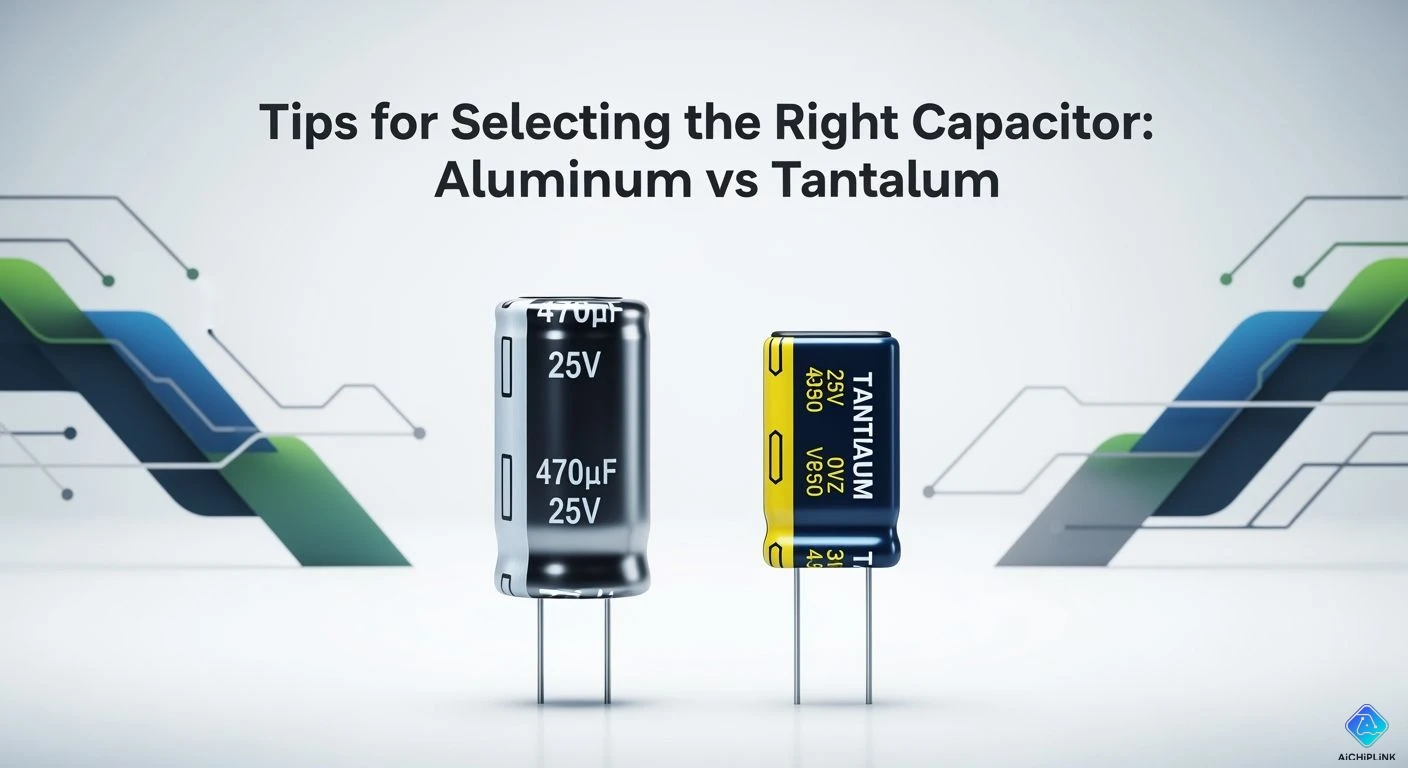
When you choose between Aluminum vs Tantalum Capacitors, it is a crucial decision for your project. You will notice that they differ in ESR, longevity, and stability. Aluminum types typically have a lower cost and can handle higher voltages more effectively. On the other hand, Tantalum types perform better in compact spaces but are more susceptible to damage from sudden voltage spikes. Consider the voltage, temperature, and reliability requirements you have before selecting a capacitor.
Key Takeaways
-
Learn how aluminum and tantalum capacitors are not the same. Aluminum capacitors cost less and can handle more voltage. Tantalum capacitors are small and steady but cost more money.
-
Always look at the voltage rating on your capacitors. Pick a capacitor with a rating at least 1.5 times higher than your circuit’s top voltage. This helps keep things safe.
-
Think about what your circuit will do. Aluminum capacitors are good for power supplies. Tantalum capacitors are better for small devices and high-frequency jobs.
-
Use voltage derating with tantalum capacitors. If you use them at half their rated voltage, they are less likely to break and will last longer.
-
Know about supply chain problems. Tantalum capacitors can be hard to find because of world events. Aluminum capacitors are usually easier to get.
Aluminum vs Tantalum Capacitors: Quick Comparison
Key Specs Overview
When you pick parts for your circuit, you compare aluminum vs tantalum capacitors. Each type has special features. The table below shows the main differences. This helps you see which one works for you.
| Feature | Tantalum Capacitors | Aluminum Capacitors |
|---|---|---|
| Capacitance per Volume | Highest available | Large values, but less dense |
| Equivalent Series Resistance (ESR) | Smaller ESR, better for high-frequency use | Higher ESR, less ideal for fast switching |
| Operational Lifespan | Over 100,000 hours | 10,000 - 50,000 hours |
| Failure Rate | 0.1% - 1% per 1,000 hours | Higher, especially with dielectric breakdown |
| Cost | Higher, unstable supply and price | Lower, cost-effective |
| Voltage Handling | Sensitive to overvoltage, needs derating | Handles higher voltages well |
| Physical Size | Compact, fits tight spaces | Larger for same capacitance |
| Reliability | Longer lifetime, but risk of catastrophic failure | Reliable, but can fail from electrolyte breakdown |
Note: Tantalum capacitors have a high capacitance-to-volume ratio. Aluminum capacitors cost less and are easy to find.
Pros and Cons
This list helps you see the good and bad sides of aluminum vs tantalum capacitors. It makes your choice easier.
Tantalum Capacitors:
-
Have great frequency features.
-
Last longer and have smaller ESR.
-
Give the highest capacitance per volume.
-
Fit in small spaces.
-
Can get too hot from dielectric breakdown.
-
Might fail badly, sometimes causing fire or explosion.
-
Price and supply can change a lot.
-
Work only with DC (polarized).
Aluminum Capacitors:
-
Used a lot in power supply circuits.
-
Cheap and easy to buy.
-
Give large capacitance values.
-
Need to be put in the circuit the right way.
-
Can get too hot from electrolyte failure.
-
Usually bigger for the same capacitance.
-
Handle higher voltages better.
Both types can get too hot and fail. Tantalum capacitors may break from dielectric problems. Aluminum capacitors may break from electrolyte issues. You need to check voltage and reliability for your project.
Tip: For better safety, use voltage derating. This means you run tantalum capacitors at half their rated voltage. It lowers the failure rate and keeps things safer.
Now you know the differences between aluminum vs tantalum capacitors. You can use this info to pick the best one for your circuit.
Application Suitability
Power Supply Uses
Aluminum capacitors are common in power supply circuits. These capacitors are polarized. They give more capacitance than ceramic capacitors. Aluminum capacitors handle high voltages well. This helps filter noise and keeps voltage steady. You can trust aluminum capacitors for jobs needing high capacitance. They work well in power supplies and audio amplifiers.
- Electrolytic capacitors, especially aluminum types, filter noise well. This is because they have high capacitance values.
| Specification | Details |
|---|---|
| Voltage Rating | Pick a capacitor with a voltage rating higher than your circuit needs. For example, use above 24V for a 24V circuit. |
| Operating Temperature Range | Choose capacitors based on your circuit’s temperature and environment. This helps them work best. |
Temperature affects how long capacitors last. If you go over the rated temperature, the life of aluminum capacitors drops by half with just a 10°C increase.
Audio and Signal Filtering
You want clear sound in audio circuits. Aluminum capacitors usually have lower impedance. They perform better in distortion and noise. Tantalum capacitors can cause distortion at low frequencies. This leads to poor audio quality.
Tantalum capacitors stay stable for a long time. They do not degrade like aluminum electrolytic capacitors. This makes them good for long-life service jobs.
Capacitors filter noise and split audio frequencies. Using better capacitors in the signal path improves performance.
-
Dissipation factor changes with temperature.
-
Insulation resistance drops as temperature goes up.
-
Frequency affects dissipation factor in many dielectrics.
Portable Devices
You need small and reliable capacitors for portable devices. Tantalum capacitors fit tight spaces. They offer high capacitance per volume. Ceramic capacitors also work well in small devices. They are light and stable. You can use these capacitors for smartphones, tablets, and wearables.
Industrial and Automotive
Industrial and automotive jobs need capacitors that handle tough conditions.
| Factor | Description |
|---|---|
| Temperature Ratings | Capacitors must handle high temperatures, sometimes above 150°C. |
| Dielectric Types | Different dielectrics like C0G/NP0 and X8R keep performance stable across temperature ranges. |
| AEC-Q200 Compliance | Capacitors must meet AEC-Q200 standards for temperature cycling, humidity resistance, and shock. |
Tantalum capacitors are great for cars because they are small and stable.
- Tantalum capacitors stay reliable in humidity, rain, and snow.
| Capacitor Type | Temperature Range |
|---|---|
| Aluminum | -40° C to 105° C |
| Tantalum | -55° C to 125° C |
Ceramic capacitors also help in these places. They offer stability and resist vibration.
Performance Factors for Tantalum Capacitors
ESR and Stability
You need to know how ESR affects tantalum capacitors. ESR means how much resistance a capacitor has for AC signals. Tantalum capacitors have lower ESR than aluminum capacitors. But they have higher ESR than ceramic capacitors. Look at the table below to see ESR values:
| Capacitor Type | Typical ESR Range |
|---|---|
| Tantalum (Standard) | 0.1 - 2 ohms |
| Tantalum (Low ESR) | 0.05 - 0.2 ohms |
| Aluminum (General) | 0.1 - 5 ohms |
| Aluminum (Low ESR) | 0.01 - 0.1 ohms |
| Aluminum (Ultra-Low ESR) | < 0.01 ohms |
Tantalum capacitors work in many circuits. High ESR can cause problems. If you use them in high-frequency circuits, too much ESR can make them hot. This can cause thermal runaway and make them less reliable. Ceramic capacitors have much lower ESR. They are better for high-frequency jobs.
-
At 100 kHz or more, tantalum capacitors have higher ESR than ceramic capacitors.
-
High ESR in tantalum capacitors can cause overheating and power loss.
-
Ceramic capacitors help stop these problems.
Capacitance and Voltage
Tantalum capacitors give a good range of capacitance and voltage. You can compare them to aluminum capacitors in the table below:
| Parameter | Tantalum | Aluminum Electrolytic |
|---|---|---|
| Capacitance Range | 0.1µF–1,500µF | 0.47µF–100,000µF+ |
| Rated Voltage | 2.5V–50V | 6.3V–450V |
Tantalum capacitors do not handle high voltages as well as aluminum or ceramic capacitors. Manufacturers say you should use voltage derating for tantalum capacitors. For example, use MnO2 tantalum capacitors at half their rated voltage. Polymer types need about 20% derating. Aluminum capacitors do not need derating. Ceramic capacitors handle voltage spikes better.
Temperature and Reliability
Tantalum capacitors work in a wide temperature range. You can use them from -55°C to 125°C. Some special tantalum capacitors can go up to 230°C. The table below shows temperature ranges and reliability ratings:
| Capacitor Type | Operating Temperature Range | Reliability Rating (per 1,000 hours) |
|---|---|---|
| Standard Tantalum Chip | -55°C to +125°C | 0.5% |
| Enhanced Tantalum Chip | Up to 175°C | 0.5% |
| High-Temperature Molded | Up to 200°C | N/A |
| High-Temperature SMD | Up to 230°C | N/A |
Tantalum capacitors last a long time and stay stable in tough conditions. You can trust them for industrial and automotive jobs. Ceramic capacitors also work well in harsh places. But tantalum capacitors give more stable capacitance over time.
Tip: Always check the temperature and voltage ratings before you pick tantalum capacitors. This helps you avoid early failure and keeps your circuit safe.
Cost and Sourcing
Price Comparison
Tantalum capacitors cost more than other types. Their price has gone up a lot in five years. AI servers use more tantalum capacitors than regular servers. This makes demand high and lead times long, sometimes up to 20 weeks. It is hard to get tantalum capacitors fast. Aluminum capacitors do not have big price jumps. They are cheaper and easier to find.
Ceramic capacitors often cost less than tantalum capacitors. They are easy to buy and work in many circuits. If you need to save money, ceramic capacitors or aluminum capacitors are good choices.
-
Tantalum capacitors: Higher price, long wait, used in AI and advanced electronics.
-
Aluminum capacitors: Lower price, steady supply, good for power and audio circuits.
-
Ceramic capacitors: Low price, easy to get, great for filtering and signal paths.
Tip: If you want to spend less, pick ceramic capacitors or aluminum capacitors for most uses.
Supply Chain Considerations
Think about where your capacitors come from. Tantalum capacitors face more supply risks. Most tantalum comes from a few countries in Africa. Trouble in these places can delay your order. Geopolitical issues and new rules make tantalum capacitors harder to find. Prices can go up quickly because of these problems.
Here is a table showing key challenges for tantalum capacitors:
| Key Challenges | Description |
|---|---|
| Supply Constraints | Tantalum comes from a few regions. Trouble there can stop supply. |
| Regulatory Pressures | Rules about conflict minerals make buying tantalum capacitors harder. |
| Price Volatility | Prices can change quickly due to mining and export problems. |
Aluminum capacitors do not have these supply problems. Aluminum is found all over the world. You can buy aluminum capacitors from many suppliers. Ceramic capacitors also have a strong supply chain. You face fewer risks with ceramic capacitors or aluminum capacitors.
-
Tantalum capacitors: Supply depends on mining in unstable regions.
-
Aluminum capacitors: Steady supply, less risk.
-
Ceramic capacitors: Reliable and easy to find.
Note: More than half of the world’s tantalum comes from the Democratic Republic of the Congo. Problems there can affect the whole market for tantalum capacitors.
When you plan your project, check how easy it is to get the capacitors you need. For most jobs, ceramic capacitors and aluminum capacitors give you the best mix of price and supply security.
Capacitor Selection Tips
Selection Checklist
You want to pick the best types of capacitors for your project. This checklist helps you make good choices:
-
Know Your Application
Think about what your circuit needs. Power supplies, audio filters, and portable devices use different types of capacitors. -
Check Voltage Rating
Pick a capacitor with a voltage rating at least 1.5 times higher than your circuit’s highest voltage. This keeps your circuit safe. -
Consider Capacitance Value
Find out the exact capacitance your circuit needs. Remember to check tolerance and how temperature changes affect performance. -
Review ESR (Equivalent Series Resistance)
Look at ESR for your project. Low ESR is important for DC-DC converters and high-frequency circuits. -
Think About Size and Space
If your device is small, use tantalum capacitors. They fit tight spaces and give high capacitance per volume. -
Check Temperature Range
Make sure the types of capacitors you pick can handle the hottest and coldest temperatures your device will face. -
Plan for Reliability and Lifespan
Choose capacitors that last a long time for important jobs. Tantalum capacitors last longer and stay stable over time. -
Review Cost and Supply
Compare prices and see if you can get the capacitors easily. Use buying tips to avoid delays in your project.
Tip: Always use voltage derating for tantalum capacitors. This means you run them below their rated voltage to keep your circuit safe and reliable.
Common Mistakes
You can stop problems by learning from common mistakes in picking types of capacitors. Here are some errors engineers make:
-
Not checking voltage ratings. Always pick a rating at least 1.5 times your circuit’s highest voltage.
-
Ignoring ESR. High ESR can cause overheating and lower efficiency, especially in DC-DC converters.
-
Miscalculating capacitance needs. You must check tolerance and how temperature affects the value.
-
Forgetting about size limits. Some types of capacitors are too big for small devices.
-
Overlooking supply chain risks. Tantalum capacitors can be hard to find during shortages.
-
Not planning for lifespan. Some capacitors wear out faster in hot or tough conditions.
Note: You can stop most failures by following these buying tips and double-checking your choice before you order.
Real-World Examples
You can see how good capacitor selection helps real engineering projects. Here are some examples:
-
Engineers used tantalum capacitors in low voltage and small circuits. This made performance and reliability better.
-
Space missions needed types of capacitors that could survive extreme conditions. Tantalum capacitors worked better than aluminum electrolytic capacitors in these cases.
-
New technology in tantalum capacitors lowered ESR. This helped power delivery networks in modern digital electronics work more efficiently.
You can use these lessons in your own projects. When you match the right types of capacitors to your needs, you get better results and fewer failures.
Remember: Careful selection and smart buying tips help you build circuits that last longer and work better.
You should pick capacitors based on what your project needs. Aluminum types are good for power supplies and high-voltage jobs. Tantalum types are better for small devices and steady performance. The table below can help you choose:
| Key Factor | What to Check |
|---|---|
| Capacitance | How much charge your circuit needs |
| Voltage Rating | Should be higher than your circuit’s max |
| ESR | Lower ESR is best for fast circuits |
| Type | Choose the right type for your project |
| Environment | Think about heat and moisture |
Think about how much money you have and how long your project should last. If you want more information, find guides about picking capacitors and making them last.

Written by Jack Elliott from AIChipLink.
AIChipLink, one of the fastest-growing global independent electronic components distributors in the world, offers millions of products from thousands of manufacturers, and many of our in-stock parts is available to ship same day.
We mainly source and distribute integrated circuit (IC) products of brands such as Broadcom, Microchip, Texas Instruments, Infineon, NXP, Analog Devices, Qualcomm, Intel, etc., which are widely used in communication & network, telecom, industrial control, new energy and automotive electronics.
Empowered by AI, Linked to the Future. Get started on AIChipLink and submit your RFQ online today!
Frequently Asked Questions
What happens if you use a tantalum capacitor above its rated voltage?
If you use too much voltage, it can fail fast. The capacitor might get very hot or short out. Sometimes, it could even start a fire. Always use less voltage than the rating to stay safe.
Can you replace an aluminum capacitor with a tantalum one?
You can switch them sometimes, but check a few things first. Look at the voltage, ESR, and size before you swap. Tantalum capacitors do not handle high voltage as well as aluminum ones.
Why do you need to derate tantalum capacitors?
You should use less voltage to stop failures from spikes. Using lower voltage makes tantalum capacitors last longer. It also helps them work better and stay safe.
Which capacitor is best for high-frequency circuits?
Tantalum capacitors are good for high-frequency circuits. They have lower ESR than aluminum capacitors. For very high frequencies, ceramic capacitors are also a good choice.