How to Test an ECU and Spot Common Problems
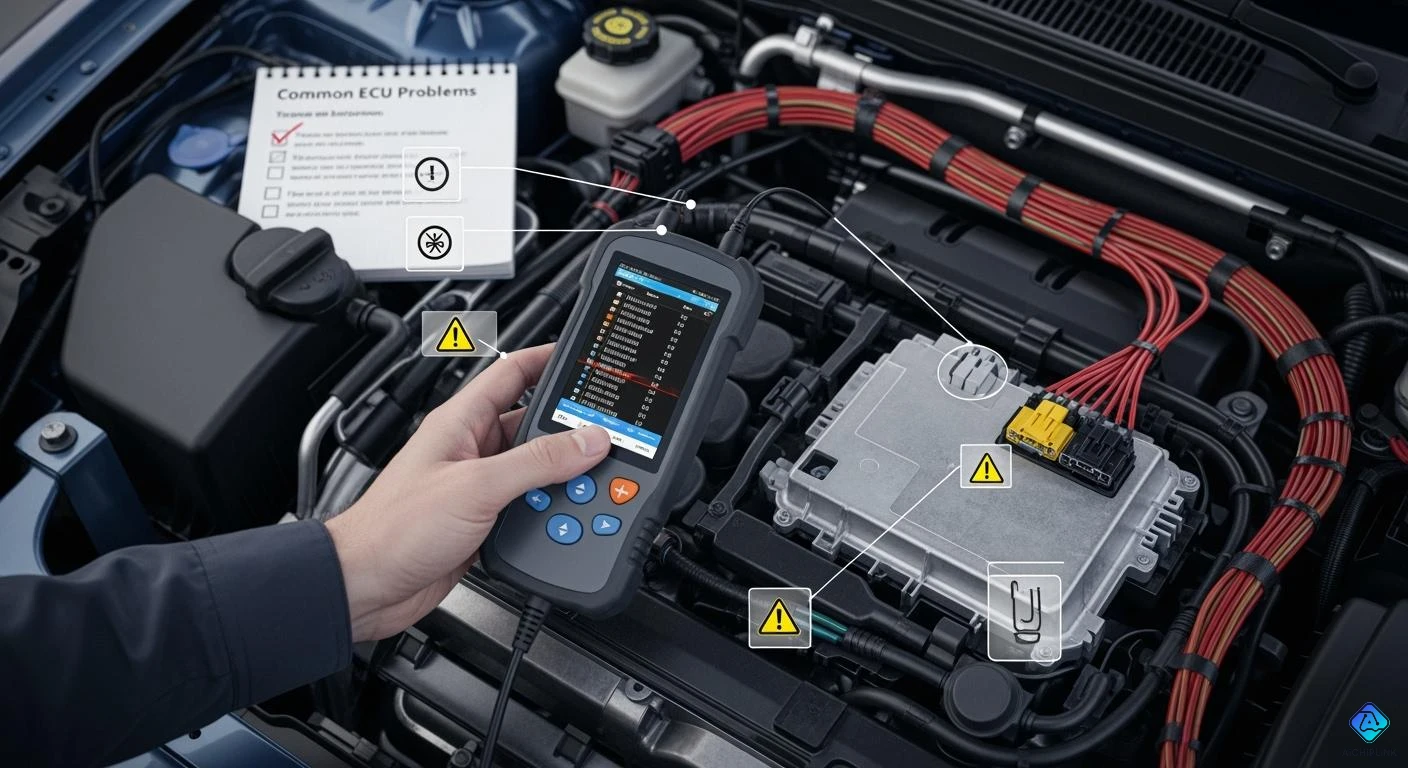
You can test an ecu by looking for clear signs. Use easy steps to check for problems. First, see if warning lights stay on. Check if the car does not run well. Use a scan tool to look for error codes in the ecu. Look at the ecu for water damage or burnt smells. Check for sensors that do not work right. Many people make mistakes when finding ecu problems. The most common reasons are:
-
Water damage after heavy rain
-
Failed sensors sending wrong data
-
Corrupt software from interrupted updates
-
Failed injectors or coils causing shorts
-
Malfunctioning VVT motors
Always test an ecu with care before changing parts. You only need simple tools and careful checking to test an ecu the right way.
Key Takeaways
-
Look at warning lights and error codes to find ECU problems. Use a scan tool to read codes before fixing anything.
-
Check the ECU and connectors by looking at them. Search for water damage, rust, or burn marks that show issues.
-
Test power and ground at the ECU. Use a multimeter to check voltage and look for ground problems.
-
Check parts like sensors and wires. Many ECU problems come from bad sensors or broken wires, not the ECU.
-
Ask a professional for help with hard problems. If tests do not fix the issue, a professional can help you.
Common Symptoms of Engine Control Unit Failure
Warning Lights and Error Codes
You can see signs of a bad ecu when the check engine light stays on or blinks. This light means the engine control unit found a problem. You can use a scan tool to get error codes. These codes show what is wrong. Sometimes, you find codes for misfiring or no spark. You may also see codes about lost communication between the ECU and other modules. If your diagnostic tool cannot connect to the ECU, it means there is a communication problem.
Tip: Always look for error codes before fixing anything. Codes help you find problems and stop you from guessing.
Starting and Performance Issues
You might notice trouble starting or the car running badly. The engine can stall or turn off without warning. Sometimes, the car will not start at all. You may feel less power or bad gas mileage. The engine can misfire, idle rough, or lose power when you speed up. Transmission shifting problems can happen too. These signs often mean ecu failure and faults in the engine control unit.
Common starting and performance symptoms:
-
Hard starting or no-start condition
-
Engine stalling or rough idling
-
Poor engine performance
-
Transmission shifting issues
-
Unexpected acceleration or power loss
Communication and Electrical Problems
Communication problems can cause many issues. You may see error codes about CAN message timeouts. Sometimes, the ECU cannot talk to other modules. This loss of communication can cause electrical problems. You might find that diagnostic tools cannot connect to the ECU. Electrical parts may stop working or act strange. These signs show the engine control unit is not sending or getting signals as it should.
| Symptom | Possible Cause |
|---|---|
| Loss of communication | Faulty wiring or connectors |
| Electrical malfunctions | ECU not sending signals |
| CAN timeout errors | ECU communication failure |
Note: If you see electrical or communication problems, check wiring and connectors first. Many issues start with loose or broken connections.
How to Test ECU: Step-by-Step
Learning how to test ecu problems can save you money. You can do these steps at home. You only need simple tools and need to be careful. Always wear gloves and safety glasses before you begin.
Scan for Diagnostic Trouble Codes
Start by scanning for trouble codes. This helps you find ecu faults fast. Use an OBD-II scanner or a pro diagnostic tool. Plug the scanner into the car’s diagnostic port. Turn the key to ON. Read the codes on the screen.
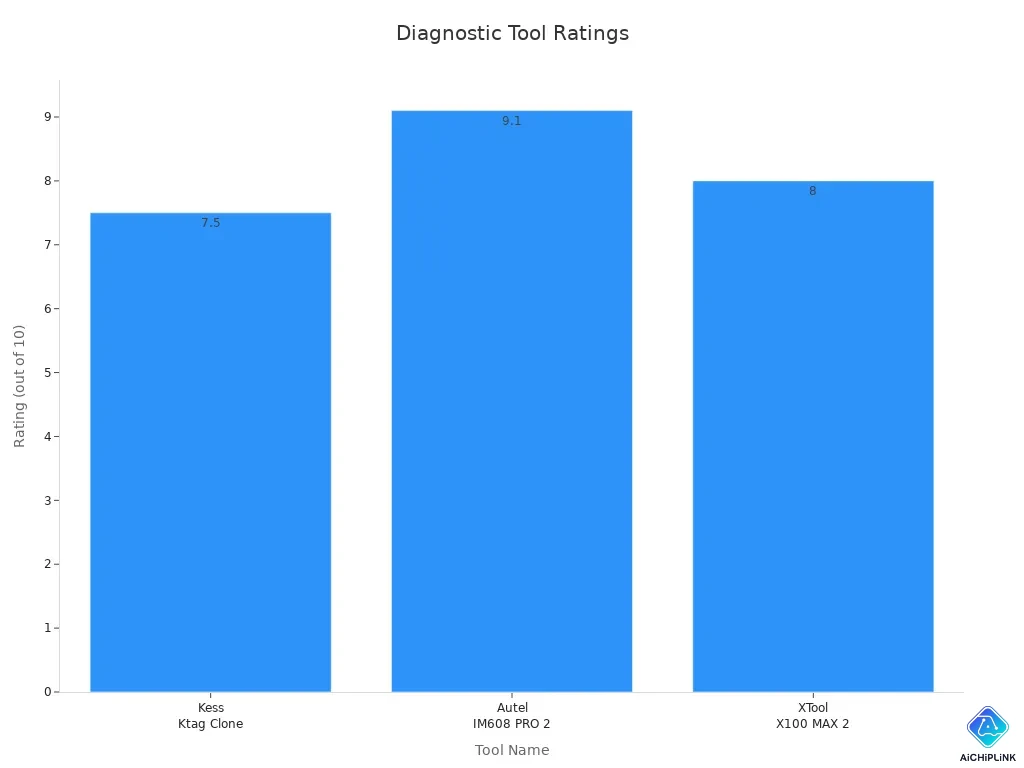
Here is a table that compares popular diagnostic tools for scanning and reading ECU codes:
| Tool Name | Rating | Key Features | Pros | Cons |
|---|---|---|---|---|
| Kess Ktag Clone | 7.5/10 | ECU tuning and programming clone tool for reading and writing ECU maps | ✓ Works with many ECUs for chip tuning✓ Cheap clone price | ✕ Clone quality changes✕ No real support✕ Can be risky if used wrong |
| Autel IM608 PRO 2 | 9.1/10 | Pro key programming and diagnostics tool with full-system diagnostics | ✓ Top key programming✓ Works with many cars✓ Full-system diagnostics✓ ECU programming | ✕ Very costly✕ Needs yearly subscription✕ Too much for home use |
| XTool X100 MAX 2 | 8/10 | Advanced key programming tablet with full-system diagnostics and IMMO functions | ✓ Key programming and IMMO✓ Full-system diagnostics✓ Works with many cars | ✕ Pricey✕ Some features need internet |
Tip: Write down all error codes you find. Check your service manual to see what each code means. This will help you test ecu problems the right way.
Visual Inspection of ECU and Connectors
Looking closely at the ECU and connectors is important for testing ecu problems. Turn off the car and take out the key first. Find the ECU near the engine or under the dash. Use a flashlight to look for damage.
Check for these problems:
-
Water inside the ECU box
-
Green or white stuff on pins or boards
-
Burn marks or melted plastic
-
Wires that are broken or loose at the connectors
If you see green stuff where gold should be, water got in. Corrosion near the oscillator or power parts means the ECU is bad. Also, check the wiring harness for hot spots or wires that look worn out.
Safety Note: Never touch the ECU or connectors with wet hands. Unhook the battery before you take out the ECU. This stops short circuits.
Check Power and Ground at ECU Connector
You need to check power and ground to test ecu circuits. Use a digital multimeter with auto-range. Do these steps:
-
Take out the key and turn off the car.
-
Find the ECU and its connectors.
-
Put the black probe on the battery’s negative side.
-
Put the red probe on the positive side.
-
Set the meter to check voltage.
-
Start the car and let it idle.
-
Check the voltage at the ECU connector. You should see 12 to 16 volts. If it is not in this range, the ECU may not work right.
You should also check each ECU ground while the engine runs. Good ground should show less than 0.10 volts. If you see more than 0.10 volts, there is a ground problem. Rust at ground points or connectors can make voltage drop. Cleaning the terminals with electrical cleaner can fix many problems.
-
Normal resistance for a 10-foot 22-gauge wire is about 0.1 to 0.2 ohms.
-
If you see 1 ohm or more, that is too high and can cause ECU errors.
Tip: Use a star point ground. Connect all grounds to one spot, like the cylinder head, to stop voltage drops.
If you do these steps, you will know how to test ecu circuits and find common problems. You can check ecu power, ground, and wires before you change any parts.
How to Test ECU with Multimeter
If you want to know how to test ecu with multimeter, you need to follow a few simple steps. You can use this tool to check power, ground, and signal paths. This method helps you find problems before you replace any parts. You do not need advanced skills to test ecu with multimeter. You only need patience and attention to detail.
Test Power Supply and Ground
You can start by checking the ECU’s power supply and ground. This is the first step in how to test ecu with multimeter. Follow these steps:
-
Turn the ignition key to ON. Watch for the check engine light. It should turn on for a few seconds, then go off. If it stays on or does not come on, you may have an ECU problem.
-
Set your multimeter to DC voltage mode.
-
Place the black lead on the ECU ground pin and the red lead on the power pin. For example, test B1 (+12V) against A26 (GND) and A25 (+12V) against A26 (GND).
-
You should see battery voltage, usually between 12 and 14 volts.
-
Check the ECU ground pins, such as A23 and A24, against the car body. The voltage drop should be less than 1 volt.
If you do not get the right readings, you may have a wiring or ground issue. This is a key part of how to test ecu with multimeter.
Tip: Always check the service manual for the correct pin numbers and voltage values for your car.
Check Continuity and Signal Input/Output
You can also test ecu with multimeter by checking continuity and signals. This step helps you find broken wires or bad connections.
-
Set your multimeter to continuity mode.
-
Touch one probe to the start of a wire and the other to the end. If you hear a beep, the wire is good.
-
Check for open circuits on the ECU board. Focus on important paths like sensor inputs and outputs.
-
If you want to check signal voltage, set the multimeter to DC voltage. Connect the leads to the signal pin and ground. You should see 5 volts on most sensor circuits.
Always use the service manual for your car. This will help you avoid mistakes when you test ecu with multimeter.
Inspect Fuses, Relays, and Connectors
Many problems that look like ECU failure come from fuses, relays, or connectors. You can use how to test ecu with multimeter to check these parts.
-
Remove the fuse and set your multimeter to continuity mode. Touch both ends of the fuse. If you hear a beep, the fuse is good.
-
Check relays by measuring voltage at the relay terminals. A bad relay can stop power from reaching the ECU.
-
Look at connectors for corrosion, loose pins, or water damage. Damaged wiring or blown fuses can cause engine stalling, sensor errors, or ignition problems.
Note: Water leaks, faulty parts, or exposed wires can cause short circuits. Always fix these before you replace the ECU.
If you follow these steps, you will know how to test ecu with multimeter and avoid common mistakes. You can save money and time by finding the real problem.
What to Check Before Replacing the ECU
Rule Out Sensor and Electrical Issues
Before you change the ECU, check for sensor and electrical problems. Many engine troubles come from bad sensors or wires, not the ECU. Start by looking for U-codes in other modules. Do wiring checks and look at parts closely. Use a multimeter to check voltage at sensors. The voltage should be near 5.0V. If it is much different, the problem may be in the wires or sensors.
Here is a table with important steps:
| Diagnostic Step | Description |
|---|---|
| Check Reference Voltage | Measure voltage at sensors; it should be close to 5.0V. |
| Monitor RPM Signals | Make sure the ECU reacts to engine RPM signals. |
| Perform Harness Tests | Test wires for damage or shorts; check resistance and current. |
| Conduct Actuator Tests | Check actuators draw the right current before connecting a new ECU. |
Tip: Always check other circuits to make sure they work before you think the ECU is bad.
Inspect Related Components
You need to check other parts to see if the ECU is the real problem. Looking at parts helps you find clear signs of damage. Look for rust, broken wires, burnt spots, or loose connections. These problems can stop the ECU from working right.
Follow these steps to check parts:
-
Look at the PCB for rust, burnt spots, or cracked solder near connectors and heat sinks.
-
Use a multimeter to check input voltage to the ECU. It should be between 11.5V and 14.5V.
-
Test for broken lines or open circuits using continuity mode.
-
Check capacitors, resistors, and diodes to see if they work. Replace any that are not right.
-
Watch signal quality at key points with an oscilloscope to spot weird waveforms or noise.
Looking at parts can save time and stop you from changing things you do not need. Always check wires and connectors first.
When to Seek Professional Help
Sometimes, ECU problems are too hard to fix at home. You may need special tools or skills for tough issues. If you feel unsure or tests do not fix the problem, ask for help.
It is okay to admit when a job is too hard. For tough repairs, get help from a pro who knows ECU repair.
You can save money and avoid mistakes by doing these steps before changing the ECU. Always make sure the problem is real with careful tests and checks.
You can find ECU problems by doing these things: First, watch for signs like rough idling or the engine stopping. The car may feel weak or use too much gas. You might notice misfires or the car failing emissions tests. Next, check parts like ignition coils, spark plugs, relays, sensors, and wires. Do this before you think about changing the ECU. Make sure you know what is wrong. Use a scanner to read codes. Look at the ECU to see if it is damaged. This helps you not make mistakes. Testing the ECU can help you keep more money. If you know the real problem, you will not buy parts you do not need. Look at the table to see how much you can save:
| Action | Cost Range |
|---|---|
| Repair ECU | $200 - $600 |
| Replace ECU | Higher cost |
If you still cannot fix the problem, ask a pro for help. These steps can help you fix your car and save money.

Written by Jack Elliott from AIChipLink.
AIChipLink, one of the fastest-growing global independent electronic components distributors in the world, offers millions of products from thousands of manufacturers, and many of our in-stock parts is available to ship same day.
We mainly source and distribute integrated circuit (IC) products of brands such as Broadcom, Microchip, Texas Instruments, Infineon, NXP, Analog Devices, Qualcomm, Intel, etc., which are widely used in communication & network, telecom, industrial control, new energy and automotive electronics.
Empowered by AI, Linked to the Future. Get started on AIChipLink and submit your RFQ online today!
Frequently Asked Questions
How do you know if your ECU is bad?
You may see warning lights, have trouble starting, or notice poor engine performance. Use a scan tool to check for error codes. Look for signs like burnt smells or water damage on the ECU.
Can you test an ECU at home?
Yes, you can test an ECU at home with a basic multimeter and a scan tool. Follow safety steps. Check power, ground, and look for error codes. Always read your car’s service manual for guidance.
Will a car start with a faulty ECU?
Sometimes the car will not start if the ECU fails. You may hear the engine turn over, but it will not run. Other times, the car may start but run poorly or stall.
What causes an ECU to fail?
Common causes include water damage, electrical shorts, failed sensors, or overheating. Power surges and poor connections can also damage the ECU. Always check wiring and connectors before replacing the ECU.