Flywheel Diode Definition, Function, and Real-World Applications
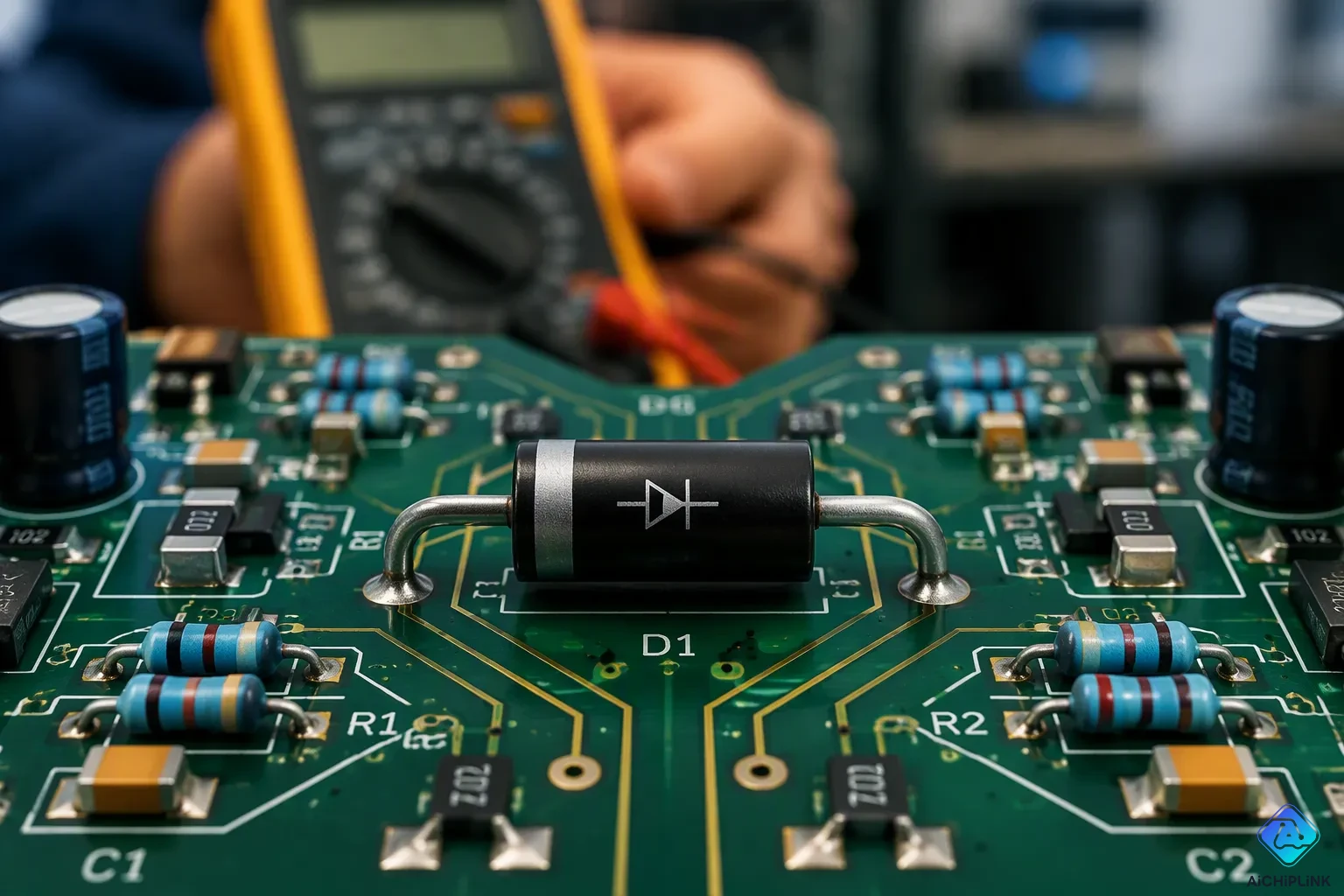
You have probably run into this problem: turning off a relay, motor, or solenoid makes harmful voltage spikes. This flyback voltage can ruin your switching transistor or IC. The fix is a simple, low-cost part: the flywheel diode, also called a flyback diode or freewheeling diode. Like a mechanical flywheel smoothing energy in an engine, this diode gives the inductive current a safe path. During normal operation, it stays reverse-biased and conducts nothing. When you cut the current, it forward-biases and lets the energy flow safely. This one part saves your circuit from costly failures.
Key Takeaways
-
A flywheel diode stops harmful voltage spikes when you turn off inductive loads like relays or motors.
-
Without this diode, high voltage can ruin your switching transistor and cause expensive problems.
-
Connect the diode so the cathode goes to the positive supply and the anode goes to the negative side.
-
Use a flywheel diode in circuits that have relays, solenoids, motors, and other inductive loads.
-
A flywheel diode costs very little and keeps your whole circuit safe from harm.
What Is a Flywheel Diode?
Definition and Purpose
A flywheel diode is a regular rectifier diode that you hook up right across an inductive load, such as a relay coil, solenoid, or DC motor. You put it in reverse polarity compared to the power supply. Connect the cathode to the positive supply side and the anode to the negative or ground side. While the circuit runs normally, the diode stays reverse-biased and lets no current through. It basically vanishes from the circuit.
The main job of this part is to guard your circuit from voltage spikes when you turn off the inductive load. When the current stops, the collapsing magnetic field in the inductor tries to keep the current going. Without a safe path, the voltage shoots up fast until something breaks. The diode gives this flyback current a low-resistance path, sending it back into the coil. This stops high voltage from building up and damaging semiconductor switches or other parts. When the switch opens, the voltage across the inductor flips polarity. This flip forward-biases the diode. The stored energy then flows in a loop made by the inductor and the diode, safely turning into heat in the winding resistance.
Compare this to an RC snubber, another common way to suppress spikes. The two parts do different jobs. The flyback diode clamps the voltage spike to about one diode drop, protecting your switching device. An RC snubber dampens LC oscillations and cuts down dv/dt and ringing. For energy dissipation, the flywheel diode lets the current circle longer in the coil loop, so the current fades slowly. The snubber uses its capacitor to soak up fast transient energy, and its resistor turns that energy into heat. For EMI control, the flyback diode helps only a little. High-frequency noise and ringing can still happen, and conducted EMI may get into your supply or ground. The snubber quiets ringing faster and improves EMI behavior. One key trade-off: the flywheel diode makes relay release time longer because the current fades slowly. The snubber does not mainly change release time; it targets parasitic reactances. Think of the diode as a safety valve for voltage and the snubber as a shock absorber for noise. About 95 percent of small relay and coil snubbers use either a diode like the 1N4001 through 1N4007 series or a 100 ohm, 1 watt resistor in series with a 10 to 100 nanofarad plastic or ceramic capacitor.
Common Names
You will see this part called by several names. The most common is a flyback diode. This name comes straight from the voltage spike it suppresses, called the flyback voltage. Another common name is a freewheeling diode. The word "freewheeling" describes the current path after you cut the power. The current freewheels around the loop made by the inductor and the diode, safely circling until the stored energy turns into heat in the winding resistance.
You might also hear the term snubber diode. Snubber is a broad group for parts that suppress voltage transients. A flyback protection diode is one specific kind of snubber. Other snubber types include capacitors, R-C series networks, nonlinear resistors like MOVs, and Zener diodes. The snubber type you pick affects the relay release time and the transient voltage produced. For most small relays and solenoids, the simple diode approach works best. It costs pennies, needs no tuning, and reliably protects your circuit.
Why a Flyback Diode Is Essential
The Inductive Kickback Problem
Turning off an inductor like a relay coil or motor winding makes a risky problem. The magnetic field falls apart and tries to keep current moving. This makes a sudden high-voltage spike called inductive kickback. Lenz's Law explains this action with math. The caused voltage equals inductance times how fast current changes. You write the formula as V equals L times di over dt. A quicker current stop makes a bigger voltage spike. This flyback voltage can hit hundreds of volts, much higher than your circuit's normal voltage. The voltage can rise to many times the supply voltage before the energy goes away. These voltage spikes put every part near the switching node in danger. The inductor acts like a generator when you switch off, pushing current against the stop. Your switching transistor or IC feels this huge voltage across its terminals. The stored magnetic energy must go somewhere when you open the switch. This is why a flyback diode is so important for any inductive load circuit.
Consequences of Omission
Now think about what happens with no flyback protection diode. That high-voltage spike has no place to go but through your switching transistor. The voltage can pass the transistor's top rating right away. Semiconductor junctions break down under this stress. You get lasting damage to the switching part. A short circuit shows up between collector and emitter or drain and source. The part fails. Your circuit stops working. This failure often harms other parts too. Replacing a blown transistor or IC costs much more than the pennies you pay for a flyback diode. Repair costs, downtime, and lost output far outweigh the small cost of this part. Designers who skip this protection learn the hard way. The flyback voltage destroys MOSFETs, bipolar transistors, and driver ICs just as easily. Even strong parts cannot live through repeated voltage spikes above their ratings. A relay may work a few times without a flyback diode. Failure will happen. Every inductive load needs a flyback diode to work safely. This simple part gives a safe path for the current, stopping harm to your switching device. Some designers leave out the diode to save cost or board space. This choice risks terrible failure. One damaged transistor can take out the whole control board.
How a Flywheel Diode Works
Circuit Configuration and Polarity
You hook up the flywheel diode across your inductive load. Polarity is very important. You have to connect the diode's cathode to the positive side of the coil. The anode goes to the negative side or ground.
When the circuit runs normally, the diode stays reverse-biased. It does not let any current flow. It stays off. This reverse bias keeps the diode from changing your circuit or blocking current. The diode basically vanishes from the circuit when the switch is closed. That is what you need for correct circuit action.
A flyback diode is hooked up across the inductive load, like a relay coil or motor winding. The diode is placed with the right polarity: cathode to the positive supply side, anode to the negative side. This setup makes sure the diode stays reverse-biased when the circuit runs. When the switch turns off, the coil polarity flips and the diode becomes forward-biased.
This setup stops the diode from causing trouble during normal use. It sits quietly in the background. It only turns on when needed.
Current Path During Switch-Off
Now think about what happens when you open the switch. The magnetic field around the inductor quickly falls apart. The inductor tries to keep current moving the same way. The voltage across the inductor flips polarity right away. This flip makes the diode forward-biased. The diode now lets current flow easily.
The stored energy takes a safe path. Current goes around in a loop made by the inductor and the diode. This loop is called the freewheeling path. The flyback diode makes a closed loop for the fading current. That current does not go through your switching transistor. It flows safely in this closed loop. Your transistor only sees the diode's small forward voltage. This saves the transistor from the high flyback voltage.
As the current goes around, it turns into heat in the winding resistance. The current slowly fades over time. The output current through the freewheeling diode goes up and down almost in a straight line during turn-on and turn-off. The diode lets out stored inductor energy to keep the current waveform smooth.
Even with a flywheel diode in place, you may see high-frequency ringing in some circuits. The diode's own junction capacitance interacts with leakage inductance present in the circuit.
| Source | Author | Mechanism described | Key finding relevant to the query |
|---|---|---|---|
| Forum post #4 | DAVID CUTHBERT | Transformer leakage inductance together with output diode capacitance causes ringing | LTSPICE modeling attributes flyback ringing to leakage inductance and output diode capacitance; an RC snubber across the diode reduces ringing, but the real fix is reducing leakage inductance |
| Forum post #5 | DAVID CUTHBERT | Diode capacitance and leakage inductance shape the current waveform | With zero leakage inductance, ringing disappears, but the initial spike caused by charging the diode capacitance remains |
For most relay and solenoid circuits, this ringing is not a problem. The energy levels are low. For sensitive switching power supplies, you might need another RC snubber across the diode to quiet the oscillations.
The flyback diode gives you simple and dependable protection. It clamps the flyback voltage to about one diode drop above the supply voltage. It stops dangerous voltage spikes from hurting your switching device. The energy safely goes around and turns into heat. Your circuit stays safe and reliable with no risk of part failure.
Real-World Applications of the Flywheel Diode
Relays and Solenoids
You will find a flyback diode in almost every circuit that runs a relay coil. The diode sits in parallel with the coil. While the coil has power, the diode is reverse-biased and does not conduct. When you cut power to the coil, the collapsing magnetic field makes a reverse voltage spike called back EMF. The diode gives this induced current a closed path to flow and fade away instead of showing up across the relay contacts or driver circuit. By sending the back EMF away from the contacts, the diode stops the high voltage that would otherwise cause arcing as the contacts open.
Solenoid valves in fluid control systems need the same protection. A diode around the solenoid coil protects a solid-state switch from the high reverse voltage spike caused by opening the inductive coil circuit. Install the diode in the field close to the solenoid. This placement stops the reversing voltage before it travels through cables and possibly affects nearby instrument wires. Some solenoid valves even have the diodes built in.
A flyback diode can slightly slow relay release time because it allows current to decay gradually.
Motors and Power Supplies
DC motors benefit from a flyback diode as well. The diode suppresses brush arcing and protects H-bridge transistors from voltage spikes. Switching power supplies use a flyback diode as the catch diode in flyback converters. This part catches the inductive energy each switching cycle.
The diode suppresses back EMF and protects the drive circuit, but it can also keep coil current flowing long enough to slow relay contact opening. In some load conditions, especially DC motor loads, this delayed opening can itself contribute to arcing and contact damage.
Any inductive load benefits from a flywheel diode. Relays, solenoids, motors, and transformers all store magnetic energy. That energy needs a safe path when you cut the power.
A flywheel diode is a simple part that usually blocks current. It gives inductive current a safe path when you turn off the power. This action stops harmful voltage spikes. You need this part in any circuit that runs relays, motors, solenoids, or other inductive loads. Without it, a collapsing magnetic field can destroy your switching transistor. This part protects your whole circuit.
Always hook up the diode with the right polarity. The cathode faces the positive supply. Pick a flyback diode with enough voltage and current ratings for your load. A flyback diode costs pennies and saves components. Always put a flywheel diode in your inductive load designs – it costs pennies and saves components.

Written by Jack Elliott from AIChipLink.
AIChipLink, one of the fastest-growing global independent electronic components distributors in the world, offers millions of products from thousands of manufacturers, and many of our in-stock parts is available to ship same day.
We mainly source and distribute integrated circuit (IC) products of brands such as Broadcom, Microchip, Texas Instruments, Infineon, NXP, Analog Devices, Qualcomm, Intel, etc., which are widely used in communication & network, telecom, industrial control, new energy and automotive electronics.
Empowered by AI, Linked to the Future. Get started on AIChipLink and submit your RFQ online today!
Frequently Asked Questions
What happens if I connect the flywheel diode backwards?
If you connect the diode backwards, it becomes forward-biased when the circuit runs normally. The diode then acts like a short circuit. This can blow the diode right away or overload your power supply. The load will not work, and you get no flyback protection at all.
Does a flywheel diode slow down my relay or solenoid?
Yes. After the power cuts, the diode keeps the coil current flowing in a loop. This leftover current makes the magnetic field collapse more slowly. Your relay release time goes up. This trade-off rarely matters, but you should know about it for timing-critical circuits.
What size diode do I need for a small relay coil?
A standard 1N400X series rectifier diode works for most small relays and solenoids. Pick one with a reverse voltage rating higher than your supply. Make sure the forward current rating matches or beats your load current. These parts cost pennies and handle the energy with no trouble.
Can I use a flywheel diode on an AC motor or transformer?
You cannot use one standard diode on AC power. The changing AC polarity makes the diode forward-biased on the negative half-cycle. This creates a direct short circuit. For AC inductive loads, you must use a bidirectional snubber, like an RC network or MOV.
Is a flywheel diode the same as a TVS or Zener diode?
No. A flywheel diode sends energy back around through the coil resistance. A Zener or TVS diode clamps the voltage spike to a set level and burns the energy off as heat. These parts reach the same goal but work in very different ways.