TFOS Series Automotive-Grade 260 W Resistor
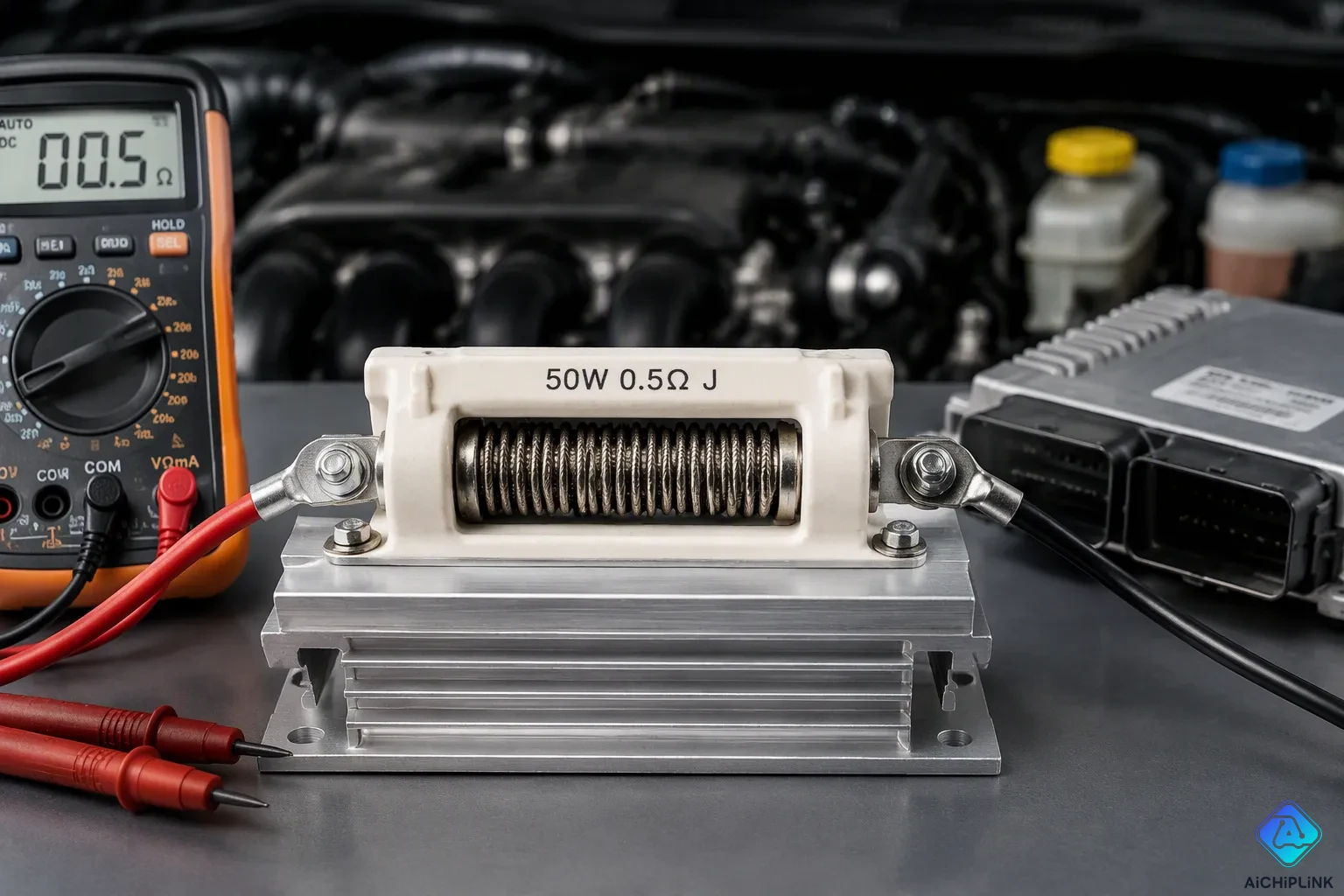
The TFOS Series is an automotive-grade resistor rated for 260 W. It handles high power dissipation in electric vehicles and other vehicles. Typical duties include EV pre-charge circuits, braking resistors, and load dump protection.
This part combines a rugged power package with automotive qualifications. Designers choose it when a circuit must absorb or shed large amounts of energy without drift or failure. The sections below explain the specifications, construction, and qualifications of the TFOS Series. They also show where this resistor fits best in real automotive systems.
Key Takeaways
-
The TFOS Series resistor can handle 260 W of power. It also meets AEC-Q200 automotive standards for reliability.
-
Use this resistor in electric vehicle pre-charge, braking, and load dump circuits to handle large energy pulses.
-
Attach the resistor to a heat sink to reach the full 260 W rating and keep it from getting too hot.
-
Pick the clip mount TO247 package for easy assembly and good heat transfer.
-
For accurate sensing, choose a thin film chip resistor instead; the TFOS Series works best in high-power paths.
What Is the TFOS Series Resistor?
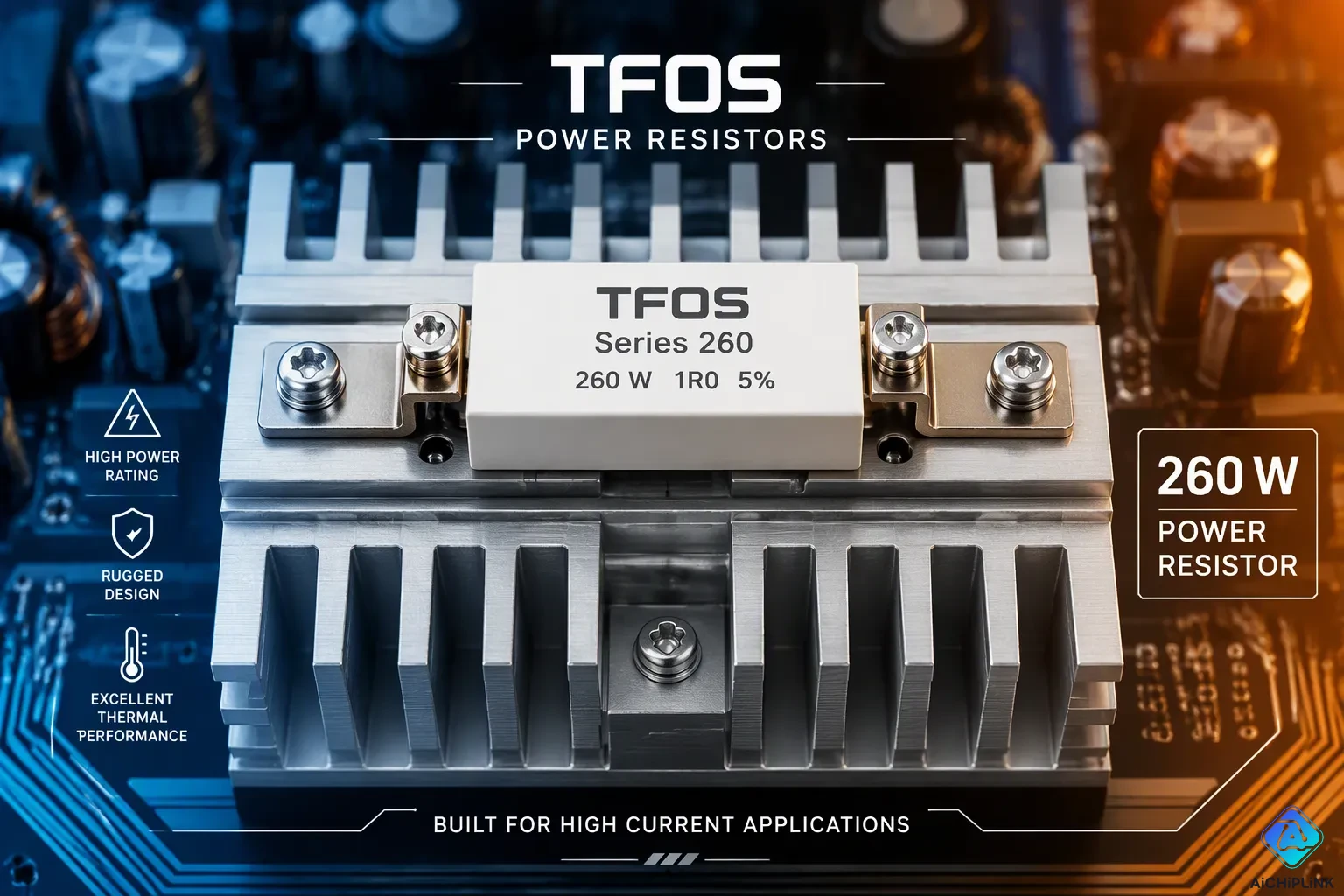
The TFOS Series is a resistor made for circuits that must take in big bursts of energy. This power resistor has a 260 W rating and a housing built to move heat into a metal surface. Engineers see it as a fix for high-current paths, not as an all-purpose part. It goes in the power stage of a design, near the energy source it protects.
Key Specifications
The table below gathers the main parameters. Only the power rating stays the same across the family. The other values depend on the exact part number, so designers should check each one against the official datasheet before release.
| Parameter | Value |
|---|---|
| Power rating | 260 W |
| Resistance range | Datasheet-defined per part number |
| Tolerance | Datasheet-defined per part number |
| Temperature coefficient | Datasheet-defined per part number |
| Maximum operating voltage | Datasheet-defined per part number |
The 260 W figure assumes the part is mounted correctly to a heat sink. Running it in free air lowers the usable load. A designer who ignores the derating curve will put too much stress on the element. The upper voltage limit sets a second ceiling. That limit matters most in load dump events, where voltage spikes go far above the steady-state rail. Designers must respect both the power limit and the voltage limit. Tolerance and temperature coefficient work the same way. A tight tolerance narrows the spread from part to part. A low temperature coefficient keeps the value steady as the element warms.
Construction and Qualifications
Qualification status is what sets this part apart from industrial resistors. The AEC-Q200 standard governs passive components in vehicles, and it tests parts far beyond commercial limits. A qualified part passes temperature cycling, humidity bias, mechanical shock, and vibration testing. Wide operating temperature range, vibration resistance, and long-term stability all come from that qualification. An AEC-Q200 qualified device also has documented change control, so the part a designer qualifies stays the part in production. Test reports back each claim, and buyers should ask for them.
Element material drives behavior. Thick film power resistor designs screen a resistive paste onto a ceramic substrate. Thin film sputters a precise layer for tight tolerance. Metal foil and metal strip elements serve low-inductance, high-pulse duties. Each approach trades precision against power density and cost. The choice follows the duty cycle, not a preference. A pulse-heavy duty favors metal strip. A precision divider favors thin film.
The TFOS Series uses a ceramic body for electrical isolation and thermal conduction. Electrodes bond the element to the terminals. A molded or potted housing protects the assembly from moisture and mechanical damage. Terminals accept standard soldering processes, including reflow and wave soldering. The clip mount TO247 option lets a clip press the package against a heat sink for efficient heat transfer.
A low TCR keeps resistance stable as the element heats. That stability matters in current sensing, where drift corrupts the measurement. The AEC-Q200 qualified thick film power resistor category covers parts that combine this stability with rugged packaging. Buyers comparing options should check the qualification report, the derating curve, and the mounting torque spec together. Those three documents show how the part behaves in a real automotive environment.
Where Is the Resistor Used?
EV Pre-Charge and Braking
A precharge or discharge resistor limits the inrush current when a contactor closes into a large capacitor bank. Electric vehicles use this circuit at the traction inverter input. At the first instant of contact, the capacitor acts like a short. A 260 W part takes in that surge without damage. The same tough design works for braking resistors, which release energy from a motor during slowing down. Braking power goes up with total inertia and with the square of the speed, so the element must survive repeated heat pulses. A thick film power resistor with a ceramic body spreads heat well and resists cracking under cycling.
Load Dump, Heaters, and Current Sensing
Load dump events push voltage far above the normal rail. A resistor in the clamp path must block that spike and get rid of the energy behind it. Heater circuits in electric vehicles pull steady current for cabin warming, and the 260 W rating covers that continuous duty. Current sensing in high-power systems depends on a stable element. A low temperature coefficient keeps the reading true as the part warms. Voltage measurement chains in battery management systems also gain from stable parts. Battery management systems check cell stacks at high operating voltages, and voltage dividers built from matched resistors keep that sensing accurate. On-board chargers and onboard chargers face similar stress. Automotive and industrial inverters share the pattern. Hybrid electric vehicles mix all of these loads in one platform.
Lower-power resistors fit signal-level work well. They cost less and take less board space. Non-automotive parts often match the electrical spec at a lower price. They lack AEC-Q200 qualification, though, and that gap matters in automotive applications. A qualified part carries documented vibration and temperature cycling results. A commercial part does not. The 260 W rating and the tough housing make this part the better fit for high operating voltage and high operating voltages in power paths. Signal paths still favor small chips.
| Option | Strength | Best Fit |
|---|---|---|
| 260 W automotive-grade part | High power dissipation, AEC-Q200 | Pre-charge, braking, load dump |
| Lower-power chip resistor | Small size, low cost | Sensing, signal paths |
| Non-automotive power resistor | Lower price | Benchtop and industrial loads |
Designers should match the part to the duty, not to the price alone. Each option has a valid role in vehicles.
Selection and Integration
Thermal Management and Clip Mount TO247 Package
A power rating means little if heat has no way out. The 260 W figure only holds when the part sits on a heat sink that keeps the case at a safe temperature. Designers begin with the expected load profile, then choose a cooling method. Air-cooled heat sinks work well for moderate duty cycles. Liquid-cooled plates handle continuous high-power loads. The mounting style must match the sink that is chosen.
The clip mount TO247 package gives one practical answer. A spring clip presses the package flat against the heat sink. That pressure allows direct mounting on a heatsink with a thin, even thermal interface. The clip mount TO247 package also speeds up assembly, since no screw torque is needed. Designers should still check the derating curve and the thermal resistance values on the datasheet.
Fit Versus an Automotive Grade Thin Film Flat Chip Resistor
A thick film power resistor and an automotive grade thin film flat chip resistor do different jobs. The thick film power resistor handles large energy pulses and high power in a rugged housing. The chip part gives tight tolerance and low drift in a small footprint. Precision sensing and voltage division favor the chip. Pre-charge, braking, and load dump paths favor the power part.
Size and thermal mass separate the two even more. The power part needs board area and a heat sink. The chip mounts close to the signal it measures. Both parts have valid roles in vehicles, and many designs use both. An automotive grade thin film flat chip resistor family, including automotive grade high voltage thin film flat chip resistors and high voltage thin film flat chip resistors, covers sensing at elevated rails. The power resistor covers the energy path.
Compliance and cost shape the final choice. AEC-Q200 qualification applies to both categories, so designers compare test reports, not claims. The power part costs more per unit and adds heat sink cost. The chip costs less but cannot absorb large pulses. Matching each resistor to its duty keeps the bill of materials lean.
The TFOS Series is a resistor made for cars, and it is rated at 260 W. It handles tough, high-power work in electric vehicles and hybrid electric vehicles. Its rating and AEC-Q200 qualification make it a good fit for EV pre-charge, braking resistors, load dump protection, heater circuits, and high-power current sensing. Smaller chip resistors still handle precision sensing in these vehicles.
This part answers two questions. It is a 260 W automotive-grade power resistor with a package that mounts to a heat sink. It fits best in energy paths that must take in large pulses or release steady heat. Designers who match the part to the job get stable, qualified performance.

Written by Jack Elliott from AIChipLink.
AIChipLink, one of the fastest-growing global independent electronic components distributors in the world, offers millions of products from thousands of manufacturers, and many of our in-stock parts is available to ship same day.
We mainly source and distribute integrated circuit (IC) products of brands such as Broadcom, Microchip, Texas Instruments, Infineon, NXP, Analog Devices, Qualcomm, Intel, etc., which are widely used in communication & network, telecom, industrial control, new energy and automotive electronics.
Empowered by AI, Linked to the Future. Get started on AIChipLink and submit your RFQ online today!
Frequently Asked Questions
What does the 260 W rating actually depend on?
The rating only holds when the part is mounted to a heat sink that keeps the case cool. Running it in free air lowers the usable load. Designers should read the derating curve before they pick the part size.
What does AEC-Q200 qualification prove?
AEC-Q200 tests passive components beyond normal commercial limits. A qualified part passes temperature cycling, humidity bias, mechanical shock, and vibration testing. Buyers should ask for the test reports and check the change control process.
When should a designer choose this part over a chip resistor?
Energy paths are the best fit for the tfos series. Pre-charge, braking, and load dump duties need high power dissipation and thermal mass. Precision sensing and voltage division are better suited to a thin film flat chip resistor instead.
How does the clip mount TO247 package help thermal design?
A spring clip presses the package flat against the heat sink. That pressure gives a thin, even thermal interface without screw torque. Assembly gets faster, and heat leaves the element efficiently.
Does the part work in high-voltage paths?
Yes, as long as it stays within its datasheet limits. The maximum operating voltage sets a ceiling that matters most during load dump events. Designers must respect both the power limit and the voltage limit together.